Cluster Page ? ~2005 words ? Global ? 7 FAQs ? Focus: fit, specs, reliability, and total cost
Choosing between an OEM GE oven heating element and a third-party alternative is not only about price. The best choice depends on (1) how critical precise fit and long-term reliability are for the household, (2) whether the oven is under warranty or used heavily, and (3) how confident the buyer is that the third-party part matches the correct electrical rating and geometry. Because heating elements are engineered assemblies not just wire small differences in terminals, insulation, alloy, and shape can affect safety and life.
Engineering reference: TUTCO defines a heating element as a component made of electrically conductive and insulating material with connectors, designed for a purpose, and discusses less obvious costs like field failures and replacement labor. https://tutco.com/conductive/heating-elements
- Part is sold through GE/authorized channels under a GE part number
- Highest confidence in exact geometry and intended electrical rating
- Usually best documentation and compatibility matching
- Made/sold by a non-GE brand and marketed as compatible
- Quality ranges from excellent to unsafe clones
- Requires stronger buyer verification (dimensions, terminals, wattage)
Per TUTCO, a heating element is an assemblage that includes conductive alloy plus insulating framework and lead connectors. For ovens, the terminals and bracket geometry are often where almost fits becomes a reliability problem (loose connections, misalignment, local overheating). Reference
| Factor | OEM GE oven heating element | Third-party alternative | Why it matters |
|---|---|---|---|
| Fit and geometry | Highest confidence | Varies; some are exact, others close enough | Wrong bends/brackets can stress terminals or interfere with racks/liners |
| Electrical rating alignment | Typically matched to the model s requirements | Must be verified carefully by buyer | Mismatch can cause slow preheat, overheating, or shortened life |
| Terminals/connectors quality | Consistent | Variable | Loose terminals create resistance hot spots; tight connections are critical |
| Traceability | Strong (authorized supply chain) | Depends on seller/brand | Lower traceability increases counterfeit/incorrect part risk |
| Upfront price | Often higher | Often lower | Upfront savings can be erased by repeat labor/downtime |
| Total cost (labor + downtime) | Often lower long term if it avoids repeats | Can be lower or much higher depending on failure rate | TUTCO highlights less obvious costs from field failures and rework |
Table 1 Best choice depends on whether the third-party part is truly equivalent and whether the installation is sensitive to fit and terminal integrity.
- The oven is under warranty or used daily/heavily
- The model uses a specialty element shape (hidden bake, uncommon bracket)
- Past failures included burned connectors or arcing
- The household wants install once and forget it reliability
- There is limited appetite for returns/reorders
- Compatibility is clearly documented (exact part cross-reference)
- Measurements, terminal style, and mounting points match the OEM element
- The seller has strong return policies and consistent reviews
- The buyer is comfortable validating specs and doing a supervised test bake
- Model number (from the oven data plate)
- Element type: bake vs broil vs hidden bake
- Terminal details: spacing, orientation, insulation block if present
- Bracket + bend geometry: compare against your old element photos
- Return policy: ensure hassle-free return if mismatch occurs
- Inspect spade terminals for looseness/discoloration; replace if needed
- Ensure the element seats flush and mounts without forcing
- Reinstall covers/insulation and route wires away from heat
Whirlpool s heater replacement steps emphasize verifying the correct replacement (voltage/wattage) and making sure all wire connections are tight. Although written for water heaters, the verify specs + tight connections principle applies to oven element replacements. Source
- Second service visit if the part fails or doesn t fit
- Downtime (meals disrupted, holiday cooking, etc.)
- Collateral damage (burned terminals, damaged wiring, scorched insulation)
- Return friction (shipping delays, restocking, labor time lost)
TUTCO explicitly calls out less obvious costs of heater decisions rework, field failures, and quality issues can swamp initial savings. Reference
Hudson Reed s 1000W plug-in heating element listing includes clear specs (1000W, IP67 ingress rating, UL Approved, materials, cable length, warranty). It s not an oven part, but it shows the kind of spec clarity buyers should look for when assessing third-party heater products. Source
Not always, but OEM generally offers the highest confidence in fit, rating, and traceability. A high-quality third-party part can perform well if it truly matches the original design and is sourced from a reputable seller.
Mismatch or variability small differences in terminals, bends, bracket position, or rating can cause poor fit, hot spots, or shorter life. Counterfeit risk is also higher on low-traceability marketplaces.
Yes. A wrong element can overheat wiring/terminals, stress controls, or physically interfere with liners/racks. Always verify model compatibility and inspect terminals and wiring during replacement.
You should use the model-correct replacement. Whirlpool s guidance explicitly instructs verifying voltage and wattage against the unit s data plate when replacing elements. Source
The element is an assembly; terminals and connectors are part of that system. Loose connections create resistance hot spots. Whirlpool notes to ensure all wire connections are tight during element replacement. Reference
Buy the correct element, replace any heat-damaged terminals, confirm the element is mounted without forcing, and perform a supervised test heat cycle after reassembly. TUTCO notes heater life is influenced by design and operating conditions (oxidation, deformation, cycling). Reference
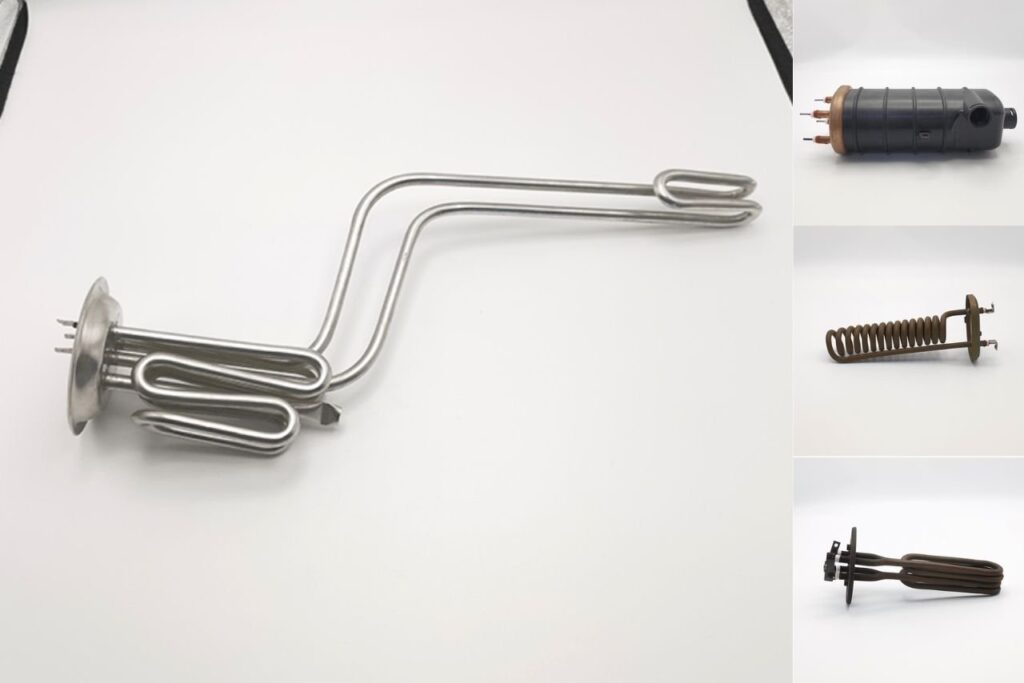
Manufacturers categorize heater technologies into tubes, plates, films, and integrated modules. For examples, see JINZHO s category pages: Heating Tubes, Heating Plate, Heating Film, and Die Casting Heating Solutions.
- TUTCO heater engineering overview: https://tutco.com/conductive/heating-elements
- Whirlpool element replacement (verify correct element; tighten connections; safe sequencing): https://www.whirlpoolwaterheaters.com/support/help/element-was-out-of-range/24
- Hudson Reed spec transparency example: https://usa.hudsonreed.com/1000-plug-in-watt-electric-heating-element-76309
- JINZHO category references: Heating Tubes, Electric Boiler Heater
Disclaimer: This page is educational and not GE-authorized guidance. Always disconnect power before servicing appliances and follow model-specific service instructions.