桑拿 發熱元件 2025年的科技透過以下方式徹底改變桑拿體驗 先進的智慧控制系統, 、環保材料與能源效率。諸如 金眾電熱 等公司引領潮流,作為 加熱元件製造商, ,專注於 家用電器加熱元件. 的創新。現代桑拿創新現已具備混合與智慧系統,可實現精確的溫度控制、快速加熱,以及與智慧家庭技術的無縫整合。沉浸式健康體驗需求的日益增長推動了這一轉變,其中 混合加熱器 與紅外線技術正在重塑市場。加熱元件的進步為使用者提供量身定制的桑拿環境,樹立了放鬆體驗的新標準。.
2025年桑拿加熱元件的關鍵趨勢

2025年的桑拿產業展現出快速轉型,其驅動力來自 先進技術, 、永續材料選擇,以及對能源效率與材料的關注。這些趨勢塑造了下一代桑拿加熱元件的設計,為使用者提供更智慧、更永續且更節能的加熱系統。.
桑拿加熱元件設計中的先進材料
石墨烯加熱元件
石墨烯 加熱元件代表了現代桑拿 創新的一大突破。此材料具有卓越的導熱性,可實現快速且均勻的熱量分佈。製造商採用石墨烯的原因在於其輕量結構與耐用性,可支援商用及家用桑拿應用。石墨烯的效率可降低能源消耗,符合產業對永續與節能設計的推動方向。.
陶瓷複合材料技術
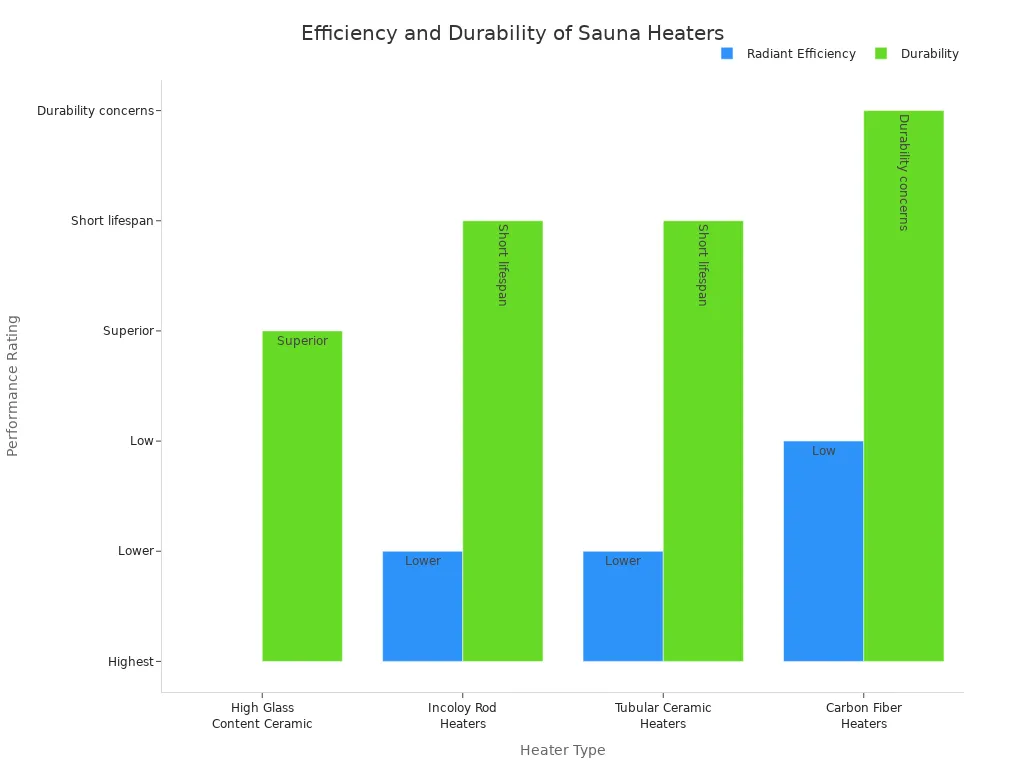
陶瓷複合材料技術 仍是桑拿加熱元件發展中的主要技術。陶瓷加熱器發出遠紅外線波長,提供針對性的熱能。然而,研究顯示陶瓷管可能產生局部熱點與不均勻加熱。其使用壽命介於5,000至10,000小時之間,但相較於其他先進材料,陶瓷管較脆弱且耐用性較低。儘管存在這些限制,陶瓷複合材料仍具有高輻射效率,並有助於提升桑拿的整體能源效率。.
紅外線加熱面板
紅外線加熱面板 因其能在較低溫度下運作同時提供治療效益而廣受歡迎。這些面板採用航空級碳纖維與微晶玻璃等先進材料,可提供均勻的熱量分散與低電磁場(EMF)排放。下圖比較了多種 桑拿加熱元件 類型的輻射效率與耐用性:
不鏽鋼 仍是2025年桑拿加熱元件最常用的材料。其具備耐用性、耐腐蝕性與易於維護等特點。Harvia Cilindro Pro與HUUM Hive等型號採用不鏽鋼以實現強勁性能與長久使用壽命。這些特性增強了保熱能力與蒸汽品質,支援節能加熱系統。.
智慧與互聯桑拿加熱元件創新
物聯網整合用於加熱控制
物聯網整合 位居智慧桑拿技術的前沿。數位恆溫器與AI驅動功能可實現溫度與濕度的即時調整。使用者可透過行動應用程式或智慧音箱進行遠端控制,從而簡化桑拿體驗。物聯網系統可收集即時數據、與雲端同步,並提供使用習慣的洞察分析,支援預測性維護與能源最佳化。.
- AI驅動功能 可根據生理反應個人化加熱排程。.
- 與智慧家庭系統的整合可實現語音控制與自動化。.
- 數位控制系統透過智慧調整加熱來最佳化能源使用。.
應用程式與遠端控制
應用程式與遠端控制已成為現代桑拿加熱元件設計的標準配備。這些控制功能允許使用者從任何地方管理溫度、濕度與療程時長。遠端管理支援韌體更新與維護警報,確保最佳性能與能源效率。緊湊型智慧桑拿設計,如AI驅動的家用理療艙,可滿足小型居住空間的需求,同時提供個人化理療體驗。.
AI輔助加熱排程
AI輔助加熱排程 可最大化健康效益並最小化能源使用。這些系統會適應環境條件與使用者偏好,自動調整加熱參數。與家庭能源系統的整合使桑拿可在再生能源充裕或離峰時段運作,進一步提升能源效率。配備生物辨識感測器的先進健康監測功能可追蹤生命徵象並即時調整桑拿設定,增強安全性與舒適性。.
桑拿加熱中的永續與節能設計
太陽能桑拿加熱元件
太陽能桑拿加熱元件反映了產業對永續性的承諾。這些系統利用再生能源,減少對傳統電力來源的依賴。與智慧控制及可程式計時器的整合允許使用者最佳化能源使用並降低公用事業成本。太陽能相容性支援了朝向永續與節能設計的廣泛趨勢。.
高性能隔熱與門封
高性能隔熱與門封 在能源效率與材料選擇中扮演關鍵角色。桑拿牆壁、地板與屋頂的優質隔熱可保留熱量並降低能源消耗。妥善密封的門窗可防止熱量流失,確保桑拿加熱元件高效運作。具備熱回收功能的通風系統可從排氣中捕捉熱能,預熱進入的空氣,進一步提升效率。.
環保製造與回收材料
環保製造與回收材料的使用已成為永續材料選擇的核心。製造商優先採用竹子、模組化預製結構與回收金屬,以減少環境影響。這些做法符合法規壓力與消費者對永續產品的需求。下表比較了現代桑拿加熱元件與傳統型號的能源消耗統計數據:
| 桑拿類型 | 加熱器功率(kW) | 預熱時間(分鐘) | 預熱期間的能源使用量(kWh) | Energy Use per 30-min Session (kWh) | Annual Electricity Cost (3x weekly use) |
|---|---|---|---|---|---|
| 傳統電動 | 6-9 | 30-45 | 3-7 | 1.5-2.5 | $95-$130 |
| 紅外線桑拿 | 1.5-2.5 | 10-15 | 0.25-0.5 | 0.5-0.8 | $30-$45 |
Modern infrared sauna heating elements operate at lower power levels and heat up faster, resulting in roughly one-third the electricity consumption of traditional electric heaters. Factors such as insulation quality, sauna size, and user behavior also influence energy use. Smart sauna technology, including timers and remote controls, further optimizes energy efficiency.
提示: Regular maintenance and proper sizing of the sauna heating element ensure peak efficiency and extend equipment lifespan.
The convergence of advanced materials, smart technology, and sustainable and energy-efficient designs defines the leading trends in sauna heating elements for 2025. These innovations deliver superior performance, lower energy consumption, and a more personalized sauna experience.
Hybrid Heat Experiences and Wellness Integration
Combining Traditional and Infrared Heating
Hybrid sauna heating technology has emerged as a leading trend in 2025. Manufacturers now combine traditional and infrared heating elements in a single unit. This approach allows users to customize their heat experience and benefit from both heating methods. Hybrid saunas operate at moderate temperatures, typically between 120°F and 150°F. Users can switch between dry infrared heat and moist steam heat, gaining flexibility not available in single-type saunas.
- Hybrid saunas deliver the combined health benefits of both traditional and infrared heating.
- They support muscle relaxation, improved respiratory health, enhanced immune function, and better circulation.
- The technology enables quicker onset of sweating, which may improve skin health and stress reduction.
- Hybrid models often include advanced features such as red light therapy and chromotherapy, further enhancing wellness.
- The convenience of having both heating types in one unit allows for a personalized wellness experience.
A comparison of user satisfaction across sauna types highlights the versatility and comfort of hybrid models:
| 桑拿類型 | 熱能強度 | Typical Session Length | User Comfort and Accessibility | Social vs Solo Use | User Satisfaction Highlights |
|---|---|---|---|---|---|
| 傳統 | High (150-195°F) | Short (15-20 minutes) | Intense heat, challenging for heat-sensitive users | Larger, social, cultural, communal | Favored for authentic, intense heat and social bonding |
| 紅外線 | Lower (120-140°F) | Longer (30-45 minutes) | Gentler heat, easier breathing, less facial discomfort | Smaller, private, suited for solo relaxation | Preferred for comfort, longer sessions, and heat sensitivity |
| 混合式 | Moderate (120-150°F) | 參差不齊 | Combines traditional and infrared, customizable heat | Versatile, supports both social and solo use | Appreciated for versatility, enhanced features, and comfort |
Hybrid sauna technology supports both social and solo use, making it a flexible choice for diverse user needs. The ability to tailor heat and humidity levels increases overall satisfaction and aligns with current trends in personalized wellness.
Salt Therapy and Aromatherapy Integration
Recent trends in sauna heating technology include the integration of salt therapy and aromatherapy. Salt therapy, also known as halotherapy, involves dispersing fine salt particles into the sauna air. This process can support respiratory health and skin wellness. Aromatherapy systems infuse essential oils into the heated air, creating a calming and therapeutic environment.
- Salt therapy may help clear airways and reduce inflammation.
- Aromatherapy can promote relaxation and stress relief.
- Many hybrid sauna models now feature built-in dispensers for both salt and essential oils.
These wellness integrations transform the sauna session into a multi-dimensional experience, supporting both physical and mental health.
Gentle Steam and Multi-Sensory Features
Manufacturers have responded to consumer demand for comfort by adding gentle steam and multi-sensory features to modern sauna heating systems. Steam generators produce a moist environment that soothes joints and relaxes muscles. Multi-sensory features, such as chromotherapy lighting and immersive sound systems, further enhance relaxation.
Note: Multi-sensory sauna technology can improve sleep quality by relaxing the body and regulating temperature.
Hybrid sauna heating elements now deliver a comprehensive wellness experience, combining heat, moisture, light, and sound. These features reflect the latest trends in smart wellness technology.
Enhanced Safety Features in Sauna Heating Element Technology
Auto Shut-Off and Overheat Protection
Safety remains a top priority in sauna heating technology. Auto shut-off and overheat protection systems have become standard in 2025. These features monitor the temperature and automatically power down the heating element if it exceeds safe limits. This reduces the risk of fire hazards and electrical malfunctions.
- ETL, UL, CSA, CE, and TÜV certifications confirm compliance with international safety standards.
- Routine electrical inspections by licensed professionals help maintain safety and reliability.
UL 認證, in particular, indicates that sauna electrical components have passed rigorous safety tests. This certification reduces the risk of electrical shocks and fire hazards, ensuring peace of mind for users.
Advanced Temperature Regulation Systems
Modern sauna heating technology uses advanced temperature regulation systems to maintain consistent and safe heat levels. The latest UL 60335-2-53 standard, which replaces the older UL 875, aligns with international safety guidelines and improves usability.
| 面向 | UL 875 (Old Standard) | UL 60335-2-53 (2025 Standard) |
|---|---|---|
| High-temperature trip | Lower threshold (~360°F/182°C), conservative to protect wiring and components | Higher threshold, reducing unnecessary trips and improving usability |
| Thermostat sensor location | Directly above heater, 6″ from ceiling (inaccurate for room temp) | Over seating area (Europe-style), more accurate temperature control |
| Air-venting requirements | Required supply vent behind or below heater to cool sensor | More flexible vent placement, improving airflow and installation options |
| 溫度測量 | Limited to sensor above heater, restricting natural sauna temps | Supports sit-bench measurements, allowing room temps >90°C (~194°F) naturally |
| 安全性與文件 | Based on older UL 875 requirements | Aligned with international IEC 60335 standards, updated warnings, IP ratings, installation guidelines, and infrared-specific safety rules |
These improvements allow for more accurate temperature control and safer operation, reflecting the latest trends in sauna heating technology.
Child and Pet Safety Innovations
Manufacturers have introduced several innovations to protect children and pets in the sauna environment. These include cool-touch surfaces, tamper-resistant controls, and motion sensors that detect unexpected entry. Smart technology can lock controls or shut down the heating system if a child or pet enters the sauna unsupervised.
- Child and pet safety features reduce the risk of accidental burns or injuries.
- Smart sensors and app-based alerts notify users of any safety concerns in real time.
These advancements demonstrate the industry’s commitment to safety and user well-being, setting new standards for sauna heating technology in 2025.
Impact of Sauna Heating Element Innovations on Relaxation

More Precise Temperature Control in Heating
Real-Time Adjustments and Monitoring
Modern sauna heating elements deliver precise temperature control through advanced digital panels and smart sensors. Electric sauna heaters use electrical resistance to heat sauna stones, allowing users to set exact temperatures and session times. Sensitive electronics, often housed outside the sauna room, improve reliability and longevity. Real-time monitoring features, including AI-powered adaptive heating and climate control systems, enable automatic adjustments based on user preferences and physiological responses. These systems optimize energy use and maintain stable sauna conditions, enhancing the overall sauna experience.
- Digital temperature readouts provide accurate monitoring.
- Wi-fi enabled controls allow remote operation and adjustments.
- Predictive maintenance features prevent failures that could disrupt heat distribution.
Consistent Heat Distribution Across the Sauna
Consistent heat distribution remains essential for a relaxing finnish sauna experience. Premium saunas with advanced heating elements reach optimal temperatures between 130–150°F, enveloping users in even heat. Carbon panels heat more efficiently than ceramic panels, reducing hot spots and improving comfort. Strategic heater placement, such as additional units for calves, sides, back, and front, ensures uniform warmth. Proper ventilation systems, including intake and exhaust vents near the floor and ceiling, balance airflow and prevent temperature imbalances.
Tip: Blocked or malfunctioning vents can disrupt airflow and heat distribution, reducing sauna effectiveness and comfort.
Users report that advanced sauna heating elements provide a more comfortable and effective relaxation experience than older technologies. High-end units feature ultra-low EMF levels, contributing to a gentler and safer heat environment.
Customizable Heat Profiles and Wellness Programs
User-Defined Settings for Personalized Relaxation
Customizable heat profiles allow users to tailor their sauna sessions to individual needs. Saunas with programmable temperature settings and session durations support a personalized finnish sauna experience. Physiological research shows that far infrared sauna sessions increase skeletal muscle temperature, leading to beneficial cardiovascular and metabolic adaptations. These findings support the use of passive heating modalities for targeted health outcomes.
Preset Wellness and Therapy Programs
Preset wellness programs optimize brain health, detoxification, and longevity benefits. Technologies such as Sauna Guide Technology™ use predictive biofeedback to personalize sessions based on heat acclimation and real-time body temperature tracking. Users can select from a range of therapy programs, each designed to maximize specific wellness outcomes. This approach moves beyond a one-size-fits-all model, allowing users to track and optimize their sauna sessions for maximum benefit.
| Program Type | Target Benefit | Session Length | Heat Profile |
|---|---|---|---|
| Detoxification | Toxin removal | 30 min | High, steady |
| Cardiovascular | Heart health | 20 min | Moderate, pulsed |
| Relaxation | Stress reduction | 40 min | Gentle, gradual |
Quieter and More Comfortable Sauna Heating Operation
Silent Heating Technologies and Reduced Vibration
Advanced heating technologies operate quietly, minimizing vibration and noise. Carbon and ceramic panels produce less sound than older models, contributing to a peaceful sauna environment. Silent operation allows users to relax without distraction, supporting longer and more comfortable sessions.
Improved Air Quality and Ventilation
Proper ventilation systems enhance air quality by balancing airflow and maintaining optimal humidity. Humidity sensors placed near the ceiling provide precise moisture readings, enabling automated adjustments. Smart sauna controls integrate humidity and temperature management, allowing remote adjustments and real-time monitoring.
Enhanced Comfort with Even Heat
Premium saunas feature better insulation and strategic heater placement, resulting in uniform heat distribution. Users find that advanced saunas provide deeper penetrating infrared heat that feels more relaxing and less likely to cause discomfort. High-end models allow longer, more comfortable sessions without feeling faint or overheated.
Note: Advanced heating technologies significantly improve comfort, heat consistency, and user satisfaction during relaxation compared to older technologies.
User Considerations for Sauna Heating Element Selection in 2025
選擇合適的桑拿加熱元件
Matching Heating Element Type to Sauna Size and Use
Selecting the optimal sauna heating element depends on several factors related to sauna size and intended use. Users should measure the sauna room volume in cubic feet and apply the general rule: 1 kW of heater power for every 45 to 50 cubic feet. Larger saunas or those in colder climates require increased heater capacity to maintain efficiency and energy performance. For outdoor or uninsulated saunas, increasing heater size by 25–30% compensates for heat loss. Infrared saunas typically need smaller heaters due to their targeted heat delivery. Electrical requirements also play a role; heaters above 2 kW need dedicated 240 Volt circuits. Proper ventilation ensures consistent heat distribution and supports sustainable energy use.
Tip: Consult a professional for correct sizing and safe installation to maximize efficiency and energy savings.
Assessing Personal Preferences and Wellness Goals
Personal wellness goals and preferences strongly influence the choice of sauna heating element. The following table compares features based on user priorities:
| Preferences / Goals | 傳統桑拿 | 紅外線桑拿 |
|---|---|---|
| Authentic experience | Ritual steam, high heat | 不適用 |
| Steam and humidity | 必備工具 | Not available |
| Intense sweating | High temperatures | Gentle heat |
| Respiratory benefits | Steam prioritized | 不適用 |
| Social environment | Larger, communal | Smaller, personal |
| Heat sensitivity | May overwhelm | Better tolerated |
| Joint pain relief | 不適用 | Infrared penetration |
| Longer sessions | 較高 | Longer possible |
| Space limitations | Requires more space | Compact design |
| Modern features | Less common | Advanced technology |
| Installation/maintenance | More complex | Easier, plug-in |
| Energy consumption | 高瓦特密度 | Lower, faster heat-up |
Individuals seeking sustainable energy efficiency and modern features often prefer infrared saunas. Those valuing tradition and steam may choose conventional sauna heating elements.
Budget, Value, and Long-Term Savings
Far infrared saunas offer lower initial costs and reduced maintenance expenses compared to traditional steam or hot rock saunas. Their heating elements can last up to 50 years, minimizing replacement costs and supporting sustainable energy efficiency. Infrared models consume less electricity per hour, resulting in lower energy bills. Traditional saunas require more frequent heater replacements and have higher energy consumption, which increases long-term costs. Portable and near infrared saunas may start with lower upfront costs but often incur higher maintenance expenses over time. Over a decade, far infrared saunas provide the most cost-effective solution when considering installation, maintenance, energy use, and durability.
Maintenance and Longevity of Modern Sauna Heating Elements
Cleaning and Upkeep Requirements for New Technologies
Routine maintenance ensures the longevity and efficiency of sauna heating elements. Recommended practices include:
- Use only sauna rocks designed for electric heaters and arrange them loosely for airflow.
- Clean the heater exterior regularly with a soft cloth and specialized cleaners to prevent corrosion.
- Inspect rocks for cracks or wear every few months and rearrange them for even heating.
- Vacuum dust and debris around and inside the heater to maintain performance and safety.
- Check heating elements for wear and replace if necessary; test safety sensors and wiring annually.
- Perform seasonal deep cleaning by removing rocks, washing them, drying thoroughly, inspecting for rust, and tightening mounting brackets.
- Follow manufacturer guidelines and avoid pouring unauthorized substances directly on rocks.
Wood burning sauna stoves require frequent inspection and cleaning of the stove body, combustion chamber, and chimney to prevent rust and ensure safe combustion. Steam saunas need softened or distilled water and regular cleaning of the steam generator to prevent mineral buildup.
Durability and Lifespan of Advanced Materials
Modern sauna heating elements use advanced materials such as graphene, ceramic composites, and aviation-grade carbon fiber. These materials enhance durability, support sustainable energy efficiency, and extend service life. Far infrared heating elements can last up to 50 years, while ceramic and stainless steel components offer robust performance and resistance to corrosion. Regular maintenance further increases the lifespan of these technologies.
Warranty, Support, and Upgrade Options
Warranty and support options vary among leading manufacturers. The table below summarizes coverage:
| 製造商 | Warranty Duration | Labor Coverage | 保固範圍詳情 | Exclusions and Conditions |
|---|---|---|---|---|
| Heavenly Heat Saunas | 10 years | 4 years (USA & Canada) | Defects in materials, workmanship, cabin integrity | Excludes improper installation, environmental damage |
| SalusHEAT | 1 year (components), 7 years (core tech), lifetime paid replacement | 未涵蓋內容 | Heater components, extended paid support | Excludes remodeling, disasters, misuse; direct purchases only |
| Helo (Sauna360) | 5 years (residential), 1 year (commercial) | Support via dealers | Manufacturing defects, proper installation required | Use of approved stones, authorized installation required |
Manufacturers require proof of purchase and proper installation to maintain warranty coverage. Support and upgrade options depend on the brand and region. Users should review warranty terms and seek authorized service for repairs to ensure continued efficiency and energy savings.
Sauna heating element innovations in 2025 deliver smarter, safer, and more sustainable relaxation. Recent advancements offer users several key benefits:
- Far infrared technology supports detoxification, pain relief, and stress reduction.
- Advanced heating elements ensure precise temperature control and deeper heat penetration.
- Smart regulation and heat recycling optimize energy use while maintaining comfort.
- Eco-friendly designs use renewable materials and energy-saving modes.
- Saunas now serve as personalized wellness platforms for individual health goals.
| Priority Aspect | Expert Recommendations | User Priorities | Brand Examples and Features |
|---|---|---|---|
| 安全性 | Emphasize certifications, non-toxic materials, auto shutoff | Prevent burns and emissions | HUUM, Harvia |
| 能源效率 | Highlight energy-saving designs, especially infrared | Seek long-term savings and eco-friendly options | HUUM |
| 客製化 | Integrate smart controls and personalized settings | Desire tailored experiences and convenience | HUUM (WiFi app), Amerec (A6 Touch controls) |
| 性價比 | Compare features and long-term benefits | Balance cost with durability and savings | Harvia, Amerec |
Buyers should prioritize advanced materials, hybrid and smart controls, energy efficiency, and integrated wellness features to maximize comfort, safety, and value.
常見問題
What are the main types of sauna heating elements available in 2025?
Manufacturers offer traditional electric, infrared, and hybrid heating elements. Each type provides unique benefits. Hybrid models combine both technologies for a customizable experience. Users can select the best option based on their wellness goals and sauna preferences.
How do smart sauna heating elements improve user experience?
Smart sauna heating elements use digital controls, IoT integration, and AI-assisted schedules. These features allow users to adjust temperature and humidity remotely. Real-time monitoring ensures consistent heat and safety throughout each session.
Are modern sauna heating elements energy efficient?
Modern sauna heating elements use advanced materials and smart controls to reduce energy consumption. High-performance insulation and programmable timers further improve efficiency. Many models support renewable energy sources, which helps users lower utility costs and support water sustainability.
What safety features do new sauna heating elements include?
Manufacturers design heating elements with auto shut-off, overheat protection, and advanced temperature regulation. Child and pet safety innovations, such as cool-touch surfaces and tamper-resistant controls, help prevent accidents and ensure safe operation.
How does sauna size affect heating element selection?
Sauna size determines the required heater power. Larger spaces need higher wattage for effective heating. Proper sizing ensures even heat distribution and optimal performance. Professionals recommend measuring the sauna’s volume before choosing a heating element.
Can sauna heating elements support communal sauna culture?
Many modern saunas accommodate groups, supporting communal sauna culture. Hybrid and traditional models often feature larger capacities and robust heating systems. These designs encourage social wellness experiences and group relaxation.
What are the latest hydrothermal trends in sauna technology?
Recent hydrothermal trends include hybrid heat experiences, salt therapy, and aromatherapy integration. Multi-sensory features, such as chromotherapy lighting and immersive sound, enhance relaxation. These innovations create a more immersive and therapeutic sauna environment.