
支柱页面 • 全球受众 • 空气炸锅维护与可靠性
清洁的空气炸锅更安全、烹饪更均匀、气味更佳——但 加热元件才是您应重点清洁的部分 仔细, ,且不可用力过猛。本指南将向您展示如何维护并 清洁空气炸锅的加热元件 同时.
1) 空气炸锅加热元件的工作原理(以及清洁为何重要)
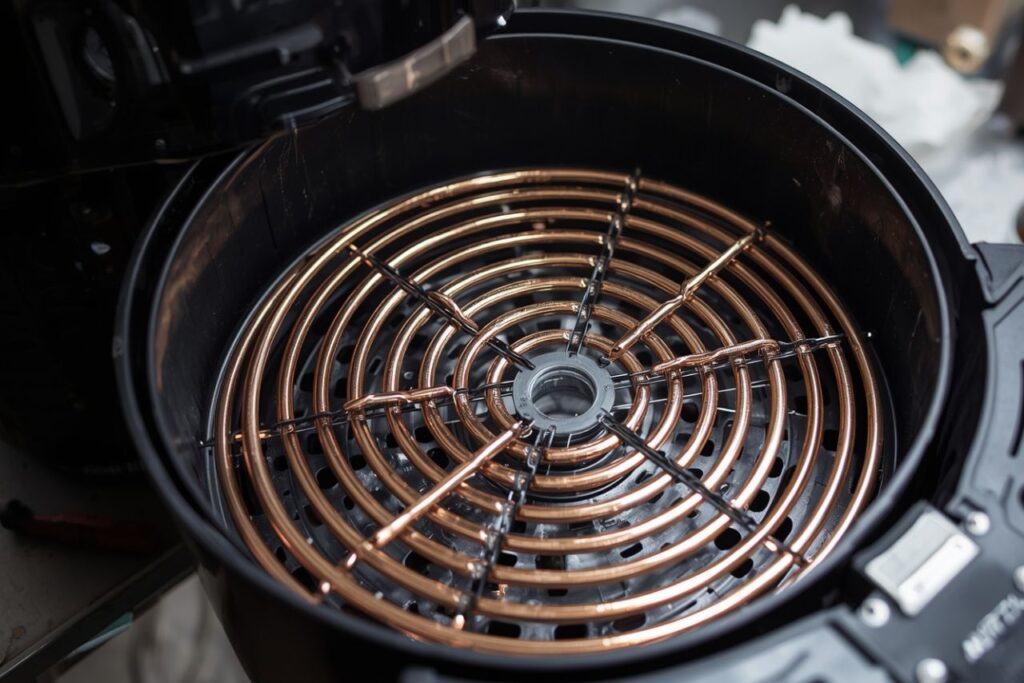
空气炸锅本质上是一款紧凑型对流烤箱:风扇将空气吹过电阻加热元件,然后热空气在食物周围循环。加热元件并非“只是一根电线”——它是一个由导电材料(通过电阻/焦耳热将电能转化为热量的部分)以及绝缘/支撑材料构成的组件,这些材料确保其安全、正确定位并实现电气隔离。.
这种“导电+绝缘框架”的概念对清洁至关重要:油脂、积碳和水分可能损害热传递、气流及绝缘完整性。即使是手指上的油脂和化学残留物,也可能在高温电阻合金中加速腐蚀或产生热点。.
2) 识别您的元件类型:线圈式、板式、管式或薄膜式
空气炸锅采用多种加热 结构。您的清洁方法取决于热源是裸露式、.
| 元件样式(常见于电器中) | 在空气炸锅中的外观 | 清洁注意事项 |
|---|---|---|
| 开放式/支撑式线圈 | 可见的线圈或蛇形线,由陶瓷/云母支架支撑 | 对刮擦最敏感;避免弯曲;使用软质工具和最少水分进行清洁 |
| 带护套的“管式”元件 | 金属管环(通常为不锈钢),端子隐藏在外壳内 | 表面更耐用;仍应避免浸水;重点在于脱脂和擦拭 |
| 加热板 | 平面或异形加热表面,粘合在热板上 | 请勿刮伤涂层;均匀加热依赖于良好的表面接触和清洁的气流路径 |
| 薄/厚膜加热器 | 集成在基板上的低剖面加热器 | 避免使用刺激性化学品;保护边缘、引线连接及绝缘层 |
工业加热产品类别反映了这些物理现实:“加热管”通常使用填充绝缘氧化镁(MgO)的金属护套包裹电阻丝;“加热板”旨在通过强粘合实现均匀表面加热;薄膜则优先考虑薄型、柔性、快速、均匀的加热。您无需了解制造细节即可清洁空气炸锅——但这些知识解释了为何某些损坏模式(刮擦、水分侵入、化学侵蚀)至关重要。.
3) 工具与清洁剂:应使用什么(以及应避免什么)
推荐工具
- Khăn lau sợi microfiber (干燥+微湿)
- 软尼龙刷 或软毛牙刷
- 无刮痕海绵
- 棉签 (用于狭窄角落)
- 木签 或塑料刮刀(用于轻轻撬起积碳)
- 小碗 温水+洗洁精(仅用于润湿抹布)
安全清洁剂(典型)
- 温和洗洁精 (日常清洁的最佳默认脱脂剂)
- 小苏打糊 (用于烧焦油脂;温和研磨剂)
- 醋水溶液 (用于轻微除味;仅擦拭)
务必查阅空气炸锅手册,了解经批准的清洁剂、涂层以及可用洗碗机清洗的部件。.
- 烤箱清洁剂/腐蚀性脱脂剂(可能腐蚀金属、涂层和绝缘支撑件)
- 金属擦洗垫/钢丝绒(划痕会产生热点和腐蚀点)
- 浸泡主机头(湿气可能渗入线路、传感器和绝缘层)
- 将气雾剂直接向上喷入通风口(会将液体带入电子元件)
4) 清洁计划:每次使用后、每周清洁及深度清洁
用户最常 空气炸锅的加热元件问题并非“神秘故障”——而是维护 欠账:层层油脂变为.
| Tính thường xuyên | 处理措施 | Thời gian |
|---|---|---|
| Sau mỗi lần sử dụng | 清空碎屑/油脂;擦拭炸篮和抽屉;快速擦拭可见的飞溅物(冷却后) | 3–7 分钟 |
| 每周(或每 5–10 次烹饪) | 彻底清洁炸篮/抽屉;擦拭内部;检查元件区域是否有残留物 | 10–20 分钟 |
| 深度清洁(每月或按需进行) | 小心对元件区域进行脱脂;擦拭风扇防护罩(如可触及);消除异味 | 20–45 分钟 |
5) 分步指南:安全清洁加热元件
步骤 1 — 拔掉电源并完全冷却
- 拔下 将空气炸锅从墙上插座拔下。(不要依赖电源按钮。)
- 让其冷却,直至所有表面达到室温。油脂在温热时更容易擦拭,但切勿在发热线圈附近操作。.
步骤 2 — 取出并清洗接触食物的部件
- 取出炸篮/脆皮盘/抽屉。.
- 用温水和洗洁精清洗。冲洗并彻底擦干。.
- 用干纸巾或布清除腔体内的大块碎屑。.
步骤 3 — 将设备置于安全操作位置
许多空气炸锅的元件位于顶部。如果您的型号允许,可以轻轻将其向后倾斜以查看元件。目标是获得可见性——而不是将液体“向上”倒入机头。.
步骤 4 — 先干式清洁(清除碎屑)
- 使用干燥的超细纤维布清除松散的碎屑。.
- 使用软尼龙刷清除干燥的碳片(轻压)。.
- 在陶瓷/云母支撑件和接缝处使用棉签。.
步骤 5 — 用最少水分进行脱脂(擦拭,不要喷洒)
- 在温水中混合几滴洗洁精。.
- 将超细纤维布蘸湿(不要浸透);拧干至仅微湿。.
- 轻轻擦拭元件区域。如果是裸露线圈,重点擦拭相邻的金属和防护罩,不要用力摩擦线圈。.
- 随后使用干净的湿布(仅用水)去除肥皂膜。.
- 最后用干布擦干。.
步骤 6 — 通电前干燥时间
将设备打开晾干至少 30–60 分钟(潮湿环境中更长时间)。然后重新插入炸篮/抽屉并运行一个短时间的空烧循环(如果手册允许),以烧掉任何残留水分——仅在您确认没有积水之后进行。.
6) 在不刮伤表面的情况下清除烧焦的油脂和积碳
炸篮上方的“顽固物质”通常是聚合油和碳。您的任务是软化和清除它——而不是对元件进行喷砂处理。.
方法 A:小苏打糊(温和、可控)
- 制作糊状物:小苏打 + 少量水。.
- 用棉签或布涂抹在 周围的金属表面 (不要深入通风口/线路)。.
- 静置 10–15 分钟。.
- 用微湿的布擦掉,然后擦干。.
方法 B:腔体内使用温蒸汽(不弄湿机头)
如果设计允许,可以在炸篮区域放置一个小型耐热碗,内装热水(设备拔掉电源),关闭抽屉 10 分钟以软化残留物。不要将水倒入机头,也不要让水接触电气区域。.
方法 C:使用木质/塑料工具进行针对性清除(无金属工具)
使用木签或塑料刮刀从扁平防护罩上清除厚碳层。如果感觉到需要“挖掘”的阻力,请停止并先软化残留物——划痕会成为热量集中点和腐蚀起点。.
7) 检查清单:损坏迹象及何时停止使用
正常/可接受
- 金属表面出现浅棕色变色
- 轻微烘烤的薄膜,随时间推移可擦除
- 加热性能均匀
停止并检查
- 陶瓷/云母支撑件 出现裂纹
- 线圈形状 变形或下垂
- 金属 剥落、点蚀或严重腐蚀
- 烧灼痕迹 靠近线路或连接器处
- Repeated tripping of GFCI/outlet or breaker
8) 故障排除:冒烟、异味、加热不均及不加热
Problem: Smoke during cooking
Likely causes: Grease on the element/shield; oil aerosol deposits; food drippings.
Fix: Deep-clean the element area using wipe-only degreasing. Reduce oil spray use; line the basket properly (without blocking airflow).
Problem: “Burnt plastic” smell
Likely causes: Residue on hot surfaces; cleaner residue; overheated food deposits.
Fix: Rinse-wipe again with plain water and dry. Run a short empty cycle only after everything is dry.
Problem: Uneven cooking / cold spots
Likely causes: Airflow restriction (grease film, blocked intake/exhaust, overloaded basket).
Fix: Clean vents and interior surfaces; avoid overcrowding; confirm fan is unobstructed.
Problem: No heat (fan runs, but food stays cold)
Likely causes: Open element, failed thermal fuse, control fault, connector issue.
Fix: This is not a cleaning issue. Unplug and consult service/manual. Avoid disassembly unless qualified.
9) 如何延长元件寿命(功率密度、气流与污染)
Heating element longevity is strongly affected by temperature, cycling, and environment. When the element runs hotter than intended, oxidation accelerates, resistance can drift, and supports can degrade. In compact appliances like air fryers, airflow is the main cooling mechanism for the element.
Practical life-extension habits
- Keep airflow paths clean: residue changes airflow and can create local hot spots.
- Minimize aerosol oil sprays: they deposit sticky films on hot metal that carbonize fast.
- Avoid harsh cleaners: caustics can attack metals and insulating supports; residues can smoke.
- Don’t run empty at max temp repeatedly: high watt density with limited airflow accelerates oxidation.
- Let it cool between high-temp batches: reduces thermal cycling stress.
Câu hỏi thường gặp
Can I use oven cleaner to remove tough grease from the heating element area?
It’s usually a bad idea. Oven cleaners are often caustic and can attack metals, coatings, and insulating materials or leave residues that smoke. Use mild dish soap wipe-downs, baking soda paste on surrounding surfaces, and patience.
Is it safe to spray degreaser directly onto the coil?
Avoid spraying into the head/coil area. Sprays can push liquid into wiring, sensors, and insulation. Apply cleaner to a cloth first, then wipe.
Why does my air fryer smoke more over time even if I clean the basket?
The top housing and element shield can accumulate invisible oil film that gradually carbonizes. A periodic deep-clean of the element area (wipe-only, minimal moisture) usually fixes this.
What’s the connection between “heating tubes/plates/films” and air fryers?
They’re categories of how heat is built and transferred. Tube-style heaters often use a metal sheath with insulation (like MgO) around resistance wire. Plates aim for stable, uniform surface heating and mechanical strength. Films are thin and uniform for tight spaces. Air fryers commonly use coil or sheathed elements, but the same maintenance principles apply: protect surfaces, insulation, and connections.
How do I know if I should replace the heating element instead of cleaning it?
If you have no-heat, repeated electrical trips, visible damage (cracks in supports, severe corrosion, burned connectors), or the element shape is distorted, cleaning won’t fix it. Stop using the unit and consult service options.
Disclaimer: This guide provides general maintenance information. Always follow your specific air fryer’s user manual, safety warnings, and service guidance. If electrical faults are suspected, consult a qualified technician.

