You can test hot water heater elements at home with confidence when you follow the correct procedures. When you test hot water heater components, you reduce the risk of unexpected breakdowns and improve efficiency. Safety should always guide your approach. Testing electrical parts requires attention to detail and respect for potential hazards. If you notice changes in your hot water supply, you can identify issues early and prevent further damage.
Signs Your Hot Water Heater Element Needs Testing
Common Hot Water Heater Problems
When you experience hot water issues, you need to identify the root cause quickly. Several symptoms often point to a faulty heating element in your hot water heater. Recognizing these signs helps you begin troubleshooting before more serious problems develop.
Không có nước nóng
If you turn on the tap and receive only cold water, your electric water heater may have a failed element. This problem often signals that both elements have stopped working. In a gas water heater, this symptom usually points to a different cause, but for electric models, the heating element is a common culprit.
Water not getting hot enough
You may notice that your water heater produces lukewarm water instead of the usual hot water. When only one heating element works, the water temperature drops below normal. This issue often appears gradually, making it easy to overlook until the problem worsens.
热水很快用完
Running out of hot water faster than usual can indicate that only one element is functioning. If your showers turn cold halfway through, or you cannot fill a bathtub with hot water, you should consider testing both the upper and lower elements.
断路器频繁跳闸
A tripped circuit breaker can signal electrical issues within your hot water heater. Faulty elements sometimes cause short circuits, which lead to repeated breaker trips. You should address this problem promptly to avoid further electrical hazards.
Mẹo: Listen for unusual noises coming from your water heater. Popping or hissing sounds may indicate sediment buildup or a failing element. Lower water pressure can also result from sediment affecting performance.
When to Test the Elements
You should not rush to test the heating element at the first sign of trouble. Careful troubleshooting ensures you address the correct problem.
Ruling out other causes
Before you test the element, rule out other potential issues. Check the thermostat settings and inspect for blown fuses. If your elements test fine, the thermostat may be the source of the problem. Unusual noises can also point to sediment buildup rather than a faulty element.
Considering the age and wear of your water heater
Manufacturers and experts recommend servicing traditional tank water heaters annually. This service includes flushing the tank and inspecting the heating elements. In areas with hard water, you may need to flush and inspect every six months due to faster sediment buildup. Regular maintenance helps you catch issues early and keeps your hot water heater running efficiently.
Ghi chú: Regular inspection and maintenance align with most manufacturer warranty requirements. Staying proactive prevents unexpected failures and extends the life of your water heater.
Tools and Safety Gear for Testing a Hot Water Heater
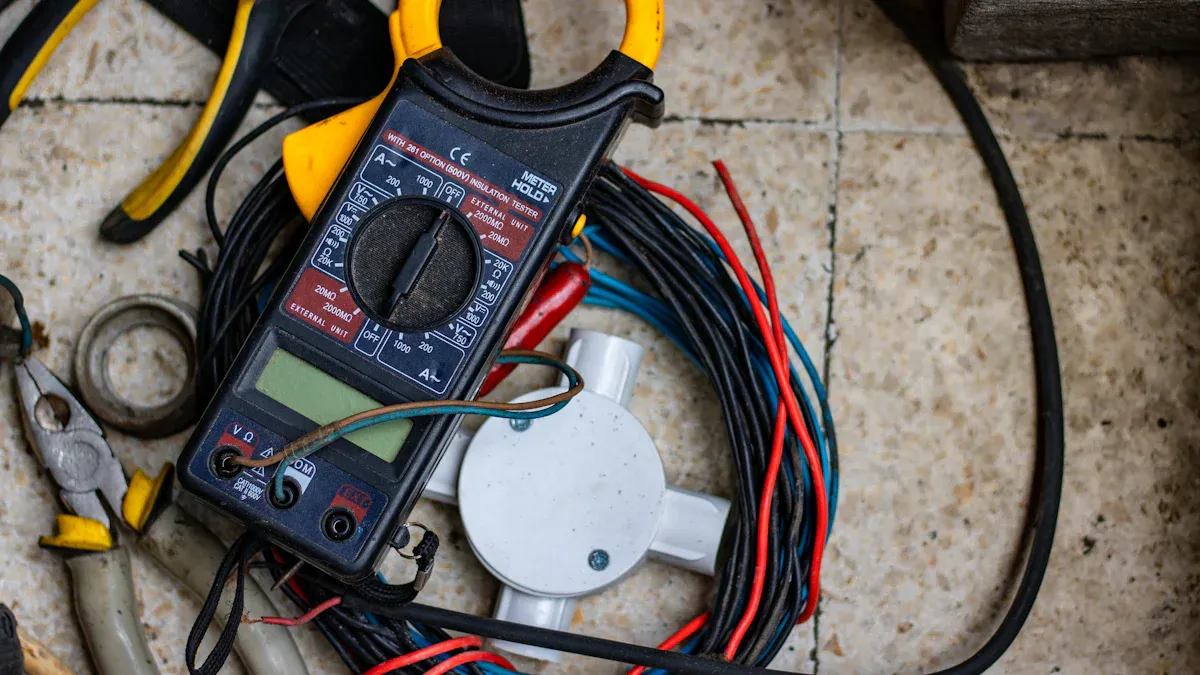
Before you begin testing your electric water heater, you need the right tools and safety equipment. Proper preparation ensures you can work efficiently and avoid unnecessary risks. This section outlines what you should gather before you start.
Essential Tools for Test Hot Water Heater
You need several basic tools to access and test the heating element in your water heater. Each tool serves a specific purpose and helps you complete the job safely.
Đồng hồ vạn năng
A multimeter allows you to measure resistance and check for continuity in the element. Set the multimeter to the ohms setting. You will use it to determine if the heating element is working or if you need a replacement. A reading around 14 ohms usually means the element functions correctly.
Tua vít
You use a screwdriver to remove the access panels and insulation from your electric water heater. This tool also helps you disconnect wires from the element terminals. Choose a screwdriver that fits the screws on your water heater to avoid stripping them.
Máy kiểm tra điện áp
A voltage tester or voltage test pen helps you confirm the power is off before you touch any wires. Always check for live voltage after turning off the breaker. This step protects you from electrical shock and ensures a safe working environment.
Mẹo: Always double-check that the power is off with your voltage tester, even if you have already switched off the breaker. Never skip this step.
Safety Equipment for Water Heater Work
You should never overlook safety when working with electrical appliances. The right gear protects you from injury and gives you confidence during the process.
Găng tay cách nhiệt
Wear insulated gloves to protect your hands from accidental electrical contact. These gloves reduce the risk of shock if you accidentally touch a live wire or terminal.
Kính bảo hộ
Safety glasses shield your eyes from dust, debris, or accidental sparks. You may encounter small particles when removing panels or insulation from your hot water heater.
Vật dụng hữu ích
A few extra supplies can make your project smoother and help you handle unexpected issues.
替换元件
Keep a replacement element on hand in case your testing shows the original heating element has failed. Having the correct part ready saves you time and lets you restore hot water quickly.
Towels or rags
Towels or rags help you clean up any water that escapes when you access the element. They also protect the area around your water heater from drips or spills.
Ghi chú: Organize your tools and supplies before you start. This preparation helps you avoid delays and keeps your workspace safe and efficient.
Preparing Your Water Heater for Testing
Before you begin testing, you must prepare your water heater to ensure safety and accuracy. Careful preparation protects you from electrical hazards and helps you access the element efficiently.
Tắt nguồn máy nước nóng
Locating the correct breaker
Bạn cần phải locate your home’s circuit breaker panel. Look for the breaker labeled for your water heater. Switch it to the “off” position. This step removes electrical power from the unit and prevents accidental shock. Always double-check the label, as some homes have multiple breakers for different appliances.
Confirming power is off with a voltage tester
After switching off the breaker, you must confirm that no electricity flows to the water heater. Use a non-contact voltage tester or a multimeter set to the appropriate setting. Touch the tester to the wires connected to the element terminals. If the tester shows no voltage, you can proceed safely. Never skip this step, even if you feel confident the breaker is off.
⚡ Mẹo: Always wear 绝缘手套和护目镜 when working near electrical components. These items protect you from accidental contact and flying debris.
Truy cập vào bộ phận làm nóng nước
拆卸检修面板和保温层
Use a screwdriver to remove the metal access panels on your water heater. Set the screws aside in a safe place. Pull back any insulation covering the element and thermostat. Some models have a plastic cover over the thermostat and element. Remove this cover to expose the components fully.
Identifying the element location
Most electric water heaters have two elements—one at the top and one at the bottom. Look for the metal flange with two screws or bolts and electrical wires attached. This is the element you will test. If you have trouble locating it, consult your water heater’s manual or look for diagrams online.
Xả nước bình nóng lạnh (nếu cần thiết)
When draining is necessary
You do not always need to drain the tank to test the element. Draining becomes necessary if you plan to replace a faulty element or if water leaks when you remove the wires. If you only test for continuity or resistance, you can usually leave the tank full.
How to drain safely
If you must drain the tank, turn off the cold water supply valve first. Attach a garden hose to the drain valve at the bottom of the water heater. Run the hose to a floor drain or outside area. Open the drain valve and allow water to flow out. Open a hot water faucet in your home to let air into the system and speed up draining. Monitor the process to prevent spills or flooding.
🛠️ Ghi chú: Gather all your tools—screwdriver, multimeter, insulated gloves, and safety glasses—before starting. Preparation helps you work efficiently and reduces the risk of accidents.
Step-by-Step Guide to Test Hot Water Heater Element
断开元件电气连接
Why disconnecting is important
You must disconnect the wires from the element before you test hot water heater components. This step prevents electrical feedback and ensures you get accurate readings. If you leave the wires attached, you risk measuring the circuit instead of the heating element itself. You also reduce the chance of accidental electrical contact during testing.
⚠️ Mẹo an toàn: Always confirm the power is off before you touch any wires. Use your voltage tester on the terminals to double-check.
How to safely remove wires
Begin by taking a clear photo of the wiring setup. This reference helps you reconnect everything correctly later. Use a screwdriver to loosen the terminal screws. Gently pull the wires away from the element. Place the wires aside so they do not touch any metal surfaces or each other. You can use a small piece of tape to keep them separated if needed.
Using a Multimeter to Test the Elements
Setting the multimeter to resistance (ohms)
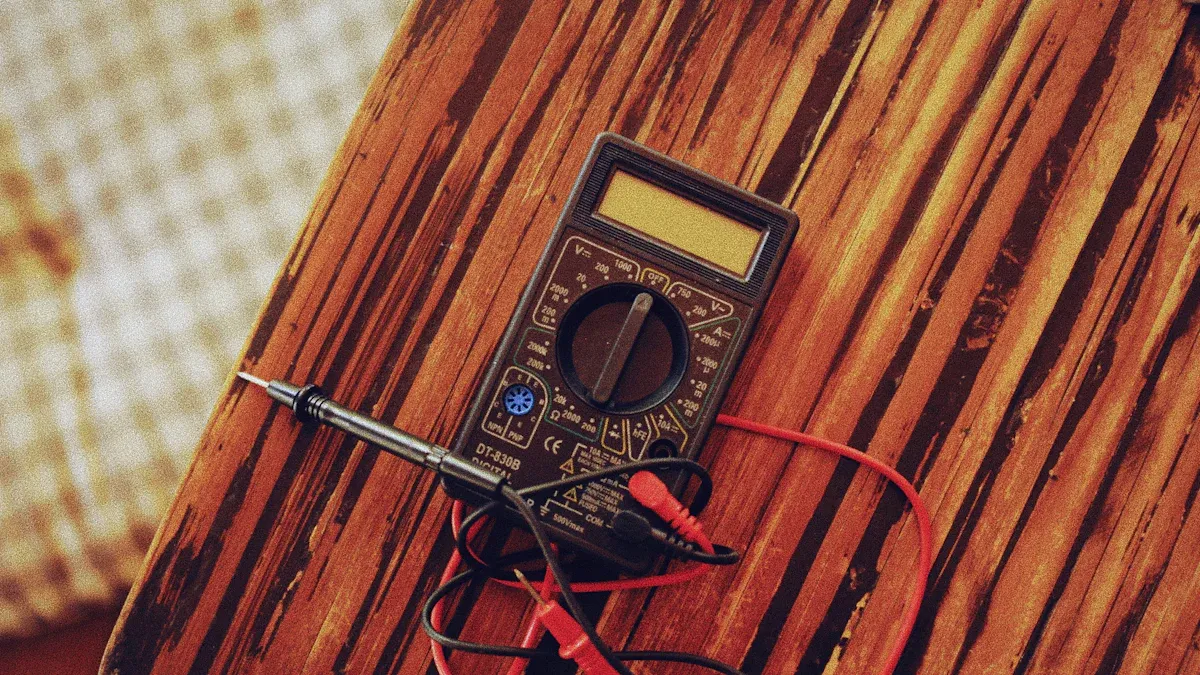
Set your multimeter to the resistance (Ω) setting. This mode allows you to check for continuity and measure the resistance of the heating element. Most digital multimeters have a dial or button for this function. Make sure the probes are clean and securely connected to the meter.
Placing probes on the element terminals
Touch one probe to each terminal on the heating element. Hold the probes steady to get a stable reading. You do not need to worry about which probe goes on which terminal because resistance is not polarity-sensitive. If your water heater has two heating elements, repeat this process for both.
📝 Ghi chú: Do not let the probes touch anything except the terminals. Contact with other metal parts can affect your results.
解读热水器测试结果
What a good resistance reading looks like
A properly functioning hot water heater element typically shows a điện trở từ 10 đến 30 ohm. This range indicates the element can heat water efficiently. If your multimeter displays a value within this range, your element is likely in good condition.
Signs of a faulty element (open circuit, zero resistance)
If your multimeter shows a reading of zero or infinite resistance (often displayed as “OL” or “Open Loop”), you have a faulty heating element. Zero resistance means the element has shorted internally. An open circuit means the element has broken and cannot conduct electricity. Either result means you need to replace the element.
Checking for grounding issues
You should also check for continuity between each terminal and the metal tank. Place one probe on a terminal and the other on the bare metal of the tank. If you get any reading other than infinite resistance, the element has grounded out. A grounded element can cause the circuit breaker to trip and may damage your hot water heater. Replace any element that fails this test.
✅ 专业建议: 始终 test both heating elements if your water heater has two. A problem with either one can affect your hot water supply.
Double-Checking for Safety During Testing
Ensuring no power is present
You must always confirm that no electricity flows to your hot water heater before you begin testing. Start by switching off the correct circuit breaker. Keep the breaker off until you finish all testing and replace every cover. Use a voltage tester to check the terminals and wires. This step ensures you do not work on a live circuit.
⚡ Mẹo: Never rely on memory or labels alone. Always use your voltage tester to verify the absence of power.
Wear insulated gloves to protect your hands from electrical hazards. Put on safety glasses to shield your eyes from dust or debris when you remove covers or insulation. These precautions help you avoid injury and maintain a safe workspace.
Avoiding accidental contact
When you disconnect wires from the heating element, make sure the wires do not touch each other or any metal parts. This practice prevents short circuits and protects both you and your equipment. Place the wires aside and use tape if needed to keep them separated.
Remove metal covers and insulation carefully. Set screws and panels in a safe place so you can reinstall them after testing. After you finish, replace all covers before you restore power to the unit. This step keeps internal components protected and reduces the risk of accidental contact in the future.
- Always keep these safety checks in mind during and after testing:
- Turn off the power at the circuit breaker before starting any work.
- Use insulated gloves and eye protection.
- Prevent wires from touching each other or metal surfaces.
- Remove and replace covers with care.
- Restore power only after all covers are securely in place.
- Consult a professional if you feel unsure about any step.
🛡️ Ghi chú: Prioritize safety at every stage. If you have any doubts about the process, contact a licensed technician for assistance.
What to Do If Your Hot Water Heater Element Fails the Test
Thay thế bộ phận máy nước nóng bị lỗi
Choosing the right replacement
When you discover a burned-out element in your hot water heater, you need to select a replacement that matches your unit’s specifications. Check your water heater’s manual or the label on the tank for the correct wattage and voltage. Most residential models use either 3,500, 4,500, or 5,500-watt elements. You should also confirm the length and type—screw-in elements are most common, but some older units use bolt-in styles. Bringing the old element to the hardware store can help you find an exact match.
Mẹo: Always purchase a new gasket with your replacement element to prevent leaks after installation.
Basic replacement steps
You can replace the element by following a clear process. First, ensure the power remains off at the breaker. Drain the tank below the level of the element if you have not already done so. Use an element wrench or a suitable socket to unscrew the old heating element. Remove it carefully and clean the opening. Install the new element with the gasket in place, tightening it securely. Reconnect the wires as you noted earlier, then refill the tank and check for leaks. Once you confirm everything is dry and secure, restore power and monitor the water heater for proper operation.
⚠️ 警告: Attempting to replace the element without professional assistance carries several risks:
- Electrical hazards, including shock or incorrect wiring, can cause overheating or fire.
- DIY repairs may void your water heater’s warranty.
- Improper installation can lead to water leaks and property damage.
- Amateur repairs often take longer and may result in costly mistakes.
何时应为热水器寻求专业帮助
Signs of more complex issues
You should contact a licensed technician if you notice persistent issues after you replace the element. Problems such as inconsistent water temperature, sediment buildup, or unusual noises often indicate deeper faults. Leaks, pilot light problems, or a faulty pressure relief valve require professional diagnosis and repair. These issues can affect the safety and efficiency of your water heater.
涉及电气或管道的问题
You must prioritize safety when working with electrical or gas-powered appliances. If you feel uncertain about any step, or if you encounter wiring that looks damaged or unfamiliar, call a professional. Gas models present additional risks, such as gas leaks or carbon monoxide exposure. Professionals have the training and experience to repair your water heater safely and ensure compliance with warranty requirements. Their expertise can also help you avoid further damage and extend the lifespan of your unit.
🛠️ Ghi chú: Professional repair services can save you time and money by preventing future issues and ensuring your hot water heater operates reliably.
Reassembling and Restoring Your Hot Water Heater
Putting the Water Heater Back Together
Reinstalling insulation and panels
After you finish testing or replacing the element, you need to restore your water heater to its original condition. Start by placing the insulation back over the thermostat and element. Make sure the insulation covers all exposed wiring and components. This step helps maintain energy efficiency and protects the internal parts from dust and moisture.
Next, align the metal access panel with the opening. Insert the screws and tighten them securely. Use a screwdriver that fits the screws to avoid stripping them. If your model has a plastic cover, snap it back into place before reinstalling the metal panel. Keeping all covers in place ensures the safety of anyone near the unit and prevents accidental contact with electrical parts.
复查所有连接
恢复供电前,请检查您在操作过程中接触过的每个连接。确认电线已牢固连接在加热元件端子上。轻轻拉动每根电线以确保其不会松动。检查该区域是否有任何散落的电线或裸露的金属。如果发现任何异常,请在继续操作前予以纠正。.
🛡️ Mẹo: 花点时间再次查看您的接线参考照片。这项快速检查有助于避免错误,并确保热水器安全运行。.
恢复热水器供电
安全地重新合上断路器
为热水器恢复供电时,您必须遵循谨慎的操作流程。首先,在您 按下温控器上的复位按钮. 时,确保电源保持关闭状态。此步骤为设备的安全运行做好准备。复位温控器后,返回配电箱并将断路器切换到“开启”位置。.
执行此操作前,请检查是否存在任何电气问题迹象。检查断路器是否跳闸、有无烧焦气味或异常噪音。如果发现任何这些警告信号,请立即停止并联系专业人员。安全始终是第一位的。.
Ghi chú: 务必使用 非接触式电压测试仪 电压测试仪确认设备在恢复供电前后均处于安全状态。.
监测运行状况
恢复供电后,请倾听加热元件启动的声音。该声音表明热水器正在按预期工作。等待至少30分钟,然后检查附近水龙头是否有热水流出。检查检修口面板周围区域是否有泄漏或异常发热。如果发现滴水或闻到烧焦味,请关闭电源并联系技术人员。.
重新组装后监测热水器的快速检查清单:
- 倾听加热元件启动声。.
- 30分钟后检查是否有热水。.
- 检查是否有泄漏或烧焦气味。.
- 观察断路器是否有跳闸迹象。.
遵循这些步骤,有助于确保您的热水器在维护后安全高效地运行。.
Ngăn ngừa các vấn đề về máy nước nóng trong tương lai
热水器定期维护
Xả sạch bể chứa
定期冲洗热水器水箱可以预防许多常见问题。. 硬水产生的水垢和矿物质沉积物 通常会积聚在水箱底部。这些沉积物会形成绝缘层,迫使加热元件更努力工作并降低效率。随着时间的推移,水垢可能导致过热、腐蚀,甚至造成水箱或元件过早损坏。.
Mẹo: 将花园软管连接到排水阀,每年至少排空水箱一次. 。如果您生活在硬水地区,建议每六个月冲洗一次。这个简单的步骤可以清除沉积物,帮助您的热水器高效运行。.
定期检查元件
年度热水器维护 应包括测试加热元件和温控器。您需要确保这两个部件功能正常。如果及早发现元件故障,可以避免热水意外中断和昂贵的维修。开始任何检查或维护前,务必关闭电源。.
MỘT 典型的维护检查清单 包括:
- 对于电热水器,在断路器处关闭电源。.
- Xả sạch bể để loại bỏ cặn bẩn.
- 检查阳极棒是否腐蚀,必要时进行更换。.
- 检查所有连接和阀门是否泄漏。.
- 测试温度压力安全阀。.
- 检查加热元件是否磨损或损坏。.
遵循这些步骤可以延长热水器的使用寿命,并降低突发问题的风险。.
识别热水器的早期预警信号
监测水温
您应注意水温的变化。如果您发现水温不如往常热或出现意外波动,这可能表明加热元件或温控器存在问题。持续监测水温有助于您在问题变得严重之前及时发现。.
- 将温控器设置在120°F至140°F之间以获得最佳性能。.
- 水温突然下降通常表明元件故障或沉积物积聚。.
注意异常噪音
异常噪音,如爆裂声或嘶嘶声,通常表明沉积物积聚或元件故障。这些声音意味着加热元件正艰难地透过矿物质层加热水。忽视这些噪音可能导致更严重的问题和昂贵的维修。.
如果您听到持续噪音或发现泄漏,请联系专业人员进行检修。早期干预可防止进一步损坏,确保热水器平稳运行。.
定期维护和早期发现问题可确保您的热水器高效运行。您可以节省能源成本,并避免意外故障。持续的维护还能延长设备的使用寿命,使热水器维护成为一项明智的投资。.
使用万用表测试 热水器加热元件在遵循正确步骤操作时是安全可靠的。 请务必使用合适的工具,并采取以下基本安全预防措施:
- 在断路器处关闭电源,并用电压测试仪确认.
- 更换前将水箱排水至元件水位以下.
- 恢复供电前完全注满水箱,以防止干烧。.
- 安装后固定所有盖板并检查是否泄漏。.
美国环境保护署和能源部建议每年进行一次专业维护 以确保可靠性能。如果您不确定或遇到问题,请联系合格的技术人员。.
Câu hỏi thường gặp
应该多久测试一次热水器加热元件?
您应每年测试一次热水器加热元件。定期测试有助于及早发现问题并保持高效运行。如果您注意到水温或供水发生变化,请立即测试元件。.
可以不排水箱就测试热水器加热元件吗?
可以,您可以在不排水箱的情况下测试元件。仅当您计划更换元件或测试期间发生漏水时,才需要排空水箱。.
什么电阻读数表示元件工作正常?
健康的元件通常显示电阻在10到30欧姆之间。如果您的万用表显示值在此范围内,则您的元件工作正常。.
自己测试热水器加热元件安全吗?
如果您关闭电源并使用适当的安全装备,可以安全地测试元件。接触任何电线前,务必用电压测试仪再次确认。.
如果热水器持续导致断路器跳闸该怎么办?
Báo động:
如果断路器反复跳闸,请停止使用热水器并测试元件是否存在故障。元件接地或短路通常会导致此问题。如果问题持续存在,请联系持证技术人员。.
可以不借助专业帮助更换热水器加热元件吗?
如果您遵循安全步骤并使用正确的工具,可以自行更换元件。如果您不确定或发现电线损坏,请致电专业人员以避免风险。.
检测热水器加热元件需要哪些工具?
- Đồng hồ vạn năng
- Tua vít
- Máy kiểm tra điện áp
- Găng tay cách nhiệt
- Kính bảo hộ
在开始前请准备好这些工具。充分的准备工作有助于您安全、高效地进行操作。.