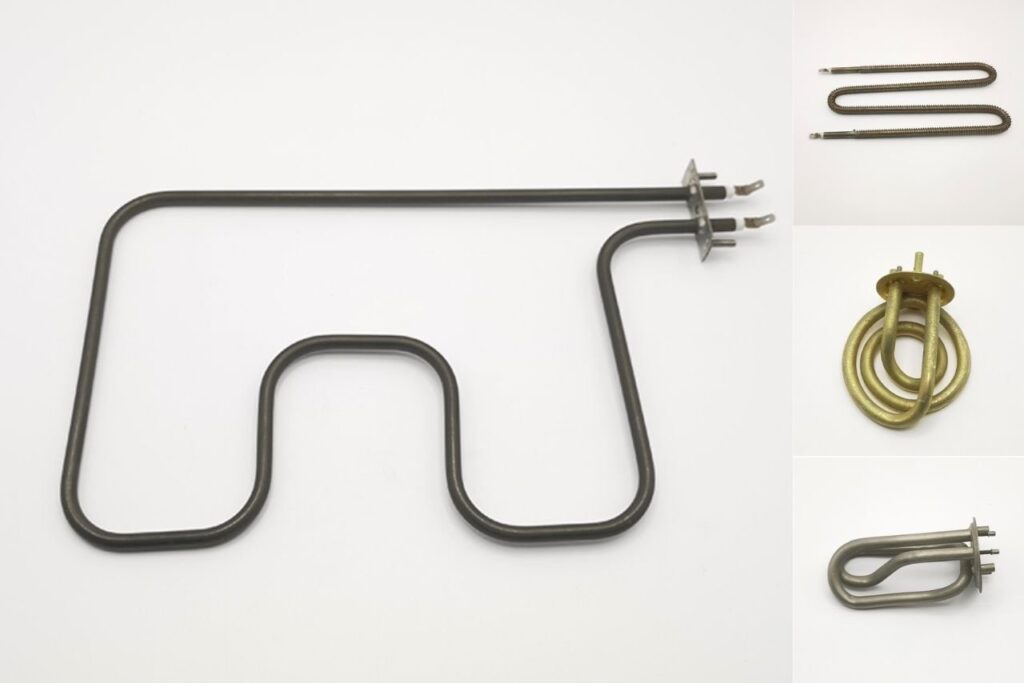
The transition from a high-temperature wash to a sterile, bone-dry finish is the most energy-intensive phase of a dishwasher’s operation.
When your dishes remain damp, the failure is rarely a mystery of mechanical action; it is almost always a breakdown in the thermal conversion system. Grounded in the manufacturing expertise of Camewould (Jin Zhong) a premier global 加热元件制造商 with over 40 years of experience this technical guide analyzes the specific reasons why an Thanh gia nhiệt fails to dry and how to implement a professional-grade fix.
Technical Analysis Directory
I. The Physics of Dishwasher Drying Cycles
Modern dishwashers utilize two primary methods for drying: evaporative condensation và radiant heating. 。 Thanh gia nhiệt is the core of the latter. During the final 20 C30 minutes of a cycle, the element energizes, heating the interior air to approximately 150 F.
This heat facilitates two things:
- Thermal Energy Transfer: Heat is transferred to the dishes, increasing the kinetic energy of water molecules on their surface, causing them to turn into vapor.
- The “Sheeting” Effect: When combined with rinse aid, the surface tension of the water is reduced, allowing it to slide off the dishes before the heat evaporates the remaining thin film.
II. Continuity Failure: The Broken Resistive Circuit
MỘT 管状加热元件 is essentially a 镍铬合金 wire coiled inside a metal sheath. The most common reason for a failure to dry is a physical break in this internal wire. This is known as a loss of 电气通路.
Diagnostic Verification
To confirm this at home, use a digital multimeter. A functional element from an ISO9001-certified 加热元件工厂 should show a specific resistance range. If the reading is infinite (O.L.), the internal coil is snapped, often due to thermal fatigue from years of expansion and contraction.
Standard Resistance Diagnostics for Dishwasher Elements
| 0或OL | 状态判定 | 含义 |
|---|---|---|
| 15 C 30 | Healthy | Element is fine; check wiring or board. |
| Infinite (O.L.) | 元件内部灯丝断裂,中断电路。 | Coil is broken; replace element. |
| 0 C 5 | Short Circuit | Ground fault; potential fire hazard. |
III. Calcification: The Silent Insulator
In regions with hard water, calcium and magnesium deposits (scale) build up on the element sheath. This scale acts as a thermal insulator. While the element is drawing full power, the heat cannot penetrate the layer of rock effectively enough to heat the air or water.
This causes two issues:
- Poor Drying: The radiant energy is trapped within the element.
- Overheating Failure: Because the heat cannot escape, the internal 氧化镁(MgO) insulation and the NiCr wire reach temperatures far exceeding their design limit (800 C C1200 C), eventually causing the element to “pop” or pit.
IV. External Factors: Thermostats & Rinse Aids
If the element tests positive for continuity, the fault likely lies in the peripheral control systems.
- High-Limit Thermostat: This safety component sits on the bottom of the tub. If it is faulty, it will “trip” and cut power to the element at a temperature much lower than 150 F, preventing the drying phase from completing.
- Rinse Aid Shortage: Without rinse aid, water forms droplets rather than a flat sheet. Even a perfectly functioning element cannot evaporate large drops of water in the allotted time.
- Control Board Relay: The relay that switches the heater “ON” may have charred contacts. You may hear the dishwasher “click” for the dry cycle, but no voltage is actually sent to the element.
V. Engineering Excellence: MgO Density and Sheath Alloys
At **Camewould Electrical Technology**, we ensure our components exceed domestic requirements. Our elements feature high-purity compressed MgO loaded via precision vibration equipment. This ensures maximum thermal conductivity, which is essential during the high-stress “dry” phase where the element is not cooled by water.
Furthermore, our Giải pháp gia nhiệt đúc khuôn provide a secondary layer of protection against chemical corrosion and mechanical damage, maintaining a thermal conversion efficiency of 98% throughout the component’s 5,000+ hour lifespan.
VI. Expert Troubleshooting FAQ
Q1: Why does my dishwasher finish the cycle but the dishes are cold and wet?
This is a classic sign of a failed Thanh gia nhiệt or a blown thermal fuse. If the element is cold to the touch immediately after a cycle ends, it was never energized. Perform a multimeter test to verify continuity.
Q2: Can I clean an element that has white buildup, or must it be replaced?
If the buildup is light, running a cycle with a citric-acid based cleaner can dissolve the scale. However, if the element has pitting or “blisters,” it is a sign of internal structural damage and must be replaced to prevent a ground fault.
Q3: Why does my dishwasher dry some dishes but leave plastic ones wet?
Plastic has low **热质量**。 and doesn’t hold heat as well as ceramic or glass. This is normal. However, if even your ceramic plates are wet, the Thanh gia nhiệt is likely the culprit.
Q4: Does Suli Technology produce elements for brands like Whirlpool or Bosch?
Camewould maintains a monthly production capacity of 3 million units, supplying high-precision heating cores to many global brands. Our elements meet VDE, UL, and CE standards, ensuring they are identical in quality to original OEM parts.
Q5: How can I tell if my control board is the problem instead of the element?
If you have a voltmeter, check for 120V (or 240V depending on region) at the heater terminals during the “Heated Dry” portion of the cycle. If you see voltage but the element stays cold, the element is dead. If you see 0V, the control board or a thermostat is the problem.
Q6: Are hidden heating elements better for drying?
Hidden elements (located in a separate pump-linked chamber) are safer because they don’t melt plastic items that fall to the bottom. However, they rely more on evaporative condensation and require a functional vent fan to dry as effectively as an exposed radiant element.
Q7: Is it normal for my element to glow red during the dry cycle?
Yes. To heat the air effectively, the element must reach very high surface temperatures. This is why it is critical to ensure no plastic items or food debris are touching the element.
Global Engineering, Industrial Trust
Supplying 3 million units monthly to the world’s leading brands, Camewould is the expert in clean heat technology. Trust our 40 years of precision to make your life warmer.
References & Technical Data Sources:
- [1] Camewould Electrical Technology – Technical Manual for Tubular Heating Components (2025). jinzho.com
- [2] Wikipedia – Physics of Radiant Heat and Evaporation. en.wikipedia.org
- [3] IQS Directory – Troubleshooting Industrial and Domestic Heating Elements. iqsdirectory.com
- [4] Sears Home Services – Why Your Dishwasher Won’t Dry Dishes. searshomeservices.com