サウナ 電熱線 2025年のテクノロジーは、サウナ体験を以下の要素を通じて変革します 高度なスマート制御, 、環境に優しい素材、そしてエネルギー効率です。以下のような企業が 金中電熱 先導役として 発熱体メーカー, 、革新性に焦点を当てながら 家電製品の加熱素子. をリードしています。現代のサウナ革新は、精密な温度制御、急速加熱、スマートホーム技術とのシームレスな統合を可能にするハイブリッドおよびスマートシステムを特徴としています。没入型ウェルネス体験への高まる需要がこの変化を推進しており、 ハイブリッドヒーター と赤外線技術が市場を再形成しています。発熱体の進歩により、ユーザーはカスタマイズされたサウナ環境を享受し、リラクゼーションの新たな基準を確立しています。.
2025年のサウナ発熱体における主要トレンド

2025年のサウナ業界は、以下の要素によって推進される急速な変革を示しています 高度な技術, 、持続可能な素材選定、そしてエネルギー効率と素材への注力です。これらのトレンドは次世代のサウナ発熱体設計を形成し、ユーザーによりスマートで持続可能、かつエネルギー効率の高い暖房システムを提供します。.
サウナ発熱体設計における先進素材
グラフェン発熱体
グラフェン 発熱体は、現代のサウナにおける画期的な 革新を象徴します。この素材は卓越した熱伝導性を提供し、迅速かつ均一な熱分布を可能にします。メーカーは、その軽量構造と耐久性からグラフェンを採用し、商業用および家庭用サウナの両方に対応しています。グラフェンの効率性はエネルギー消費を削減し、業界の持続可能でエネルギー効率の高い設計への推進と一致しています。.
セラミック複合材技術
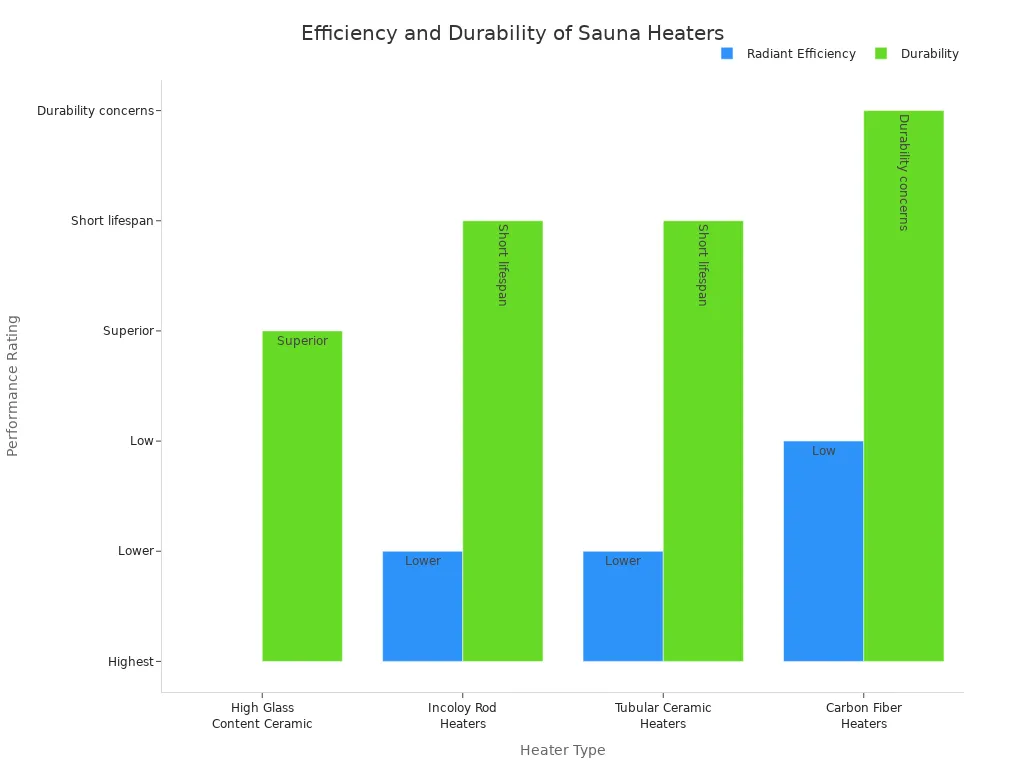
セラミック複合材技術 は、サウナ発熱体開発において依然として主要な位置を占めています。セラミックヒーターは遠赤外線波長を放射し、対象を絞った温熱を提供します。しかし、研究によれば、セラミックチューブは局所的なホットスポットや不均一な加熱を生じる可能性があります。その耐用年数は5,000時間から10,000時間ですが、他の先進素材と比較して脆弱で耐久性に劣ります。これらの限界にもかかわらず、セラミック複合材は高い放射効率を提供し、サウナ全体のエネルギー効率に貢献します。.
赤外線加熱パネル
赤外線加熱パネル は、低温で動作しながら治療効果をもたらす能力により人気を博しています。これらのパネルは、航空宇宙グレードの炭素繊維や微結晶ガラスなどの先進素材を使用し、均一な熱分散と低電磁界(EMF)放出を実現します。以下の図表は、いくつかの サウナ発熱体 タイプの放射効率と耐久性を比較しています:
ステンレス鋼 は、2025年においてサウナ発熱体の最も一般的な素材であり続けています。耐久性、耐腐食性、およびメンテナンスの容易さを提供します。Harvia Cilindro ProやHUUM Hiveなどのモデルは、堅牢な性能と長寿命のためにステンレス鋼を利用しています。これらの特性は、保温性と蒸気品質を向上させ、エネルギー効率の高い暖房システムを支えています。.
スマートで接続されたサウナ発熱体の革新
スマートサウナ技術の最前線には、
IoT統合を備えたスマート加熱コイルを開発しました。 IoT統合による加熱制御が位置しています。デジタルサーモスタットとAI搭載機能により、温度と湿度のリアルタイム調整が可能になります。ユーザーはモバイルアプリやスマートスピーカーを介した遠隔操作の恩恵を受け、サウナ体験を効率化します。IoT対応システムはリアルタイムデータを収集し、クラウドと同期して使用習慣に関する洞察を提供し、予測メンテナンスとエネルギー最適化を支援します。.
- AI駆動機能 は、生理的反応に基づいて加熱スケジュールをパーソナライズします。.
- スマートホームシステムとの統合により、音声制御と自動化が可能になります。.
- デジタル制御システムは、加熱をインテリジェントに調整することでエネルギー使用を最適化します。.
アプリベースおよび遠隔制御
アプリベースおよび遠隔制御は、現代のサウナ発熱体設計において標準となっています。これらの制御により、ユーザーはどこからでも温度、湿度、セッション時間を管理できます。遠隔管理はファームウェアアップデートやメンテナンスアラートをサポートし、最適なパフォーマンスとエネルギー効率を確保します。AI搭載ホームセラピーブースなどのコンパクトなスマートサウナ設計は、狭い居住空間に対応しながら、パーソナライズされたセラピーを提供します。.
AI支援加熱スケジュール
AI支援加熱スケジュール は、ウェルネス効果を最大化し、エネルギー使用を最小限に抑えます。これらのシステムは、環境条件やユーザーの好みに適応し、加熱パラメータを自動的に調整します。家庭用エネルギーシステムとの統合により、再生可能エネルギーが豊富な時間帯やオフピーク時にサウナを稼働させ、エネルギー効率をさらに向上させます。生体センサーを用いた高度な健康モニタリングは、バイタルサインを追跡し、サウナ設定をリアルタイムで調整することで、安全性と快適性を高めます。.
サウナ加熱における持続可能でエネルギー効率の高い設計
太陽光発電サウナ発熱体
太陽光発電サウナ発熱体は、業界の持続可能性への取り組みを反映しています。これらのシステムは再生可能エネルギーを活用し、従来の電力源への依存を低減します。スマート制御やプログラム可能なタイマーとの統合により、ユーザーはエネルギー使用を最適化し、光熱費を最小限に抑えることができます。太陽光対応は、持続可能でエネルギー効率の高い設計への広範なトレンドを支えています。.
高性能断熱材とドアシーリング
高性能断熱材とドアシーリング は、エネルギー効率と素材選定において重要な役割を果たします。サウナの壁、床、天井における高品質な断熱材は、熱を保持しエネルギー消費を低減します。適切に密閉されたドアと窓は熱損失を防ぎ、サウナ発熱体が効率的に動作することを保証します。熱回収機能付き換気システムは、排気空気から熱エネルギーを捕捉し、流入空気を予熱することで効率をさらに向上させます。.
環境に優しい製造とリサイクル素材
環境に優しい製造とリサイクル素材の使用は、持続可能な素材選定の中心となっています。メーカーは、環境への影響を低減するために、竹、モジュール式プレハブ工法、リサイクル金属を優先しています。これらの慣行は、規制上の圧力と持続可能な製品に対する消費者需要に沿ったものです。以下の表は、現代のサウナ発熱体と従来モデルのエネルギー消費統計を比較しています:
| サウナタイプ | ヒーター出力(kW) | ウォームアップ時間(分) | ウォームアップ中のエネルギー使用量(kWh) | 30分セッションあたりのエネルギー使用量(kWh) | 年間電気代(週3回使用) |
|---|---|---|---|---|---|
| トラディショナル・エレクトリック | 6-9 | 30-45 | 3-7 | 1.5-2.5 | $95-$130 |
| 赤外線サウナ | 1.5-2.5 | 10-15 | 0.25-0.5 | 0.5-0.8 | $30-$45 |
現代の赤外線サウナ発熱体は、より低い出力レベルで動作し、より速く加熱するため、 従来の電気ヒーターの約3分の1の電力消費 となります。断熱材の品質、サウナのサイズ、ユーザーの行動などの要因もエネルギー使用に影響を与えます。タイマーや遠隔制御を含むスマートサウナ技術は、エネルギー効率をさらに最適化します。.
ヒント 定期的なメンテナンスと適切なサイズ選定 サウナ発熱体のピーク効率を確保し、機器の寿命を延ばします。.
先進素材、スマート技術、そして持続可能でエネルギー効率の高い設計の融合が、2025年のサウナ発熱体における主要トレンドを定義しています。これらの革新は、優れた性能、低エネルギー消費、そしてよりパーソナライズされたサウナ体験を提供します。.
ハイブリッド熱体験とウェルネス統合
従来型加熱と赤外線加熱の組み合わせ
ハイブリッドサウナ加熱技術は、2025年の主要トレンドとして浮上しています。メーカーは現在、従来型と赤外線の発熱体を単一ユニットに組み合わせています。このアプローチにより、ユーザーは 熱体験をカスタマイズ し、両方の加熱方法の恩恵を受けることができます。ハイブリッドサウナは、通常120°Fから150°Fの間の中程度の温度で動作します。ユーザーは乾式赤外線熱と湿式蒸気熱を切り替えることができ、単一タイプのサウナでは得られない柔軟性を獲得します。.
- ハイブリッドサウナは、 従来型と赤外線加熱の両方の 健康効果を組み合わせて提供します。.
- 筋肉の弛緩、呼吸器系の健康改善、免疫機能の向上、血行促進をサポートします。.
- この技術により発汗がより迅速に促され、肌の健康改善とストレス軽減に寄与する可能性があります。.
- ハイブリッドモデルには、レッドライトセラピーやクロモセラピーなどの高度な機能が搭載されることが多く、ウェルネスをさらに向上させます。.
- 1台のユニットに両方の加熱方式を備える利便性により、パーソナライズされたウェルネス体験が可能になります。.
サウナの種類別のユーザー満足度比較は、ハイブリッドモデルの多用途性と快適性を浮き彫りにしています:
| サウナタイプ | 熱強度 | 一般的なセッション時間 | ユーザーの快適性とアクセシビリティ | 社交的利用 vs 単独利用 | ユーザー満足度のハイライト |
|---|---|---|---|---|---|
| 従来型 | 高温(150-195°F) | 短時間(15-20分) | 強い熱、熱に敏感なユーザーには困難 | 大型、社交的、文化的、共同利用 | 本格的で強い熱と社交的な交流が好まれる |
| 赤外線 | 低温(120-140°F) | 長時間(30-45分) | 穏やかな熱、呼吸がしやすい、顔の不快感が少ない | 小型、プライベート、単独でのリラックスに適する | 快適性、長時間のセッション、熱感受性への対応が好まれる |
| ハイブリッド | 中温(120-150°F) | 変動あり | 従来型と赤外線を組み合わせ、カスタマイズ可能な熱 | 多用途、社交的利用と単独利用の両方をサポート | 多用途性、強化された機能、快適性が評価される |
ハイブリッドサウナ技術は社交的利用と単独利用の両方をサポートし、多様なユーザーニーズに対応する柔軟な選択肢となります。熱と湿度レベルを調整できる能力は全体的な満足度を高め、パーソナライズドウェルネスにおける現在のトレンドと一致します。.
ソルトセラピーとアロマセラピーの統合
サウナ加熱技術における最近のトレンドには、ソルトセラピーとアロマセラピーの統合が含まれます。ソルトセラピー(ハロセラピーとも呼ばれる)は、微細な塩粒子をサウナ内の空気に分散させるものです。このプロセスは呼吸器系の健康と肌の健康をサポートする可能性があります。アロマセラピーシステムは、加熱された空気にエッセンシャルオイルを注入し、心を落ち着かせ、治療効果のある環境を創り出します。.
- ソルトセラピーは気道を浄化し、炎症を軽減するのに役立つ可能性があります。.
- アロマセラピーはリラクゼーションとストレス解消を促進できます。.
- 多くのハイブリッドサウナモデルには現在、塩とエッセンシャルオイルの両方に対応した内蔵ディスペンサーが搭載されています。.
これらのウェルネス統合機能は、サウナセッションを多面的な体験へと変え、身体的および精神的な健康の両方をサポートします。.
マイルドスチームとマルチセンサリー機能
メーカーは消費者の快適性への需要に応え、現代のサウナ加熱システムにマイルドスチームとマルチセンサリー機能を追加しています。. スチームジェネレーターは 湿潤な環境を生成し、関節を和らげ、筋肉を弛緩させます。クロモセラピー照明や没入型サウンドシステムなどのマルチセンサリー機能は、リラクゼーションをさらに高めます。.
注記:マルチセンサリーサウナ技術は、体をリラックスさせ体温を調節することで、睡眠の質を向上させる可能性があります。.
ハイブリッドサウナの加熱エレメントは現在、熱、湿気、光、音を組み合わせた包括的なウェルネス体験を提供します。これらの機能は、スマートウェルネス技術における最新のトレンドを反映しています。.
サウナ加熱エレメント技術における強化された安全機能
自動オフ機能と過熱保護
サウナ加熱技術において安全性は引き続き最優先事項です。自動オフ機能と過熱保護システムは2025年において標準装備となっています。これらの機能は温度を監視し、安全な限界値を超えた場合に加熱エレメントを自動的に停止します。これにより、火災の危険性や電気的故障のリスクが低減されます。.
- ETL、UL、CSA、CE、TÜV認証は、 国際安全基準への準拠を確認します。.
- 資格を有する専門家による定期的な電気点検は、安全性と信頼性の維持に役立ちます。.
UL認証は、, 特に、サウナの電気部品が厳格な安全試験に合格したことを示します。この認証は、感電や火災の危険性のリスクを低減し、ユーザーに安心感を提供します。.
高度な温度調節システム
現代のサウナ加熱技術は、高度な温度調節システムを使用して、一貫性のある安全な熱レベルを維持します。最新の UL 60335-2-53規格は、, 従来のUL 875に代わるもので、国際安全ガイドラインに準拠し、使いやすさを向上させます。.
| アスペクト | UL 875(旧規格) | UL 60335-2-53(2025年規格) |
|---|---|---|
| 高温トリップ | 低い閾値(約360°F/182°C)、配線と部品を保護するために保守的 | 高い閾値、不要なトリップを減らし、使いやすさを向上 |
| サーモスタットセンサーの位置 | ヒーターの真上、天井から6インチ(室温に対して不正確) | 座席エリアの上方(ヨーロッパ方式)、より正確な温度制御 |
| 換気要件 | センサーを冷却するため、ヒーターの後方または下方に給気口が必要 | より柔軟なベント配置、気流と設置オプションを改善 |
| 温度測定 | ヒーター上部のセンサーに限定され、自然なサウナ温度が制限される | 座面ベンチでの測定に対応し、室温を自然に90°C(約194°F)以上にすることが可能 |
| 安全性と文書化 | 旧版UL 875要件に基づく | 国際規格IEC 60335に準拠し、警告表示、IP等級、設置ガイドライン、赤外線特有の安全規則を更新 |
これらの改善により、より正確な温度制御と安全な運転が可能となり、サウナ加熱技術の最新動向を反映している.
子どもとペットの安全に関する革新
メーカーはサウナ環境における子どもとペットの保護のために、いくつかの革新を導入している。これには、低温表面、不正操作防止機能付きコントローラー、予期せぬ侵入を検知するモーションセンサーが含まれる。スマート技術により、子どもやペットが無監視でサウナに入った場合、コントロールをロックしたり、加熱システムを停止したりすることができる。.
- 子どもとペットの安全機能は、偶発的な火傷や傷害のリスクを低減する。.
- スマートセンサーとアプリベースの通知により、安全上の懸念事項をリアルタイムでユーザーに知らせる。.
これらの進歩は、業界の安全性とユーザーの健康への取り組みを示し、2025年のサウナ加熱技術における新たな基準を確立している。.
サウナ加熱エレメントの革新がリラクゼーションに与える影響
加熱におけるより精密な温度制御
リアルタイム調整とモニタリング
最新のサウナ加熱エレメントは、高度なデジタルパネルとスマートセンサーを通じて精密な温度制御を実現する。. 電気式サウナヒーターは 電気抵抗を利用してサウナストーンを加熱し、ユーザーが正確な温度とセッション時間を設定できるようにする。多くの場合サウナ室外に設置される高感度電子機器は、信頼性と寿命を向上させる。リアルタイムモニタリング機能には、 AI搭載の適応型加熱 および気候制御システムが含まれ、ユーザーの好みや生理的反応に基づいて自動調整を可能にする。これらのシステムはエネルギー使用を最適化し、安定したサウナ状態を維持することで、全体的なサウナ体験を向上させる。.
- デジタル温度表示により 正確なモニタリングが提供される。.
- Wi-Fi対応コントロールにより、遠隔操作と調整が可能。.
- 予知保全機能により、熱分布を乱す可能性のある故障を防止する。.
サウナ全体での均一な熱分布
リラックスできるフィンランド式サウナ体験には、均一な熱分布が不可欠である。高度な加熱エレメントを備えたプレミアムサウナは、 130~150°F, の最適温度に達し、ユーザーを均一な熱で包み込む。カーボンパネルはセラミックパネルよりも効率的に加熱し、ホットスポットを減らして快適性を向上させる。ふくらはぎ、側面、背面、前面用の追加ユニットなど、戦略的なヒーター配置により均一な暖かさを確保する。床付近と天井付近の吸気口と排気口を含む適切な換気システムは、空気の流れのバランスを整え、温度の不均衡を防ぐ。.
ヒント:換気口が塞がれたり、故障したりすると、空気の流れと熱分布が乱れ、サウナの効果と快適性が低下する可能性がある。.
ユーザーは、 高度なサウナ加熱エレメント が旧来の技術よりも快適で効果的なリラクゼーション体験を提供すると報告している。ハイエンドユニットは超低EMFレベルを特徴とし、より穏やかで安全な熱環境に貢献している。.
カスタマイズ可能な熱プロファイルとウェルネスプログラム
パーソナライズされたリラクゼーションのためのユーザー定義設定
カスタマイズ可能な熱プロファイルにより ユーザーはサウナセッションを個々のニーズに合わせて調整できる。プログラム可能な温度設定とセッション時間を備えたサウナは、パーソナライズされたフィンランド式サウナ体験をサポートする。生理学的研究によると、 遠赤外線サウナセッションは骨格筋温度を上昇させ, 、有益な心血管および代謝適応をもたらす。これらの知見は、特定の健康成果を目的とした受動的加熱法の使用を支持している。.
プリセットされたウェルネスおよびセラピープログラム
プリセットされたウェルネスプログラムは、脳の健康、解毒、長寿効果を最適化する。Sauna Guide Technology™などの技術は、予測型バイオフィードバックを使用して、熱順応とリアルタイムの体温追跡に基づいてセッションをパーソナライズする。ユーザーは、特定のウェルネス成果を最大化するように設計された様々なセラピープログラムから選択できる。このアプローチは、画一的なモデルを超え、ユーザーが最大の効果を得るためにサウナセッションを追跡し最適化することを可能にする。.
| プログラムタイプ | 対象効果 | セッション時間 | 熱プロファイル |
|---|---|---|---|
| 解毒 | 毒素除去 | 30分 | 高温、一定 |
| 心血管 | 心臓の健康 | 20分 | 中温、パルス状 |
| リラクゼーション | ストレス軽減 | 40分 | 穏やか、徐々に上昇 |
より静かで快適なサウナ加熱運転
静音加熱技術と振動低減
高度な加熱技術は静かに動作し、振動と騒音を最小限に抑える。カーボンおよびセラミックパネルは旧型モデルよりも発生音が少なく、静かなサウナ環境に貢献する。静音動作により、ユーザーは気を散らされることなくリラックスでき、より長く快適なセッションをサポートする。.
改善された空気質と換気
適切な換気システムは、空気の流れのバランスを整え、最適な湿度を維持することで空気質を向上させる。. 天井付近に設置された湿度センサーは 正確な湿度測定値を提供し、自動調整を可能にする。スマートサウナコントロールは湿度と温度管理を統合し、遠隔調整とリアルタイムモニタリングを可能にする。.
均一な熱による快適性の向上
高級サウナは優れた断熱性と戦略的なヒーター配置により、均一な熱分布を実現します。先進的なサウナは、より深く浸透する遠赤外線熱を提供し、リラックス効果が高く、不快感を引き起こしにくいとユーザーは感じています。ハイエンドモデルでは、めまいや過熱を感じることなく、より長く快適なセッションが可能です。.
注記:先進的な加熱技術は、旧来の技術と比較して、リラクゼーション中の快適性、熱の一貫性、ユーザー満足度を大幅に向上させます。.
2025年におけるサウナ加熱エレメント選択のためのユーザー考慮事項
適切なサウナ加熱エレメントの選び方
サウナのサイズと使用目的に応じたヒータータイプの選定
最適なサウナヒーターの選択は、サウナのサイズと使用目的に関連するいくつかの要因に依存します。利用者はサウナ室の容積を立方フィートで測定し、一般的な基準を適用する必要があります: 45~50立方フィートごとに1kWのヒーター出力. 。大型のサウナや寒冷地にあるサウナでは、効率とエネルギー性能を維持するためにヒーター容量の増強が必要です。屋外または断熱されていないサウナでは、ヒーターサイズを25~30%増加させることで熱損失を補償します。赤外線サウナは、ターゲットを絞った熱伝達方式のため、通常より小型のヒーターで済みます。電気要件も重要な要素です;; 2kWを超えるヒーターには専用の240ボルト回路が必要. 。適切な換気は均一な熱分布を保証し、持続可能なエネルギー使用を支えます。.
ヒント:効率と省エネルギーを最大化するため、適切なサイジングと安全な設置については専門家に相談してください。.
個人の好みとウェルネス目標の評価
個人のウェルネス目標と好みは サウナヒーターの選択に強く影響します。以下の表は、ユーザーの優先事項に基づく特徴を比較したものです:
| 好み/目標 | 伝統式サウナ | 赤外線サウナ |
|---|---|---|
| 本格的な体験 | 儀式的な蒸気、高温 | 該当なし |
| 蒸気と湿度 | 必須 | 不可 |
| 大量発汗 | 高温 | 穏やかな熱 |
| 呼吸器への効能 | 蒸気を優先 | 該当なし |
| 社交的環境 | 広め、共同利用向き | 小型、個人向き |
| 熱感受性 | 圧倒される可能性 | 耐容性が高い |
| 関節痛緩和 | 該当なし | 赤外線浸透 |
| セッション時間 | 短時間 | 長時間可能 |
| スペース制限 | より広い空間を要する | コンパクト設計 |
| 現代的な機能 | あまり一般的でない | 先進技術 |
| 設置/メンテナンス | より複雑 | 容易、プラグイン式 |
| エネルギー消費量 | より高い | 低消費、急速昇温 |
持続可能なエネルギー効率と最新機能を求める個人は、しばしば遠赤外線サウナを好みます。伝統と 蒸気を重視する方は、従来のサウナ加熱エレメントを選択する場合があります。.
予算、価値、長期的な節約効果
遠赤外線サウナは、従来の蒸気サウナやホットロックサウナと比較して 初期費用が低く、維持費も抑えられます。そのヒーターは最大50年持続可能で、交換コストを最小限に抑え、持続可能なエネルギー効率をサポートします。赤外線モデルは時間当たりの電力消費が少なく、光熱費を低減します。伝統式サウナはヒーターの交換頻度が高く、エネルギー消費量も多いため、長期的なコストが増加します。ポータブルサウナや近赤外線サウナは初期費用が低い場合もありますが、時間の経過とともに維持費が高くなる傾向があります。10年スパンで見ると、遠赤外線サウナは設置、メンテナンス、エネルギー使用、耐久性を考慮した場合、最も費用対効果の高いソリューションを提供します。.
現代的なサウナヒーターのメンテナンスと耐久性
新技術の洗浄と保守要件
定期的なメンテナンスは、サウナヒーターの耐久性と効率を 保証します。推奨される方法は以下の通りです:
- 電気ヒーター専用のサウナ石のみを使用し、通気性を確保するため石を緩く配置してください。.
- 腐食を防ぐため、柔らかい布と専用クリーナーで定期的にヒーター外装を清掃してください。.
- 数か月ごとに石のひび割れや摩耗を点検し、均一な加熱のために配置を変えてください。.
- ヒーター周辺および内部のほこりやごみを掃除機で取り除き、性能と安全性を維持してください。.
- ヒーター素子の摩耗を確認し、必要に応じて交換してください。安全センサーと配線は年1回点検してください。.
- 季節ごとの徹底清掃として、石を取り出して洗浄し、完全に乾燥させ、錆を点検し、取り付けブラケットを締め付けてください。.
- メーカーのガイドラインに従い、許可されていない物質を石に直接注ぐことは避けてください。.
薪焼きサウナストーブは、錆を防止し安全な燃焼を確保するため、 ストーブ本体、燃焼室、煙突の頻繁な点検と清掃が必要です。蒸気サウナは、ミネラル堆積を防ぐため、軟水または蒸留水を使用し、蒸気発生器を定期的に清掃する必要があります。.
先進材料の耐久性と寿命
現代のサウナヒーターは、グラフェン、セラミック複合材、航空機級炭素繊維などの先進材料を使用しています。これらの材料は耐久性を高め、持続可能なエネルギー効率をサポートし、使用寿命を延長します。遠赤外線ヒーター素子は最大50年持続可能であり、セラミックとステンレス鋼部品は堅牢な性能と耐腐食性を提供します。定期的なメンテナンスは、これらの技術の寿命をさらに延ばします。.
保証、サポート、アップグレードオプション
保証およびサポートオプションは、主要メーカー間で異なります。. 以下の表は、保証範囲をまとめたものです:
| メーカー | 保証期間 | 作業補償 | 補償内容 | 除外事項および条件 |
|---|---|---|---|---|
| Heavenly Heat Saunas | 10年間 | 4年間(米国およびカナダ) | 材料、製造上の欠陥、キャビンの完全性 | 不適切な設置、環境による損傷は除外 |
| SalusHEAT | 1年間(部品)、7年間(コア技術)、生涯有償交換 | 対象外 | ヒーター部品、延長有償サポート | 改装、災害、誤用は除外;直接購入のみ |
| Helo (Sauna360) | 5年間(住宅用)、1年間(商業用) | 販売店経由のサポート | 製造上の欠陥、適切な設置が必要 | 承認された石の使用、認定された設置が必要 |
メーカーは、保証を維持するために購入証明と適切な設置を要求します。サポートおよびアップグレードオプションは、ブランドおよび地域によって異なります。ユーザーは保証条件を確認し、効率性と省エネを継続するために、修理は認定サービスに依頼する必要があります。.
2025年のサウナ加熱エレメントの革新は、よりスマートで、より安全で、より持続可能なリラクゼーションを提供します。最近の進歩により、ユーザーは以下のようないくつかの重要な利点を得られます:
- 遠赤外線技術は 解毒、痛みの緩和、ストレス軽減をサポートします。.
- 先進的な加熱エレメントは、正確な温度制御とより深い熱浸透を保証します。.
- スマート調整と熱回収は、快適性を維持しながらエネルギー使用を最適化します。.
- 環境に優しい設計は、再生可能材料と省エネモードを採用しています。.
- サウナは現在、個人の健康目標に合わせたパーソナライズされたウェルネスプラットフォームとして機能します。.
| 優先事項 | 専門家の推奨事項 | ユーザーの優先事項 | ブランド例と特徴 |
|---|---|---|---|
| 安全性 | 認証、無毒素材、自動シャットオフを重視 | 火傷と排出を防止 | HUUM、Harvia |
| エネルギー効率 | 特に赤外線における省エネ設計を強調 | 長期的な節約と環境に優しいオプションを求める | HUUM |
| カスタマイズ | スマートコントロールとパーソナライズ設定を統合 | カスタマイズされた体験と利便性を望む | HUUM(WiFiアプリ)、Amerec(A6タッチコントロール) |
| バリュー・フォー・マネー | 機能と長期的な利点を比較 | コストと耐久性および節約のバランスを取る | Harvia、Amerec |
購入者は、快適性、安全性、価値を最大化するために、先進的な素材、ハイブリッドおよびスマートコントロール、エネルギー効率、統合されたウェルネス機能を優先すべきです。.
よくあるご質問
2025年に利用可能なサウナ加熱エレメントの主な種類は何ですか?
メーカーは、従来の電気式、赤外線式、およびハイブリッド式の加熱エレメントを提供しています。各タイプは独自の利点を提供します。ハイブリッドモデルは、両方の技術を組み合わせてカスタマイズ可能な体験を提供します。ユーザーは、ウェルネス目標とサウナの好みに基づいて最適なオプションを選択できます。.
スマートサウナ加熱エレメントは、どのようにユーザー体験を向上させますか?
スマートサウナ加熱エレメントは、デジタルコントロール、IoT統合、AI支援スケジュールを使用します。これらの機能により、ユーザーはリモートで温度と湿度を調整できます。リアルタイム監視により、各セッションを通じて一貫した熱と安全性が確保されます。.
現代のサウナ加熱エレメントはエネルギー効率が良いですか?
現代のサウナ加熱エレメントは、先進的な素材とスマートコントロールを使用してエネルギー消費を削減します。高性能断熱材とプログラム可能なタイマーは、効率をさらに向上させます。多くのモデルは再生可能エネルギー源をサポートしており、ユーザーが光熱費を削減し、水の持続可能性を支援するのに役立ちます。.
新しいサウナ加熱エレメントにはどのような安全機能が含まれていますか?
メーカーは、自動シャットオフ、過熱保護、高度な温度調節機能を備えた加熱エレメントを設計しています。クールタッチ表面や耐タンパーコントロールなどの子供およびペットの安全のための革新は、事故を防止し、安全な操作を確保するのに役立ちます。.
サウナのサイズは、加熱エレメントの選択にどのように影響しますか?
サウナのサイズは、必要なヒーター出力を決定します。より広い空間では、効果的な加熱のためにより高いワット数が必要です。適切なサイジングにより、均一な熱分布と最適なパフォーマンスが保証されます。専門家は、加熱エレメントを選択する前にサウナの容積を測定することを推奨します。.
サウナ加熱エレメントは、共同サウナ文化をサポートできますか?
多くの現代サウナはグループ利用に対応し、共同サウナ文化を支えています。ハイブリッドおよび伝統モデルは、しばしば大容量と堅牢な加熱システムを特徴とします。これらの設計は、社会的ウェルネス体験とグループでのリラクゼーションを促進します。.
サウナ技術における最新の水熱トレンドは何ですか?
最近の水熱トレンドには、ハイブリッド熱体験、塩療法、アロマセラピーの統合が含まれます。色彩療法照明没入型サウンドなどのマルチセンサリー機能は、リラクゼーションを高めます。これらの革新により、より没入的で治療的なサウナ環境が創出されます。.