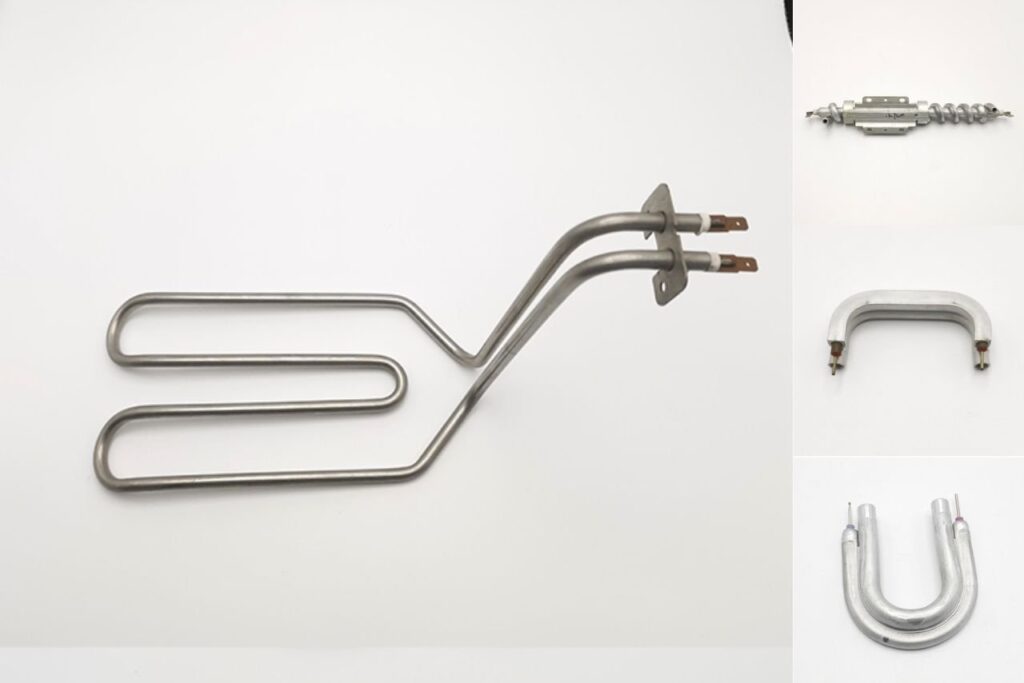
Replacing a water heater element can improve real-world efficiency mainly by restoring proper heat transfer and stable operation especially when the old element is insulated by accumulation de tartre or is partially failing while the biggest efficiency loss to avoid during an upgrade is a preventable installation error: Whirlpool warns that restoring power before the tank is completely full and purged of air can chauffage à sec and burn out the upper element, creating immediate rework and wasted energy.
Air purge requirement
3 minutes
Full-stream purge per Whirlpool
Expected heat-up time
Up to 2 hours
Whirlpool note after power restore
Example heater component price
$209.95
Hudson Reed listing (1000W)
Example component power
1000W
Référencement Hudson Reed
- What better efficiency means for electric water heaters
- When replacing the element is an upgrade (vs. just a repair)
- Efficiency killers you can fix during replacement
- Upgrade-minded replacement workflow (safety-first)
- Element design & materials: why quality affects lifecycle efficiency
- Beyond tanks: how heating tubes, plates, films, and die-cast modules fit in
- FAQ (3)
- Citations et liens externes
In an electric storage water heater, efficiency is often experienced as faster recovery, stable hot-water delivery, and fewer wasted cycles rather than a dramatic reduction in electricity per gallon in a perfectly functioning system. A degraded element can act like a bottleneck: when mineral deposits build up on the sheath, the element runs hotter for the same delivered heat, which can accelerate wear and cause uneven heating.
The practical outcome of replacing a compromised element is typically: more reliable heat transfer, fewer nuisance failures, and reduced need for repeat service. This is an efficiency upgrade in the operational sense less downtime and less rework energy rather than a promise of a fixed percentage reduction without measurement.
- Hot water is inconsistent (short draws, longer recovery time).
- The element has scale, corrosion, or visible deformation after removal.
- There have been repeated failures that suggest mismatch or poor installation practice (e.g., dry firing).
- The tank itself is leaking or structurally compromised.
- Electrical safety components or wiring are damaged beyond a simple reconnection.
- Drainage is blocked by heavy sediment and cannot be safely managed (Whirlpool suggests technician assistance if the tank cannot drain properly).
Whirlpool s warning is explicit: do not energize until the tank is full and air is removed; otherwise the upper element can burn out from chauffage à sec. The required purge method includes running the hot faucet full stream for TROIS MINUTES.
Leaks force drain-and-reseat cycles. Whirlpool instructs cleaning threads, installing the gasket, lubricating it with a drop of dishwashing liquid, and tightening properly. If the leak persists, the tank must be drained again and the gasket inspected and replaced if damaged.
Whirlpool s steps emphasize making sure all wire connections are tight. Loose terminations can create localized heating and intermittent performance, which shows up as inefficiency because the system cycles poorly and fails sooner.
The workflow below is upgrade-minded because it reduces rework probability and improves long-term reliability two outcomes that consumers experience as improved efficiency. It follows Whirlpool s published sequence and wording where applicable.
| Phase | Key actions | Why it supports efficiency |
|---|---|---|
| Cool & isolate | Run hot water until cool; turn cold water supply OFF | Prevents injury; reduces rushed errors |
| Drain & remove | Hose to drain valve; open drain; remove element with 1 1/2" socket | Controlled removal prevents damage and delays |
| Verify & install | Verify data-plate voltage/wattage; clean threads; gasket on; lubricate; tighten | Correct rating + proper sealing reduces rework |
| Refill & purge | Refill tank; remove aerator; run full stream for TROIS MINUTES | Prevents chauffage à sec (immediate failure) |
| Leak check & reassemble | Check leaks; reinstall protector/insulation/cover; restore power | Reduces water damage, improves safety, stabilizes operation |
Source : https://www.whirlpoolwaterheaters.com/support/help/element-was-out-of-range/24
TUTCO s engineering overview is relevant to efficiency upgrades because it explains why two elements with similar ratings can behave differently in the field. It defines a heating element as a component comprising conductive and insulating materials and describes how alloy selection and integration methods (suspended/embedded/supported) change heat transfer behavior. It also notes that supplier-to-supplier differences in éléments traces can change properties, affecting longevity.
- Focus on correct rating first (voltage/wattage), then build quality and environment fit.
- In challenging environments, material selection and contamination sensitivity can be the difference between long life and frequent replacements.
- Lifecycle reliability reduces hidden energy cost from repeated heating cycles, repeated refills, and service work.
Jinzhong organizes products into families that reflect different engineering approaches to heating:
- Tubes de chauffage (e.g., water heating tube, boiler heating tube, fryer elements)
- Plaque chauffante (kettle plates, coffee maker plates, dishwasher heater elements)
- Film chauffant (thick film and thin film heater listings)
- Solutions de chauffage pour la coulée sous pression (die-cast alloy substrates and appliance heater bodies)
- Chaudière électrique (steam boiler / coffee boiler categories)
A homeowner upgrading a tank element is focused on restoring correct operation. An OEM upgrading an appliance platform may compare designs: a radiateur tubulaire versus a réchauffeur à couche épaisse on ceramic or a die-cast heating body, depending on space constraints, response time, and thermal control requirements. Jinzhong s die-cast solutions list products such as boiler heat exchangers and coffee-machine heater parts, illustrating integrated heating approaches in compact appliances.
Élément chauffant Fabricant d'éléments chauffants Usine d'éléments chauffants Solutions de chauffage pour la coulée sous pression
Will a new element reduce electricity bills immediately?
A new element most reliably improves operational efficiency by restoring proper heating and preventing repeat failures. If the old element was heavily scaled or failing intermittently, users may notice faster recovery and steadier temperatures. However, a functioning system s energy use is dominated by hot-water demand and heat loss, so results vary.
What is the single most important step to protect a new efficiency upgrade element?
Prevent chauffage à sec. Whirlpool warns that if power is applied before the tank is completely full, the upper element will burn out. Their air purge method requires running hot water full stream for TROIS MINUTES.
How should the correct replacement element be selected?
Whirlpool instructs confirming the correct replacement by referring to the water heater data plate for tension et puissance. Correct rating selection is the foundation for safe operation and stable performance.
- Whirlpool Water Heaters replacement workflow, dry-fire warning, and 3-minute air purge requirement: https://www.whirlpoolwaterheaters.com/support/help/element-was-out-of-range/24
- TUTCO heating element definition, material considerations, integration styles, and less-obvious cost/quality impacts: https://tutco.com/conductive/heating-elements
- Hudson Reed example heater component listing with price/spec disclosure ($209.95, 1000W, IP67, UL Approved): https://usa.hudsonreed.com/1000-plug-in-watt-electric-heating-element-76309
- Jinzhong internal category and solutions pages referenced for heater-family context: Tubes de chauffage, Plaque chauffante, Film chauffant, Solutions de chauffage pour la coulée sous pression, Chaudière électrique