
Page Pilier ? Entretien du chauffe-eau électrique ? Guide de remplacement sur site
Le remplacement de l'élément chauffant pour un chauffe-eau à accumulation est mieux traité comme un flux de travail contrôlé : identifier si l'élément est réellement le point de défaillance, tension et puissance, remplacer l'élément avec joint dans un réservoir vidangé, cuisson à sec.
Ce qu'est un élément chauffant (et pourquoi les détails de conception sont importants)
En termes techniques, un élément chauffant n'est pas seulement un morceau d'alliage qui « chauffe ». C'est un assemblage qui combine un matériau conducteur avec des matériaux isolants et des.
Traduction pratique pour les chauffe-eau
- Deux éléments avec la même puissance peuvent se comporter différemment si l'un a une densité de puissance plus élevée densité de puissance (plus de watts par surface).
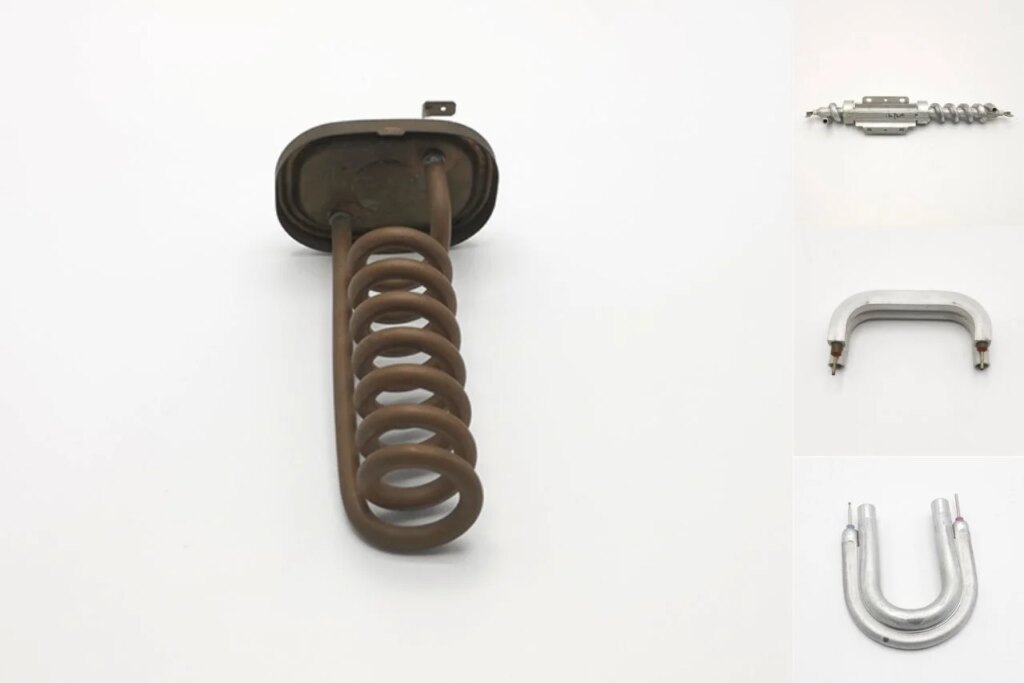
- La géométrie de l'élément (droit, replié ou ondulé) affecte la surface et la tolérance au tartre.
- Le choix du matériau et la construction de la gaine influencent la résistance à la corrosion dans des conditions chimiques d'eau spécifiques.
Termes LSI utilisés dans ce guide : chauffe-eau immergé, élément de chauffe-eau électrique, densité de puissance, entartrage minéral, court-circuit à la terre, fuite de joint.
Modes de défaillance courants : tartre, corrosion, échauffement du câblage et mise sous tension à sec
Sur le terrain, éléments chauffants les éléments chauffants tombent en panne pour une courte liste de raisons qui se répètent à travers les marques et les régions. Les résultats les plus coûteux sont rarement « mystérieux » ;.
Modes de défaillance justifiant fréquemment un remplacement
- Circuit ouvert Élément chauffant (pas de continuité)
- Court-circuit à la masse qui déclenche un disjoncteur lors d'un appel de chaleur
- Entartrage sévère provoquant une surchauffe et un grillage prématuré
- Corrosion ou piqûres de la gaine évoluant vers une défaillance
Ressemble à l'élément chauffant, mais souvent ce n'est pas le cas
- Défaillance ou mauvais calibrage du thermostat
- Connexions de bornes desserrées provoquant un échauffement localisé et des arcs électriques
- Sédiments réduisant le taux de récupération (chaleur fournie, mais plus lentement)
- Problèmes côté plomberie (comportement du mitigeur, problèmes de tube plongeur)
Mise sous tension à sec : le chemin le plus rapide vers une réparation récurrente
La procédure de remplacement étape par étape officielle de Whirlpool avertit de ne pas appliquer d'alimentation électrique à moins que le réservoir ne soit complètement plein et que tout l'air ne soit éliminé. chauffage à sec. Il s'agit d'un échec de processus, non d'un problème de qualité de pièce.
Diagnostic avant remplacement : éviter les réparations par « canon à pièces »
Une approche de réparation professionnelle confirme le mode de défaillance avant de vidanger un réservoir. Remplacer un élément sans diagnostic peut gaspiller de la main-d'œuvre et masquer la véritable cause racine,.
Vérifications fondées sur des preuves (non spécifiques à une marque)
- Confirmer le schéma des symptômes : pas d'eau chaude de l'eau chaude vs eau chaude limitée (comportement du double élément)
- Inspecter l'isolation du câblage et le serrage des bornes (la décoloration due à la chaleur est un indice)
- Confirmer la tension nominale de l'appareil tension et puissance sur la plaque signalétique avant d'acheter des pièces
Référence technique rapide : résistance attendue de l'élément
Pour le chauffage résistif, une attente approximative est ( R approx V^2/P ). Exemple : 240V et 4500W donnent environ 12,8 Ω. Les lectures varient selon la conception de l'élément et la méthode de test.
Comment choisir l'élément de remplacement correct (tension, puissance, géométrie, matériaux)
Les étapes de remplacement de Whirlpool indiquent explicitement de vérifier que le nouvel élément est le bon remplacement en se référant à la plaque signalétique du chauffe-eau pour tension et puissance. la puissance et la tension. Cette instruction est une pierre angulaire pratique : elle réduit le risque d'inadéquation et évite les déclenchements évitables du disjoncteur ou une mauvaise performance de récupération.
Liste de vérification pour la sélection
| Paramètres | Critères de correspondance | Pourquoi c'est important en pratique |
|---|---|---|
| Tension | Correspondre à la tension nominale de la plaque signalétique (généralement 120V ou 240V) | Une mauvaise tension modifie la charge et la puissance calorifique ; peut déclencher la protection ou sous-performer |
| Puissance | Correspondre à la puissance nominale sauf si le fabricant approuve des alternatives | Une puissance plus élevée peut augmenter le stress thermique ; une puissance plus faible prolonge le temps de récupération |
| Montage / filetage | Correspondre au filetage de vissage et à l'interface d'étanchéité | Une inadéquation entraîne des fuites ou un mauvais positionnement dangereux |
| Géométrie | Droit vs pliage/repli ; privilégier les conceptions à faible densité de puissance | Influence la surface, la tolérance au tartre et les points chauds localisés |
| Matériels | Gaine et bornes adaptées à la chimie de l’eau | La résistance à la corrosion varie ; une mauvaise adéquation réduit la durée de vie |
| Joint | Joint neuf correct (recommandé) | La plupart des fuites après intervention sont dues à un joint endommagé ou inadapté |
À quoi ressemblent de bonnes spécifications (exemple pour le grand public)
Les fiches produits faciles à comparer indiquent généralement la puissance, les matériaux et les certifications de sécurité. La page de l’élément plug-in de Hudson Reed fournit un exemple clair de champs de spécifications :.
Source : Page produit Hudson Reed.
Optique ingénierie : l’alliage et l’environnement déterminent encore la longévité
TUTCO note que les éléments chauffants des appareils électroménagers utilisent couramment des alliages résistants métalliques tels que Fe-Cr-Al et Ni-Cr(Fe), et que des différences apparemment mineures (y compris les éléments traces).
Flux de travail de remplacement étape par étape (séquence alignée sur Whirlpool)
Le flux de travail ci-dessous suit la structure des étapes publiées par Whirlpool Remplacer l’élément chauffant présentées dans un format global et neutre en termes de marque.
Règle critique
Ne pas mettre sous tension tant que le réservoir n’est pas complètement rempli et que tout l’air n’est pas évacué. Le guide Whirlpool indique que la mise sous tension prématurée peut griller l’élément supérieur (chauffage à sec).
Procédure (séquence)
1) Refroidir l’eau d’abord
Faire couler de l'eau chaude jusqu’à ce qu’elle devienne froide pour réduire le risque de brûlure (Whirlpool note que cela peut prendre 10 minutes ou plus).
2) Couper l’alimentation en eau froide
Fermer la vanne d’alimentation en eau froide.
3) Vidanger en toute sécurité
Raccorder un tuyau d’arrosage à la vanne de vidange et vidanger vers un endroit approprié. Ouvrir un robinet d’eau chaude peut accélérer la vidange. Si les sédiments obstruent la vanne de vidange, l’intervention d’un technicien qualifié peut être nécessaire.
4) Retirer l’ancien élément
Retirer le couvercle d’accès et l’isolation si nécessaire, déconnecter les fils, et retirer l’élément à l’aide d’une clé à élément ou d’une douille profonde de 1 1/2″ (comme spécifié par Whirlpool).
5) Vérifier la pièce de remplacement
Confirmer que le nouvel élément correspond à la plaque signalétique du chauffe-eau pour tension et puissance.
6) Nettoyer les filetages et installer le joint
Nettoyer les filetages du réservoir avec un chiffon. Installer un nouveau joint. Whirlpool suggère également d’utiliser une goutte de liquide vaisselle pour lubrifier le joint lors du serrage afin de réduire les risques d’endommagement.
7) Installer et serrer le nouvel élément
Serrer à la main, puis ajuster avec la clé/douille. Éviter un couple excessif qui pourrait compromettre l’étanchéité.
8) Reconnecter le câblage et remonter les couvercles
Remettre les fils d’alimentation en place et s’assurer que les connexions sont serrées. Réinstaller l’isolation et les couvercles pour réduire les risques de choc et d’incendie.
9) Remplir et purger complètement l’air
Fermer la vanne de vidange et ouvrir l’eau froide. Whirlpool indique de retirer l’aérateur du robinet d’eau chaude le plus proche, de faire couler l’eau chaude jusqu’à obtenir un débit continu, trois minutes pour éliminer tout l’air.
10) Vérifier les fuites
Inspecter l’élément pour détecter les fuites. En cas de fuite, serrer légèrement. Si les fuites persistent, vidanger et inspecter/remplacer le joint, puis réinstaller.
11) Rétablir l’alimentation électrique
Uniquement après que le réservoir est plein et que l’air est purgé, rétablir l’alimentation. Whirlpool note que le chauffage peut prendre jusqu’à deux heures.
Prévention des défaillances récurrentes : chimie de l'eau, densité de puissance, cadence d'entretien
Un remplacement n’est aussi fiable que l’environnement dans lequel il fonctionne. TUTCO souligne que différents matériaux réagissent différemment selon leur environnement,.
Lorsque l’eau dure domine
- Prioriser la gestion du tartre (rinçage périodique lorsque approprié et réalisable).
- Envisager des conceptions d’éléments qui réduisent les points chauds et gèrent densité de puissance (spécifique à l’application).
- Maintenir des températures de consigne raisonnables ; une température excessive accélère le tartre et les contraintes.
Lorsque la corrosion domine
- Choisir des matériaux adaptés à la chimie de l’eau ; la sélection de la gaine n’est pas cosmétique.
- Inspecter le câblage et les bornes – un échauffement électrique au niveau des connexions peut imiter une défaillance de l’élément.
- Enquêter sur l’état général du réservoir lorsque pertinent (les facteurs au niveau du système génèrent des interventions répétées).
Perspective OEM et approvisionnement : intégrer la fiabilité dans les composants chauffants
Pour les fabricants d’équipement d’origine (OEM) et les marques d’appareils électroménagers, les pannes d’éléments se traduisent par une exposition aux garanties et un risque de réputation. Les fournisseurs solides démontrent une large gamme (afin que la solution corresponde au produit), une préparation à la certification et un contrôle de processus cohérent. Jinzhong se positionne comme un fournisseur basé en Chine, spécialisé dans les composants de chauffage électrique avec plus de 30 ans d’expérience, des certifications mondiales revendiquées (par exemple, systèmes ISO et conformité des produits), et une fabrication intégrée couvrant le moulage sous pression, l’emboutissage, l’usinage CNC et le traitement de surface.
Structure du catalogue et place de chaque technologie
- Fabricant d'éléments chauffants Aperçu : positionnement, capacités et couverture produit.
- Élément chauffant Hub de catégories : large gamme de composants pour diverses applications.
- Tubes de chauffage Pour les formats gainés/tubulaires à haute efficacité thermique utilisés dans les appareils électroménagers et les équipements industriels.
- Plaque chauffante Options pour des surfaces de chauffe compactes à conduction uniforme.
- Film chauffant Pour les conceptions à profil mince et réponse rapide (variantes à couche mince/épaisse).
- Solutions de chauffage pour la coulée sous pression Pour les corps chauffants intégrés utilisés dans les machines à café et les chaudières compactes.
Signaux de qualité généralement vérifiés par les équipes d’approvisionnement
- Ensemble de certifications et auditabilité (systèmes de qualité, environnementaux, de sécurité ; approbations spécifiques à chaque région).
- Capacité de processus: l’intégration du moulage sous pression + CNC + traitement de surface peut réduire les délais et le nombre de fournisseurs.
- Allégations de capacité: Jinzhong cite une production à grande échelle (par exemple, **3 millions d’éléments chauffants par mois** sur les pages de catégories) et des objectifs de livraison clé en main.
- Adéquation à l’application: des catégories dédiées telles que les chauffe-eau électriques indiquent une spécialisation pour les modules thermiques compacts.
Des informations supplémentaires sur l’entreprise sont présentées sur : Usine d'éléments chauffants.
FAQ
Quelle est l’étape la plus importante pour empêcher qu’un nouvel élément ne tombe immédiatement en panne ?
Comment confirmer la spécification correcte de l’élément de remplacement ?
Pourquoi les éléments chauffants tombent-ils plus souvent en panne dans les régions à eau dure ?
Tous les **éléments chauffants de 1000W** sont-ils comparables d’une application à l’autre ?
Références et liens externes
La source suivante
Partager :

Mari Cheng
Bonjour à tous, je suis Mari Cheng, le "spécialiste du chauffage électrique" de Jinzhong Electric Heating Technology. Notre usine fabrique des composants de chauffage électrique depuis 30 ans et a servi plus de 1 000 clients nationaux et étrangers. Dans les blogs suivants, je parlerai de la connaissance réelle des composants de chauffage électrique, des histoires de production dans l'usine et des besoins réels des clients. Si vous avez des questions, n'hésitez pas à commenter ou à me contacter directement, je vous dirai tout ce que je sais~
Article en vedette
Besoin d'aide ?
Si vous avez des questions, n'hésitez pas à nous contacter pour obtenir de l'aide. Nous vous fournirons également le dernier devis et des échantillons gratuits.
