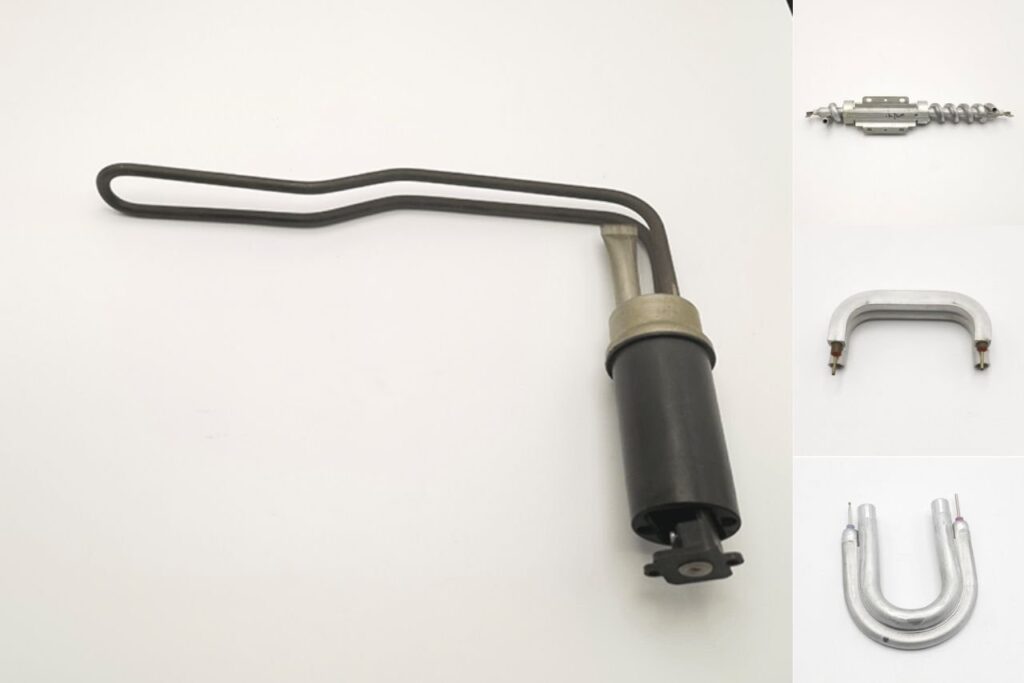
Page de cluster ? Dépannage ? Éléments de chauffe-eau électriques
UN élément chauffant est défectueux lorsque les symptômes et les contrôles indiquent qu'il ne peut plus fournir un chauffage résistif stable, généralement parce qu'il est en circuit ouvert (absence de continuité), a développé un court-circuit à la terre, ou surchauffe en raison d'un entartrage minéral. En pratique, un diagnostic fiable repose sur la combinaison de schémas symptomatiques (en particulier dans les réservoirs à double élément) avec une inspection minutieuse, des contrôles électriques sécurisés et la vérification de la puissance nominale de l'appareil tension et puissance avant de commander un remplacement.
Réponse rapide : les signes les plus fiables qu'un élément est défaillant
La plupart des diagnostics sur le terrain sont corrects lorsqu'ils s'appuient sur des preuves convergentes plutôt que sur un seul symptôme. La liste ci-dessous priorise les indicateurs à fort signal qui tendent à se confirmer après ouverture du réservoir.
Indicateurs à haute fiabilité
- Non eau chaude dans un réservoir électrique qui est sous tension et dont les commandes sont intactes (souvent un problème d'élément supérieur ou de chaîne de commande).
- Uniquement de courtes rafales de de l'eau chaude (souvent cohérent avec un élément inférieur qui ne chauffe pas dans un réservoir à double élément).
- Le disjoncteur se déclenche au début du chauffage (peut indiquer un court-circuit à la terre).
- L'élément est testé en circuit ouvert (pas de continuité) ou présente une résistance anormale par rapport à sa valeur nominale.
- Dommages visibles après retrait : gonflement, fissures, piqûres sévères, ou dépôt important avec signes de surchauffe.
Indicateurs à faible fiabilité (nécessitent confirmation)
- L'eau « n'est plus aussi chaude qu'avant » (cela pourrait être un décalage du réglage du thermostat, un mitigeur ou des variations saisonnières de l'arrivée d'eau).
- Bruits inhabituels (souvent dus au sédiment, pas nécessairement à un élément défaillant).
- Eau chaude de couleur rouille (souvent liée au réservoir/anode plutôt qu'à l'élément seul).
Référence technique rapide : à quoi la résistance devrait ressembler
La résistance approximative d'un radiateur résistif suit ( R approx V^2/P ). Exemple : un élément nominal 240V / 4500W est d'environ 12,8 Ω. Les relevés réels dépendent de la conception et de la température. Les mesures électriques doivent être effectuées en respectant les pratiques de sécurité ; les exigences locales et le manuel du chauffe-eau prévalent.
Comment un élément de chauffe-eau tombe en panne (contexte technique)
Un élément de chauffe-eau est une implémentation spécifique d’un de chauffage électrique élément : un assemblage conçu de matériaux conducteurs et isolants qui convertit l’énergie électrique en chaleur.
Mécanismes de défaillance expliquant les symptômes réels
- Circuit ouvertRupture de filament : le chemin conducteur se rompt ; l'élément cesse de chauffer.
- Défaut de terrePanne de masse : la défaillance de l'isolation/de la gaine permet une fuite de courant ; les dispositifs de protection peuvent se déclencher.
- Surcharge thermique due à l'entartrage : les dépôts réduisent le transfert de chaleur, augmentant la température de surface et accélérant la dégradation.
- Échauffement des connexions: des bornes desserrées créent une résistance locale et de la chaleur, endommageant le câblage et provoquant un fonctionnement intermittent.
Schémas symptomatiques indiquant des problèmes d'élément supérieur ou inférieur
De nombreux chauffe-eau électriques à accumulation utilisent deux éléments. Le schéma symptomatique fournit souvent l'indice le plus rapide : lorsque seule une partie de l'eau chaude est disponible, l'élément inférieur est fréquemment impliqué ; lorsqu'il n'y a aucune eau chaude, le problème peut être en amont (élément supérieur, chaîne de thermostat, ou alimentation/électricité).
Guide des schémas (généralisé)
| Observed symptom | Interprétation courante | Que confirmer ensuite |
|---|---|---|
| Eau chaude brève seulement, puis tiède | La voie de chauffage inférieure ne contribue pas (souvent élément inférieur) | Vérifier les commandes et l'état de l'élément ; considérer le sédiment et l'entartrage |
| Pas d'eau chaude du tout | Problème de voie de chauffage supérieure ou d'alimentation/commande | Confirmer l'alimentation électrique, la chaîne de thermostat et l'intégrité du câblage |
| Le disjoncteur se déclenche pendant le chauffage | Possible court-circuit à la masse court-circuit à la terre ou défaut de câblage | Inspecter le câblage et l'état de l'isolation de l'élément en utilisant des pratiques sécurisées |
Ceci est une aide à la priorisation — ne remplace pas le manuel de l'appareil ni le protocole de diagnostic local.
Que vérifier avant d'incriminer l'élément
Un diagnostic d'« élément défectueux » est souvent correct, mais les erreurs les plus coûteuses proviennent du fait de sauter les vérifications évidentes. L'objectif est d'éviter de remplacer un bon élément alors que le vrai problème est un thermostat, une terminaison de câblage ou un mitigeur côté plomberie.
Vérifications électriques et côté commande
- Confirmer que le chauffe-eau dispose de l'alimentation correcte et que la protection ne déclenche pas.
- Inspecter le câblage visible pour déceler toute décoloration, isolation fondue ou bornes desserrées.
- Confirmer les réglages du thermostat et toute condition de sécurité à limite haute (selon le modèle).
Vérifications côté plomberie pouvant imiter une défaillance de l'élément.
- Comportement du mitigeur (le mélange de température peut masquer la capacité de chauffage).
- Variations saisonnières de la température d'entrée (l'eau d'alimentation hivernale réduit le débit perçu).
- Problèmes de tube plongeur (peut réduire le puisage effectif d'eau chaude).
Avertissement critique lié au remplacement affectant également le diagnostic.
Si un élément nouvellement installé tombe en panne rapidement, une erreur de procédure est un suspect principal. Les instructions de remplacement de Whirlpool indiquent de ne pas rétablir l'alimentation électrique tant que le réservoir n'est pas complètement rempli et que tout l'air n'est pas éliminé ; sinon, l'élément supérieur grillera. chauffage à sec. Cela peut être interprété à tort comme une « pièce neuve défectueuse » si l'étape de remplissage et de purge a été sautée.
Un processus de diagnostic sûr et structuré (sans raccourcis risqués)
Un flux de travail de diagnostic fiable priorise la sécurité, réduit les reprises et protège l'étape suivante (remplacement) contre les défaillances évitables. Le plan ci-dessous s'aligne sur la manière dont les directives du fabricant structurent le remplacement : contrôler le risque d'ébouillantage, isoler l'alimentation, vidanger si nécessaire, vérifier les spécifications, et n'alimenter qu'après remplissage et purge d'air.
Aperçu du flux de travail
Les détails du diagnostic varient selon la région, la conception du chauffe-eau et le niveau de qualification. Le principe est cohérent : les preuves d'abord, puis les pièces.
Préparation au remplacement : quoi confirmer avant de commander les pièces
Même lorsque l'élément est confirmé défectueux, commander le mauvais remplacement crée un deuxième mode de défaillance : la non-concordance. La procédure de Whirlpool exige explicitement de vérifier le nouvel élément par rapport à la plaque signalétique pour : tension et puissance.
Informations minimales à capturer
- Caractéristiques de la plaque signalétique : tension, puissance, et identifiants du modèle.
- Norme de montage et type de joint (le filetage/l'interface n'est pas universel dans le monde).
- Géométrie de l'élément et contraintes d'espace (droit vs plié, dégagement par rapport au réservoir).
- Conditions de l'eau (eau dure vs chimie corrosive) pouvant justifier un choix de gaine/matériau différent.
Transparence des spécifications : pourquoi c'est important
Les pages produits des détaillants révèlent souvent à quoi ressemblent les « spécifications vérifiables » lors de la comparaison des composants. Par exemple, la fiche de l'élément enfichable de Hudson Reed spécifie une puissance de 1000 W, des matériaux en plastique ABS et acier inoxydable, une protection IP67 et une approbation UL, plus une garantie de 2 ans et une longueur de câble. Bien que conçu pour les radiateurs ou les sèche-serviettes plutôt que pour l'immersion dans un réservoir, la structure de divulgation des spécifications est une référence utile.
Quand la question devient « qualité des pièces » : considérations d'approvisionnement et de conception
Si les défaillances d'éléments sont fréquentes sur une ligne de produits (plutôt qu'isolées à un seul réservoir), la cause racine peut passer d'« un élément défectueux » à la conception, l'environnement ou la cohérence de la chaîne d'approvisionnement. La discussion technique de TUTCO souligne que la composition de l'alliage et les oligo-éléments peuvent modifier les propriétés entre les fournisseurs, et que les contaminants environnementaux peuvent réduire la durée de vie. Pour les fabricants d'équipement d'origine (OEM) et les propriétaires de marques, c'est pourquoi la capacité des fournisseurs et le contrôle des processus font partie de l'ingénierie de la fiabilité.
Familles de composants utilisées dans les applications de chauffage
- Élément chauffant (hub de catégorie)
- Fabricant d'éléments chauffants (aperçu de l'entreprise)
- Usine d'éléments chauffants (capacités et contexte)
- Solutions de chauffage pour la coulée sous pression (corps chauffants intégrés pour chaudières compactes et modules d'appareils)
Pourquoi l'étendue du catalogue peut être importante
Un fournisseur qui prend en charge plusieurs constructions de chauffage (tubes, plaques, films et modules moulés sous pression intégrés) peut être pertinent pour les organisations standardisant les stratégies de contrôle thermique sur plusieurs produits. La structure de catégorie de Jinzhong distingue ces familles et met en avant des affirmations de fabrication telles que l'intégration multi-processus et la capacité à l'échelle.
FAQ
Quels sont les symptômes les plus courants d'un élément défectueux ? élément de chauffage de l'eau chaude?
En confirmant l'état de l'alimentation et du contrôle, en inspectant le câblage/les bornes pour détecter une surchauffe, et en considérant les facteurs côté plomberie (comportement du mitigeur, variations saisonnières de l'entrée). Un diagnostic est plus solide lorsque plusieurs indicateurs concordent, plutôt que de se fier à un seul symptôme.
Une cause courante est le rétablissement de l'alimentation électrique avant que le réservoir ne soit complètement rempli et que tout l'air ne soit éliminé. Les étapes de remplacement publiées par Whirlpool avertissent que la mise sous tension précoce peut griller l'élément supérieur et instruisent de purger l'air en faisant couler l'eau à plein débit pendant.
What should be verified before ordering a replacement heating element?
Références et liens externes
Sources externes utilisées pour étayer les définitions techniques, les étapes critiques de sécurité et les exemples de spécifications :
- Whirlpool Water Heaters – étapes de remplacement de la résistance et avertissement sur la mise en marche à sec : https://www.whirlpoolwaterheaters.com/support/help/element-was-out-of-range/24
- TUTCO – définition de la résistance chauffante, matériaux, styles d'intégration et considérations environnementales : https://tutco.com/conductive/heating-elements
- Hudson Reed – exemple de spécifications divulguées (1000W, ABS + acier inoxydable, IP67, homologation UL, garantie/longueur de câble) : https://usa.hudsonreed.com/1000-plug-in-watt-electric-heating-element-76309
- Jinzhong Electric Heating – références internes pour le contexte fournisseur et le placement des ancrages : https://jinzho.com/product-category/heating-element/, https://jinzho.com/, https://jinzho.com/about/, https://jinzho.com/product-category/die-casting-heating-solutions/