Page Pilier ? ~4000 mots ? Mondial ? 4 FAQ ? Technique, accessible aux propriétaires
La plupart des problèmes d’absence de chaleur sur les appareils Maytag ne sont pas résolus en remplaçant des pièces au hasard. Les éléments chauffants sont des ensembles conçus :.
Référence d'ingénierie : TUTCO définit un élément chauffant en tant que composant constitué à la fois d’un matériau électriquement conducteur et d’un matériau isolant, conçu pour le chauffage,. https://tutco.com/conductive/heating-elements
- Notions de base sur l’élément chauffant (ce qu’il est, ce qu’il n’est pas)
- Sèche-linge Maytag : fonctionnement du système de chauffage
- Fours électriques Maytag : explication des éléments de cuisson et de grill
- Pourquoi les éléments tombent en panne (et pourquoi les remplacements échouent rapidement)
- Symptômes vers causes : tableau de diagnostic rapide
- Principes de sécurité pour le remplacement (éviter la « mise à feu à sec » et autres erreurs)
- Types d’éléments chauffants (tubes, plaques, films, modules moulés sous pression)
- Liste de contrôle pour l’approvisionnement et les spécifications des remplacements corrects
- FAQ (4)
- Références et liens internes obligatoires
Un ensemble chauffant résistif où le courant traversant un alliage résistif convertit l’énergie électrique en chaleur (effet Joule).
- Partie conductrice : alliage résistif (par exemple, famille Ni-Cr ou Fe-Cr-Al dans de nombreux appareils)
- Cadre isolant : céramiques, mica, poudre de MgO, etc., selon la conception
- Bornes/fils de sortie : connectent l’élément en toute sécurité au circuit
Ce n’est pas une pièce universelle standard. De petites différences – forme, puissance, géométrie de montage, matériau de la gaine et mode de transfert de chaleur – peuvent modifier les performances et la durée de vie.
Si un élément « grille constamment », la cause profonde est souvent une restriction du flux d’air, un mauvais ajustement, une puissance incorrecte ou des points chauds au niveau des bornes – pas de la « malchance ».
Dans un sèche-linge électrique, l' élément immergé chauffe air que le ventilateur fait circuler à travers le tambour et vers l'extérieur par l'évacuation. La température de l'élément chauffant dépend fortement du flux d'air :.
| Sous-système | Rôle | Impact de panne courant | Indice typique |
|---|---|---|---|
| Élément chauffant | Convertit l’énergie électrique en chaleur | Absence de chaleur ou chaleur faible | Sèche très lentement / tourne à froid |
| Circuit de flux d’air (filtre à peluches, conduit, évacuation) | Évacue la chaleur de l’élément et la transporte vers le linge | Surchauffe, déclenchement du coupe-circuit thermique, grillages répétés de l’élément | Carrosserie chaude, mauvais débit d’air d’évacuation extérieur |
| Sécurités thermiques / thermostats | Limite la température pour éviter un incendie/une surchauffe | Absence de chaleur même avec un bon élément (sécurité ouverte) | La chaleur s’arrête tôt ; cycles intermittents |
| Bornes et câblage | Distribuer l’énergie en toute sécurité | Connecteurs brûlés, chauffage intermittent, isolation fondue | Décoloration au niveau des bornes à lame |
Tableau 1 – La fiabilité du chauffage du sèche-linge dépend de l’ensemble du système, en particulier du flux d’air et des sécurités.
L’élément de cuisson fournit une chaleur soutenue et uniforme. Les pannes se manifestent souvent par une cuisson insuffisante, des temps de préchauffage longs ou des températures inégales.
Le L’élément de grill fournit une chaleur radiante élevée. Les pannes se manifestent par un brunissement faible/une grillade médiocre même si la cuisson fonctionne encore.
TUTCO décrit les chauffages tubulaires comme une bobine électrique entourée de poudre isolante (souvent du MgO) dans une gaine métallique, couramment utilisée dans les fours de cuisine électriques. Source
Classement indicatif basé sur les schémas de service courants et les principes de durée de vie des chauffages (oxydation, déformation, cyclage) discutés par TUTCO.
TUTCO note que tous les éléments chauffants à résistance finissent par griller et que l'oxydation, les variations de résistance électrique, les dommages et la déformation limitent leur longévité. Référence
| Appareil | Symptôme | Causes probables | Que vérifier en premier |
|---|---|---|---|
| Sèche-linge | Pas de chaleur du tout | Élément ouvert ; sécurité thermique ouverte ; défaillance du câblage/des bornes | Vérifier le flux d'air + inspecter les coupe-circuits de sécurité et les bornes avant de remplacer à nouveau l'élément |
| Sèche-linge | Chauffe puis s'arrête / chaleur intermittente | Conduit d'évacuation obstrué provoquant une surchauffe ; problèmes de thermostat cyclique | Flux d'air du conduit d'évacuation extérieur + propreté du trajet du conduit |
| Four | Préchauffage lent / cuisson insuffisante | Élément de cuisson faible/ouvert ; problèmes de commande/capteur | Vérification visuelle des fissures/cloques sur l'élément ; confirmer que la cuisson s'active |
| Four | Le gril ne dore pas | Élément de gril faible/ouvert | Confirmer que l'élément du gril chauffe/s'active en toute sécurité |
Tableau 2 : Les symptômes de défaillance d'élément pointent souvent vers le flux d'air (sèche-linge) ou des circuits d'élément spécifiques (fours).
Les étapes de remplacement de l'élément chauffant de Whirlpool pour les chauffe-eau incluent un avertissement clair :. https://www.whirlpoolwaterheaters.com/support/help/element-was-out-of-range/24
Traduction pour appareils électroménagers : Sèche-linge = ne pas faire fonctionner le chauffage sans un flux d'air/raccordement d'évacuation approprié et sans tous les couvercles installés. Four = s'assurer du bon positionnement de l'élément, des bornes correctes et de l'isolation/protection intacte avant la mise sous tension.
- Faire correspondre le remplacement aux exigences de tension/puissance de l'appareil et à l'ajustement physique.
- Inspecter/remplacer les bornes endommagées par la chaleur (ne pas réutiliser les connecteurs desserrés).
- Remonter tous les couvercles/isolants ; confirmer qu'il n'y a pas de contact élément-métal qui créerait des points chauds.
- Effectuer un cycle de test supervisé ; arrêter en cas d'arc électrique, d'odeur de brûlé ou de cycle anormal.
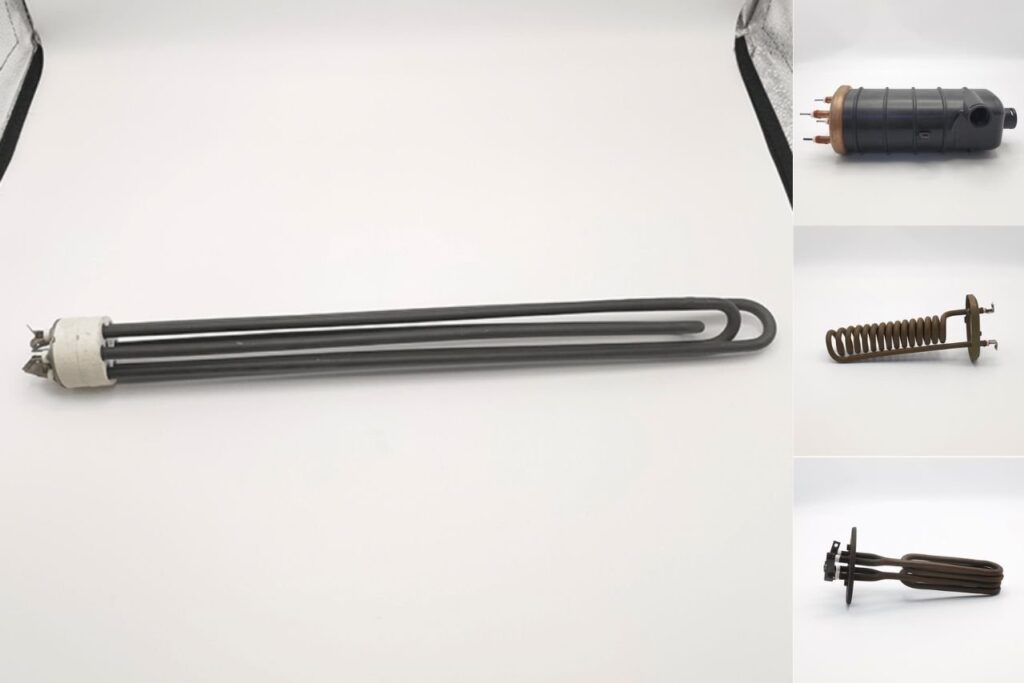
JINZHO organise sa gamme de produits pour refléter comment « élément chauffant » couvre plusieurs technologies, notamment Tubes de chauffage, Plaque chauffante, Film chauffant.
La catégorie Tubes chauffants présente des produits comme « tube chauffant pour eau 12-380V », « tube chauffant pour chaudière », « tige chauffante en faisceau »,. Catégorie
La catégorie Plaques chauffantes inclut des articles comme « plaque chauffante pour machine à café », « élément chauffant pour lave-vaisselle », « plaque chauffante pour cuiseur à œufs » et « plaque chauffante personnalisée ». Catégorie
La catégorie Films chauffants liste « élément/système/ensemble chauffant à film épais », « tube chauffant à film épais » et « chauffage à film mince »,. Catégorie
La catégorie Solutions de chauffage par moulage sous pression liste des articles intégrés tels que « échangeur de chaleur pour chaudière 1400 Watt », « chauffage de chaudière pour machine à espresso »,. Catégorie
Pour les appareils générant de la vapeur/eau chaude, la catégorie Chauffage électrique pour chaudière de JINZHO liste des produits comme « chaudière à café », « chaudière à vapeur électrique »,. https://jinzho.com/product-category/electric-heater-parts/electric-boiler-heater/
- Puissance et électricité : puissance et tension correctes pour le circuit de l'appareil.
- Géométrie : longueur/forme/points de montage ; assure un motif radiant correct (four) ou un chauffage par flux d'air correct (sèche-linge).
- Matériaux et protection : gaine/isolation adaptée à la température et à l'environnement.
- Conformité : homologations pertinentes le cas échéant (exemple ci-dessous).
Hudson Reed « 1000 Plug-In Watt » Élément chauffant électrique liste des attributs spécifiques : 1000W, Approuvé UL, la protection contre les intrusions IP67, Garantie de 2 ans, plus un câble de 35,4 pouces. Source
Ils sont basés sur le même principe (chauffage par résistance) mais ne sont pas la même pièce. Les sèche-linge sont des systèmes de chauffage par flux d'air ; les fours sont des cavités de cuisson par rayonnement/convection avec des circuits de cuisson et de gril.
La cause la plus courante est un flux d'air restreint (accumulation de charpie ou conduit d'évacuation long/écrasé), ce qui force l'élément à fonctionner plus chaud et à cycler plus fort.
Maintenir les bornes serrées et propres, éviter d'endommager la gaine lors du nettoyage et traiter rapidement les temps de préchauffage anormaux.
Mettre le chauffage sous tension avant que le système ne puisse évacuer la chaleur en toute sécurité. Whirlpool avertit explicitement qu’alimenter un chauffe-eau avant que le réservoir ne soit plein peut provoquer une « mise à feu à sec » et griller l’élément chauffant. élément Aperçu de l’ingénierie des éléments chauffants TUTCO :. Référence
- Élément chauffant
- Fabricant d'éléments chauffants
- Usine d'éléments chauffants
- Solutions de chauffage pour la coulée sous pression
- Séquence de sécurité pour le remplacement d’élément Whirlpool (illustre « ne pas mettre sous tension trop tôt » + connexions serrées) : https://tutco.com/conductive/heating-elements
- Catégories de site JINZHO référencées : https://www.whirlpoolwaterheaters.com/support/help/element-was-out-of-range/24
- Page produit de l’élément enfichable 1000W Hudson Reed (exemple de divulgation des spécifications) : Tubes de chauffage, Plaque chauffante, Film chauffant, Chaudière électrique
- Avis de non-responsabilité : Cette page est informative et ne constitue pas des instructions de service spécifiques à un modèle. Suivez toujours la fiche technique de l’appareil et les règles locales de sécurité électrique. https://usa.hudsonreed.com/1000-plug-in-watt-electric-heating-element-76309
tableau-composants-sèche-linge.