Usted observa que el mercado de bobinas de calefacción para hornos en 2025 lidera un cambio importante en cómo experimenta el calor y la comodidad. Los elementos calefactores inteligentes ahora impulsan casi el 20% de los hornos industriales, con un tamaño de mercado global que alcanza 3.740 millones de USD y una CAGR del 6.02%.
| Aspecto del Mercado | Estadística / Perspectiva 2025 |
|---|---|
| Mercado global de bobinas de calefacción para hornos | 3.740 millones de USD |
| Adopción de tecnología inteligente/IoT en hornos | ~20% en industrias clave |
| Cuota de mercado de Asia-Pacífico | ~37% |
| Segmento de más rápido crecimiento | Calentadores de inmersión con un crecimiento del 16% |
Elementos calefactores inteligentes impulsan la eficiencia y la sostenibilidad en cada horno. Los estudios muestran que puede reducir el uso de energía para calefacción hasta en un 38% y disminuir costos con controles adaptativos. También obtiene beneficios inmediatos en confort, gracias a configuraciones basadas en datos que aprenden sus preferencias. Elemento calefactor tendencias moldeadas por Calefacción eléctrica Jinzhong y otros líderes fabricantes de elementos calefactores ahora establecen la dirección futura tanto para elementos calefactores de electrodomésticos como para el mercado más amplio de bobinas de calefacción para hornos.
Tendencias de los Elementos Calefactores que Redefinen el Rendimiento de los Hornos
El Auge de los Elementos Calefactores Inteligentes
Usted ahora ve a los elementos calefactores inteligentes en el centro de las tendencias de calefacción doméstica y la innovación en hornos. Estos componentes utilizan sensores avanzados, controles impulsados por IA y datos en tiempo real para ofrecer una gestión precisa de la temperatura. Usted se beneficia de sistemas que se adaptan a sus rutinas diarias, aprendiendo cuándo necesita calor y ajustando la producción automáticamente. Este cambio en la tecnología HVAC significa que ya no tiene que conformarse con una calefacción obsoleta e ineficiente.
- Gestión adaptativa de la temperatura basada en IA utiliza datos en tiempo real, sensores de ocupación e inputs ambientales para ajustar los horarios de calefacción. Usted experimenta una mayor eficiencia y confort.
- El mantenimiento predictivo con diagnósticos automatizados detecta fallas de manera temprana. Esto reduce el tiempo de inactividad hasta en un 50% y extiende la vida útil de su horno.
- La integración con el hogar inteligente le permite controlar su horno a través de asistentes de voz y aplicaciones móviles. Usted gana en conveniencia y mejor gestión energética.
- Los sistemas HVAC optimizados por IA aprenden sus preferencias y utilizan geofencing para anticipar sus llegadas y salidas. Esto puede reducir el uso de energía hasta en un 30%.
- Las bombas de calor modernas combinadas con controles inteligentes reducen los gastos de calefacción hasta en un 50%.
- El acceso y programación remotos le permiten ajustar la calefacción desde cualquier lugar, ahorrando entre un 10% y un 15% en las facturas de energía cada año.
- La integración con plataformas de hogar inteligente como Amazon Alexa, Google Home y Apple HomeKit simplifica el control y respalda sus objetivos energéticos.
Usted también nota que los avances tecnológicos en materiales y diseño impulsan estas tendencias de los elementos calefactores. Los nanomateriales permiten tiempos de respuesta en microsegundos y una distribución térmica precisa. Los sensores embebidos y los sistemas de control impulsados por IA permiten el ajuste dinámico de la producción térmica. Innovaciones como las superficies calefactoras basadas en grafeno y los elementos cerámicos impresos en 3D mejoran el control de temperatura y la eficiencia. Estas tecnologías de vanguardia hacen que su horno sea más receptivo y confiable.
Por qué Importan las Tendencias de los Elementos Calefactores en 2025
Las tendencias de los elementos calefactores moldean el futuro del rendimiento de los hornos y las tendencias de calefacción doméstica. Usted depende de su horno para el confort, pero también espera eficiencia y fiabilidad. En 2025, los materiales utilizados en los elementos calefactores—como el carburo de silicio, las aleaciones de níquel-cromo, las cerámicas y los compuestos avanzados—impactan directamente en el buen funcionamiento de su horno. Estos materiales mejoran la conductividad térmica y la resistencia al choque térmico y a la corrosión. Como resultado, usted obtiene una mejor transferencia de calor, un calentamiento consistente y una vida operativa más larga.
Los materiales inteligentes con capacidades de autorregulación y control predictivo optimizan el uso de energía y mejoran la seguridad. Usted experimenta menos averías y menos tiempo de inactividad. Las iniciativas de sostenibilidad, incluidos los materiales reciclables y la fabricación ecológica, respaldan elementos calefactores más duraderos y reducen el impacto ambiental. Esto alinea su horno con los estándares regulatorios y la rentabilidad.
Usted también se beneficia de innovaciones en sistemas HVAC que se centran en la eficiencia y la fiabilidad. Cerámica PTC en los elementos calefactores proporcionan limitación automática de temperatura, lo que mejora la seguridad y la eficiencia térmica. Las estructuras compuestas aseguran un calentamiento uniforme y se adaptan a las limitaciones de diseño. Los termostatos integrados y las protecciones contra quemado en seco previenen daños y mejoran la fiabilidad. Las mejoras de diseño reducen la pérdida por radiación térmica y el ruido operativo, optimizando la eficiencia energética general.
El mercado de elementos calefactores inteligentes ha crecido rápidamente en los últimos tres años. Usted observa que este crecimiento es impulsado por un enfoque en la eficiencia energética, la electrificación y las iniciativas gubernamentales como la Ley de Reducción de la Inflación de EE. UU.. Los avances tecnológicos y la creciente demanda de los consumidores por soluciones de calefacción conectada alimentan esta tendencia. La pandemia de COVID-19 aceleró la adopción, ya que usted pasó más tiempo en interiores y priorizó el confort y la eficiencia. Innovaciones como los sistemas de calefacción habilitados para IoT, termostatos programables y la integración de IA respaldan este crecimiento. La expansión regional en América del Norte y Asia-Pacífico refleja el crecimiento industrial, la urbanización y las iniciativas de eficiencia energética.
Usted ahora espera que su horno ofrezca más que solo calor. Desea un sistema que se adapte a sus necesidades, ahorre energía y respalde la sostenibilidad. Las tendencias de los elementos calefactores en 2025 hacen esto posible, transformando tanto las tendencias de calefacción doméstica como el panorama más amplio de la tecnología HVAC.
Integración de IoT e IA en Elementos Calefactores para Hornos
La integración de IoT e IA en los elementos calefactores para hornos marca una nueva era en la tecnología HVAC. Usted ahora tiene acceso a hornos conectados que ofrecen información en tiempo real y control adaptativo, transformando tanto los entornos residenciales como comerciales.
Hornos Conectados y Control Remoto
Monitoreo y alertas en tiempo real
Usted puede monitorear el rendimiento de su horno desde cualquier lugar, gracias a Sensores habilitados para IoT que rastrean la temperatura, la humedad y la ocupación. Estos sensores envían datos a sistemas HVAC inteligentes, que procesan la información localmente o en la nube. Las alertas en tiempo real le notifican de cualquier irregularidad, como caídas repentinas de temperatura o posibles fallas del sistema. Este enfoque proactivo le ayuda a abordar problemas antes de que escalen, reduciendo los costos de reparación de emergencia y minimizando el tiempo de inactividad.
- Los sensores IoT recopilan datos ambientales continuamente.
- Las unidades de procesamiento de datos analizan esta información para una respuesta inmediata.
- Las alertas automatizadas le mantienen informado sobre la salud y eficiencia del sistema.
Aplicaciones Móviles Fáciles de Usar
La tecnología HVAC moderna le empodera con aplicaciones móviles. intuitivas. Usted puede ajustar la configuración de su horno, establecer horarios y recibir notificaciones de mantenimiento directamente en su smartphone o tableta. La integración con plataformas de hogar inteligente y asistentes de voz le permite controlar su horno con comandos simples. Este nivel de conveniencia le asegura mantener un confort y una eficiencia energética óptimos, incluso cuando está fuera de casa.
Consejo: Utilice aplicaciones móviles para crear zonas de calefacción personalizadas en su hogar. Esta función le permite dirigir el calor solo donde lo necesita, reduciendo el desperdicio de energía y disminuyendo las facturas de servicios públicos.
Automatización impulsada por IA y Calefacción Adaptativa
Configuraciones de confort personalizadas
La automatización impulsada por IA en los sistemas HVAC inteligentes aprende sus rutinas diarias y preferencias. Los termostatos inteligentes analizan su comportamiento, ajustando los horarios de calefacción automáticamente para adaptarse a su estilo de vida. Las redes de sensores recopilan datos sobre temperatura, humedad y ocupación, lo que permite al sistema ajustar la configuración de confort para cada habitación. Usted experimenta un calor constante y una mejor calidad del aire, adaptados a sus necesidades.
Optimización Predictiva de la Energía
Los análisis predictivos impulsados por IA pronostican su uso de energía al considerar patrones climáticos, tendencias de ocupación y costos de electricidad. Estos algoritmos avanzados optimizan el funcionamiento del horno, trasladando las cargas de calefacción a horas de menor demanda e integrándose con fuentes de energía renovable cuando están disponibles. Un estudio de caso reciente sobre control predictivo para calentadores de agua con bomba de calor demostró una reducción del 41% en los costos de electricidad y una disminución del 67% en las emisiones de gases de efecto invernadero utilizando control predictivo de modelo. Usted se beneficia de facturas de energía más bajas, una huella de carbono reducida y un enfoque más sostenible para la calefacción.
- Los sistemas de IA operan con una interacción mínima del usuario después de la configuración inicial.
- Las alertas de mantenimiento predictivo le advierten sobre posibles problemas antes de que interrumpan el confort.
- La integración con plataformas HVAC inteligentes permite una gestión energética sin problemas en todo su hogar o negocio.
Mantenimiento Predictivo y Diagnóstico en Hornos Modernos
Detección Temprana de Fallas con Sensores Inteligentes
Los sensores inteligentes ahora juegan un papel crucial para mantener su horno funcionando de manera eficiente. Estos sensores recopilan datos en tiempo real de alta frecuencia sobre temperatura, presión y rendimiento del sistema. Los algoritmos avanzados de aprendizaje automático analizan estos datos, aprendiendo cómo es el funcionamiento normal de su horno. Cuando el sistema detecta una desviación, señala el problema antes de que se convierta en un problema mayor. Este enfoque no depende de modelos físicos complejos. En cambio, utiliza datos históricos para identificar fallas tempranamente, ayudándole a evitar caídas de rendimiento y riesgos de seguridad.
Notificaciones de Servicio Automatizadas
Usted recibe notificaciones de servicio automatizadas cuando su horno necesita atención. Los sistemas impulsados por IA monitorean su equipo las 24 horas del día, enviando alertas directamente a su teléfono o panel de mantenimiento. Estas notificaciones priorizan los problemas según el riesgo, para que sepa qué problemas requieren acción inmediata. La monitorización remota y la resolución de problemas reducen la necesidad de visitas en el sitio, ahorrándole tiempo y dinero.
Consejo: Active las notificaciones push en su aplicación de mantenimiento para mantenerse informado sobre el estado de su horno y evitar averías inesperadas.
Reducción del Tiempo de Inactividad y Costos de Reparación
La detección temprana de fallas conduce a menos reparaciones de emergencia y menos tiempo de inactividad. Al detectar los problemas antes de que se agraven, puede programar el mantenimiento en momentos convenientes y evitar costosas interrupciones. La automatización agiliza el proceso, asegurando que su horno funcione de manera confiable durante toda la temporada de calefacción. El mantenimiento predictivo también extiende la vida útil de su equipo, reduciendo la frecuencia y el costo de los reemplazos.
- El aprendizaje automático y la IA mejoran la precisión del diagnóstico con el tiempo.
- Los análisis predictivos pronostican fallos, permitiéndole actuar antes de que ocurran los problemas.
- La resolución remota de problemas y las alertas automatizadas minimizan los costos de reparación.
Programas de Mantenimiento Basados en Datos
El mantenimiento basado en datos transforma la forma en que cuida su horno. En lugar de depender de horarios fijos o esperar a que se produzcan averías, utiliza datos en tiempo real e históricos para planificar el servicio. Las auditorías detalladas rastrean los tipos de fallas, el momento y las condiciones ambientales. Esta información le ayuda a identificar qué componentes causan la mayor cantidad de tiempo de inactividad y priorizar el mantenimiento en consecuencia.
| Métrica / Estudio | Evidencia | Impacto en el Tiempo de Inactividad del Horno |
|---|---|---|
| Ahorros del Mantenimiento Preventivo | 8-12% de ahorro de costos sobre el mantenimiento reactivo | El mantenimiento preventivo reduce el tiempo de inactividad al evitar fallas |
| Ahorros del Mantenimiento Predictivo | 8-12% adicional de ahorro sobre el mantenimiento preventivo | El mantenimiento predictivo basado en datos reduce aún más el tiempo de inactividad |
| Estudio de las instalaciones de fabricación | 30% de reducción en el tiempo de inactividad con mantenimiento predictivo | Demuestra la eficacia del mantenimiento predictivo en entornos industriales |
| Investigaciones recientes (Es-Sakali et al. 2022) | 70-75% de reducción en averías del sistema; 35-45% de disminución en la duración de las averías | Pruebas fehacientes de que el mantenimiento predictivo reduce los tiempos de inactividad |
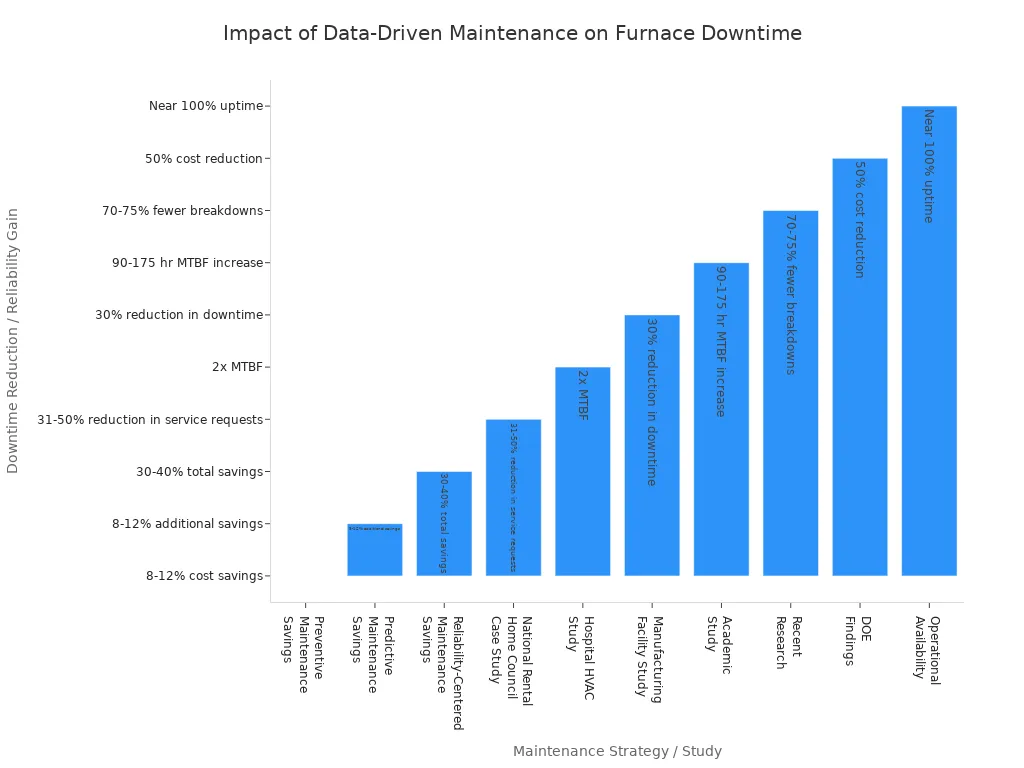
Usted se beneficia de menos cortes no planificados y menores costos de mantenimiento. Las estrategias basadas en datos duplican el tiempo medio entre fallos y logran una reducción de hasta el 50% en el costo total de mantenimiento. Al centrarse en el 20% del equipo responsable de la mayor parte del tiempo de inactividad, maximiza la confiabilidad y mantiene su horno funcionando sin problemas. Este enfoque proactivo no solo ahorra dinero, sino que también respalda los objetivos de eficiencia energética y sostenibilidad.
Eficiencia Energética y Sostenibilidad en el Mercado de Bobinas de Calefacción para Hornos
Salida Variable y Gestión Inteligente de la Energía
Ajuste Dinámico de Potencia
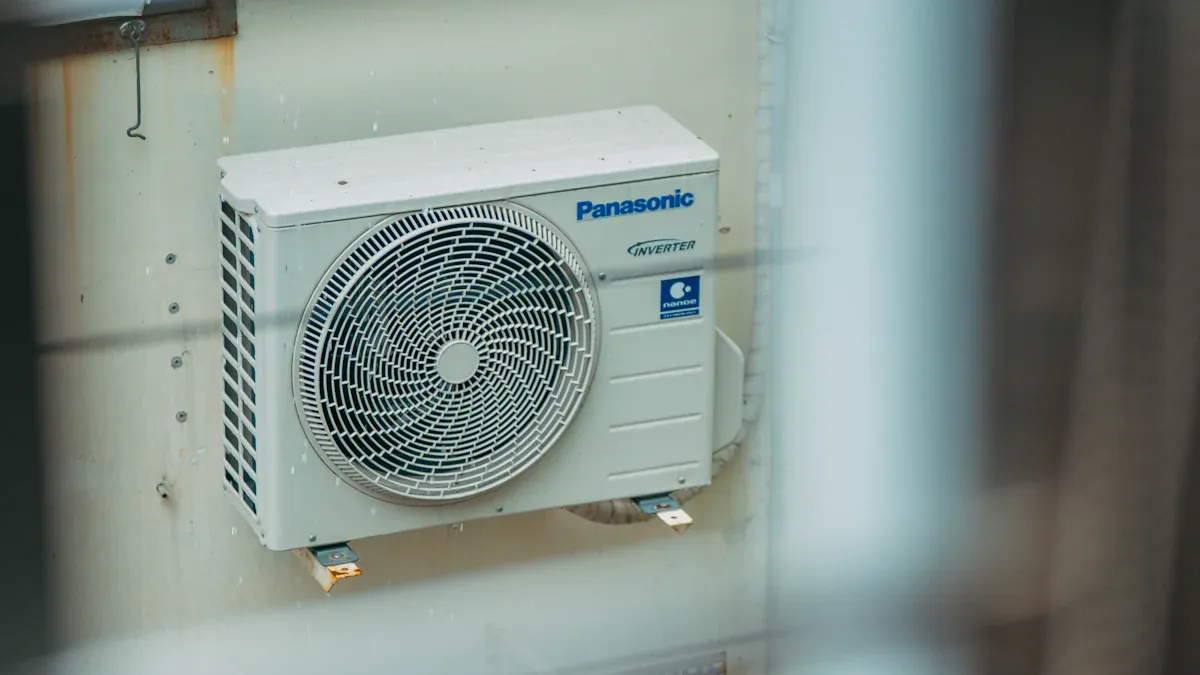
Usted ve que el mercado de bobinas de calefacción para hornos está adoptando rápidamente la tecnología de salida variable para maximizar la eficiencia. Los hornos de capacidad variable ajustan la salida de calor y el flujo de aire en pequeños incrementos, satisfaciendo las necesidades exactas de calefacción de su hogar. A diferencia de los sistemas tradicionales que se encienden y apagan a máxima potencia, estas bobinas de horno de alto rendimiento funcionan durante más tiempo a velocidades más bajas. Este enfoque reduce el desperdicio de energía, mantiene temperaturas estables y mejora la calidad del aire interior. Los sistemas inteligentes de gestión de energía utilizan sensores y automatización para monitorear la ocupación y las condiciones ambientales. Ajustan el funcionamiento del horno en tiempo real, evitando el consumo innecesario de energía y apoyando el mantenimiento predictivo. Como resultado, usted se beneficia de facturas de servicios públicos más bajas y menos averías.
Nota: La actualización a sistemas energéticamente eficientes puede reducir su consumo de energía entre un 20% y un 50%, ahorrándole aproximadamente 500 € al año en facturas de energía. Los sistemas HVAC certificados por ENERGY STAR también reducen los costos de calefacción y refrigeración entre un 10% y un 30%.
Integración con sistemas de casas inteligentes
El mercado de bobinas de calefacción para hornos ahora ofrece una integración perfecta con sistemas domésticos inteligentes. Puede conectar su horno a termostatos inteligentes y plataformas de automatización del hogar, lo que permite el control remoto y la programación optimizada. Los hornos de velocidad variable funcionan bien con estos sistemas, proporcionando un control preciso de la temperatura y una mayor eficiencia. Los sistemas HVAC inteligentes le permiten monitorear el rendimiento, recibir alertas y ajustar la configuración desde su teléfono inteligente. Esta conectividad garantiza que su horno funcione de manera eficiente, incluso cuando está fuera, y respalda el uso de fuentes de energía renovable para un hogar más sostenible.
Materiales Ecológicos y Fabricación
Componentes Reciclables y de Bajas Emisiones
Los fabricantes en el mercado de bobinas de calefacción para hornos utilizan cada vez más materiales ecológicos para reducir el impacto ambiental. Acero inoxidable, por ejemplo, ofrece durabilidad, resistencia a la corrosión y reciclabilidad. Estas propiedades reducen los residuos y las necesidades de mantenimiento, mientras que la baja capacidad térmica del material aumenta la eficiencia energética en los intercambiadores de calor. La investigación muestra que el uso de materiales reciclados y renovables en la fabricación de elementos calefactores reduce significativamente las emisiones y las exposiciones nocivas durante todo el ciclo de vida del producto. Usted apoya la sostenibilidad y los resultados de salud al elegir productos fabricados con materiales ecológicos.
- El acero inoxidable promueve un rendimiento de ciclo de vida más largo.
- Los componentes reciclables ayudan a reducir la huella de carbono de las aplicaciones de calefacción.
Cumplimiento de Objetivos Regulatorios y de Sostenibilidad
Usted nota que el mercado de bobinas de calefacción para hornos está respondiendo a regulaciones más estrictas y objetivos de sostenibilidad. Los fabricantes rediseñan elementos calefactores inteligentes para mejorar la eficiencia y utilizar materiales reciclables, alineándose con los estándares ESG (Ambientales, Sociales y de Gobernanza).. Los elementos calefactores inteligentes personalizados optimizan el uso de energía y la transferencia de calor,, ayudándole a cumplir con mejoras en la eficiencia energética y reducir los costos operativos. Estas tecnologías de calefacción ecológicas cumplen con los estándares en evolución de agencias como la EPA y el Departamento de Energía.. La integración con fuentes de energía renovable, como la solar y la eólica, respalda aún más la descarbonización. Los incentivos regulatorios, incluidos los créditos fiscales para equipos compatibles con energías renovables y de alta eficiencia, le animan a adoptar soluciones avanzadas y sostenibles.
El mercado residencial de hornos en EE. UU. alcanzó los $5.3 mil millones en 2023,, impulsado por la sustitución de sistemas antiguos con soluciones de calefacción energéticamente eficientes que cumplen con los nuevos estándares del Departamento de Energía. Esta tendencia refleja la creciente demanda de equipos sostenibles y de alta eficiencia en el mercado de bobinas de calefacción para hornos.
Beneficios Prácticos de los Elementos Calefactores Inteligentes para Propietarios y Empresas
Facturas de Energía Más Bajas y Ahorro de Costos
Usted ve beneficios financieros inmediatos cuando actualiza a elementos calefactores inteligentes. Estos sistemas avanzados utilizan sensores e inteligencia artificial para optimizar el funcionamiento del horno, ajustando la producción de calor a sus necesidades reales. Evita el desperdicio que proviene del ciclo tradicional de encendido y apagado. En su lugar, su horno funciona al nivel más eficiente, reduciendo el consumo de energía y disminuyendo sus facturas de servicios públicos.
Elementos calefactores inteligentes Apoyan las tendencias de calefacción doméstica centradas en la eficiencia y la sostenibilidad. Al aprender sus rutinas diarias, estos sistemas ajustan los horarios de calefacción automáticamente. Ya no paga por calentar habitaciones vacías ni por hacer funcionar su horno a máxima potencia cuando no es necesario. Con el tiempo, nota ahorros de costos significativos, especialmente durante las temporadas pico de calefacción.
Consejo: Utilice funciones programables para establecer temperaturas más bajas cuando esté fuera. Este simple cambio puede reducir sus costos de calefacción hasta en un 10%.
Los sistemas energéticamente eficientes también le ayudan a calificar para reembolsos e incentivos. Muchas empresas de servicios públicos y programas gubernamentales le recompensan por realizar mejoras en la eficiencia energética. Estos ahorros se acumulan, haciendo que su inversión en tecnología de calefacción inteligente sea aún más atractiva.
Confort Interior Mejorado y Calidad del Aire
Los elementos calefactores inteligentes transforman su experiencia de confort interior. Obtiene un control preciso sobre la temperatura en cada habitación, eliminando puntos fríos y calientes. La calefacción por zonas le permite establecer diferentes temperaturas para cada área, de modo que todos en su hogar o negocio se sientan cómodos.
- Los sensores inteligentes optimizan el funcionamiento del HVAC ajustando la calefacción, refrigeración y ventilación basándose en datos en tiempo real. Disfruta de una eficiencia mejorada y una reducción de desperdicios.
- La monitorización continua de la calidad del aire detecta alérgenos, contaminantes y compuestos orgánicos volátiles (COV). El sistema ajusta automáticamente la filtración y ventilación, creando un ambiente interior más saludable.
- Los elementos calefactores inteligentes permiten el control de temperatura habitación por habitación,, terminando con los conflictos del termostato y proporcionando un funcionamiento silencioso.
- Los sistemas HVAC optimizados por IA aprenden sus hábitos y ajustan los horarios de calefacción dinámicamente, asegurando un confort constante y eficiencia energética.
- Las tecnologías avanzadas de purificación de aire, como filtros HEPA, luz UV-C y carbón activado, eliminan partículas en el aire, esterilizan patógenos y eliminan olores.
- La integración con plataformas de hogar inteligente y el control remoto a través de aplicaciones o comandos de voz mejora la conveniencia y la capacidad de respuesta del sistema.
Usted se beneficia de estas características todos los días. Su horno mantiene temperaturas estables y un aire más limpio, apoyando las últimas tendencias de calefacción doméstica. Respira más tranquilo, sabiendo que su sistema trabaja las 24 horas para proteger su salud y confort.
Mantenimiento Reducido y Mayor Vida Útil
Los elementos calefactores inteligentes reducen la tensión en su horno, lo que lleva a menos reparaciones y una vida operativa más larga. Los termostatos inteligentes proporcionan un control preciso de la temperatura y evitan la calefacción innecesaria. Aprenden su horario, previenen el desperdicio de energía y generan informes de uso de energía que le ayudan a gestionar el consumo de manera eficiente. Este enfoque apoya las tendencias de calefacción doméstica más importantes: eficiencia y fiabilidad.
Usted gana tranquilidad con tecnologías de mantenimiento predictivo.. Estos sistemas monitorean el rendimiento en tiempo real, analizando tendencias de datos para detectar ineficiencias tempranamente. Cuando el sistema identifica un problema potencial, recibe una alerta antes de que se convierta en una avería costosa. Este mantenimiento proactivo reduce las reparaciones de emergencia y mantiene su horno funcionando con la máxima eficiencia.
Los expertos recomiendan actualizar a termostatos inteligentes y componentes energéticamente eficientes como un paso clave para prolongar la vida de su sistema HVAC. Al rastrear el uso de energía y alertarle cuando se necesita mantenimiento, estas tecnologías previenen la degradación del sistema. La monitorización continua asegura que su horno funcione de manera eficiente, reduciendo el desgaste y extendiendo su vida útil.
Nota: El mantenimiento predictivo cambia su enfoque de reactivo a proactivo. Aborda los problemas antes de que se agraven, ahorrando dinero y evitando tiempos de inactividad inesperados.
Usted ve los beneficios en menos llamadas de servicio, costos de reparación más bajos y un horno que dura más. Esto se alinea con el impulso más amplio hacia mejoras en la eficiencia energética y apoya su compromiso con las tendencias de calefacción doméstica sostenible.
Impacto Ambiental y Descarbonización
Usted juega un papel crucial en la reducción del impacto ambiental cuando elige elementos calefactores inteligentes para su horno. Estos sistemas avanzados le ayudan a abordar el cambio climático reduciendo las emisiones de carbono y maximizando la eficiencia. Los elementos calefactores inteligentes utilizan controles inteligentes y datos en tiempo real para optimizar el uso de energía, lo que significa que su horno funciona solo cuando es necesario y al nivel más eficiente.
Un sistema de calefacción inteligente para edificios comerciales reciente, alimentado por recursos geotérmicos profundos y estrategias de control inteligente, logró un aumento del 11% en la producción de energía y una reducción del 14% en los costos de energía.. Este sistema logró una reducción anual de CO2 de 12.2 toneladas mediante una gestión óptima de la energía. Usted ve cómo los elementos calefactores inteligentes pueden reducir significativamente las emisiones de carbono mientras mejoran la eficiencia.
Los elementos calefactores inteligentes hacen más que solo calentar su espacio. Le ayudan a reducir su huella de carbono y apoyar un ambiente más limpio.
Usted se beneficia de varias innovaciones que impulsan la descarbonización:
- Los Sistemas de Gestión de Edificios Inteligentes (SBMS) integran la calefacción, refrigeración, iluminación y monitorización de energía.. Estas plataformas automatizadas proporcionan monitorización en tiempo real, detección de fallos y análisis de datos. Usted optimiza el uso de energía y reduce las emisiones con estas herramientas.
- Las bombas de calor transfieren calor de manera eficiente en lugar de generarlo. Cuando las alimenta con energía renovable, reduce drásticamente las emisiones operativas de carbono.
- La electrificación beneficiosa reemplaza la calefacción basada en combustibles fósiles con alternativas eléctricas eficientes, como los calentadores de agua con bomba de calor. Usted reduce la intensidad de carbono, especialmente cuando combina estos sistemas con electricidad renovable.
- La Inteligencia Artificial (IA) predice sus patrones de consumo y optimiza las operaciones del sistema de calefacción en tiempo real. Usted ve reducciones adicionales en las emisiones de CO2 y los costos de energía.
- Las soluciones de almacenamiento de energía almacenan el exceso de energía renovable. Usted asegura un suministro constante de energía limpia y equilibra la demanda, haciendo que su sistema de calefacción sea más sostenible.
En la ciudad holandesa de Aalsmeer, un sistema inteligente de circuito cerrado recupera el calor residual de un centro de datos y lo suministra a edificios cercanos. Este enfoque reduce las emisiones y los costos de energía. Los sistemas de bombas de calor totalmente eléctricos en edificios comerciales recuperan y reutilizan el calor con eficiencias de hasta el 350% en comparación con las calderas de gas.. Cuando combina estos sistemas con electricidad renovable, puede lograr emisiones casi nulas. Este ejemplo muestra cómo los elementos calefactores inteligentes contribuyen a la descarbonización y reducen el impacto ambiental.
También nota que los estándares regulatorios y los objetivos de sostenibilidad impulsan a los fabricantes a diseñar componentes de horno más inteligentes y ecológicos. Al elegir sistemas que utilizan materiales reciclables y controles avanzados, ayuda a reducir los residuos y apoya una economía circular. Alinea sus elecciones de calefacción con los esfuerzos globales para combatir el cambio climático y proteger el clima para las generaciones futuras.
Consejo: Cuando actualice a un horno inteligente con elementos calefactores de alta eficiencia, no solo ahorra dinero, sino que también tiene un impacto positivo en el medio ambiente.
Los elementos calefactores inteligentes le brindan el poder de mejorar la eficiencia, reducir las emisiones y apoyar un futuro sostenible. Usted se convierte en parte de la solución al cambio climático cada vez que elige tecnología de calefacción avanzada y ecológica.
Cómo Actualizar Su Horno con las Últimas Tendencias en Elementos Calefactores
Evaluación de Su Sistema de Horno Actual
Antes de actualizar, necesita evaluar su sistema de horno existente. Comience revisando el manual de su horno para comprender sus especificaciones técnicas y diagramas de cableado. Utilice herramientas de compatibilidad en línea de los fabricantes de termostatos. Ingrese los detalles del modelo de su horno y la información del cableado para verificar si su sistema admite elementos calefactores inteligentes. Si su horno es más antiguo o tiene una configuración compleja, consulte a un profesional de HVAC para obtener orientación.
Siga estos pasos para garantizar la compatibilidad y seguridad:
- Apague la alimentación en el disyuntor antes de inspeccionar cualquier cableado.
- Retire la placa frontal del termostato y verifique si hay un cable C, que es esencial para la mayoría de los controles inteligentes.
- Tome fotos claras de la configuración del cableado para referencia durante la instalación.
- Identifique el tipo de su sistema —sistema de una etapa, múltiples etapas, bomba de calor o sistema zonificado— y confirme el voltaje.
- Evite errores comunes como la falta de cables C, voltaje incompatible o una ubicación inadecuada del termostato.
- Después de la instalación, verifique todas las conexiones de cableado y la configuración del sistema.
Consejo: Si en algún paso se siente inseguro, contacte a un técnico certificado en HVAC o al servicio de atención al cliente del fabricante.
Cómo elegir el elemento de calefacción inteligente adecuado
Compatibilidad y requisitos del sistema
Debe seleccionar un elemento de calefacción inteligente que cumpla con los requisitos de su horno. Verifique el rango de temperatura de funcionamiento y asegúrese de que se alinee con las necesidades de su horno. Elija materiales que resistan la corrosión y soporten altas temperaturas, especialmente si su horno opera en un entorno adverso. Materiales de alta resistividad como el nicromo o el Kanthal mejoran la eficiencia energética y reducen la pérdida de calor. Confirme siempre que el elemento se ajuste al voltaje y la configuración de etapas de su sistema.
Marcas y modelos líderes en 2025
En 2025, las marcas líderes ofrecen elementos de calefacción inteligentes diseñados para durabilidad y control avanzado. Busque modelos que admitan integración con termostatos inteligentes y sistemas de automatización del hogar. Los principales fabricantes proporcionan elementos con sensores integrados para monitoreo en tiempo real y rendimiento adaptativo. Al seleccionar un modelo, priorice aquellos con sólidos registros de seguridad y fiabilidad comprobada en su tipo específico de horno.
Consejos de instalación y mejores prácticas
Instalación Profesional vs. Instalación por Propia Cuenta (DIY)
Puede instalar algunos elementos de calefacción inteligentes por sí mismo, pero la instalación profesional garantiza un rendimiento y seguridad óptimos. Los profesionales siguen las instrucciones del fabricante al pie de la letra y manejan cableado complejo o requisitos de voltaje. Si opta por hacerlo usted mismo, use las herramientas adecuadas y siga cada paso con cuidado. Siempre conecte su sistema inteligente a Wi-Fi para control remoto y ahorro de energía.
Seguridad, garantía y cumplimiento normativo
Priorice la seguridad apagando la alimentación antes de cualquier trabajo de instalación. Registre su nuevo elemento de calefacción inteligente para activar la garantía. Siga todos los códigos locales y las pautas del fabricante para mantener el cumplimiento. El mantenimiento regular, como la limpieza de filtros y las revisiones del sistema, mantiene su horno funcionando de manera eficiente y prolonga su vida útil.
Nota: Para reparaciones complejas o actualizaciones del sistema, el servicio profesional protege su inversión y garantiza que su horno funcione de manera segura.
Incentivos financieros y reembolsos para mejoras de hornos
Programas gubernamentales y de servicios públicos
Puede aprovechar una amplia gama de incentivos financieros al actualizar su horno con elementos de calefacción inteligentes. Los programas federales, estatales y locales tienen como objetivo reducir sus costos iniciales y fomentar opciones energéticamente eficientes.
- El Crédito para Mejoras en el Hogar Eficiente en Energía le permite reclamar hasta $3,200 en créditos fiscales federales para mejoras de HVAC calificadas hasta 2032.
- La Ley de Reembolsos para Hogares Eléctricos de Alta Eficiencia (HEEHRA) proporciona reembolsos de hasta $8,000 para bombas de calor y $840 para sistemas eléctricos de HVAC. Estos reembolsos están dirigidos a hogares que ganan hasta el 150% del ingreso medio del área.
- Programas estatales, como EmPower+ de Nueva York y EnergyRight de la Autoridad del Valle de Tennessee, ofrecen reembolsos adicionales que van desde $500 hasta $10,000 para mejoras de HVAC y mejoras energéticas relacionadas.
- Las bombas de calor de fuente de aire certificadas ENERGY STAR reconocidas como las más eficientes califican para créditos fiscales federales a partir de 2025.
- Muchas compañías de servicios públicos ofrecen reembolsos por instalar sistemas de HVAC eficientes en energía, incluidos termostatos inteligentes y hornos de alta eficiencia.
- Usted puede combinar reembolsos y créditos fiscales para maximizar sus ahorros, siempre que su equipo cumpla con ENERGY STAR o estándares de eficiencia similares.
- La elegibilidad a menudo depende de los ingresos, la propiedad de la vivienda y la instalación por parte de contratistas aprobados.
- La solicitud temprana es importante porque los plazos de financiamiento y programas pueden limitar la disponibilidad.
Consejo: Conserve todas las facturas y especificaciones del producto. Necesitará esta documentación para calificar para reembolsos y créditos fiscales.
A menudo puede acumular reembolsos locales con incentivos federales. Los reembolsos locales generalmente se aplican primero, reduciendo sus costos iniciales. Luego reclama los créditos fiscales federales durante la declaración de impuestos. Este enfoque le ayuda a gestionar el costo de actualizar a un horno inteligente y eficiente en energía.
Cómo navegar aranceles y aumentos de precios
Puede notar que los aranceles y los problemas de la cadena de suministro global pueden afectar el precio de los equipos de HVAC. Los elementos de calefacción inteligentes y los componentes avanzados de hornos a veces cuestan más debido al aumento en los costos de materiales o aranceles de importación. Sin embargo, los incentivos financieros y los reembolsos ayudan a compensar estos aumentos de precios.
- Las compañías de servicios públicos y los fabricantes pueden ofrecer opciones de financiamiento que aplican los reembolsos directamente al saldo de su préstamo, reduciendo sus pagos mensuales.
- Los incentivos estatales y locales a menudo tienen reglas específicas de la región y requisitos de elegibilidad de ingresos. Revise estos detalles antes de realizar una compra.
- Los sistemas elegibles incluyen hornos de alta eficiencia, bombas de calor, minisplits y controles inteligentes de HVAC.
- Los procesos de solicitud generalmente requieren que compre equipos calificados, use contratistas con licencia y presente prueba de instalación.
Nota: Solicite temprano los reembolsos e incentivos. La financiación limitada y las regulaciones cambiantes pueden afectar la disponibilidad del programa.
Puede reducir el impacto de los aranceles y aumentos de precios combinando múltiples incentivos. Esta estrategia reduce su inversión total y respalda su transición hacia un sistema de calefacción más eficiente y sostenible.
Superando desafíos en la adopción de elementos de calefacción inteligentes para hornos
Gestión de costos iniciales y retorno de inversión
Puede dudar en actualizar su horno debido a la inversión inicial. Los elementos de calefacción inteligentes y los sistemas avanzados a menudo requieren costos iniciales más altos en comparación con las opciones tradicionales. Sin embargo, puede gestionar estos gastos adoptando un enfoque por etapas. Comience con mejoras de eficiencia energética asequibles, como sellar conductos o agregar aislamiento. Estas mejoras reducen la carga energética de su hogar, permitiéndole instalar un sistema de calefacción más pequeño y menos costoso más adelante.
También puede aprovechar incentivos federales y estatales. Los programas introducidos por la Ley de Reducción de la Inflación y otras iniciativas gubernamentales ofrecen reembolsos y créditos fiscales por instalar electrodomésticos eficientes en energía. Estos incentivos reducen su inversión efectiva y hacen que las mejoras inteligentes sean más accesibles. Cuando instala una bomba de calor, puede recuperar una parte significativa del costo en la reventa; algunos informes muestran que los propietarios recuperan más del 100% de los gastos de instalación. Incluso si elige un horno de gas de alta eficiencia, se beneficia de facturas de energía más bajas y un mayor valor de la propiedad.
Tecnologías inteligentes como termostatos programables y sistemas de monitoreo de energía le ayudan a optimizar el uso de energía. Con el tiempo, estas características generan ahorros continuos y respaldan un sólido retorno de la inversión. Al realizar un análisis del ciclo de vida, asegura que sus mejoras proporcionen beneficios financieros sostenidos.
Garantizar la compatibilidad con hornos existentes
Puede preocuparse de si los elementos de calefacción inteligentes funcionarán con su horno actual. Muchos sistemas más antiguos carecen del cableado o los controles necesarios para dispositivos inteligentes modernos. Puede abordar estos desafíos siguiendo algunos pasos clave:
- Verifique si su horno tiene un cable C (cable común), que suministra energía continua a los termostatos inteligentes.
- Si su sistema carece de un cable C, use un kit adaptador de cable C como solución alternativa.
- Elija modelos de termostato inteligente diseñados para funcionar sin un cable C.
- Consulte a un técnico profesional de HVAC para evaluar su sistema y recomendar opciones compatibles.
- Considere la instalación profesional para garantizar una configuración adecuada y evitar problemas de compatibilidad.
- Explore mejoras menores del sistema que puedan ser necesarias para desbloquear todas las funciones inteligentes.
- Busque reembolsos o incentivos de servicios públicos locales para ayudar a compensar los costos de mejora.
Consejo: La orientación profesional garantiza que sus nuevos elementos de calefacción inteligentes se integren sin problemas con su horno existente, reduciendo el riesgo de errores de instalación.
Abordando preocupaciones de privacidad de datos y seguridad
Es posible que tenga inquietudes sobre la privacidad y seguridad de los datos al adoptar tecnología de hornos inteligentes. Cerca del 60% de los consumidores comparten esta preocupación, especialmente a medida que los sistemas inteligentes de gestión energética para el hogar se vuelven más complejos. Estos sistemas suelen incluir medidores inteligentes, sensores, software y redes de comunicación, todos los cuales recopilan y transmiten datos.
Para proteger su información, elija marcas reconocidas que prioricen la ciberseguridad. Busque productos con cifrado robusto y actualizaciones de software periódicas. Cambie siempre las contraseñas predeterminadas y active la autenticación de dos factores cuando esté disponible. Revise las políticas de privacidad para comprender cómo se utilizarán y almacenarán sus datos.
Nota: Mantenerse informado sobre la configuración de privacidad y las actualizaciones de software le ayuda a mantener el control sobre su sistema de calefacción inteligente y salvaguardar su información personal.
Al abordar estos desafíos, se posiciona para disfrutar de todos los beneficios de los elementos calefactores inteligentes para hornos: mayor eficiencia, confort y ahorro a largo plazo.
El Futuro del Mercado de Bobinas Calefactoras para Hornos y Tendencias de Elementos Calefactores Inteligentes
Tecnologías e Innovaciones Emergentes
Observará que el mercado de bobinas calefactoras para hornos está entrando en una nueva era moldeada por rápidos avances tecnológicos y un fuerte enfoque en la sostenibilidad. Las empresas ahora invierten considerablemente en soluciones inteligentes y energéticamente eficientes que sientan las bases para el futuro. Notará varias tecnologías de vanguardia y lanzamientos de productos que redefinen lo que puede esperar de sus sistemas de calefacción:
- Watlow presentó bobinas calefactoras energéticamente eficientes en 2023, diseñadas para el procesamiento de alimentos a alta temperatura. Estas bobinas ofrecen durabilidad y ahorros energéticos significativos, lo que le ayuda a cumplir con estándares de eficiencia más estrictos.
- Hotwatt expandió su capacidad de producción en un 20% en 2024 y lanzó elementos calefactores personalizables. Usted obtiene un control de temperatura preciso, esencial tanto para aplicaciones residenciales como industriales.
- Heat Tech desarrolló bobinas calefactoras inteligentes con integración de IoT. Ahora puede monitorear el rendimiento en tiempo real y rastrear la salud del sistema desde cualquier lugar.
- La bobina calefactora VersaPower™ de Watlow ofrece un control de temperatura avanzado y una estabilidad térmica superior. Este producto se ha vuelto popular en los sectores automotriz y aeroespacial.
- La serie EcoHeat™ de Hotwatt reduce el consumo de energía hasta en un 25%. Usted se beneficia de materiales resistentes a la corrosión y una fiabilidad mejorada.
Observará que el mercado de bobinas calefactoras para hornos está impulsado por la demanda de soluciones ecológicas y el cumplimiento de regulaciones globales. Watlow invirtió 50 millones de USD en mejoras de fabricación sostenible. Esta inversión respalda la transición del mercado hacia iniciativas de construcción ecológica y estándares energéticos más estrictos, especialmente en América del Norte y Europa. En Asia-Pacífico, la rápida industrialización y urbanización crean nuevas oportunidades para la innovación y adopción de bobinas calefactoras avanzadas.
También notará un fuerte énfasis en las prácticas de economía circular. Los fabricantes utilizan aleaciones avanzadas para una mejor eficiencia térmica y durabilidad. La integración de IoT permite el monitoreo en tiempo real, mientras que la IA y la automatización mejoran el mantenimiento predictivo. Estas tendencias se alinean con el impulso global por una infraestructura inteligente y sostenibilidad.
Predicciones para los Próximos Cinco Años
Puede esperar que el mercado de bobinas calefactoras para hornos evolucione rápidamente en los próximos cinco años. El futuro traerá soluciones aún más inteligentes, conectadas y sostenibles. Verá que los elementos calefactores inteligentes se convertirán en estándar tanto en entornos residenciales como industriales. El mercado responderá a la creciente demanda de eficiencia energética y transformación digital.
- Es probable que vea que la automatización impulsada por IA y el análisis predictivo se conviertan en características esenciales. Estas herramientas le ayudarán a optimizar el uso de energía y reducir los costos de mantenimiento.
- El mercado se expandirá a medida que más regiones adopten códigos de construcción ecológica y regulaciones de emisiones más estrictas. Usted se beneficiará de productos que utilicen materiales reciclables y controles avanzados.
- Los fabricantes continuarán invirtiendo en investigación y desarrollo. Verá nuevos materiales y diseños que mejoran el rendimiento y extienden la vida útil del producto.
- El futuro del mercado de bobinas calefactoras para hornos incluirá una mayor integración con fuentes de energía renovable. Tendrá más opciones para conectar sus sistemas de calefacción a energía solar o eólica.
- La transformación digital impulsará el mercado hacia adelante. Utilizará aplicaciones móviles y plataformas basadas en la nube para gestionar sus sistemas de calefacción con facilidad.
Al mirar hacia el futuro, puede esperar que el mercado de bobinas calefactoras para hornos ofrezca soluciones más inteligentes, ecológicas y confiables. Estas innovaciones le ayudarán a alcanzar sus objetivos de confort, eficiencia y sostenibilidad.
Observará que el mercado de bobinas calefactoras para hornos impulsa mejoras importantes en eficiencia, ahorro y sostenibilidad. Los elementos calefactores inteligentes le ayudan a reducir costos y aumentar el confort. El mercado ahora ofrece soluciones avanzadas que se adaptan a sus necesidades. Usted obtiene un rendimiento confiable y apoya los objetivos ambientales. El mercado de bobinas calefactoras para hornos continúa evolucionando a medida que nuevas tecnologías ingresan al mercado. Puede esperar que el mercado ofrezca sistemas aún más inteligentes en el futuro. El mercado de bobinas calefactoras para hornos está listo para moldear el futuro de la calefacción. Usted asegura un futuro mejor al elegir la innovación en el mercado de bobinas calefactoras para hornos.
PREGUNTAS FRECUENTES
¿Qué son los elementos calefactores inteligentes y cómo funcionan?
Los elementos calefactores inteligentes utilizan sensores y microcontroladores para ajustar automáticamente la salida de calor. Usted se beneficia del control de temperatura en tiempo real, ahorro de energía y gestión remota a través de dispositivos conectados.
¿Se pueden instalar elementos calefactores inteligentes en cualquier horno?
Puede actualizar la mayoría de los hornos modernos. Siempre verifique la compatibilidad con el voltaje y los controles de su sistema. Consulte el manual de su horno o a un profesional de HVAC antes de comprar.
¿Cómo ayudan los elementos calefactores inteligentes a reducir las facturas de energía?
Los elementos calefactores inteligentes optimizan la entrega de calor según sus patrones de uso. Usted evita calefacción innecesaria, lo que reduce su consumo de energía y las facturas mensuales.
Consejo: Utilice programaciones para maximizar los ahorros.
¿Son seguros de usar los elementos calefactores inteligentes?
Los fabricantes diseñan elementos calefactores inteligentes con múltiples características de seguridad. Usted obtiene protección contra sobrecalentamiento, detección de fallos y cumplimiento de estándares de la industria. Siempre siga las pautas de instalación para obtener los mejores resultados.
¿Los elementos calefactores inteligentes requieren un mantenimiento especial?
Usted mantiene los elementos calefactores inteligentes de manera similar a los tradicionales. Sin embargo, recibe alertas automatizadas para las necesidades de servicio. Este enfoque proactivo le ayuda a prevenir averías costosas.
¿Los elementos calefactores inteligentes protegerán su privacidad de datos?
Las marcas reconocidas utilizan cifrado y actualizaciones de software periódicas. Usted debe habilitar contraseñas seguras y autenticación de dos factores para mantener su sistema seguro.
¿Qué beneficios ambientales ofrecen los elementos calefactores inteligentes?
Usted reduce su huella de carbono al usar menos energía. Muchos elementos calefactores inteligentes utilizan materiales reciclables y admiten la integración con fuentes de energía renovable.
- Usted apoya los objetivos de sostenibilidad.
- Usted ayuda a reducir las emisiones.