
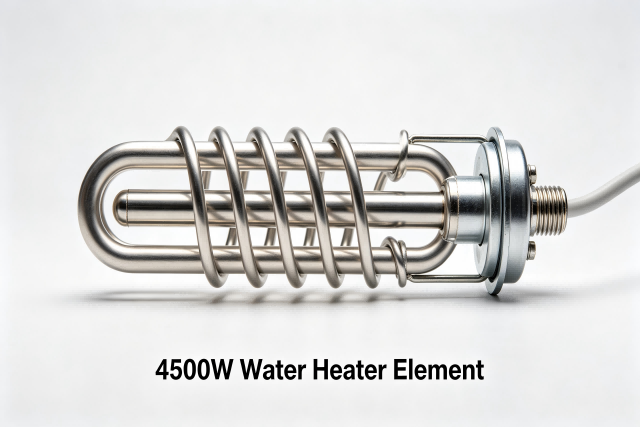
A 4500W electric water-heater element can be a good fit only when it matches the tank’s required voltage and wattage and your home’s electrical circuit is designed for that load. The safest approach is to treat the element as a rated electrical component (not an “upgrade” knob): verify the heater’s data plate, choose an element with the same rating, install with tight connections, refill and purge air before energizing, then check for leaks and re-secure covers. This mirrors manufacturer replacement discipline and aligns with heater engineering fundamentals (resistive/Joule heating occurs where the electrical load is).
Related resources: Heating Element, Heating Element manufacturer, Heating Element Factory, Die Casting Heating Solutions.
What a water-heater element is (and why wattage matters)
A heating element is an engineered component made from electrically conductive material plus insulating/support parts and connectors, designed to produce heat. In operation, the element alloy converts electrical energy into heat via resistive (Joule) heating—the electrical load occurs in the element. Higher wattage generally means faster heat input, but it also means higher electrical demand and potentially different thermal stress on the system.
Section summary: Wattage is not “better by default.” It is a required rating that must match the appliance design and electrical supply.
When 4500W is the right rating
A 4500W element is “right” when the heater’s data plate (or manufacturer documentation) specifies 4500W at the intended supply voltage, and the circuit capacity and wiring are appropriate for that load. Manufacturer-style guidance for element replacement explicitly instructs verifying the new element is correct by referring to the unit’s data plate for voltage and wattage.
Practical indicators that you should stick with the specified wattage
Section summary: If 4500W is the OEM rating, replacement should match it—then the job is mostly about safe installation and leak-free sealing.
When 4500W is the wrong choice
4500W is the wrong choice if it does not match the heater’s rated wattage/voltage or if the home’s electrical setup is not designed for the increased load. Even if an element “fits,” mismatched specifications can cause nuisance trips, overheating at connections, or shortened component life—hidden costs that engineering experience warns about.
Do not “upgrade” wattage without a confirmed design match
- Data plate does not list 4500W for your voltage
- Breaker trips or wiring/terminal overheating risk increases
- Installation requires changes to wiring/circuit that you cannot verify safely
- You are trying to solve “not enough hot water” but the root cause may be sediment, thermostats, or usage patterns
Section summary: A wattage mismatch is a system-level risk, not just a performance difference.
Compatibility checklist before buying
Use this list to reduce wrong-part purchases and repeat labor. Product listings with clear specifications (wattage, materials, approvals, warranty/returns) are helpful signals. For example, an electric element listing for radiators/towel warmers clearly displays wattage (1000W), materials, ingress protection rating, UL approval, and warranty/returns—illustrating the kind of clarity that reduces mistakes.
| Check | What to confirm | Why it matters |
|---|---|---|
| Voltage | Matches the heater data plate | Wrong voltage can prevent proper heating or create unsafe operation |
| Wattage | Matches the heater data plate (e.g., 4500W if specified) | Controls electrical load and heat output; mismatch can cause failures or trips |
| Physical interface | Correct thread/flange style and gasket seat | Prevents leaks and damage to tank opening |
| Connection quality | Terminals/lead connectors fit and can be tightened securely | Loose connections create localized resistive heating and failure risk |
| Warranty/returns | Reasonable policy | Reduces cost if the part is wrong or damaged in shipping |
Section summary: Confirm voltage/wattage on the data plate first, then verify physical fit and connection integrity.
Replacement safety sequence (high-level)
The following sequence mirrors manufacturer guidance for replacing heating elements in a tank water heater and focuses on the steps that prevent injury, leaks, and immediate element burnout.
- Run hot water until cool to reduce scalding risk.
- Turn cold water supply OFF, connect a hose, and drain the tank fully.
- Remove the old element using the correct socket/wrench.
- Verify the new element against the data plate for voltage and wattage.
- Install gasket, lubricate as directed, and tighten element properly.
- Reconnect power wires and ensure all connections are tight.
- Refill the tank and purge air (run a hot faucet full stream for several minutes).
- Check for leaks, replace insulation and covers, then restore power.
Critical notice
Do not energize the water heater until the tank is completely full and air is purged; applying power to an empty/air-bound tank can burn out the upper element (“dry fire”). Also ensure covers are secured to reduce fire and shock risk.
Section summary: Correct rating + tight connections + “full tank before power” are the three most important controls for a successful replacement.
FAQ (4)
1) Will a higher-watt element always give more hot water?
Not necessarily. It can increase heating rate, but total hot-water availability depends on tank size, thermostat settings, incoming water temperature, and usage. Wattage must match the heater’s rated specifications.
2) What is the safest way to choose the right replacement element?
Follow the rule used in manufacturer service guidance: verify the new element is the correct replacement by checking the water heater’s data plate for voltage and wattage.
3) Why do elements fail soon after replacement?
Common causes include energizing before the tank is fully filled and purged (dry firing), loose wire connections creating localized resistive heating, or using a mismatched voltage/wattage element.
4) What does “heating element” mean beyond just the metal coil?
Engineering guidance defines it as an assembly: conductive alloy plus insulating/support material and lead connectors. That is why terminals and mounting/support conditions affect reliability and safety.
Conclusion
A 4500W water-heater element is the right choice when it matches the heater’s specified voltage and wattage and your system is designed for that load. The most reliable and lowest-risk path is to verify the data plate, buy a correctly specified element, install with a sound gasket seal and tight wire connections, fully refill and purge the tank, confirm no leaks, then restore power with all covers secured.
References
-
Heating element engineering explanation: definition (assembly), resistive/Joule heating, materials and frameworks, and hidden costs:
https://tutco.com/conductive/heating-elements -
Manufacturer-style water heater element replacement steps (verify voltage/wattage, tight connections, do not energize until tank is full and air is purged, secure covers):
https://www.whirlpoolwaterheaters.com/support/help/element-was-out-of-range/24 -
Example of spec clarity in a heating element listing (wattage, materials, approvals, warranty/returns):
https://usa.hudsonreed.com/1000-plug-in-watt-electric-heating-element-76309 -
Product-family context for heating elements (tubes/plates/films, custom solutions):
https://jinzho.com/product-category/heating-element/
https://jinzho.com/
https://jinzho.com/about/
https://jinzho.com/product-category/die-casting-heating-solutions/
Disclaimer: This article is general information. Always follow your water heater’s manual and local electrical/plumbing codes. If unsure, contact a qualified technician.

