
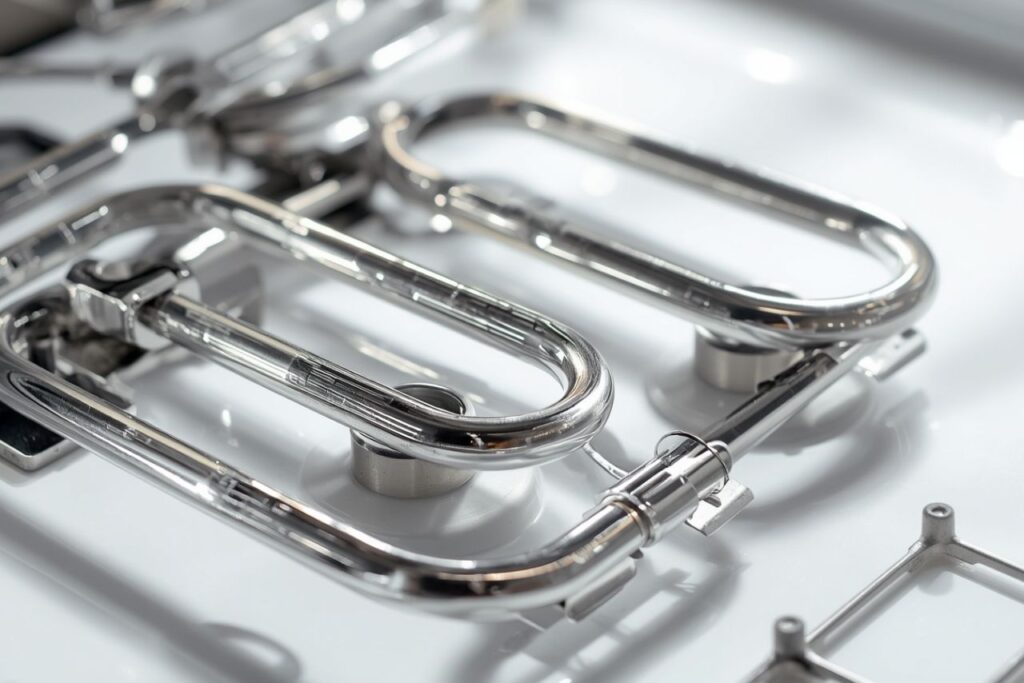
Heating elements in Frigidaire appliances are best understood as engineered assemblies—conductive alloys, insulating frameworks, and terminals—designed to deliver heat safely within a larger system. In electric dryers, the element’s life is dominated by airflow and lint environment; in dishwashers, performance depends on water temperature targets, mineral scale exposure, and safe electrical integration. A practical, high-confidence approach blends product-family knowledge (tubular elements, plates, films, and integrated modules), disciplined part verification (voltage/wattage, fit, approvals), and root-cause prevention to reduce repeat failures and hidden service costs.
Internal references: Heating Element, Heating Element manufacturer, Heating Element Factory, Die Casting Heating Solutions.
- Heating element fundamentals for appliance owners and service teams
- Common heating element architectures used across appliances
- Frigidaire electric dryer heating elements: design, failure patterns, and diagnostics
- Frigidaire dishwasher heating elements: design, failure patterns, and diagnostics
- Selecting the correct replacement: rating, fit, and procurement quality controls
- Prevention: extending element life in dryers and dishwashers
- The less-obvious costs: why “cheap parts” often cost more
- FAQ (3 questions)
- References and outbound links
Heating element fundamentals for appliance owners and service teams
A heating element is not “just a coil.” Engineering definitions describe it as a component containing both electrically conductive and insulating materials, assembled with lead connectors and a framework that positions the conductive alloy in the right thermal and electrical relationship to its environment. Heat generation occurs where the electrical load resides in the alloy, producing **resistive heating** (also called **Joule heating**). Material properties (resistance, thermal expansion, oxide formation) change with temperature and operating conditions, so design and application matching matter.
Section summary
Heating elements are assemblies whose reliability depends on alloy choice, insulation/support method, terminals, and the surrounding operating environment.
Common heating element architectures used across appliances
Appliance heating solutions generally fall into a few architectures. The same fundamental physics applies, but the way the wire interacts with its framework—**suspended**, **supported**, or **embedded**—changes heat transfer mode (conduction vs convection/radiation) and changes failure risk (sag, contact shorts, insulation breakdown).
| Architecture | How the element is physically integrated | Dominant heat transfer | Where it commonly appears |
|---|---|---|---|
| Suspended | Alloy wire held by ceramic/mica insulators at points along its length | Convection + radiation (not conduction) | Open-coil style air heaters; airflow-driven heating |
| Supported | Coil rests in channels or is supported at many points; not fully embedded | Conduction + convection + radiation | Framed heater assemblies where shape retention matters |
| Embedded | Coil encased in insulation (e.g., MgO) inside a sheath | Conduction | tubular heaters, cartridge/immersion elements |
In appliance manufacturing catalogs, these architectures map to product families such as **heating tubes**, **heating plates**, and **heating films**. For example, tubular designs typically use a metal sheath with high-purity magnesium oxide insulation and resistance wire, while plates emphasize uniform surface heating and mechanical strength, and films emphasize ultra-thin, flexible integration for compact spaces.
Section summary
Architecture selection (suspended/supported/embedded) drives heat transfer, allowable watt density, and the dominant failure modes in real appliances.
Frigidaire electric dryer heating elements: design, failure patterns, and diagnostics
Electric dryer elements are airflow-dependent heaters: the system is designed so forced convection removes heat from the element while warming process air for drying. As airflow drops, element temperature rises, raising the probability of coil damage, safety cutoff activation, and connector overheating.
What fails most often in “no-heat” dryer complaints
Diagnostics framework (high-level)
A structured diagnostic sequence typically checks: power supply integrity, continuity of the heating element assembly, continuity of safety devices, and evidence of airflow restriction and heat damage. Because heating elements are assemblies, connector condition and mechanical alignment should be assessed alongside resistance checks.
Safety note
Manufacturer-style guidance for heating element replacement in other equipment emphasizes verifying correct voltage/wattage via the data plate, ensuring wire connections are tight, securing covers, and restoring power only after the system is in a safe operating state. Those principles remain applicable to dryer heater service work.
Section summary
Dryer element failures are frequently caused or accelerated by restricted airflow and connector issues; “replace the coil” alone is often an incomplete fix.
Frigidaire dishwasher heating elements: design, failure patterns, and diagnostics
Dishwasher heaters are responsible for raising wash water temperature and supporting drying performance. A dishwasher may still run a mechanical wash sequence without a functioning heater, but it may fail to reach target temperatures and performance expectations. Water chemistry (hardness) can create scale buildup that degrades heat transfer and stresses components over time.
Common dishwasher heater stressors
| Stressor | Mechanism | Typical outcome |
|---|---|---|
| Hard water / mineral scale | Insulating deposits increase thermal resistance and local temperature | Reduced efficiency, longer heat times, premature failure risk |
| Electrical connection degradation | Loose or corroded contacts raise resistance at terminals | Connector overheating, intermittent heating, fault codes |
| Operational cycling | Repeated heat-up/cool-down drives expansion, oxide-layer stress | Long-term fatigue and eventual burnout |
Diagnostics framework (high-level)
Reliable diagnosis typically pairs electrical verification (resistance/continuity and connector inspection) with system checks (water temperature rise behavior and mineral scale evidence). The objective is to distinguish a failed heater from a control/sensor issue and to identify conditions likely to damage the replacement heater.
Section summary
Dishwasher heater reliability depends heavily on water environment (scale) and connection quality; performance symptoms can appear before full failure.
Selecting the correct replacement: rating, fit, and procurement quality controls
Replacement selection is a quality-control task. A disciplined approach verifies the element’s electrical rating and fit, and treats approvals, ingress protection, and warranty/returns as risk controls. Product listings for other heater types commonly present these fields explicitly (e.g., wattage, materials, ingress rating, safety approval, warranty).
| Selection control | What to confirm | Why it matters |
|---|---|---|
| Data plate match | Correct replacement rating per equipment specifications: voltage and wattage | Prevents underheating/overheating and reduces stress on controls and wiring |
| Mechanical fit | Mounting points, geometry, terminal orientation, clearances | Avoids misalignment, contact shorts, and installation rework |
| Materials & environment | Appropriate sheath/substrate for water chemistry or lint/air environment | Improves corrosion/scale resistance and service life |
| Quality signals | Safety approvals, ingress protection where relevant, and clear warranty/returns | Reduces total cost of ownership and downtime risk |
Where “element type” knowledge helps procurement
Product-family framing is useful for cross-referencing requirements: heating tubes commonly emphasize sheath options (stainless steel/copper/special alloy), magnesium oxide fill, and custom diameters/shapes; heating plates emphasize uniform surface heating, mechanical strength, and adhesion of the heating component to the thermal panel; heating films emphasize ultra-thin, flexible, low-voltage operation for compact spaces; and integrated die-cast modules emphasize heat transfer efficiency and mechanical robustness.
Section summary
Correct selection is a combination of rating verification, fit verification, environment matching, and procurement safeguards (approvals and returns).
Prevention: extending element life in dryers and dishwashers
Prevention focuses on reducing operating temperature and avoiding hostile environments for the heating alloy and connectors. Engineering guidance highlights that contaminants (e.g., chlorine, sulfur compounds) and even surface oils can harm alloys in some heater contexts; in appliances, the most actionable “contaminants” are lint accumulation (dryers) and mineral scale (dishwashers).
| Appliance | Top prevention action | What it protects | Service signal that action is overdue |
|---|---|---|---|
| Electric dryer | Vent and lint-path cleaning | Element temperature, thermal fuse/high-limit cycling, connector life | Long dry times, hot cabinet, weak exhaust, repeated thermal fuse trips |
| Dishwasher | Scale management (softening/descaling approach) | Heat transfer efficiency, heater surface temperature, cycle performance | Poor drying, lower wash temperature, visible deposits |
Section summary
Element longevity improves when airflow is restored in dryers and scale is managed in dishwashers; both reduce the element’s effective operating temperature.
The less-obvious costs: why “cheap parts” often cost more
Engineering discussions of heating solutions emphasize that cost is not limited to part price. Hidden costs include assembly difficulty, field replacement time, repeat failures, shipping delays, and brand/reputation impacts when appliances fail in service. A heater that costs more initially may reduce total cost by lowering failure frequency, simplifying installation, and improving system integration.
| Cost category | What drives it | How better heater selection reduces it |
|---|---|---|
| Labor & downtime | Rework from wrong fit/rating, difficult installation, repeat returns | Model-verified fit, clear installation interfaces, predictable performance |
| Field failure risk | Connector overheating, overheating due to airflow/scale, poor materials match | Correct terminals/materials, environment mitigation, controlled watt density |
| Supply chain friction | Unclear warranty/returns, inconsistent quality, long lead times | Documented warranty/returns and stable supplier specifications |
Section summary
Total cost of ownership for heating elements is driven by repeat failures and service time; quality and integration can outweigh the initial part price.
FAQ
1) What is the most common reason an electric dryer heating element fails repeatedly?
Repeated failures are most often associated with airflow restriction (lint/vent blockage), which raises element temperature and increases cycling stress on both the element and safety cutoffs.
2) Can a dishwasher still run if the heating element is defective?
A dishwasher may still complete a mechanical wash cycle, but heating-dependent outcomes (temperature achievement and drying performance) can be degraded, and the unit may log heater-related faults depending on model behavior.
3) What should be verified before installing a replacement heating element?
A disciplined replacement process verifies correct voltage and wattage per the equipment data plate, confirms mechanical fit and terminal compatibility, and ensures wire connections are tight and covers are secured prior to restoring power.
Conclusion
Heating elements in Frigidaire dryers and dishwashers perform best when treated as engineered assemblies operating within a complete thermal system. Dryer reliability hinges on airflow integrity and lint control; dishwasher reliability hinges on water chemistry and scale management. Across both, the highest-confidence outcomes come from: selecting the correct element by rating and fit, restoring safe mechanical and electrical integration, and addressing the environmental conditions that elevate operating temperature.
References and outbound links
Heating element engineering fundamentals (assembly concept, alloys, suspended/supported/embedded frameworks, environment, watt density, hidden costs):
https://tutco.com/conductive/heating-elements
Safe sequencing and verification principle example (data plate voltage/wattage verification; tight wires; covers secured; restore power only when safe):
https://www.whirlpoolwaterheaters.com/support/help/element-was-out-of-range/24
Heating product families and integrated heating modules context:
https://jinzho.com/
https://jinzho.com/product-category/heating-element/
https://jinzho.com/product-category/heating-element/heating-tubes/
https://jinzho.com/product-category/heating-element/heating-plate/
https://jinzho.com/product-category/heating-element/heating-film/
https://jinzho.com/product-category/die-casting-heating-solutions/
https://jinzho.com/product-category/electric-heater-parts/electric-boiler-heater/
Example of procurement-facing listing fields (power, materials, IP rating, UL approval, warranty/returns):
https://usa.hudsonreed.com/1000-plug-in-watt-electric-heating-element-76309
Disclaimer: This page is educational and platform-agnostic. Appliance designs vary by model and revision. For live electrical troubleshooting or if symptoms persist after standard checks, qualified service procedures are recommended.

