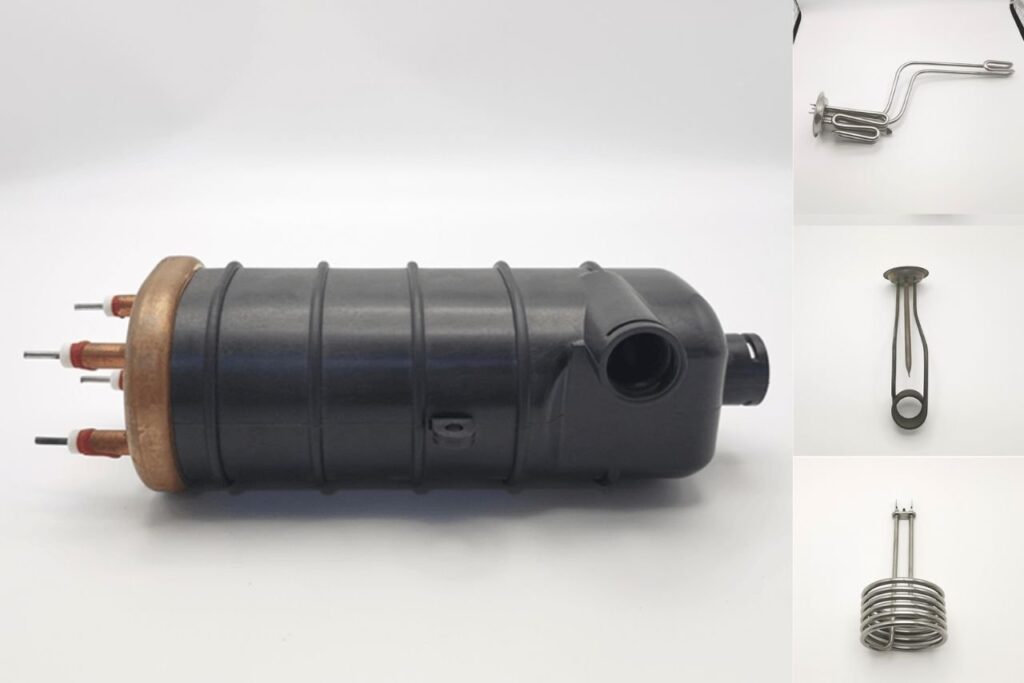
Determining the boundary between a manageable DIY repair and a high-voltage electrical hazard is the hallmark of professional appliance maintenance.
As a fundamental thermal component, a 加熱元件 operates within a complex ecosystem of thermostats, relays, and terminal blocks. Drawing from the manufacturing insights of Camewould (Jin Zhong) a leading global 加熱元件製造商 with over 40 years of industrial experience this guide provides a diagnostic framework to help you decide when to pick up a screwdriver and when to pick up the phone.
Diagnostic Roadmap
Visual Red Flags: Immediate Indicators of Failure
Before performing electrical tests, a thorough visual inspection of the 加熱元件 can often provide an immediate answer. Most range failures are caused by physical degradation of the outer sheath, which is typically made of Incoloy 800 or high-grade stainless steel.
Signs of Terminal Distress
- Blistering and Pitting: Small bubbles or “craters” on the element surface indicate that the internal Nichrome wire has created a localized hot spot, breaching the Magnesium Oxide (MgO) insulation.
- Separation or Breaks: If the coil has physically snapped or shows a visible gap, the electrical circuit is permanently open.
- Charred Terminals: Blackened or melted plastic around the terminal block where the element plugs in is a sign of high-resistance arcing.
Multimeter Continuity: The Scientific Verdict
If the element looks intact but fails to heat, the next step is a Continuity Test. This determines if electricity can flow from one end of the 加熱元件工廠-built coil to the other without interruption.
Continuity Benchmark Table
| 元件類型 | Wattage Range | Normal Resistance ( ) |
|---|---|---|
| 6-inch Surface Burner | 1200W – 1500W | 40 – 48 |
| 8-inch Surface Burner | 2100W – 2600W | 22 – 28 |
| Oven Bake Element | 2500W – 3500W | 18 – 25 |
When to call a pro: If the element shows correct resistance but still won’t heat, the failure likely resides in the infinite switch or the electronic control board (ERC). Testing live 240V circuits at the control board level is a high-risk task that requires professional certification.
Beyond the Element: Control Board & Wiring Hazards
Modern high-end ranges often utilize 壓鑄加熱解決方案 and integrated convection systems. When these fail, the diagnostics become non-linear.
- Thermal Fuses: Many ovens contain a one-time thermal fuse that trips if the oven overheats. If both the bake and broil elements stop working simultaneously, this fuse is likely blown.
- Corroded Wire Harnesses: In older units, the internal wiring can become brittle and snap. Identifying a break inside a wire bundle is a complex diagnostic that a professional should handle.
- Infinite Switch Failure: If a burner only works on “High” or won’t turn on at all despite the element being fine, the internal contacts of the switch have failed.
Why Factory-Spec Engineering Prevents Faults
At Suli Technology (Camewould), our CNAS-accredited laboratory conducts rigorous stress tests on every 加熱元件 design. We prioritize high-density MgO filling to ensure the resistive wire remains centered, even during extreme thermal expansion. Using components that meet ISO9001 and VDE standards reduces the likelihood of “nuisance trips” in your home’s GFCI breakers and ensures the element’s thermal response remains consistent over its 5,000+ hour life cycle.
Expert Diagnostic FAQ
Q1: My element is glowing red in some spots but dark in others. Is it safe?
No. This is a sign of internal coil displacement or partial thinning of the sheath. Uneven heating leads to structural failure and can potentially melt the metal floor of your oven. Replace it immediately.
Q2: Can I replace a hidden bake element myself?
While possible, hidden bake elements are located beneath the oven floor and often require removing the back panel and sliding the oven out. If you are uncomfortable with significant appliance disassembly, this is a job for a professional.
Q3: Why does my oven trip the circuit breaker only when it reaches a certain temperature?
This is a classic sign of a leakage current fault. As the element expands with heat, a microscopic crack in the sheath might open up, allowing current to leak to the ground. A professional is needed to perform an insulation resistance test (Megger test).
Q4: Are universal elements as good as OEM ones?
Only if they come from a verified 加熱元件製造商 with matching electrical specs. A mismatch in wattage can overload your range’s internal wiring or control relays.
Q5: How often should I perform these diagnostic checks?
A visual check every 6 months or whenever you perform a deep clean is sufficient. Electrical testing is only necessary when you notice changes in preheat times or uneven cooking results.
Q6: Does a humming sound mean the element is failing?
Not necessarily. A slight hum can be caused by the magnetic field of the AC current. However, a loud buzzing or crackling sound indicates arcing at the terminals, which requires immediate professional attention.
Q7: What is the most common reason a pro is called for element issues?
Burned-out terminal wires. Often the element is fine, but the wire harness connected to it has melted due to a loose connection. Repairing the harness requires specialized high-temperature terminals and crimping tools.
Q8: How does Camewould ensure its elements are diagnostic-friendly?
We use precision-calibrated terminal pins that ensure a tight, low-resistance fit with standard range harnesses, reducing the most common point of failure and making DIY installation more reliable.
Global Excellence in Thermal Solutions
Supplying 3 million units monthly to the world’s leading brands, Camewould is the expert in safe, high-performance heating. Trust our 40 years of engineering to power your home.
References & Technical Data Sources:
- [1] Camewould Electrical Technology – Diagnostic & Manufacturing Quality Standards (2025). jinzho.com
- [2] Wikipedia – Joule Heating & Electrical Continuity Principles. en.wikipedia.org
- [3] IQS Directory – Troubleshooting Industrial and Domestic Heating Elements. iqsdirectory.com
- [4] Sears Home Services – When to Call a Pro for Range Maintenance. searshomeservices.com