您依赖热水浴缸来获得舒适与放松。热水浴缸内部的加热元件通过在水流过时将电能转化为热能来工作。这一过程使您的水保持温暖宜人。来自可靠供应商的优质加热元件确保了最佳性能。许多加热元件采用相似的技术,因此在您发现问题时,更换过程简单直接。 bộ phận làm nóng 维护良好的加热元件可以延长热水浴缸的使用寿命并提升您的体验。 nhà sản xuất bộ phận làm nóng giống Hệ thống sưởi điện Jinzhong **热水浴缸加热元件的功能与重要性** bộ phận làm nóng thiết bị gia dụng **加热元件的作用**.
您依赖加热元件来保持浴池水温处于理想温度。加热元件在运行过程中执行多项关键功能:.
它通过电阻将电流转化为热能,类似于灯泡中的灯丝。
该元件位于不锈钢外壳内,允许水流过并吸收产生的热量。
包括高限开关和温度传感器在内的传感器,负责监测和控制水温,以确保安全与舒适。
- 水流充分流过元件可防止过热和损坏,例如烧坏加热线圈。.
- 加热元件通过加热热水浴缸中的循环水来维持您所需的水温。.
- 这一过程背后的科学原理依赖于焦耳定律。当电流通过元件时,电阻导致电子与原子碰撞,传递动能并产生热量。产生的热量取决于电阻和电流的平方,正如焦耳第一定律所描述。选择诸如镍铬合金等材料是因为它们的高熔点和稳定性,确保了安全高效的热传递。热量主要通过传导从元件传递到水中,这意味着热的元件在较冷的水流过时直接将其加热。 一旦确认元件故障,您就可以放心地着手寻找替换件了。, 在开启加热器之前,务必确保您的热水浴缸有适当的水流。这可以防止干烧并延长加热元件的寿命。.
- **为何加热元件对您的热水浴缸至关重要** 干烧, 加热元件是您热水浴缸性能的核心。没有它,您将无法维持舒适的水温,您的浴池体验也会大打折扣。加热元件的效率直接影响您为保持水温所消耗的能量。高效的元件能快速加热水并以更少的电力维持温度,从而降低您的能源账单。低效或故障的元件会迫使您的系统更费力地工作,增加成本和磨损。.
- 高质量的加热元件还能确保安全性和耐用性。制造商使用钛、因科洛伊合金或不锈钢等材料来抵抗腐蚀并延长使用寿命。包括厚度和表面积在内的设计会影响元件加热水的均匀性和速度。过热保护等集成安全功能可防止危险情况和意外停机。.
您还必须考虑加热元件故障的风险。如果元件失效或水质化学平衡未得到维护,可能会发生过热、腐蚀和电气危险。 Nhiệt lượng Joule. 频繁启停或不正确的安装会缩短元件的寿命。定期检查和平衡的水质化学有助于防止这些问题,确保您的热水浴缸始终是一个安全愉快的休憩之所。 nichrome 选择配备高效、设计精良的加热元件的热水浴缸,对于可靠的性能和长期的节省至关重要。 **热水浴缸加热元件的工作原理**, **加热元件的基本操作**.
Mẹo: 您依赖加热元件将电能转化为热水浴缸所需的热能。当电流流过不锈钢外壳内的电阻线圈时,该过程开始。电流通过时,线圈会发热。水在加热器外壳内循环,吸收线圈产生的热量。然后,加热后的水通过喷射口返回浴缸,创造出舒适的浸泡环境。恒温器和安全开关调节温度,确保高效安全的加热。闭环水循环系统保持恒定的温暖并防止过热。.
**提示**:在启动加热器之前,务必检查您的热水浴缸水泵是否提供充足的水流。适当的循环可防止过热并保护元件。
Các 加热元件位于热水浴缸性能的核心位置。 没有它,您将无法维持舒适的水温,水疗体验也会受到影响。 **加热线圈与元件材料** 加热线圈是加热元件的核心。制造商使用因科洛伊合金或不锈钢等耐腐蚀合金来包裹线圈。这些材料保护灯丝免受湿气影响,并延长元件的使用寿命。线圈的电阻率和电阻温度系数确保了稳定的热量产生。功率密度必须与您热水浴缸的要求相匹配,以避免过早失效并优化热量传递。抗拉强度和抗蠕变性等机械性能帮助元件承受高温。适当的绝缘和密封保护内部组件,支持可靠的加热性能。.
MỘT **因科洛伊/不锈钢** 热量产生,耐腐蚀 腐蚀 **护套**.
保护线圈,保持效率. **陶瓷/云母** 电气隔离.
Ghi chú: **垫圈**.
橡胶/硅胶

密封组件,防止泄漏
**端子、连接件与外壳** 您使用坚固的端子将加热元件连接到热水浴缸的电气系统。 **安装过程中避免弯曲或扭曲这些端子**,因为这可能会使环氧树脂密封破裂并导致水侵入。垫圈密封加热器组件,防止泄漏并承受热量和压力。高质量的垫圈提高了耐用性。压力和流量开关监测水的流动,如果流量过低则停止加热器。热电偶套管保护敏感传感器免受高温和高压影响,确保监测准确。恒温器传感器调节温度,而高限开关在温度超过安全限值时切断电源。.
**注意**:维护后,请排出管道中的空气,以防止干烧和快速过热。.
**元件如何加热热水浴缸水**
加热元件通过将热量从线圈传递到循环水来提高水温。传热效率取决于水温和流速。例如,**将水流量从每分钟8升增加到18升**可以使传热系数增加一倍以上,从而实现更快加热并防止元件过热。
**充足的水流可以冷却元件**并防止危险的温度骤升。压力和流量开关通过在低流量条件下停止加热器运行来保护设备和用户。持续的水循环至关重要。 corrosion-resistant alloys such as Incoloy or stainless steel to encase the coil. These materials protect the filament from moisture and extend the lifespan of the element. The coil’s resistivity and temperature coefficient of resistance ensure stable heat production. Watt density must match your hot tub’s requirements to avoid premature failure and optimize heat delivery. Mechanical properties like tensile strength and creep resistance help the element withstand high temperatures. Proper insulation and hermetic sealing safeguard internal components, supporting reliable heating performance.
| Thành phần | Vật liệu sử dụng | Mục đích |
|---|---|---|
| **加热线圈** | Incoloy/Stainless | Heat generation, corrosion resistance |
| Sheath | Thép không gỉ | Protects coil, maintains efficiency |
| Cách nhiệt | Ceramic/Mica | Electrical isolation |
| Gasket | Rubber/Silicone | Seals assembly, prevents leaks |
Terminals, Connections, and Housing
You connect the heater element to your hot tub’s electrical system using sturdy terminals. Avoid bending or twisting these terminals during installation, as this can fracture epoxy seals and allow water intrusion. Gaskets seal the heater assembly, preventing leaks and withstanding heat and pressure. High-quality gaskets improve durability. Pressure and flow switches monitor water movement, stopping the heater if flow drops too low. Thermowells shield sensitive sensors from high temperatures and pressure, ensuring accurate monitoring. Thermostat sensors regulate temperature, while high limit switches cut power if temperatures exceed safe limits.
Note: After servicing, purge air from the plumbing to prevent dry firing and rapid overheating.
How the Element Heats Hot Tub Water
The heater element raises water temperature by transferring heat from the coil to the circulating water. Heat transfer efficiency depends on water temperature and flow rate. For example, increasing water flow from 8 to 18 liters per minute can more than double the heat transfer coefficient, allowing faster heating and preventing element overheating. Adequate water flow cools the element and prevents dangerous temperature spikes. Pressure and flow switches protect both equipment and users by stopping heater operation during low flow conditions. Consistent water circulation 促进混合,减少温度波动, ,并有助于温控器保持均匀的热度。.
标注:平衡的水化学性质和适当的消毒剂水平可防止腐蚀和细菌滋生,保护加热器护套并延长加热元件的使用寿命。.
热水浴缸加热元件类型
常见设计:流经式与螺栓固定式
选择热水浴缸加热元件时,您会遇到两种主要设计:流经式和螺栓固定式。流经式元件允许水流直接通过不锈钢管内的加热线圈。这种设计最大限度地提高了传热效率和能效。大多数现代家用热水浴缸使用流经式元件,因为它们性能可靠且易于更换。. 不锈钢管状加热元件,尤其是单端类型, ,主导着家用市场。您可以从其成本、可用性和性能的平衡中受益。另一方面,螺栓固定式元件直接安装在加热器外壳上,在较新的水疗设备中不太常见。您可能在较旧或特殊型号中找到螺栓固定式设计,但流经式仍然是大多数家用热水浴缸的标准。.
提示:更换加热元件时,请查阅您的水疗设备手册以确认设计类型。这可以确保安装顺利和加热效果最佳。.
材料选择:因科洛伊合金、钛和涂层金属
为加热元件选择合适的材料会影响其使用寿命和性能。因科洛伊合金、钛和涂层金属各有独特的优势。因科洛伊合金元件提供可靠的耐腐蚀性,适用于大多数家庭用水条件。钛元件具有卓越的耐用性,特别是在盐水或化学侵蚀性环境中。一些钛元件采用环氧涂层,进一步延长了其使用寿命和保修范围。.
| 材料类型 | 涂层 | Thời hạn bảo hành |
|---|---|---|
| Incoloy | Không có | 标准(未指定) |
| Titanium | Không có | 2年 |
| Titanium | 环氧浇注 | 4年 |
您会注意到 钛元件的保修期通常比因科洛伊合金更长 。这反映了其增强的耐腐蚀性。如果您拥有高端或盐水水疗设备,应考虑使用钛或环氧浇注钛以获得最大保护。对于大多数标准家用热水浴缸,因科洛伊合金提供了经济高效且可靠的解决方案。.
注意:始终根据您的水化学性质和水疗设备使用情况匹配元件材料,以达到最佳效果。.
功率规格与兼容性
选择具有正确功率规格的加热元件对于安全高效运行至关重要。您必须在 更换前确认其功率、电压和物理尺寸 。使用不正确的功率规格可能导致加热不良甚至损坏水疗设备的电气系统。例如,一个 5.5千瓦的加热元件支持双电压(115V/230V) ,并与Balboa、Gecko、ACC和Hydro Quip等主要水疗控制系统兼容。功率规格决定了您的水疗设备加热速度以及保温效果,尤其是在较大的浴缸中。.
加热元件有多种功率规格和电压:
- 功率规格通常在1.5千瓦至27千瓦之间.
- 电压选项包括120V和240V。.
- 您必须将元件的功率规格和电压与水疗设备的电气系统匹配,以实现最佳性能。.
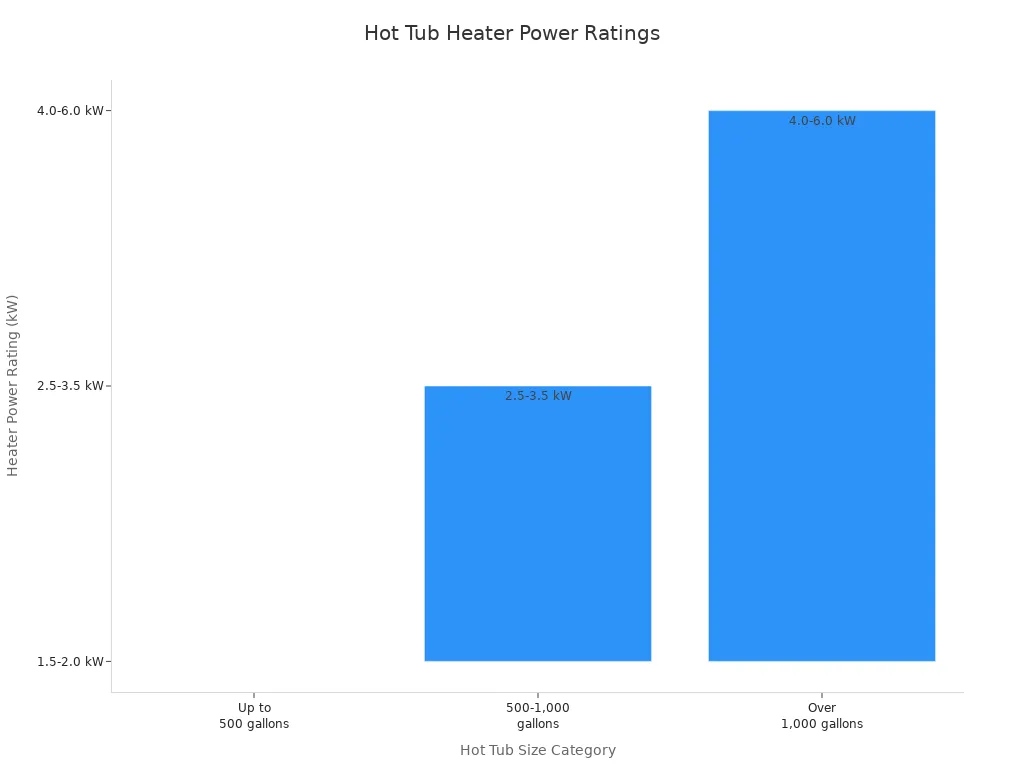
下表总结了 按热水浴缸尺寸划分的最常见功率规格:
| 定制尺寸与形态 | 适用的浴缸容量 | Điện áp |
|---|---|---|
| 1.5-2.0千瓦 | 最多500加仑 | 120V |
| 2.5-3.5千瓦 | 500-1,000加仑 | 120V/240V |
| 4.0-6.0千瓦 | 超过1,000加仑 | 240V |
标注:在选择替换加热元件前,务必查阅您的水疗设备文档或咨询专业人士。正确匹配可确保安全运行并延长热水浴缸系统的使用寿命。.
热水浴缸加热元件故障迹象
无热量或加热不足
当您发现热水浴缸的水无法达到所需温度或冷却速度比平时快时,可能首先注意到问题。烧毁或损坏的加热元件将完全停止产热。这通常是由于元件在没有足够水流的情况下运行(称为干烧)造成的。发生这种情况时,线圈或护套可能熔化或出现可见损坏。加热不足也可能是元件上水垢堆积的结果。硬水或盐系统中的矿物质会在加热器上形成一层隔热层,降低其效率。您可能会注意到水温下降或加热时间大大延长。使用欧姆表测试加热元件有助于确认问题。正常的元件通常显示电阻在 9 và 12 ohm. 之间。超出此范围的读数,例如无限大或零电阻,表明元件已失效。.
提示:如果您的热水浴缸难以维持温度,请检查水流是否正常,并检查加热元件是否有可见损坏或水垢。.
断路器跳闸和错误代码
GFCI断路器频繁跳闸或控制面板上出现错误代码,通常表明加热元件存在电气问题。水分通过元件护套上的针孔或裂缝侵入可能导致电气短路。发生这种情况时, GFCI断路器会跳闸 以保护您免受潜在危险。如果没有这种保护,您将面临电弧、火花甚至火灾的风险。也可能出现与加热、, 高温限制开关, 或流量传感器相关的错误代码。这些代码提醒您存在过热、水流过低或传感器故障。高温限制开关和压力开关是安全装置。如果温度升得太高或水流降至安全水平以下,它们会关闭加热器。如果这些开关反复跳闸,您应检查加热元件及相关组件。.
- 常见的电气症状包括:
- 加热器启动时GFCI断路器跳闸
- 出现“无热”、“过热”或“流量”错误代码”
- 高温限制开关或压力开关跳闸
物理迹象:腐蚀、水垢和锈蚀
对加热元件进行物理检查可以揭示明显的故障迹象。腐蚀通常表现为元件护套上的点蚀、变色或锈蚀。. 低pH值 或水中的化学失衡会加速腐蚀,从而削弱元件并增加电气短路的风险。水垢堆积在元件上形成白色或白垩质层,在硬水地区尤其如此。这种堆积会降低传热效率,并可能导致元件过热和烧毁。外壳上的裂缝或针孔会使水进入,导致短路和进一步损坏。如果您发现任何这些迹象,应及时更换加热元件以避免更多问题。.
- 注意以下物理警告信号:
- 加热器护套上的锈蚀或变色
- 白色、白垩质的水垢沉积物
- 元件上的裂缝、针孔或熔化区域
定期检查与维护有助于及早发现问题,确保热水浴缸安全高效运行。.
如何检测热水浴缸加热元件
使用万用表测试 热水浴缸加热元件 帮助您在更换任何部件之前诊断加热问题。您可以遵循系统化的方法,确保结果准确,并在整个过程中保持安全。.
检测前的安全预防措施
水电作业需采取严格安全措施。必须遵循以下预防措施以保护自身及设备安全:
- 进行任何检查、维修或检测前,务必切断热水浴缸所有电源.
- 为增强安全性,应在配电箱和浴缸专用断电开关处双重关闭电源。.
- 仅当接受过专业培训后方可进行电气维修;否则应联系合格电工或浴缸技术员。.
- 安装或拆卸时避免弯折、推压或扭转加热元件接线端,以防损坏。.
- 紧固或松开接线螺母时需使用两把扳手,防止接线端子本身转动。.
- 维修或重新注水后需排除管道内所有空气,防止干烧。.
- 重新接通电源前检查管道系统是否泄漏。.
- 保持水质化学平衡,防止腐蚀与水垢积聚。.
- 穿着橡胶底鞋并摘除所有首饰 以降低触电风险。.
- 测量电压时将一只手置于背后,最大限度减少电流流经身体的可能。.
⚠️ Mẹo: 除非完全断开所有电源,否则切勿在水体附近操作电气部件。.
检测所需工具
需配备合适工具以准确检测加热元件。开始前请准备以下物品:
- 设置为电阻测量模式(欧姆)的万用表或欧姆表。.
- 电流表(可选,用于测量240伏工况下的电流负载)。.
- 用于松紧接线螺母的两把扳手。.
- 绝缘手套与橡胶底鞋用于人身防护。.
- 用于打开加热器外壳的螺丝刀或螺母起子。.
备齐这些工具可确保安全高效完成检测。.
分步检测流程
关闭电源并排空热水浴缸
- 在主断路器和浴缸专用断电开关处切断热水浴缸所有电源。.
- 使用电压测试仪确认浴缸已完全断电。.
- 将热水浴缸水位排至加热器位置以下,防止检测期间漏水或意外接触水体。.
接触加热元件
- 拆卸热水浴缸检修面板以接触加热器总成。.
- 定位加热元件(通常位于控制箱附近的不锈钢管内)。.
- 断开加热元件接线端上的两根电源引线以隔离元件。.
使用万用表检测通断性
- 将万用表调至欧姆(Ω)档位,建议选择1000欧姆量程。.
- 将两个测试探针分别接触加热元件的两个接线端。.
- 观察电阻读数:
- 正常加热元件通常测量值 介于9-14欧姆之间, (具体范围因型号而异)。.
- 读数过低(接近0)表明存在短路。.
- 读数极高或无限大意味着元件断路或损坏。.
- 检测对地短路时,将一个探针接触接线端,另一个接触元件金属护套。无限大读数表示无短路;任何可测电阻值均表明元件故障。.
检测结果解读
- 若电阻测量值在9-14欧姆之间,加热元件可能状态良好。.
- 断路或无读数表明元件已失效需更换。.
- 电阻读数极低提示存在短路,同样需要更换。.
- 若检测到接线端与元件护套间存在导通性,则元件存在对地短路故障。.
- 若热水浴缸断路器跳闸,请断开加热元件后恢复供电。若断路器保持闭合,则加热元件很可能是故障原因。.
- 若元件接线端存在电压但水体无法加热,则元件已损坏。.
- 务必目视检查元件是否存在孔洞、裂纹或烧灼痕迹等损伤迹象。.
🛠️ Ghi chú: 若加热元件通过所有测试但热水浴缸仍无法加热,应检查温控器、高温限制开关或控制板等相关部件。.
按摩浴缸加热元件更换指南

更换热水浴缸加热元件需细致准备并注重细节。若能有条不紊地遵循每个步骤并优先保障安全,您可在家中完成此项任务。.
准备与安全步骤
开始前必须准备工作区域并确保安全。遵循以下步骤为成功更换做好准备:
- Tắt nguồn điện tại cầu dao.. 此步骤可防止触电并保障人身安全。.
- 备齐所有必要工具与材料。您需要兼容的替换加热元件、扳手、螺丝刀、万用表,若型号需要还需聚四氟乙烯密封带。.
- 将热水浴缸完全排水至加热元件位置以下。排水操作请始终遵循制造商说明。.
- 拆卸检修面板或盖板以接触加热器总成。.
- 谨慎断开所有电气连接。记录导线颜色与接线端位置以便后续正确重接。.
- 拆除固定加热元件的所有安装硬件(如支架、卡箍或螺丝)。.
- 轻柔取出旧加热元件。注意勿损坏周边部件。.
⚠️ Mẹo: 接触任何电气部件前,务必使用万用表双重确认电源已断开。.
拆卸旧加热元件
断开电源和水源
在拆卸加热元件之前,您必须确保完全安全。首先,在断路器处关闭热水浴缸的所有电源。使用万用表确认加热端子处无电压。接下来,将水位排至加热元件以下。关闭所有截止阀,防止拆卸过程中水进入该区域。.
断开导线和固定件
确认电源已关闭且水已排干后,断开加热元件上的所有电线。拍照或标记电线以记住其位置。卸下将元件固定在外壳上的所有安装硬件,例如螺钉或夹具。.
从外壳中取出元件
断开导线和固定件后,轻轻将加热元件从其外壳中拉出。如果元件感觉卡住,可稍微晃动以松动,但避免使用过大的力。检查外壳是否有腐蚀或碎屑。彻底清洁该区域,为安装新元件做好准备。.
注意:如果您的加热组件 使用超过八年 或出现明显腐蚀,请考虑更换整个组件以提高可靠性。.
安装新加热元件
选择正确的替换件
选择与原规格匹配的替换加热元件。检查电压、功率和物理尺寸以确保兼容性。使用错误的元件可能导致电气问题或加热性能不佳。.
安装技术和密封
准备新加热元件,如果制造商建议,用特氟龙胶带缠绕螺纹。将元件插入外壳,确保正确对齐。用安装硬件固定,均匀但不过度拧紧。过度拧紧可能损坏元件或导致泄漏。安装新的O型圈或垫片,如有建议,用硅脂润滑。确保密封件正确就位,防止挤压或泄漏。.
🛠️ Mẹo: 在安装新元件之前,务必清洁密封表面并移除旧的O型圈或垫片。.
重新连接导线和测试
按照拆卸前的原样重新连接电线和传感器。牢固拧紧连接,以防止电弧或过热。关闭并固定检修面板。缓慢将热水浴缸加注至推荐水位。在加注过程中,检查加热组件周围是否有泄漏。通过松开加热器附近的活接头来排出管道中的空气,避免气锁。.
在恢复电源之前,再次检查所有连接是否紧固且区域是否干燥。在断路器处重新打开电源。将热水浴缸设置为加热模式,观察控制面板上加热器是否启动。监测水温 15–30分钟 以确认加热器正常工作。注意错误代码或断路器跳闸。如果发现任何问题,检查高温限位开关和恒温器。.
提示:安装后务必进行泄漏检查,并立即处理任何泄漏,以防止水损坏。.
更换后测试热水浴缸
在热水浴缸中安装新加热元件后,您必须测试系统以确认安全有效的运行。仔细测试可保护您的投资,并确保舒适的水疗体验。您应遵循系统化的方法,验证加热元件功能正常且安装符合安全标准。.
按照以下步骤在更换加热元件后测试热水浴缸:
隔离加热元件:
断开加热器引线与加热端子的连接。此步骤允许您安全隔离加热元件以进行准确测试。.测量电阻:
将欧姆表设置到适当量程。将探针放在加热端子上。健康的加热元件应显示9至12欧姆之间的电阻。如果读数超出此范围,则元件可能有故障。.检查对地短路:
将一个探针放在端子上,另一个放在元件的金属护套上。无穷大读数表示无对地短路。任何可测量的电阻都表明存在问题,需要处理。.验证电流消耗:
使用电流表测量加热器运行时的电流消耗。对于110V系统,预期约为15安培。对于220V系统,电流消耗应接近25安培。这些值确认元件接收到正确电压并按预期运行。.检查安装:
检查端子和连接。避免弯曲或扭曲端子,因为这可能损坏密封件并允许水进入元件。固定所有连接,并确保外壳干燥。.排出管道空气:
清除管道中滞留的空气。气锁可能导致过热或干烧,从而损坏加热元件。打开加热器附近的活接头或使用水疗池的排气功能释放滞留空气。.恢复水质化学平衡:
测试并调整热水浴缸水的化学平衡。适当的pH值和消毒剂水平可防止腐蚀并延长加热元件的使用寿命。.监测初始加热循环:
打开热水浴缸并设置所需温度。观察控制面板上加热器是否启动。注意错误代码或断路器跳闸。让系统运行至少30分钟。检查水是否均匀加热,以及加热器是否按预期循环开启和关闭。.限制加热循环(可选):
使用控制系统设置限制加热循环次数。此做法可延长加热元件的使用寿命并提高能效。.
🛠️ Mẹo: 在首次加热循环期间,务必检查加热组件周围是否有泄漏。立即处理任何泄漏,以防止水损坏。.
| 测试步骤 | Kết quả dự kiến | 失败时的操作 |
|---|---|---|
| 电阻值(欧姆) | 9–12欧姆 | Thay thế phần tử |
| 元件内部灯丝与其外部金属护套接触。 | Sức cản vô hạn | 检查损坏情况 |
| 电流消耗 | 15–25安培(根据电压) | 检查接线/元件 |
| 水质化学平衡 | 平衡的pH值和消毒剂 | 调整化学品 |
| 空气排放 | 无气锁 | 重复排气 |
| 泄漏检查 | 无泄漏 | 拧紧密封件/更换 |
您必须仔细完成每一步,以确保热水浴缸安全高效运行。更换后的正确测试不仅能保护加热元件,还能保证多年可靠的水疗享受。.
热水浴缸加热元件维护提示
防止水垢和矿物质堆积
您可以通过管理水硬度和温度来防止水垢和矿物质堆积。当水太硬或温度过高时,钙和镁等矿物质往往会在加热元件上沉积。这些沉积物起到绝缘作用,降低热传递效率并导致元件过热。为避免这种情况,请定期测试水硬度。如果发现硬度较高,请使用软水剂或专为水疗池设计的水垢控制产品。将水温保持在制造商推荐的范围内。高温会加速水垢形成。您还应每三到四个月排空并重新加注水疗池,尤其是在频繁使用的情况下。.
提示:在加注热水浴缸时使用水疗预过滤器。这一简单步骤可在矿物质进入系统之前将其去除。.
Kiểm tra định kỳ và vệ sinh
定期检查有助于在问题损坏加热元件之前及时发现。每月打开检修面板,目视检查加热组件。留意是否存在水垢、腐蚀或变色的迹象。如果发现白色或粉状沉积物,请使用非研磨布和温泉专用除垢剂清洁元件。避免使用金属工具或刺激性化学品,以免损坏保护套。拧紧任何松动的连接,并检查加热器外壳周围是否有泄漏。如果发现生锈或点蚀,请考虑更换元件以确保安全运行。.
一份简单的检查清单可以提供帮助:
- 检查是否存在可见的水垢或矿物质沉积。.
- 检查是否存在生锈、腐蚀或变色。.
- 确保所有电气连接紧固。.
- 检查加热器组件周围是否存在泄漏。.
定期清洁和检查可延长加热元件的使用寿命,并保持热水浴缸高效运行。.
维持恰当的水化学平衡
保持均衡的水化学状态可保护加热元件免受腐蚀和水垢影响。每周至少使用可靠的测试条或数字仪表检测一次水质。重点关注以下关键参数:
| Tham số | 理想范围 | 对加热元件的影响 |
|---|---|---|
| pH值 | 7.2 – 7.8 | pH值过低会导致腐蚀;pH值过高则会产生水垢 |
| 总碱度 | 80 – 120 ppm | 稳定pH值,防止波动 |
| 钙硬度 | 150 – 250 ppm | 过高会导致水垢;过低会引起腐蚀 |
根据需要调整化学药剂以使这些数值保持在理想范围内。在大量使用后或水体出现浑浊时,应进行浴池冲击处理。添加化学药剂时务必保持水泵运行,以确保均匀分布。若难以维持水化学平衡,请查阅您的浴池手册或咨询专业水处理人员。.
注:恰当的水化学状态不仅能保护加热元件,还能提升整体泡浴体验。.
Khi nào nên gọi cho chuyên gia
许多热水浴缸加热元件相关任务可自行处理。但某些情况需要持证专业人士的专业知识。识别这些情况可保障您的安全并确保热水浴缸正常运行。.
若遇到以下任何情况,请考虑联系专业人士:
电气操作不确定时:
若对电气系统操作感到不确定,请勿尝试自行维修。水电结合存在危险。持证电工或浴池技师受过安全作业培训。.故障代码持续出现:
当控制面板显示故障代码且基础故障排除后仍未清除时,需要专家进行诊断。某些代码表明控制板、传感器或线路存在更深层问题。.漏电保护器频繁跳闸:
若漏电保护器反复跳闸,可能存在隐蔽的电气故障。专业人员使用专用工具定位目视检查难以发现的短路或接地故障。.复杂加热器组件:
部分热水浴缸采用集成式加热组件或专用部件。若无法轻松识别或接触加热元件,技术人员可无损完成系统的拆卸与重组装。.保修条款限制:
若热水浴缸仍在保修期内,未经授权的维修可能导致保修失效。请务必查阅保修条款。多数制造商要求由授权专业人员提供服务方可进行保修索赔。.维修后出现漏水:
更换加热元件后若发现漏水,请立即停止使用并联系技术人员。持续漏水可能损坏电气部件并导致昂贵的维修。.
⚠️ Cảnh báo an toàn:
若闻到焦糊味、看见烟雾或发现电线熔化,切勿尝试维修。立即关闭电源并联系专业人员。.
专业技术人员具备以下优势:
| Lợi ích | Sự miêu tả |
|---|---|
| An toàn | 专家遵循严格的安全规程 |
| 精准诊断 | 技术人员使用先进诊断设备 |
| 保修保障 | 专业服务可维持保修有效性 |
| 节省时间 | 专家能快速高效完成维修 |
了解自身能力边界既能保护您的投资,也能保障安全。若存在任何不确定,请信赖合格的专业人员来恢复热水浴缸的性能。.
Mẹo: 请随时备妥可信赖的浴池技术人员的联系信息。快速获得专家帮助可防止小问题演变成大故障。.
其他热水浴缸加热问题故障排除
与加热元件无关的问题
传感器也可能出现问题。温度传感器和流量开关监控系统运行。若这些传感器失效,控制系统可能会阻止加热器启动。应检查传感器线路并查看控制面板的故障代码。有时管道中的气阻会阻断水流。排空并重新注水后,需排除管道中的空气以恢复正常运行。.
Mẹo: 购买替换加热元件前 元件之前,请先检查热水浴缸的过滤器和循环泵。许多加热问题都源于简单的维护问题。 element. Many heating issues start with simple maintenance problems.
检查温控器与控制板
热水浴缸的温控器和控制板对加热性能起着关键作用。温控器测量水温并向加热器发出启停信号。若温控器故障,浴池可能完全无法加热或过度加热。应核实控制面板的设定温度。若显示设定正确但水温仍低,温控器可能需要校准或更换。.
控制板是热水浴缸的“大脑”,处理来自传感器、开关和温控器的信号。若控制板故障,可能出现故障代码、指示灯闪烁或加热器无响应。应检查电路板是否有烧损元件或线路松动等损坏迹象。许多现代热水浴缸会显示诊断代码以帮助识别控制板问题。.
| Triệu chứng | 可能原因 | 建议措施 |
|---|---|---|
| 不加热,无故障代码 | 恒温器故障 | 测试或更换温控器 |
| 显示故障代码 | 控制板问题 | 检查或更换电路板 |
| Sưởi ấm không đồng đều | 传感器/控制故障 | 检查线路和传感器 |
Ghi chú: 若怀疑控制板故障,请查阅浴池手册或联系专业技术人员。控制板维修通常需要专用工具和专业知识。.
电源与漏电保护器故障排除
必须确保热水浴缸获得稳定的电力供应。许多加热问题可追溯至电源故障。跳闸的漏电保护器会切断加热器及其他部件的电源。应检查断路器面板并在需要时复位漏电保护器。若断路器再次跳闸,可能存在短路、接地故障或湿气侵入问题。.
电气连接松动或腐蚀也可能导致间歇性加热问题。应检查加热器、控制板和断路器面板处的所有线路。拧紧任何松动的端子并更换损坏的导线。在进行电气部件操作前务必切断电源。.
您可以按照以下检查清单排查供电问题:
- 确认接地故障断路器未跳闸。.
- 检查线路是否有磨损或腐蚀迹象。.
- 使用万用表确认加热器端子处的电压。.
- 检查电气部件周围是否有潮湿现象。.
⚡ Báo động: 除非您具备足够信心并接受过专业培训,否则切勿尝试进行电气维修。电与水结合会产生严重危险。如有疑问,请致电持证电工或水疗技师。.
更换故障的加热元件可恢复热水浴缸的舒适性与能效。定期维护和正确的水质护理能延长设备使用寿命。维修期间务必遵守安全规程。若对任何步骤不确定,请咨询专业人士。采用正确的方法,您就能确保热水浴缸在未来多年提供可靠、放松的浸泡体验。.
Câu hỏi thường gặp
热水浴缸加热元件应多久更换一次?
应每年检查一次加热元件。如果发现腐蚀、水垢或连续性测试失败,则需更换。在适当维护下,大多数加热元件的使用寿命为三至五年。.
可以自行更换热水浴缸加热器元件吗?
若遵循安全步骤并使用正确工具,您可以自行更换加热元件。开始前务必断开电源。如有不确定,请联系专业技术人员。.
导致热水浴缸加热元件故障的原因有哪些?
常见原因包括水垢积聚、腐蚀、干烧以及水质化学平衡不良。电气短路或安装不当也会损坏元件。定期维护有助于预防这些问题。.
如何确定适合您热水浴缸的加热元件?
请查阅热水浴缸手册中的电压、功率和设计类型信息。购买替换件时需匹配这些规格。如果找不到手册,请联系制造商获取指导。.
加热元件故障时使用热水浴缸是否安全?
如果加热元件损坏,不应继续使用热水浴缸。电气故障或泄漏会带来安全风险。请在使用前维修或更换元件。.
哪些维护措施有助于延长加热元件寿命?
每周检测水质化学平衡。每月清洁元件并检查水垢或腐蚀情况。注水时使用水疗预过滤器。更换磨损的垫圈和O型圈。若发现持续性问题,应安排专业检查。.
所有热水浴缸都使用相同的加热元件吗?
热水浴缸根据尺寸、电压和设计采用不同的加热元件。流通式和螺栓固定式是常见类型。购买替换件前务必确认兼容性。.
Mẹo: 请将您的水疗设备手册和保修文件保存在安全处。快速查阅有助于找到正确的零件和服务信息。.