您的干衣机出现故障。 bộ phận làm nóng. 此次维修可根据成本做出明确选择。专业维修人员更换零件的费用为150至350美元。自行更换仅需零件费用,通常为20至80美元。许多业主,, 约65%,, 会首先尝试自行维修。关键在于找到正确的加热元件。领先的 Nhà sản xuất bộ phận làm nóng, ,例如 Hệ thống sưởi điện Jinzhong, 制造商,专营各类 bộ phận làm nóng thiết bị gia dụng, 产品,这会影响零件的供应情况和价格。了解这些因素有助于您做出经济高效的决定。.
成本细分:零件与人工
您的维修总费用主要分为两部分:新零件的价格和专业人工费。通过了解各部分如何构成总价,您可以控制最终账单。此细分将帮助您了解资金去向。.
加热元件零件成本
Các 加热元件本身价格出奇地 实惠。然而,价格会根据您烘干机的品牌、元件类型以及购买地点而有所不同。.
标准电动干衣机元件
您会发现,大多数来自惠而浦、美泰克、GE 和 Kenmore 等品牌的标准电动干衣机都使用通用的加热元件。 这些部件广泛供应,且是最经济实惠的选择。您通常可以购买到标准型号。. (此条为原文编号3的延续,内容已整合至第1条中,故此处保留空行以维持格式) 如何影响更换选型? 上的信息 20至50美元. 的价格购买一个标准的干衣机加热元件。其简单有效的设计使其成为家电维修领域的主流选择。.
高端品牌元件(LG、三星、博世)
如果您拥有高端或智能干衣机,则应预期更高的零件成本。LG、三星和博世等品牌通常采用专有设计或将元件与其他传感器集成。这种复杂性增加了制造成本。这些型号的替换元件价格通常在 50至100美元以上 的范围内。.
加热元件组装套件
有时,仅购买加热线圈是不够的。加热元件组装套件提供了更全面的解决方案。这些套件将加热元件与经常同时故障的相关组件(如高温限制恒温器和热熔断器)捆绑在一起。虽然初始成本较高,但套件可以避免您日后进行二次维修。.
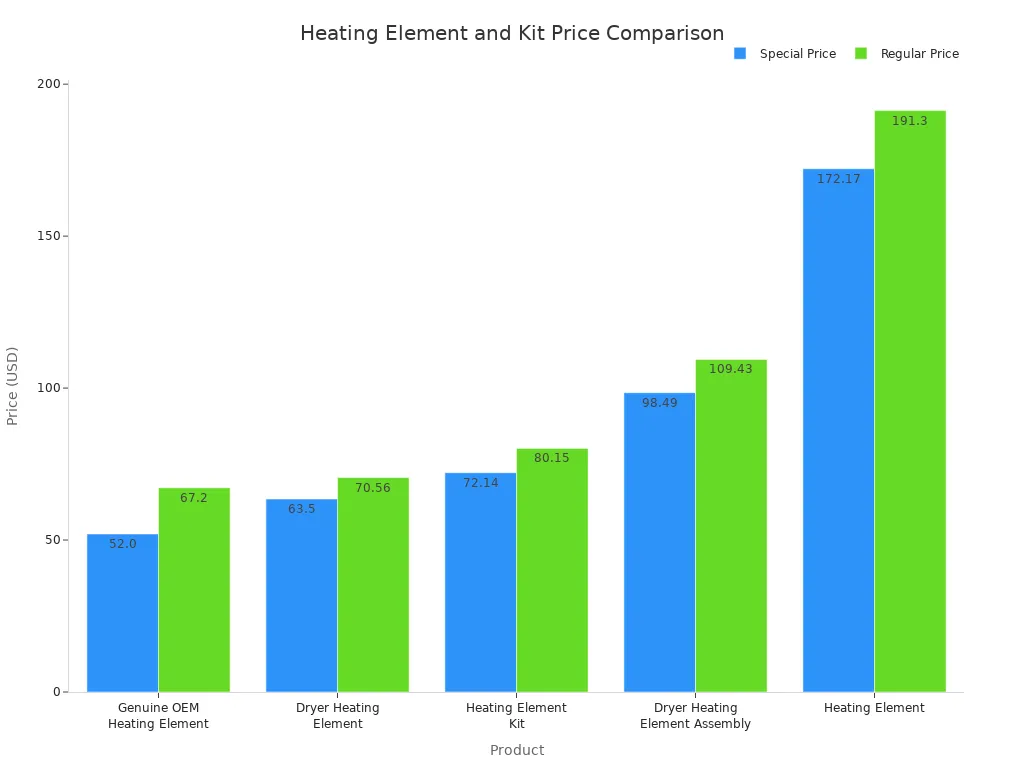
| Sự miêu tả | 特价 | 常规价格 |
|---|---|---|
| 原厂正品加热元件 | $52.00 | $67.20 |
| 烘干机加热元件 | $63.50 | $70.56 |
| 加热元件套件 | $72.14 | $80.15 |
| 烘干机加热 元件总成 | $98.49 | $109.43 |
| Thanh gia nhiệt | $172.17 | $191.30 |
下图直观地比较了这些价格,表明套件和组装件代表了更大的前期投资,但能带来更大的安心。.
零件购买渠道
您有几种渠道可以购买新的加热元件:
- 本地家电零件商店: 这些商店提供专业建议,并可让您立即拿到零件。.
- 在线零售商: 亚马逊、RepairClinic和PartSelect等网站提供有竞争力的价格和广泛的选择。.
- 制造商官网: 直接从制造商处购买可确保您获得正品OEM(原始设备制造商)零件。.
专业人工成本
聘请合格的技术人员会给您的账单增加一笔可观的人工费。这笔费用涵盖了技术人员的专业知识、时间和企业运营成本。.
平均时薪与固定费用
家电维修公司主要采用两种定价结构。一些公司按工作时长收取时薪。多方数据显示,全国家电技术员的平均时薪相当一致。.
| 来源 | 平均时薪 |
|---|---|
| ZipRecruiter | $24.00 |
| 劳工统计局 | $24.35 |
然而,更常见的做法是公司对更换加热元件等标准维修收取 固定费用 用于标准维修,例如 加热元件更换. 。此费用通常在 100至250美元 范围内,并涵盖工作的全部人工部分,无论耗时多久。.
初次上门服务与诊断费
几乎所有的家电维修公司都会收取上门服务费。这笔预付费用通常在 75至125美元, 之间,用于支付技术员的交通时间和初步诊断工作。.
专业建议: 如果您决定继续使用其服务,大多数信誉良好的公司会免除诊断费或将其计入总维修费用。预约时请务必询问此项政策。.
紧急或非工作时间附加费
您的洗衣设备很少会在方便的时间出故障。如果您需要在周末、节假日或标准朝九晚五工作时间之外进行维修,则应预计会有紧急附加费。这笔额外费用可能使您的最终账单增加 50至150美元 或更多。.
影响总成本的关键因素
最初150至350美元的专业维修估价是一个有用的起点。然而,有几个关键变量可能使您的最终账单趋向该范围的低端或高端。了解这些因素能让您更准确地预估潜在费用。您的电器具体型号和所在地点对总维修成本有重要影响。.
干衣机类型:电动与燃气
影响您维修工作的最重要因素是您的干衣机是电动还是燃气驱动。这一区别改变了工作的复杂性、安全性和成本。.
为何电动干衣机维修更便宜
您会发现,维修电动干衣机几乎总是更便宜。其加热系统简单,由加热线圈、恒温器和保险丝组成。技术员可以相对快速地诊断并更换元件,从而降低人工费用。零件也常见且价格适中,使得这项维修直接且经济。.
燃气干衣机的额外复杂性
MỘT 燃气烘干机不像电动型号那样使用加热元件 。相反,它使用燃气燃烧器总成来产生热量。该系统包括点火器、火焰传感器和燃气阀线圈。这些组件比简单的电热线圈更复杂且更昂贵。.
⚠️ 安全警示:切勿自行维修燃气干衣机 操作燃气管道和燃烧系统存在燃气泄漏、火灾或一氧化碳中毒的严重风险。任何燃气干衣机维修都应始终聘请有执照和保险的专业人员。增加的人工成本确保了工作的安全和正确完成。.
Thương hiệu và mẫu máy sấy
您的干衣机品牌和具体型号直接影响零件的供应情况和价格。与高端或老旧机型相比,常见大众市场品牌的零件更容易找到且更便宜。.
常见品牌(惠而浦、美泰克、通用电气)
如果您拥有惠而浦、美泰克或通用电气等流行品牌的干衣机,您将受益于规模经济。制造商生产了数百万台此类设备,因此替换零件供应广泛且价格具有竞争力。.
- 一台 惠而浦 干衣机的加热元件成本约为 $40.80.
- 美元。一台 美泰克 烘干机的价格可能为 $43.96.
- GE 烘干机零件的价格差异显著。一个简单的重装套件大约为 $48.79, ,而一个完整的加热器和外壳总成可能花费超过 $250.
高端与智能烘干机
博世、Miele、三星和LG等高端品牌通常采用先进技术,如蒸汽功能和智能诊断。这些烘干机使用专有零件,这些零件更复杂且生产数量较少。因此,您应预期这些型号的加热元件总成更昂贵,且可能更难快速获取。.
旧型号的零件供应
如果您的烘干机使用超过10-15年,您可能会面临挑战。制造商最终会停止生产旧型号的零件。虽然有时可以从第三方供应商处找到兼容零件,但稀有或已停产的加热元件如果还能找到,价格可能非常昂贵。这种稀缺性有时会使维修变得不切实际。.
地理位置
您所在的位置对维修账单中的人工费用部分有直接且显著的影响。家电维修费率在全国范围内并不统一。.
城市与农村人工费率
主要大都市地区的人工费率通常较高。这种差异反映了大城市企业较高的生活成本和运营费用(租金、燃料、保险)。城市的技术人员必须收取更高费用才能维持盈利业务。.
地区生活成本影响
虽然农村地区的技术人员可能时薪较低,但您可能面临其他费用。如果当地维修服务稀缺,您可能需要为来自邻近城镇的技术人员支付更高的出行费。这笔出行费有时会抵消较低时薪带来的节省,使地理位置成为最终维修成本的关键因素。.
设备的可及性
您可能不会考虑烘干机的位置,直到它需要维修。技术人员能够轻松接触并操作您的设备,直接影响人工时间。技术人员花费的时间和难度越大,您的维修账单就越高。.
叠放式洗衣机/烘干机组合
您使用叠放式洗衣机和烘干机以节省空间。然而,这种便捷的设置会使维修复杂化。技术人员无法简单地接触烘干机背面。维修过程变得复杂得多。.
首先,技术人员必须安全地将烘干机从叠放状态分离。这项任务通常需要两个人,以防止人员受伤或设备损坏。该过程包括:
- 断开烘干机的电源和通风管。.
- 小心地将沉重的烘干机从洗衣机上抬起。.
- 将烘干机移至有足够操作空间的开放区域。.
仅此初始步骤就可能显著增加工作时间。如果维修公司按小时收费,您在分离和重新叠放过程中需要支付两名技术人员的费用。即使采用固定费用维修,公司也会将这部分额外人工计入报价。预计成本会比 标准并排安装的烘干机高出 $75至$150。.
狭窄壁橱内的安装
您的烘干机可能被塞在狭小的洗衣壁橱或狭窄的走廊里。这种安装方式创造了具有挑战性的工作环境。技术人员需要空间将设备拉出、断开连接并打开面板。狭窄的空间会增加维修时间和风险。.
在狭小空间工作的技术人员必须格外小心。他们需要避免刮伤地板、撞坏墙壁或损坏设备本身。这种缓慢而细致的工作会增加总人工时间。.
技术人员必须首先将烘干机完全移出壁橱。如果公用设施连接线较短或空间极其有限,这一步可能很困难。整个维修过程——从诊断到重新组装——都在走廊或相邻房间进行。然后,技术人员必须小心地将设备滑回原位并重新连接所有部件。这种额外的移动操作至少会增加30-60分钟的工作时间,从而提高您的最终成本。.
如何判断您的加热元件是否损坏
在您决定是维修还是更换烘干机之前,必须确认加热元件是实际故障所在。有几个症状指向元件损坏,但您还应排除其他常见问题,以避免代价高昂的误诊。.
元件故障的明显症状
您通常可以通过观察烘干机的性能来识别故障元件。这些迹象表明加热系统存在问题。.
烘干机转动但不产生热量
这是最典型的症状。您听到烘干机在运行,滚筒在旋转,但内部空气仍然是冷的。您的衣物在整个循环中翻滚,但没有变热或干燥。.
完整循环后衣物仍然潮湿
您可能会注意到性能逐渐下降。如果您的衣物在标准循环后总是潮湿,则元件可能正在失效。它可能无法产生足够的热量来有效蒸发水分。.
烘干机过热或中途停机
故障元件有时会与金属外壳短路。这可能导致烘干机过热,触发限温恒温器并作为安全措施关闭机器。.
明显的烧焦味
您可能会注意到尖锐的、金属味或电气烧焦的气味。虽然新的 如何影响更换选型? 在首次使用时可能会产生轻微气味,但旧机器中持续存在的烧焦气味是一个危险信号。这种气味可能由多种问题引起:
- 棉絮积聚: 棉绒可能积聚在元件上并点燃,产生烧焦味。.
- 驱动皮带磨损: 打滑或磨损的皮带会产生摩擦和烧焦橡胶的气味。.
- 电机故障: 运转困难的电机可能会产生电气烧焦的气味。.
- 元件故障: 元件本身可能断裂并产生电弧,形成独特的气味。.
首先排除其他常见问题
无热问题并不总是由元件引起。在购买新零件之前,您应调查这些其他潜在原因。.
检查烘干机通风管是否堵塞
堵塞的通风管会限制气流,阻止热量烘干衣物,并导致烘干机过热。这可能会烧断热熔断器。您应每年清洁通风管道。如果聘请专业人员,您预计需要支付 $103至$185 的服务费用。.
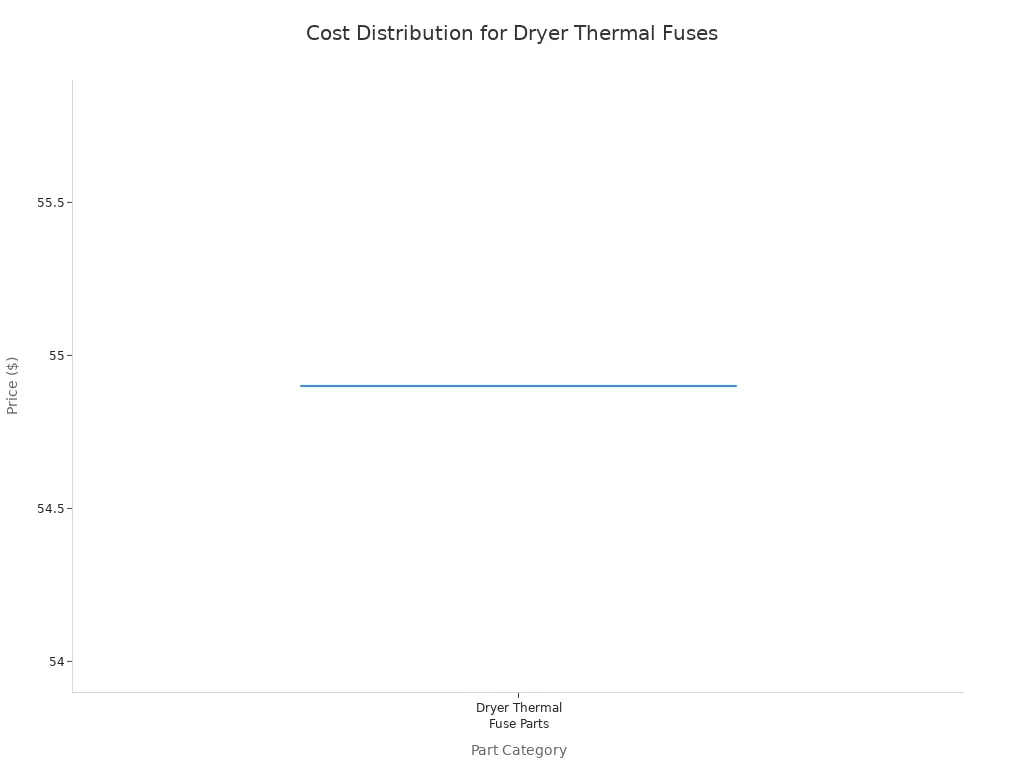
测试热熔断器
热熔断器是一种安全装置,当烘干机过热时会切断加热电路的电源。通风口堵塞是熔断器烧断的最常见原因。您可以使用万用表测试熔断器的导通性。如果熔断器已烧断,则必须更换。该部件本身价格低廉,但通常与其他恒温器一起以套件形式出售。.
检查上限恒温器和循环恒温器
这些恒温器用于调节滚筒内部的温度。如果其中一个发生故障,可能会导致加热元件无法启动或过早关闭。与热熔断器一样,您可以测试这些部件的导通性。.
确认 240V 电源供应
电动烘干机需要 240 伏插座。如果两个断路器中的一个跳闸,烘干机可能仍能以 120 伏电压转动,但将无法获得加热器所需的 240 伏电压。您应检查家中的配电盘,确保两个断路器均处于开启状态。.
如何测试加热元件
在排除其他问题后,您可以对元件本身进行两项简单的测试。.
完全拔掉咖啡机电源,并确保其外壳已冷却至可触摸的温度。 在打开机箱进行任何测试或维修之前,务必先将烘干机从墙上插座拔下。.
进行目视检查以查找断裂
一旦接触到元件,您通常可以看到问题所在。仔细观察线圈。功能正常的元件应具有连续、无断裂的线圈。您应查找电线上是否有任何可见的断裂、间隙或暗色烧焦斑点。.
请按照以下步骤进行测试:
仅凭目视检查并不总是足够的。您应使用设置为欧姆 (Ω) 档的万用表来测试电气导通性。将一个探针接触元件上的每个端子。一个好的元件会显示一个读数,介于 9 và 12 ohm. 如果万用表读数为无穷大 (OL) 或零,则表明元件已损坏,需要更换。.
“隐性成本”:常同时失效的相关部件
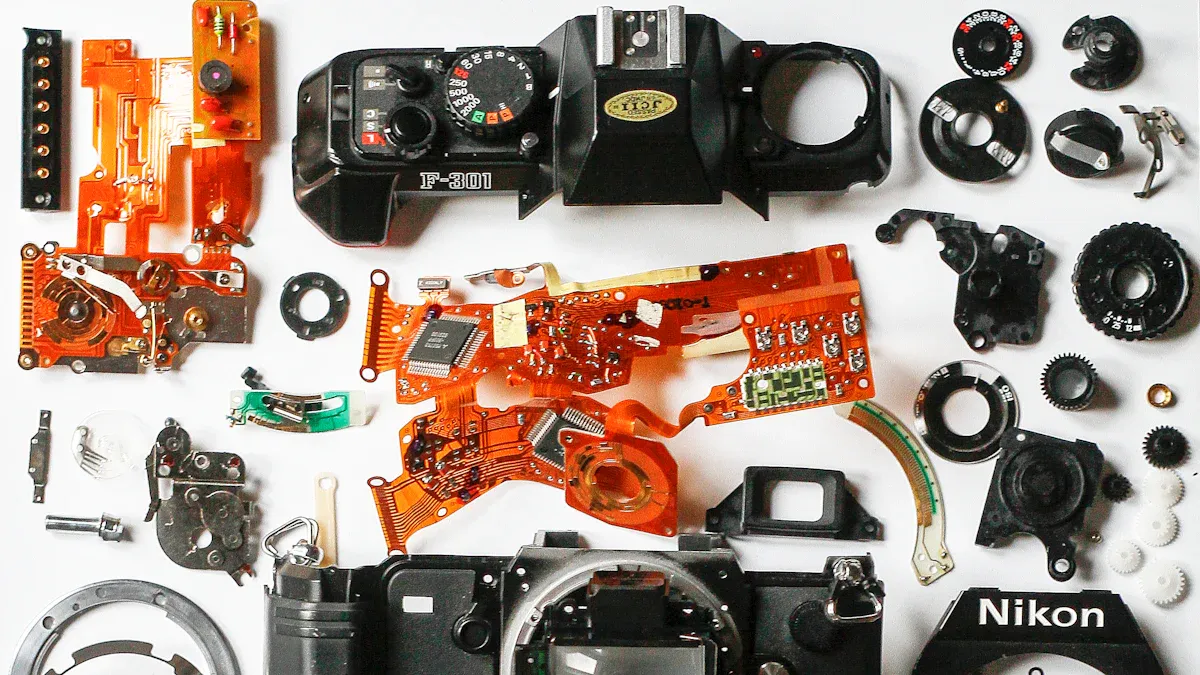
当您的 当烘干机的加热元件发生故障时, ,您可能会认为更换这一个部件就能解决问题。然而,一个损坏的元件往往是更大问题的征兆。您应了解,其他组件很可能与其同时发生故障,或是导致了最初的故障。同时处理这些相关部件可以避免重复维修和未来的额外开支。.
为何一个故障会引发其他故障
家电组件在一个精密的系统中协同工作。一个部件的故障可能引发连锁反应,导致其他相关组件发生级联故障。.
过热的“多米诺骨牌效应”
这种多米诺骨牌效应最常见的原因是过热,通常由气流不畅引起。. 堵塞的通风口会限制气流。这迫使您的烘干机更加费力地工作,并导致过热. 。这种过高的热量会给加热电路中的所有电气组件带来巨大压力。. 热熔断器设计为在过热事件中作为安全措施而烧断,从而关闭加热系统. 。持续的高温也会使恒温器磨损,并导致加热元件本身过早失效。.
热熔断器更换
热熔断器是烘干机中的一个关键安全组件。您应将其视为一个小型、一次性使用的电气保险丝。.
功能与平均成本
热熔断器可保护您的家庭免受潜在的火灾威胁。如果烘干机内部温度达到危险高度,熔断器会烧断,切断加热电路的所有电源。.
- 功能: 一种一次性使用的安全装置,在发生重大过热事件时断开电路。.
- 重要提示: 熔断器烧断是一个症状,而非根本原因。您必须找到并解决过热问题(例如通风口堵塞),否则新的熔断器会立即烧断。.
- 平均部件成本: 熔断器本身非常便宜,通常成本为 $5 至 $15. 。您通常会发现在包含上限恒温器的套件中捆绑销售。.
上限恒温器更换
上限恒温器与热熔断器协同工作,但用途不同。它是正常加热循环中的一个关键部件。.
功能与平均成本
该恒温器作为一个安全开关,用于调节烘干机的最高工作温度。它通过循环开启和关闭加热元件来维持恒定温度,并防止在正常循环期间发生轻微过热。如果它发生故障,可能会导致 加热元件完全不发热,或导致烘干机 温度过高,进而烧断热熔断器。要解决此问题,您必须更换有故障的恒温器。.
一个新的上限恒温器的平均成本介于 $15 和 $30. 之间。与热熔断器一起以套件形式购买通常是最具成本效益的选择。.
循环恒温器更换
循环恒温器是烘干机温度的主要调节器。您可以将其视为加热系统的指挥中心。它持续监测滚筒内部的空气温度,并指示加热元件开启或关闭,以维持您选择的加热水平。.
功能与平均成本
如果循环恒温器发生故障,它可能卡在常开位置,导致加热元件永远无法启动;或卡在常闭位置,导致烘干机过热。更换此部件的成本因烘干机的品牌和型号而异。例如,一个常见的 Whirlpool 循环恒温器可能具有 特价 $56.69,原价为 $62.99. 对于 Maytag 等品牌,价格根据具体部件编号显示出更大的范围:
- Maytag 烘干机循环恒温器 (WP3387134): $29.76
- Maytag 烘干机循环恒温器 (WP694674): $52.66
- Maytag 烘干机循环恒温器 (WP503979): $74.72
- Maytag 烘干机循环恒温器 (WP8318268): $102.46
其他潜在易损件
当您为了维修加热元件而 拆卸烘干机时, ,您将获得一个宝贵的机会。您可以检查其他易磨损的机械部件。现在处理这些组件可以避免在不久的将来再次发生故障并产生维修费用。.
烘干机皮带和惰轮
烘干机皮带是一条环绕滚筒的长橡胶皮带,使滚筒能够旋转。惰轮是一个安装在弹簧加载臂上的小轮子,用于保持皮带张紧。.
专业建议: 您应检查皮带是否有任何开裂、磨损或打滑的迹象。磨损的皮带可能会打滑或断裂,导致烘干机运行但滚筒不转动。吱吱声通常表明惰轮出现故障。.
滚筒滚轮和轴承
滚筒滚轮是小型轮子,通常位于滚筒后部,用于在滚筒旋转时支撑其重量。某些型号使用轴承来代替或补充滚轮。当这些部件磨损时,您通常能听到声音。运行期间发出响亮的、有节奏的撞击声或尖锐的尖叫声是滚轮故障的典型迹象。忽视这种噪音是错误的,因为磨损的滚轮会给驱动电机带来额外压力,可能导致未来进行更昂贵的维修。.
自行更换烘干机加热元件的分步指南
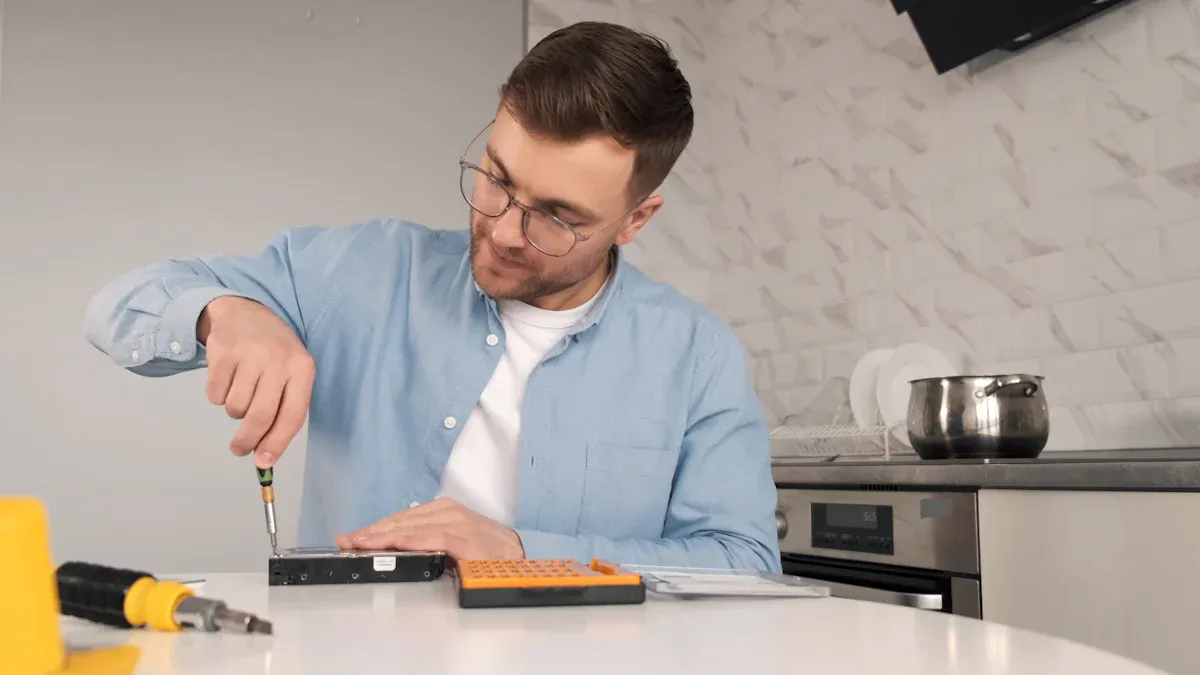
若已确认加热元件故障,自行更换可节省大量费用。本指南提供基础知识,帮助您判断是否适合进行此项目,并了解过程中的注意事项。.
这适合作为DIY项目吗?
在拆卸烘干机前,请客观评估您对电器维修的适应程度。此项自我评估有助于避免陷入令人沮丧且可能造成经济损失的困境。.
评估自身技能水平
更换烘干机加热元件是一项相对直接的任务,具备良好DIY技能即可完成. 。您无需成为专业技师。但应能熟练使用基本手工具、跟随视频或图文教程操作,并妥善管理螺丝等小零件。耐心与条理清晰的方法是完成此项工作的关键。.
时间投入(1-3小时)
请预留1至3小时进行维修。经验丰富的DIY者在处理常见机型时可能约1小时完成。若您是电器维修新手,或烘干机为叠放式/安装空间狭窄,则应计划接近3小时。仓促操作往往导致失误。.
准备好合适的工具将使这项工作变得更容易、更安全。你可能需要:
完成维修需要若干常用工具。提前备齐工具将使流程更顺畅。.
- 螺母起子或套筒套装 🛠️:用于拆卸固定烘干机面板及内部组件的六角头螺丝。1/4英寸或5/16英寸起子最为常用。.
- 您将需要十字和一字螺丝刀。大多数Kenmore烤箱使用十字螺丝固定元件,但某些型号可能需要一字螺丝刀。使用正确的螺丝刀可防止螺丝滑丝和损坏烤箱内部。:用于处理各类螺丝,并轻撬塑料卡扣或连接器。.
- 油灰刀或刮板:常需薄型柔性油灰刀来松开固定顶板与机身的弹簧卡扣。.
- Đồng hồ vạn năng:此基础诊断工具用于测试旧元件导通性,确认故障根源。.
- 在拆卸加热元件前,需要使用花园软管排空热水器水箱。将软管连接到排水阀并将水引至安全位置。此步骤可防止溢水并降低热水烫伤风险。:始终佩戴以保护双手免受机内锋利金属边缘伤害,并防止灰尘碎屑进入眼睛。.
- 新零件:需准备正确的 烘干机加热元件替换件 及相关组件(如新热熔断器或温控器)。.
开始前的安全预防措施
您必须将安全置于首位。电动干衣机使用高压电,跳过这些步骤可能导致严重伤害。.
⚠️ 关键安全警告 不遵守这些预防措施可能导致严重触电或其他危险。在完成以下两个步骤之前,切勿继续操作。.
Rút phích cắm máy sấy hoàn toàn
这是最重要的一步。您必须将干衣机的电源线从240伏墙壁插座上物理拔下。切勿仅通过控制旋钮关闭干衣机。必须完全断开其电源,以确保设备没有电流通过。.
关闭燃气供应(适用于燃气干衣机)
本指南适用于电动干衣机。如前所述,由于存在燃气泄漏和一氧化碳风险,任何燃气设备的维修都应始终聘请专业人员进行。如果专业人员维修您的燃气干衣机,他们会在开始任何工作前,在设备后部的阀门处关闭燃气管路。.
通用分步流程
本指南概述了电动干衣机维修的通用步骤。请注意,每款干衣机型号各不相同。您必须查阅针对您特定型号的维修手册或在线视频以获取精确说明。.
进入干衣机内部
您的首要任务是打开干衣机外壳。具体方法取决于干衣机的设计。大多数型号需要采用以下两种方法之一:
- 前部进入方式: 您需要使用油灰刀松开顶板下方的卡扣。然后可以抬起顶板并卸下前面板。.
- 后部面板进入方式: 您只需拧下并卸下干衣机后部的大型金属面板。这通常是最直接的途径。.
专业建议: 将所有螺丝有序地放在磁性托盘或小容器中。这个简单的步骤可以防止螺丝丢失,并使重新组装更加容易。.
定位加热元件外壳
加热元件位于一个长圆柱形金属罐内。该外壳通常位于干衣机箱体的后底部。元件本身是一根缠绕在该罐内陶瓷绝缘体上的线圈。您可以通过连接在其端子上的两根电线来识别它。.
断开并移除旧元件
必须谨慎断开旧组件。首先用手机清晰拍摄电线连接图,作为安装新部件的参照。接着轻轻拔下元件端子上的线缆接头,过紧连接可能需要钳子辅助。最后拆卸固定 加热元件支架或元件本身于烘干机 框架的螺丝,即可取出旧元件。.
Cài đặt thành phần mới
现在安装新 如何影响更换选型?. 。将新组件小心滑入支架,确保其正确置于绝缘座上。.
- 使用您之前卸下的安装螺丝固定新元件或其外壳。.
- 参考您拍摄的照片。将电线重新连接到新元件的正确端子上。.
- 确保连接牢固可靠。松动的电线可能导致过热。.
重新组装烘干机
您现在可以重新组装干衣机。按照拆卸的相反顺序进行操作。重新安装所有面板并用原装螺丝固定。确保没有电线被面板夹住。干衣机完全重新组装后,即可重新插上电源并测试您的工作。.
自行维修与聘请专业人员:成本效益分析
您可以选择自行维修或聘请专业人员。虽然自行维修的前期成本看似较低,但您必须权衡潜在节省与风险及隐性支出。此分析将帮助您根据自身情况确定最明智的途径。.
自行维修的真实成本
自行维修涉及的成本不仅仅是零件价格。您必须考虑所有因素以了解项目的真实成本。.
零件和工具费用
您的主要支出将是新的加热元件,价格在20至80美元之间。如果您没有现成的工具,可能还需要购买万用表或特定的螺母起子等工具。这些初始支出是具体的,易于计算。.
您的时间价值
您的时间是宝贵资产。自行维修可能需要一到三个小时,如果遇到问题甚至更久。您应考虑这段时间对您的价值。专业维修可以腾出这些时间用于其他优先事项。.
误诊风险
您可能会错误地诊断问题。如果您购买了新的加热元件, 但实际故障出在温控器上,那么您就浪费了钱在不必要的零件上。专业诊断可以避免此类代价高昂的错误。 (此条为原文编号6的延续,内容已整合至第4-5条中,故此处保留空行以维持格式).
应始终聘请专业人员的情况
在某些情况下,自行维修的风险远远超过任何潜在的节省。在这些情况下,您应始终交由合格的技术人员处理。.
所有燃气干衣机维修
您切勿尝试自行维修燃气干衣机。操作燃气管线极其危险,需要专门培训。.
- 不当操作可能导致 燃气泄漏、火灾、爆炸以及致命的一氧化碳中毒.
- 美国运输部报告平均每年发生 155起燃气爆炸事故, ,通常与设备故障有关。.
- 一氧化碳是故障燃气设备产生的无色无味气体,可能在家中无声积聚。.
安全警告: 由于存在生命危险,只有持照专业人员才能维修燃气设备。.
如果您拥有复杂的高端型号
具有蒸汽功能和先进传感器的现代智能干衣机系统复杂。如果您不熟悉其特定设计,可能会损坏昂贵的电子元件。专业人员接受过针对这些复杂型号的正确培训。.
如果您对诊断不确定
如果您不能100%确定问题是加热元件,则应聘请专业人员。支付诊断费通常比通过试错购买多个零件更便宜。.
为了获得零件和人工保修
信誉良好的维修公司对其工作提供保证。如果在保修期内维修失败,技术人员将免费修复,这能让您安心。.
不当自行维修的风险
自行维修过程中的错误可能产生远超初始问题的严重后果。.
造成更昂贵的损坏
您可能意外短路控制板或损坏塑料安装卡舌。一个简单的错误很容易将40美元的零件更换变成400美元的维修账单。.
造成严重的火灾隐患
如果您未能正确固定电线连接,可能会产生电弧并产生高温。这在您的设备内部构成了重大的火灾隐患。不当安装会使干衣机的内置安全功能失效。.
使您的设备保修失效
如果您的干衣机仍在制造商保修或延保期内,进行未经授权的维修几乎肯定会使其失效。这将使您承担未来任何故障的全部费用。.
维修还是更换?做出明智的财务决策
您已诊断出问题并了解维修成本。现在您面临一个关键决定:是修理旧干衣机还是投资购买新的?做出正确的财务选择需要您超越眼前的维修账单,考虑设备的长期价值。.
使用50%规则
一条简单准则可辅助理性决策。50%规则是电器维修领域广泛采用的原则。.
如何计算盈亏平衡点
可运用此简易公式:若维修成本超过同类新烘干机价格的50%,则更换通常是更经济的选择。该规则有助于避免对老旧机器过度投资。.
对比维修成本与新机价格
需了解新机价格以有效运用此规则。中端电动烘干机的新机价格多在 $800至$1,200美元. 之间。若专业维修报价达$450美元,则已接近50%临界值,此时维修决策需慎重权衡。.
烘干机使用年限与状况
设备使用年限是决策的关键因素之一。电器寿命直接影响其可靠性及追加投资合理性。.
不足5年:建议维修
设备较新,加热元件故障可能为独立问题。维修是经济明智的选择,可保障多年使用。.
5-10年:需综合判断
设备处于中期阶段。应评估整体状况:既往运行是否可靠?是否经历多次维修?若一直运行良好,维修合理;若已出现老化迹象,更换可能是更明智的长期决策。.
超过10年:通常建议更换
设备已超预期使用寿命。即使修复加热元件,电机或滚筒轴承等其他主要部件可能相继故障。投资新设备往往是更实际经济的解决方案。.
能效因素考量
现代烘干机能耗优势显著。应评估新型号可能带来的长期节能效益。.
新型能源之星认证机型的长期节能
新技术可降低公用事业费用。家庭改用能源之星认证热泵烘干机后,每年可在公用事业账单上节省 $90至$120美元 。此类机型采用先进技术,能耗大幅降低。.
新旧机型运行成本对比
旧烘干机虽能运行,但能效可能低于现行标准。高效新机型节省的电费可逐渐抵消购机成本,成为合理的财务投资。.
延长新加热元件使用寿命
您已投入时间与金钱安装新加热元件。通过简单持续的维护可保护投资,避免再次过早损坏。这些习惯能减轻烘干机加热系统负荷,确保其长期高效运行。正确维护是延长新部件及整机寿命的关键。.
#1规则:清洁绒毛过滤器
这是烘干机最重要的维护任务,必须养成不可妥协的习惯。.
每次烘干后
每个烘干周期后都需清理滤网绒毛。洁净的滤网保障最佳气流。滤网堵塞时,热空气滞留滚筒内,迫使加热元件超负荷运行并延长工作时间,导致过热并显著缩短使用寿命。.
专业建议: 建议每数月用肥皂水清洗绒毛滤网。烘干纸可能在网面残留不可见薄膜,即使滤网看似清洁仍会阻碍气流。.
定期清洁烘干机通风管道
绒毛过滤器能捕获大部分但非全部线屑。残余线屑会逐渐积聚在通风管道内,形成隐蔽隐患。.
每年彻底清洁保障最佳气流
应每年至少彻底清洁整条烘干机通风管路一次,包括从机身后部延伸至户外的管道。通风管堵塞是烘干机火灾的主因,也是导致 các bộ phận làm nóng 加热元件与热熔断器故障的首要原因。气流受限会引起极端积热,对所有加热部件造成巨大压力。.
- 提升安全性: 显著降低住宅火灾风险。🔥
- 优化性能: 衣物干燥更迅速。.
- 延长部件寿命: 您可防止因过热而损坏加热元件。.
避免过载运行
您可能为了节省时间而试图将尽可能多的衣物塞入烘干机。这种常见做法会适得其反,并对设备造成损害。.
系统过载原理
烘干机需要空间让热空气在衣物周围自由循环。当您过量装载滚筒时,会形成致密的潮湿团块阻碍气流。加热元件必须持续运行以试图穿透衣物团块。这种持续运转会产生过量热量,并对加热元件、电机和传动带造成沉重负荷。您迫使各部件以远超设计标准的方式高强度工作,这必然导致过早损坏。.
使用自动烘干程序
您可以通过在干衣机控制面板上选择合适的设置,显著影响新干衣机的使用寿命。您的干衣机可能提供两种主要模式:定时干燥和自动干燥。您应将自动循环设为默认选择。这个简单的习惯是保护设备免受不必要磨损的最有效方法之一。使用正确的设置可确保干衣机高效运行。 加热元件 lifespan by choosing the right setting on your dryer’s control panel. Your dryer likely offers two primary modes: Timed Dry and Automatic Dry. You should make the automatic cycle your default choice. This simple habit is one of the most effective ways to protect your appliance from unnecessary wear and tear. Using the correct setting ensures your dryer operates efficiently, 使加热元件 免受不必要的压力,从而延长其使用寿命。.
防止不必要的过热
定时程序与自动程序的根本区别在于停止时机的判定方式。理解这种差异可揭示为何某种设置对烘干机部件的健康运行更为有利。定时烘干程序基于简单计时器工作:您设定特定时长(如60分钟),加热器将在整个时段持续运行。机器无法感知衣物状态,即使在衣物完全干燥后仍会持续吹送热风。此过程会产生不必要的过量热量,迫使加热元件承受长时间的高温运作。.
自动程序则以更智能的方式工作。.
- 其通过内置湿度传感器监测滚筒内空气的湿度水平。.
- 当传感器检测到衣物水分已蒸发时,.
- 系统将在衣物达到选定干燥程度(如:强烘干、标准烘干)后自动关闭加热元件。.
这种智能运行是防止不必要过热的关键。烘干机仅在真正需要干燥衣物时产生热量,避免了定时烘干程序的主要缺陷——对已干燥衣物进行无意义且有害的持续烘烤。.
💡 选择自动程序可直接减少加热元件的总运行时间。这个简单操作具有多重显著优势:
- 延长部件寿命: 减少使用即意味着降低磨损,直接有助于延长新加热元件及温控器的使用寿命。.
- 节省开支: 烘干机耗电量降低,从而减少您的能源账单。.
- 保护衣物: 避免“烘烤”织物,防止缩水、褪色及损伤娇贵纤维。.
改用自动程序是一种免费且简便的方法,既能保障您的维修投资,又能确保烘干机在未来数年保持高效运行。.
当烘干机停止加热时,您面临明确的经济选择:专业维修费用在150至350美元之间,自行更换部件成本仅需20至80美元。最终价格取决于您的烘干机类型、品牌及当地人工费率。.
💡 智能决策指南:
- 应用50%原则: 您应将维修费用与新烘干机价格的50%进行比较。.
- 考虑使用年限: 对于使用不足五年的干衣机,维修是一项合理的投资。若设备使用已超过十年,则应考虑更换。.
Câu hỏi thường gặp
新的加热元件应使用多久?
新的加热元件预期使用寿命为3至10年。其寿命很大程度上取决于使用习惯和维护情况。每次使用后清理绒毛过滤网,并定期清洁干衣机通风管道,可延长其使用寿命。.
为何新的加热元件有烧焦味?
在最初使用一至两次时,轻微的烧焦味或油味是正常现象。新元件表面有一层出厂涂层,会在加热时挥发。如果气味浓烈或多次使用后仍持续存在,应拔掉干衣机电源并检查安装是否存在问题。.
自行更换加热元件是否安全?
只要遵循适当预防措施, 您可以安全地 更换电烘干机的加热元件。.
⚠️ 关键安全步骤: 开始任何维修工作前,必须将干衣机从240V电源插座上拔下。对于任何燃气干衣机的维修,您应始终聘请专业人员进行。.
更换元件后,为何我的干衣机仍不加热?
可能存在其他故障部件。您应使用万用表测试热熔断器和高温限制恒温器的通断性。这些安全部件常常与加热元件同时损坏,特别是如果最初的故障是由通风管道堵塞引起时。.
如何找到干衣机的正确零件编号?
您可以在干衣机的标签上找到型号,该标签通常位于门内侧、侧面或背板上。然后,您可以在电器零件网站或制造商网站上使用此型号,以找到您所需的确切加热元件。.
更换加热元件时,是否应同时更换恒温器?
是的,同时更换热熔断器和高温限制恒温器是明智的做法。这些部件价格低廉,且常常因导致加热元件损坏的同一过热问题而失效。您可以购买包含这些部件的便捷且经济实惠的套装。.