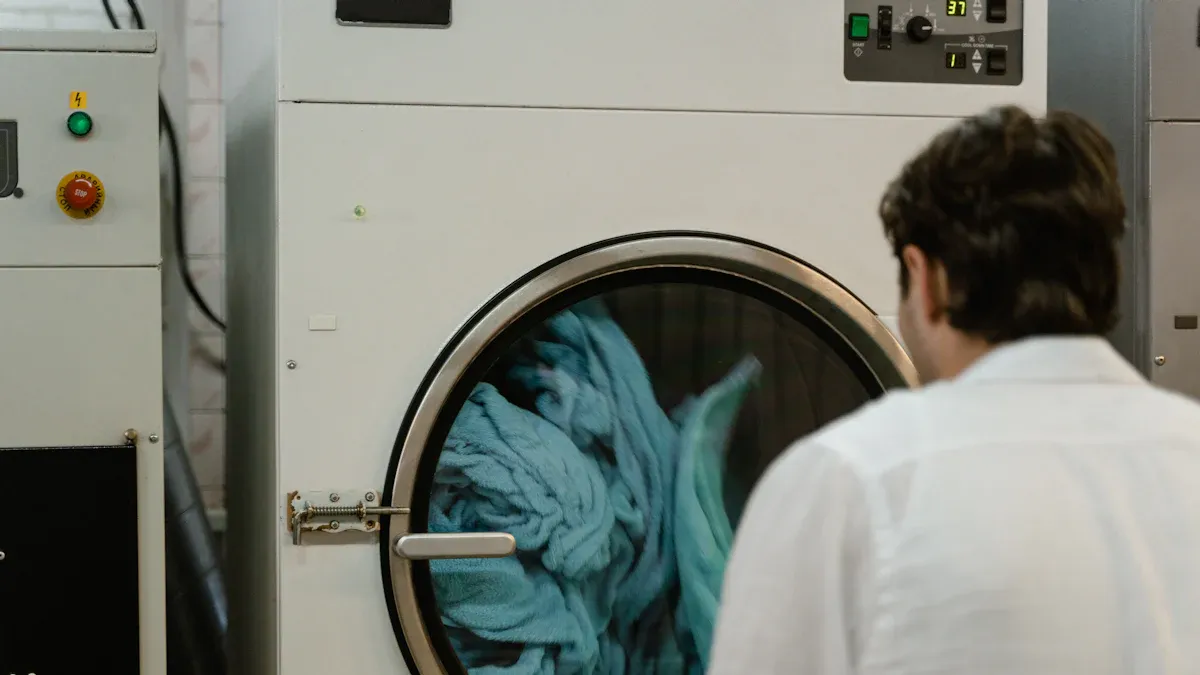

诊断干衣机加热元件故障的快速提示

诊断干衣机加热元件故障的快速提示
诊断干衣机加热元件故障的快速提示

You want your dryer to work efficiently, but a faulty heating element can disrupt that. When you test heating element performance, you use a multimeter to check for continuity or resistance. This approach gives you quick and reliable results. If you notice heating issues, always test bộ phận làm nóng first. These steps help you confirm if the problem lies with the heating element or another part.

Signs of a Faulty Dryer Element

Signs of a Faulty Dryer Element

常见警告迹象

When your dryer starts acting up, you may notice several early indicators before the heating element fails completely. Recognizing these signs helps you address the issue before it leads to a total breakdown.

Clothes Not Drying

You might find that your clothes take much longer to dry than usual. This often points to reduced heating efficiency. If you run a normal cycle and your laundry still feels damp, the heating element could be struggling to generate enough heat. Inconsistent drying results can also signal that the element is not working at full capacity.

Dryer Runs Without Heat

Sometimes, your dryer will run through its entire cycle, but the clothes remain cold and wet. The drum spins, and the timer counts down, but you feel no warmth inside. This symptom usually means the heating element is not producing any heat at all. You should check for this issue if your dryer appears to operate normally but fails to dry your clothes.

Dryer Stops Prematurely

A dryer that stops mid-cycle can indicate overheating or electrical issues. Overheating may trigger safety features that shut down the appliance to prevent damage. This can happen if the heating element or thermostat malfunctions. Frequent tripping of circuit breakers also suggests abnormal electrical current draw, which may relate to a failing heating element.

Mẹo: 如果您的烘干机 starts heating but stops after a few minutes, or barely heats within the first five minutes, you should inspect the heating element and related components.

何时怀疑加热元件故障

You need to know when to focus your attention on the heating element itself. Some warning signs make it clear that the element could be the source of the problem.

异常气味或噪音

A burning smell or odd noises coming from your dryer can signal trouble. Burn marks or visible damage on the heating element coils often accompany these symptoms. If you notice these signs, unplug the dryer and inspect the element for breaks or loose connections.

Error Codes on Dryer Display

Modern dryers often display error codes when something goes wrong. If you see codes related to heating or temperature, the control board may have detected a problem with the heating element. Always refer to your dryer’s manual to interpret these codes correctly.

You should also consider these common troubleshooting steps:

  • Check the ventilation and lint filter for blockages.
  • Inspect the thermostat and high-limit thermostat.
  • Test the heating element for continuity using a multimeter. A good element will show continuity or low resistance. No continuity or high resistance means you have a faulty dryer element that needs replacement.

By staying alert to these signs, you can quickly identify and resolve heating issues before they lead to more serious problems.

Tools Needed to Test Heating Element

Before you begin diagnosing your dryer, you need the right tools for the job. Using the correct equipment ensures accurate results and keeps you safe during the process. Below, you will find the essential tools and recommended safety gear for testing a 元件的工作原理(以及"损坏"的实际含义) 元件的安装过程。.

Các công cụ thiết yếu để kiểm tra

You should gather a few basic tools before starting. Each tool plays a specific role in helping you access, test, and diagnose the heating element.

Đồng hồ vạn năng

A multimeter is the most important tool for this task. You use it to measure resistance and check for continuity in the heating element. Choose a digital multimeter with ohm settings for precise readings. Insulated testing probes allow you to safely touch electrical terminals without risk. When you set the multimeter to the lowest ohm setting, you can quickly determine if the heating element is working. A healthy heating element usually shows a resistance reading between 20 and 50 ohms. If you see no continuity or a very high resistance, you likely have a faulty part.

螺丝刀套装

You need a set of screwdrivers, both Phillips and flathead, to remove the access panels on your dryer. These hand tools let you reach the heating element and other internal components. Using the correct screwdriver prevents damage to screws and panels. Always keep your screwdriver set nearby when working on appliances.

Work Gloves

Work gloves protect your hands from sharp metal edges and electrical shock. Choose 绝缘手套 for extra safety. You may encounter debris or dust inside the dryer, so gloves help keep your hands clean and safe. Never work on electrical parts with bare hands.

Mẹo: Always unplug the dryer or switch off the circuit breaker before using any tools inside the appliance.

推荐安全装备

Safety should always come first when working with electrical appliances. The right gear reduces your risk of injury and helps you focus on the task.

Kính bảo hộ

穿戴 安全眼镜 to shield your eyes from dust, debris, or accidental sparks. Dryers often collect lint and small particles that can become airborne when you open panels. Safety glasses provide a simple but effective barrier.

Đèn pin

A flashlight helps you see inside dark or hard-to-reach areas of the dryer. Good lighting ensures you can spot loose wires, burn marks, or other signs of damage. You should always work in a well-lit area to avoid mistakes.

Ghi chú: Never work with wet hands or in a damp environment. Keep your workspace dry and organized for maximum safety.

By preparing these tools and safety gear, you set yourself up for a smooth and accurate diagnosis. Proper preparation not only protects you but also increases the chances of identifying the problem quickly.

Safety Steps Before You Test Heating Element

Before you begin any diagnostic work on your dryer, you must take important safety steps. These precautions protect you from electrical hazards and ensure a smooth inspection process.

Disconnecting Power to the Dryer

You should always disconnect the power supply before working on your dryer. This step is not optional. It is a critical safety measure that prevents serious injury.

Why Unplugging Is Critical

Dryers operate on high voltage. Exposure to 240 volt can be lethal. If you fail to unplug the dryer before removing the back panel or testing the heating element, you risk electric shock or electrocution. Testing the heating element with an ohmmeter or multimeter requires all electrical power to be disconnected. Manufacturers and safety experts emphasize this step for every component, including the heating element, thermal fuse, and thermal cutoff. You must never skip this process.

⚠️ Mẹo: 在接触任何内部部件之前,务必再次确认烘干机已拔下电源插头。如果您的烘干机是硬接线连接,请关闭主配电盘上的断路器。.

Risks of Not Disconnecting Power:

  1. You may suffer electric shock or electrocution from 240-volt exposure.
  2. You could cause a short circuit or damage to internal components.
  3. You risk accidental activation of the dryer while working.
  4. You may create a fire hazard if tools bridge electrical contacts.

Taking these steps keeps you safe and prevents costly mistakes.

Locating the Dryer Heating Element

Once you have disconnected the power, you need to find the heating element. Dryer heating elements come in different shapes and locations, depending on the model.

Using the Dryer Manual

Your dryer’s manual is your best resource for locating the heating element. Most manuals include diagrams and step-by-step instructions. You should review the manual before opening any panels. If you do not have a physical copy, many manufacturers provide digital versions online. The manual will also list any special tools or warnings for your specific model.

Typical Heating Element Locations

Manufacturers often place heating elements in one of several common areas. In many dryers, you will find the heating element behind the rear panel. Some models place it inside the drum or beneath the drum assembly. You may need to remove the top or front panel to access it. Look for a metal housing or coil assembly, usually near the blower or exhaust vent. The heating element often sits close to the thermostat and thermal fuse.

🔦 Ghi chú: Use a flashlight to inspect tight spaces and confirm the location before proceeding.

By following these safety steps, you protect yourself and ensure a successful diagnosis. Always treat dryer heating elements with caution and respect the power they use.

How to Test a Dryer Heating Element Step by Step

How to Test a Dryer Heating Element Step by Step

Testing your dryer’s heating element requires a careful, methodical approach. You need to access the component, perform a visual inspection, and then use a multimeter to confirm its condition. Follow these steps to ensure accurate results and maintain safety throughout the process.

Truy cập vào bộ phận làm nóng

Removing Dryer Panels

To begin, you must reach the heating element inside your dryer. Manufacturers recommend a specific sequence for safe and efficient access:

  1. Unplug the dryer from its power source to eliminate electrical hazards.
  2. Move the dryer away from the wall for better access to the rear or lower panels.
  3. Use a Phillips screwdriver or nut driver to remove the screws securing the back panel.
  4. Lift off the back panel to expose the internal components.
  5. If your model has a lower front kick plate, slide a putty knife along the top edge to release the plastic clamps. Fold the panel down to access the heat shield.
  6. Unscrew and remove the heat shield, typically located on the right side.
  7. Locate the heating element assembly, usually found under the drum in a silver canister or open-front housing.
  8. Identify all wires connected to the heating element. Use needle-nose pliers to gently disconnect the wire connectors, noting their positions or taking a photo for reference.
  9. Remove any screws or mounting clips securing the heating element housing. Keep all fasteners in a safe place.
  10. Carefully slide the heating element assembly out of its compartment. Check for hidden screws or clips if you encounter resistance.

Mẹo: Clean the area thoroughly, including dust and lint from the element housing and dryer underside, before proceeding.

Xác định cụm bộ phận gia nhiệt

Once you remove the necessary panels, you will see the heating element assembly. It often appears as a metal coil or a canister with attached wires. The assembly sits near the blower or exhaust vent, close to the thermostat and thermal fuse. Take a moment to familiarize yourself with the layout, as this will help you during reassembly.

Visual Inspection for Faulty Dryer Element

Checking for Burn Marks or Breaks

Begin your inspection by looking for obvious signs of damage. Examine the heating element for visible breaks in the coil. Vết cháy hoặc đổi màu often indicate overheating or failure. These visual cues reliably point to a faulty component that requires replacement.

  • 关注以下方面:
    • Breaks or gaps in the coil
    • Vết cháy hoặc vết thâm
    • Areas of discoloration

Inspecting for Loose Connections

Next, check all wire connections to the heating element. Loose or corroded terminals can disrupt heating performance. Ensure each connector sits firmly in place and shows no signs of burning or melting. If you find damaged wires, address these issues before proceeding.

⚠️ Ghi chú: Visual inspection helps you spot obvious problems, but it may miss internal faults. Always follow up with electrical testing for a complete diagnosis.

Using a Multimeter to Test Heating Element

Setting the Multimeter to Ohms or Continuity

To test heating element functionality, you need to measure electrical resistance and check for continuity. Set your multimeter dial to the lowest ohm setting. This setting allows you to detect even small breaks in the circuit. A functional dryer heating element typically shows a resistance between 20 and 50 ohms. Some manufacturers specify about 40 ohms between certain wires, and up to 95 ohms between others.

Placing Probes on Heating Element Terminals

With the multimeter ready, touch one probe to each terminal of the heating element. Make sure you have disconnected all wires from the element before testing. Observe the reading on the multimeter display:

  • If you see a resistance value within the expected range, the element has continuity and should function properly.
  • If the multimeter shows infinite resistance or no continuity, the circuit is broken. This result confirms a faulty heating element.

🔎 Mẹo: Electrical testing with a multimeter provides a more reliable diagnosis than visual inspection alone. Always use this method to confirm your findings.

Knowing how to test a dryer heating element ensures you can identify faults quickly and accurately. If you want to test electric dryer heater components or check a dryer heater element, always rely on both visual and electrical tests. Using a multimeter to measure electrical resistance and continuity gives you the most definitive results.

解读万用表结果

When you test heating element performance, understanding the multimeter readings is crucial. Accurate interpretation helps you decide whether your dryer’s heating element works properly or needs replacement. You should always compare your results to the manufacturer’s specifications, but most dryers follow similar guidelines.

What a Good Reading Means

A good heating element allows electricity to flow through it without interruption. When you place the multimeter probes on the heating element terminals, you want to see a specific resistance value. For most dryers, the ideal reading for a tumble dryer element is around 15 ohms. This value confirms that the element has proper continuity and can generate heat efficiently.

If your multimeter displays a resistance close to 15 ohms, your heating element is in good condition. You can expect your dryer to heat up and dry clothes as intended.

The table below summarizes what you should see when testing different components:

Thành phầnExpected Multimeter Reading结果解读
Thanh gia nhiệtAbout 15 ohmsGood element if reading is near 15 ohms
Thanh gia nhiệtNo continuity (infinite or OL)检查/更换部件
Thermostats & Thermal FuseNear 0 ohmsGood if reading is close to 0
Thermostats & Thermal FuseNot near 0 ohmsLikely faulty

What a Faulty Reading Means

If your multimeter shows no continuity—often displayed as “OL” (open loop) or infinite resistance—the heating element is defective. This result means electricity cannot pass through the coil, so the dryer cannot produce heat. You should replace the heating element if you see this reading.

You may also see a reading much higher than the expected range. High resistance suggests the coil is partially broken or damaged, which can cause weak or inconsistent heating. In both cases, the element cannot perform its job, and your dryer will not heat properly.

Always disconnect all wires from the heating element before testing. This step ensures you get an accurate reading and avoid interference from other components.

Testing for Shorts to Ground

Besides checking for continuity, you should also test for shorts to ground. A short occurs when the heating element touches the metal housing or another grounded part. This condition can cause the dryer to overheat or trip the circuit breaker.

To check for a short, follow these steps:

  1. Set your multimeter to the lowest resistance setting.
  2. Place one probe on a terminal of the heating element.
  3. Touch the other probe to the metal frame or housing of the element.
  4. Repeat for each terminal.
  5. If you see any reading other than “OL” or infinite resistance, the element is shorted to ground and must be replaced.

A good heating element will show no continuity between its terminals and the metal housing. Any continuity here means a dangerous short exists.

Testing for shorts protects your dryer from electrical hazards and ensures safe operation.

Knowing how to test a dryer heating element and interpret the results gives you confidence in your diagnosis. You can quickly determine if the heating element is the source of your dryer’s heating problems or if you need to investigate other components.

What to Do If You Find a Faulty Dryer Element

更换加热元件

Finding the Correct Replacement

You need to find the right heating element for your dryer before starting any repair. Always check your dryer’s model number and confirm compatibility with the replacement part. Manufacturers design heating elements for specific models, so using the wrong part can cause further issues. If your dryer is stacked on a matching washer, make sure the new element fits your setup. Consider the age and condition of your appliance. If your dryer has multiple problems or is near the end of its life, replacing the entire unit may be more cost-effective. Compare the cost of a new heating element with the price of a new dryer. Replacement is usually cheaper if your dryer is otherwise in good shape. Review your warranty coverage before making repairs. Some warranties become void if you attempt a DIY fix. Always use OEM or compatible parts to maintain performance and safety.

Các bước cơ bản để thay thế

You can replace a faulty heating element by following a clear sequence of steps. Use caution and follow safety guidelines throughout the process.

  1. Turn off the power to the dryer and unplug it. Disconnect the vent and move the dryer away from the wall.
  2. Remove the back panel and, if needed, side panels to access the heating element housing.
  3. Disconnect the wire harnesses and unthread screws to remove sensors and the heating fuse from the housing.
  4. Remove the housing unit by unthreading its screws.
  5. Use a multimeter to test the fuse, sensors, and heating element for continuity to confirm which parts need replacement.
  6. Unthread screws and unplug wire harnesses to disconnect and remove the faulty heating element.
  7. Install the new heating element by placing it in position, reconnecting wire harnesses, and securing it with screws.
  8. Reattach the fuse, sensors, and housing unit, securing each with screws.
  9. Reattach the dryer’s back panel and any other removed panels.
  10. Plug the dryer back in, reattach the vent, turn it on, and verify it is working correctly.

⚠️ Mẹo: Always follow the manufacturer’s instructions for your specific model to avoid mistakes and ensure safety.

Khi nào nên gọi thợ chuyên nghiệp để sửa máy sấy

Dấu hiệu cho thấy bạn cần sự trợ giúp của chuyên gia

Bạn nên 提示:如果您能识别电线、拥有基本工具并能看懂示意图,您可能会觉得尝试自行维修烤箱是可行的。对于集成智能烤箱、燃气混合动力烤箱或硬接线设备,您应该 if you feel unsure about any step in the repair process. Dryers use high-voltage electricity, and improper handling can lead to injury. If you lack technical knowledge or experience, a professional can diagnose and fix the problem safely. Warranty concerns also matter; DIY repairs may void your coverage. Complex issues, such as malfunctioning motors or control boards, require specialized tools and expertise. Professionals have access to manufacturer-approved parts and follow safety standards. They can complete repairs quickly, reducing downtime for your appliance.

Diện mạo零件(加热元件)DIY Repair Considerations
Chi phí trung bình$230 (range: $100 – $350)Cost mainly for parts; no labor cost
劳务成本$60 – $150 per hour; may have flat/minimum chargesNo labor cost, but requires accurate diagnosis and care
Safety and EffectivenessEnsures safe and effective repairRisk of misdiagnosis and potential further damage
Additional FactorsDryer type, age, and model complexity can affect costRequires patience and correct parts to avoid extra expenses

If you ever feel uncomfortable working with electrical components, prioritize your safety and contact a certified technician.

Preventing Future Dryer Heating Element Problems

Mẹo bảo trì máy sấy thường xuyên

Cleaning Lint Trap and Vents

You can prevent most dryer heating issues by keeping the lint trap and vents clean. After every load, remove lint from the trap to maintain airflow and reduce fire risk. The U.S. Fire Administration recommends cleaning the dryer vent at least once a year. If you have pets, wash bulky items, or do laundry for a large family, increase the frequency. Lint buildup restricts airflow, causing the heating element to overheat and wear out faster. Once a year, remove the lint trap grate and vacuum the cavity to clear hidden debris. Professional vent cleaning ensures thorough removal of lint and helps prevent overheating.

Mẹo: Blocked vents not only damage the heating element but also increase drying time and energy costs.

避免烘干机超载

Overloading your dryer puts extra strain on the heating element and other components. When you fill the drum beyond its recommended capacity, airflow decreases and the heating element must work harder to dry clothes. This leads to overheating and premature failure. Always follow the manufacturer’s guidelines for load size. Drying smaller, balanced loads helps maintain even heat distribution and extends the life of your appliance.

Monitoring Dryer Performance

识别早期预警信号

You can catch heating element problems early by monitoring your dryer’s performance. Watch for these key indicators:

如发现上述任何迹象,请使用万用表检测加热元件的通断性。定期维护(如清洁通风口和检查传感器)有助于避免设备意外故障。. 安排年度检测 确保所有电气连接保持紧固且无灰尘积聚。技术人员可检查加热元件、温控器及通风系统,以及时发现故障征兆。.

🛠️ Ghi chú: 年度设备维护与清洁 可降低火灾风险,并保持烘干机高效运行。.

遵循这些维护建议并密切关注性能变化,可有效保护烘干机加热元件,确保设备安全可靠运行。.

烘干机其他加热故障排查指南

当烘干机无法加热时,加热元件并非唯一故障源。您需要检查其他常导致加热问题的部件。采用系统化排查方法有助于准确定位问题并恢复设备性能。.

烘干机不加热时需检测的其他部件

即使加热元件正常,仍有多个部件可能导致烘干机无法加热。诊断时应重点关注以下组件:

Cầu chì nhiệt

Các 测试开路:将两个表笔分别放在元件的两个接线端上。健康的加热元件本质上是一个大电阻,应该形成闭合电路。如果万用表不发出蜂鸣声或显示“OL”(开路),则内部线圈已断裂。该元件已失效,必须更换。 作为安全装置,当烘干机过热时会切断加热元件电源。您可在风机壳体或加热元件附近找到热熔断器。. Sử dụng đồng hồ vạn năng để kiểm tra tính liên tục.. 熔断的热熔断器将失去导通性,导致烘干机无法产热。某些情况下,熔断的保险丝甚至会完全阻止烘干机启动。务必检查绒毛堆积或通风管堵塞情况,这些常是热熔断器故障的诱因。.

Bộ điều nhiệt

恒温器负责调节烘干机内部温度。若发生故障,可能导致加热异常或过热。恒温器通常位于加热器壳体上,可用万用表检测其导通性。故障恒温器将显示断路并中断加热循环。您可能还会遇到 循环温控器 hoặc 热切断保险丝, ,两者都可能引发类似故障现象。.

元件额定值

稳定的电源供应是烘干机正常工作的基础。对于电热式烘干机,需检查240伏电源的双相供电是否正常。若其中一相失效,可能出现滚筒转动但无法加热的现象。请检查断路器与电源插座是否存在问题。保险丝故障或接线松动等电气问题也可能导致电热式烘干机不加热。.

Mẹo: 务必使用万用表对每个部件进行独立测试。该方法可帮助您隔离故障部件,避免不必要的更换。.

加热元件正常后的后续步骤

若加热元件测试正常,需继续推进故障排查流程。进阶诊断技术可帮助您识别顽固性加热问题。.

深度诊断建议

  1. 检查烘干机通风管是否堵塞. 。充足的气流对加热效率至关重要。.
  2. 彻底清洁绒毛过滤器。绒毛堆积会限制气流并可能导致过热。.
  3. 核查安装情况。确保烘干机放置水平且排风管连接牢固。.
  4. 测试湿度传感器。若发现烘干时间异常,需重新校准或更换传感器。.
  5. 评估恒温器。测试其运行状态,发现异常时立即更换。.
  6. 排查根本原因。绒毛堆积或通风不畅常导致热熔断器反复故障。.

遵循以上步骤可解决大多数加热问题。若问题仍存在,建议咨询专业人员进行深度诊断。.

🛠️ Ghi chú: 持续性加热问题往往源于气流受限或安全装置故障,而非仅由加热元件引起。.


使用万用表测试烘干机加热元件可明确其工作状态。若发现元件故障,请使用正确型号的部件进行更换。始终将安全放在首位,如有不确定之处应及时联系专业人员。定期维护可保障设备长期可靠性:

  • 早期检查能在问题导致停机前及时发现隐患。.
  • 清洁与检查加热元件能有效预防故障。.
  • 年度安全检查需遵循NFPA 86标准.
  • 日常维护可将烘干机使用寿命延长至30年。.

Câu hỏi thường gặp

应多久测试一次烘干机加热元件?

当烘干机停止加热或出现预警迹象时应立即测试。年度例行维护期间的检查有助于及早发现问题。定期测试可确保烘干机安全高效运行。.

损坏的加热元件可修复还是必须更换?

损坏的加热元件必须更换。修复加热线圈既不安全也不可靠。务必使用与烘干机型号匹配的替换部件。.

正常的烘干机加热元件电阻值范围是多少?

正常的加热元件电阻值通常在15-50欧姆之间。具体标准值请查阅烘干机说明书。超出该范围的读数表明元件存在故障。.

不断电测试加热元件是否安全?

不安全,测试前必须拔掉烘干机电源。带电测试会暴露于危险电压下,存在触电风险。.

测试烘干机加热元件需要哪些工具?

需要数字万用表、螺丝刀套装、工作手套和护目镜。手电筒有助于观察烘干机内部。这些工具可确保测试过程安全准确。.

烘干机加热元件为何频繁故障?

频繁故障通常由绒毛堆积、通风管堵塞或过载导致。气流不畅会引起过热并损坏元件。定期清洁与规范操作可延长元件使用寿命。.

恒温器故障会导致烘干机加热问题吗?

会,故障恒温器可能使烘干机无法加热或导致过热。若怀疑存在加热问题,务必测试恒温器。.

若对测试或维修不确定是否应联系专业人员?

是的,若感到操作困难或缺乏经验,请立即联系专业人员。烘干机使用高压供电,专业技术人员能确保维修安全有效。.

Hình ảnh của Mari Cheng

Mari Thành

Xin chào mọi người, tôi là Mari Cheng, "người phụ trách hệ thống sưởi điện" của Công ty TNHH Công nghệ Sưởi Điện Tấn Trung. Nhà máy của chúng tôi đã hoạt động trong lĩnh vực linh kiện sưởi điện được 30 năm và đã phục vụ hơn 1.000 khách hàng trong và ngoài nước. Trong các bài viết tiếp theo, tôi sẽ chia sẻ kiến thức thực tế về linh kiện sưởi điện, câu chuyện sản xuất tại nhà máy và nhu cầu thực tế của khách hàng. Nếu bạn có bất kỳ câu hỏi nào, vui lòng bình luận hoặc liên hệ trực tiếp với tôi, tôi sẽ chia sẻ tất cả những gì tôi biết ~

Cần trợ giúp?

Nếu bạn có bất kỳ thắc mắc nào, vui lòng liên hệ với chúng tôi để được hỗ trợ. Chúng tôi cũng sẽ cung cấp báo giá mới nhất và mẫu miễn phí.