Electric fireplace heaters are typically highly efficient at converting electricity into heat at the point of use, because they rely on резистивного (джоулевого) нагрева—the heating element alloy turns electrical energy into heat when current flows. However, whether they are “energy efficient” in the real world depends on the outcome being measured: room comfort per kWh, whole-house cost, heat distribution, и how long the unit runs. The most practical answer is: they can be efficient for zone heating (small areas), but they are not automatically the best choice for whole-home heating.
Product & manufacturing context: Нагревательный элемент, Производитель нагревательных элементов, Завод по производству нагревательных элементов, Решения по нагреву при литье под давлением.
What “energy efficient” means for electric fireplaces
“Efficient” can mean different things:
| Efficiency lens | What it asks | Electric fireplace heater result |
|---|---|---|
| Device conversion efficiency | How much electric input becomes heat output? | Generally very high, because resistive heating turns electrical energy into heat in the element. |
| Comfort efficiency | Does the heat reach people where needed? | Good for zone heating; limited by airflow pattern, room layout, and infiltration. |
| System cost efficiency | Is it the cheapest way to maintain whole-home temperature? | Not always; depends on local electricity prices and alternative heating system performance. |
Краткое содержание раздела
Electric fireplaces tend to be efficient at “turning watts into heat,” but real-world efficiency depends on where the heat goes and how long it must run.
How heating elements produce heat (why efficiency is high at the device)
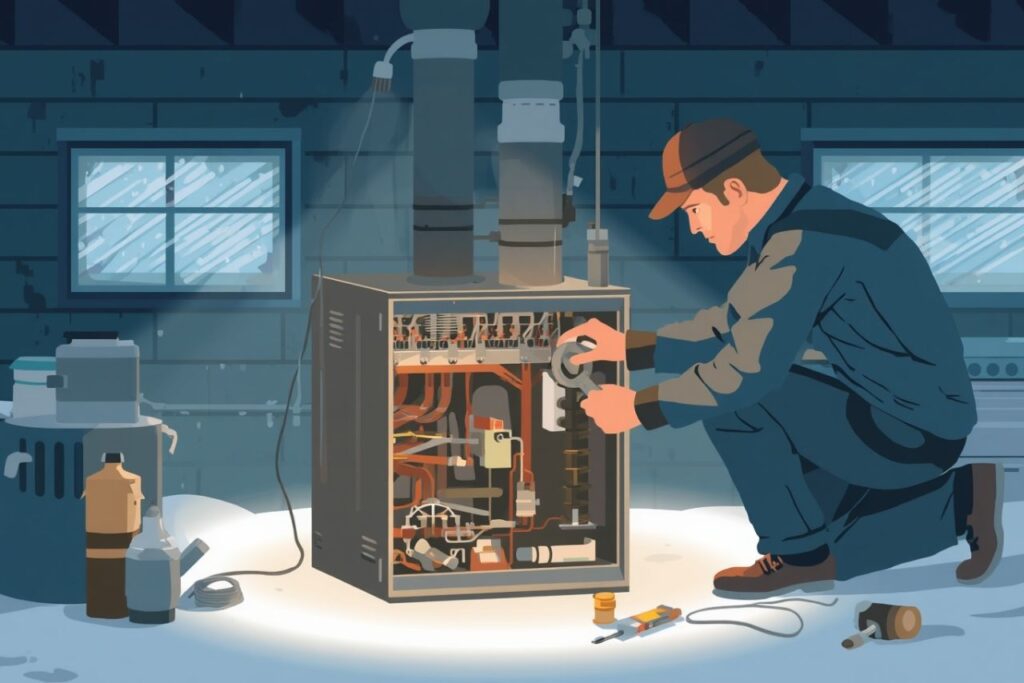
Engineering guidance defines a heating element as a component composed of electrically conductive and insulating material designed to serve a heating purpose. The core is a resistance alloy that converts electricity to heat; this is резистивного (джоулевого) нагрева. The element is more than wire alone—it includes insulating framework and lead connectors (terminals), and the way the element is supported (suspended, embedded, supported) changes how heat transfers (conduction vs. convection/radiation) and how the system must be designed for airflow and sag.
Heat delivery in electric fireplace heaters (importance by design)
Electric fireplaces typically rely heavily on forced convection from a fan, with radiation contributing near the unit.
Краткое содержание раздела
The heater element itself is a near-total converter of electrical input to heat, but the room-level benefit depends on convection, airflow, and placement.
The hidden drivers of energy use (airflow, controls, and heat losses)
The less obvious costs described in heater engineering discussions are not only about part price—they include performance, reliability, and efficiency once installed. In electric fireplaces, three “hidden” drivers determine whether the heater feels efficient:
| Фактор | Почему это важно | What it looks like in daily use |
|---|---|---|
| Airflow condition | Restricted airflow can raise element temperature and trigger safety cycling; heat delivery becomes uneven. | Heater starts, then turns off; weak warm-air stream; dust buildup on grills. |
| Controls and cycling | Short cycling can reduce comfort per kWh (more time recovering than maintaining). | Room never stabilizes; frequent on/off behavior. |
| Room heat loss | The heater can only “keep up” if the room’s insulation and infiltration allow it. | Cold drafts, leaky windows; heater runs continuously. |
A practical way to avoid waste is to treat replacement parts like a specification task: verify the correct voltage and wattage, and ensure wire connections are tight before energizing. These steps are explicitly emphasized in heater replacement guidance for other appliances and reduce failures that cause repeat energy waste and downtime.
Краткое содержание раздела
“Efficiency complaints” are often airflow, control, or building-envelope issues rather than a heating-element technology issue.
Quick energy-cost estimator (kWh and hourly cost)
Electric fireplaces are usually labeled by wattage. If a heater draws (P) watts, its energy use per hour is:
kWh per hour = P / 1000.
For example, a 1000W element draws about 1 kWh per hour when running at full power.
| Heater rating | Energy per hour | How to compute hourly cost |
|---|---|---|
| 1000 Вт | ~1.0 kWh | (1.0 times) (your electricity price per kWh) |
| 1500 Вт (common in space heaters) | ~1.5 kWh | (1.5 times) (your electricity price per kWh) |
| 2000 Вт | ~2.0 kWh | (2.0 times) (your electricity price per kWh) |
Spec transparency matters when estimating cost. A consumer listing for a plug-in electric heating element shows Element Power: 1000W (plus safety/quality cues like UL approval and warranty), which is exactly the information needed to estimate kWh usage.
Краткое содержание раздела
“Energy efficiency” becomes tangible when translated into kWh per hour: 1000W ≈ 1 kWh per hour at full output.
Ways to improve real-world efficiency
Because the element already converts electricity into heat effectively, most improvements come from delivering that heat to the right place and reducing wasted runtime.
| Действие | Why it improves efficiency | What to do |
|---|---|---|
| Use it as zone heat | Heats the occupied area instead of the whole building | Close doors to the room; reduce central thermostat slightly if appropriate |
| Maintain airflow | Better convection means more usable heat and less overheating/cycling | Keep intake/outlet clear; remove dust regularly |
| Prevent repeat failures | Loose connections and wrong ratings create downtime and waste | When servicing: verify voltage/wattage match; keep wire connections tight; secure covers |
For product designers: integrated thermal modules (e.g., die-cast heater approaches) are described as improving heat transfer efficiency and adding mechanical strength and corrosion resistance, which can support stable long-term performance in demanding applications.
Краткое содержание раздела
The biggest efficiency gains come from zone heating strategy, clean airflow, and correct specification/installation practices—more than from changing the element material.
ЧЗВ (3)
1) Are electric fireplace heaters “100% efficient”?
At the device level, resistive heaters convert electrical input into heat very effectively (Joule heating in the element alloy). But “efficient” in a home also depends on where that heat ends up and whether the unit must run continuously due to drafts or poor airflow.
2) Why does my electric fireplace run but the room still feels cold?
Common reasons are high room heat loss (drafts/poor insulation) and weak heat distribution (airflow restrictions or poor placement). The element may be fine, but the system’s convection path is not delivering heat where occupants feel it.
3) Does replacing the heating element improve efficiency?
Only if the old element was faulty (open circuit, damaged, or causing safety cycling). Replacement should match voltage and wattage, and connections must be tight; otherwise performance and reliability can degrade, increasing runtime and perceived inefficiency.
Заключение
Electric fireplace heating elements are typically energy-efficient at the point of use because they generate heat through resistive (Joule) heating. In practice, they are most efficient when used as targeted zone heaters with clear airflow and correct control settings. If energy bills or comfort feel “inefficient,” the cause is often airflow restriction, cycling behavior, or room heat loss—not the basic heating element technology itself.
Ссылки
-
Heating element definition, materials, suspended/embedded/supported frameworks, and cost/installation considerations:
https://tutco.com/conductive/heating-elements -
Replacement discipline principles (verify voltage/wattage; tight wire connections; secured covers before powering):
https://www.whirlpoolwaterheaters.com/support/help/element-was-out-of-range/24 -
Example heater product listing with explicit wattage (1000W) and quality cues (UL approval, warranty):
https://usa.hudsonreed.com/1000-plug-in-watt-electric-heating-element-76309 -
Product family context (heating elements and integrated die-cast heater modules):
https://jinzho.com/product-category/heating-element/
https://jinzho.com/product-category/die-casting-heating-solutions/
https://jinzho.com/
https://jinzho.com/about/
Disclaimer: This page is general information. Energy cost depends on local electricity rates, building heat loss, and operating behavior.