The journey from a roasted coffee bean to the aromatic cup in your hands is a fascinating act of chemistry. This transformation, known as extraction, is the process of dissolving the soluble flavor compounds from ground coffee into water. While variables like grind size, water pressure, and brew time play crucial roles, one factor reigns supreme in dictating which flavors are unlocked: temperature.
At the heart of every coffee maker, from the simplest drip machine to the most sophisticated espresso setup, lies the component responsible for mastering this critical variable: the [加熱エレメント]. This unseen engine doesn’t just heat water; it conducts the orchestra of chemical reactions that define your coffee’s final taste profile.
This article will delve into the intricate science of coffee extraction, explore how temperature acts as the primary catalyst, and reveal how the performance and design of the コーヒーメーカー用ヒーター are directly responsible for the quality, consistency, and flavor of every cup you brew.
Part 1: The Chemistry in the Cup – Understanding Coffee Extraction
A roasted coffee bean is a complex vessel, containing over a thousand different aromatic and flavor compounds. However, only a fraction of the bean’s mass—around 30%—is soluble in water. The goal of brewing is not to extract all of this but to achieve a “golden extraction” of approximately 18% to 22%.
- Under-extraction (<18%): When not enough compounds are dissolved, the coffee tastes sour, salty, and thin. This is because the first compounds to dissolve are the bright, fruity acids. Without the balance of sugars and deeper notes, these acids dominate the palate.
- Over-extraction (>22%): When too many compounds are dissolved, the coffee becomes bitter, astringent, and hollow. This happens because after the desirable acids and sugars are extracted, the water begins to pull out the heavier, less pleasant organic compounds and tannins.
- Ideal Extraction (18-22%): In this sweet spot, the brew achieves a harmonious balance of acidity, sweetness, and body, resulting in a rich, complex, and satisfying cup.
The key to hitting this target lies in controlling the rate of extraction, and the most powerful tool for controlling that rate is the temperature of the brew water.
Part 2: The Thermal Catalyst – Temperature’s Decisive Role
Think of water temperature as the “energy” of your solvent. Different flavor compounds within the coffee grounds require different amounts of energy to dissolve.
- Low Temperatures (Below 88°C / 190°F): Cooler water has less energy. It will primarily extract the most volatile and easily dissolved compounds—the bright, fruity, and floral acids. If the temperature is too low, it won’t have enough energy to dissolve the sugars and oils, leading to a sour, one-dimensional, and under-extracted brew.
- Optimal Temperatures (90°C – 96°C / 195°F – 205°F): This is the range recommended by the Specialty Coffee Association (SCA) for a reason. In this window, the water has enough energy to efficiently dissolve the desirable acids, a significant amount of the sugars (which provide sweetness and body), and some of the oils (which contribute to aroma and mouthfeel). This creates the balanced, complex flavor profile that coffee lovers seek.
- High Temperatures (Above 96°C / 205°F): Water that is too hot has an excess of energy. It extracts everything very quickly, including the heavier, bitter-tasting compounds and tannins that are ideally left behind. This leads to an over-extracted, harsh, and bitter cup. Water at a full boil (100°C / 212°F) will “scald” the grounds, producing a noticeably burnt taste.
This relationship highlights a critical concept: temperature stability. A coffee maker that allows the water temperature to fluctuate wildly during the brew cycle will extract unevenly. It might start by under-extracting and finish by over-extracting, resulting in a muddled cup that is simultaneously sour and bitter.
Therefore, the ultimate measure of a coffee machine’s quality is its ability to heat water to a precise temperature and maintain that temperature throughout the entire brewing process. This is where the コーヒーメーカー technology becomes the star of the show.
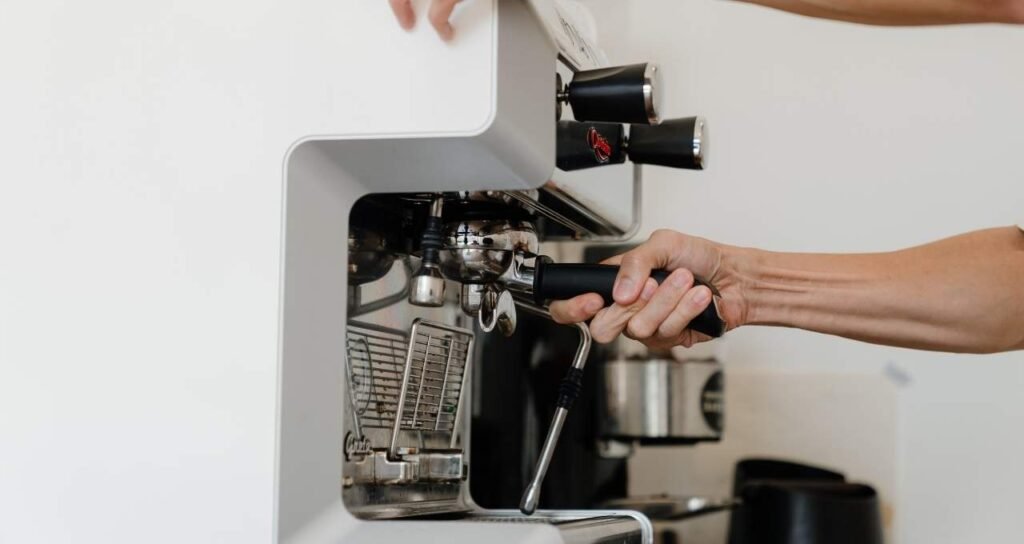
Part 3: The Engine of Extraction – How Heating Elements Dictate Quality
The heating element is the component that converts electrical energy into the thermal energy needed for extraction. Its design, power, and control system directly impact both the speed そして stability of the water temperature.
Types of Heating Elements and Their Impact on Extraction
- Traditional Metal Immersion Elements:
- How they work: Found in most espresso machine boilers and many drip brewers, these are powerful resistive coils housed in a metal tube (like the ones available from specialists like Chris’ Coffee or Stefano’s Espresso Care). They sit directly in the water, transferring heat with high efficiency.
- Impact on Extraction: In a large boiler, a powerful metal element (e.g., 1200W-1400W) can heat a significant volume of water and, when paired with a PID (Proportional-Integral-Derivative) controller, can hold that water at a very stable temperature (often within a single degree). This provides the thermal stability needed for consistent espresso shots. However, in cheaper drip machines with simple on/off thermostats, these elements can cause wide temperature swings, leading to inconsistent extraction.
- Thermoblocks and Thermocoils:
- How they work: Instead of a large boiler, these systems flash-heat water as it passes through a heated metal block or coil. They are common in home espresso machines and super-automatics.
- Impact on Extraction: Early thermoblocks were notorious for poor temperature stability. However, modern, well-designed thermocoils can offer excellent precision. The quality of the heating element and its control system is paramount. A good system provides stable, on-demand heat for consistent extraction. A poor one will produce fluctuating temperatures and inferior coffee.
- Thick Film Ceramic Heaters:
- How they work: This advanced technology involves printing a resistive circuit directly onto a ceramic tube or plate. Water is heated almost instantaneously as it flows over or through the ceramic element.
- Impact on Extraction: This is the pinnacle of temperature stability for drip and pour-over brewing. Because the element has very little thermal mass, it can be controlled with extreme precision. It can heat water to the exact target temperature on the fly and maintain it throughout the brew, ensuring a perfectly even and consistent extraction from start to finish.
The Importance of Quality Manufacturing
The performance of any of these technologies hinges on the quality of their construction. A heating element is not just a commodity; it is a piece of precision engineering. A premier 電熱器メーカー like Jinzho, with over three decades of experience, understands the nuances of thermal science.
- Material Quality: Using high-grade materials like Nichrome for the coil and pure Magnesium Oxide for insulation ensures efficient heat transfer and long life.
- Manufacturing Precision: Processes like 6sigma management and automated production ensure that every element meets its specified resistance and power rating. This guarantees that the element will behave as the coffee machine’s control system expects it to.
- Design and Innovation: Collaboration with universities to develop new materials, like nano-electric heating films, pushes the boundaries of efficiency and control, enabling coffee machine designers to achieve even greater extraction precision.
When a heating element fails or performs poorly (e.g., due to limescale buildup on a metal element), the first thing to suffer is temperature stability. The machine may struggle to reach the target temperature, or it may overshoot it, leading directly to under- or over-extracted coffee. This is why choosing a high-quality, reliable heating element is fundamental to the science of a great brew.
Conclusion: The Brew is in the Balance
The perfect cup of coffee is a delicate balance of science and art, and at the core of that science is the precise application of heat. The heating element is the unsung hero, the engine that drives the complex reactions of extraction. Its ability to deliver water at a stable, correct temperature is the single most important factor in unlocking the rich tapestry of flavors hidden within the bean.
Whether it’s the raw power of a metal element in an espresso boiler or the nimble precision of a ceramic heater in a drip brewer, the quality of that component dictates the outcome. Understanding this connection between the science of extraction and the technology of heating empowers you to make better coffee, diagnose problems with your equipment, and appreciate the incredible engineering that goes into every single cup.
よくある質問(FAQ)
1. Why is the 90°C – 96°C (195°F – 205°F) range so important for coffee extraction?
This temperature range provides the optimal thermal energy to achieve a balanced extraction. It’s hot enough to dissolve the desirable sugars and oils that provide sweetness and body, but not so hot that it rapidly extracts the bitter-tasting tannins and other heavy compounds. Brewing in this window is the key to avoiding both sour (under-extracted) and bitter (over-extracted) coffee.
2. 私のコーヒーが酸味を帯びています。ヒーターが原因の可能性はありますか?
はい、その可能性は十分にあります。酸味は抽出不足の典型的な兆候であり、これは抽出時の水温が十分に高くない場合によく発生します。これは、目標温度に達しなくなった故障したヒーター、ヒーターを断熱する厚いスケール層、あるいは故障したサーモスタットが原因である可能性があります。ヒーターのテストとマシンの脱スケールが最初に取るべき良い対策です。.
3. PIDコントローラーは、ヒーターと連携してどのようにコーヒーの品質を向上させるのですか?
PID(比例・積分・微分)コントローラーは、高度な「スマート」サーモスタットです。ヒーターの単純なオン/オフではなく、温度を継続的に監視し、ヒーターへの供給電力を極めて細かく迅速に調整します。これにより、水温を驚くほど安定して保持することができ、ムラのある抽出の原因となる温度変動を防止し、エスプレッソマシンにおけるショット間の一貫性を確保します。.