
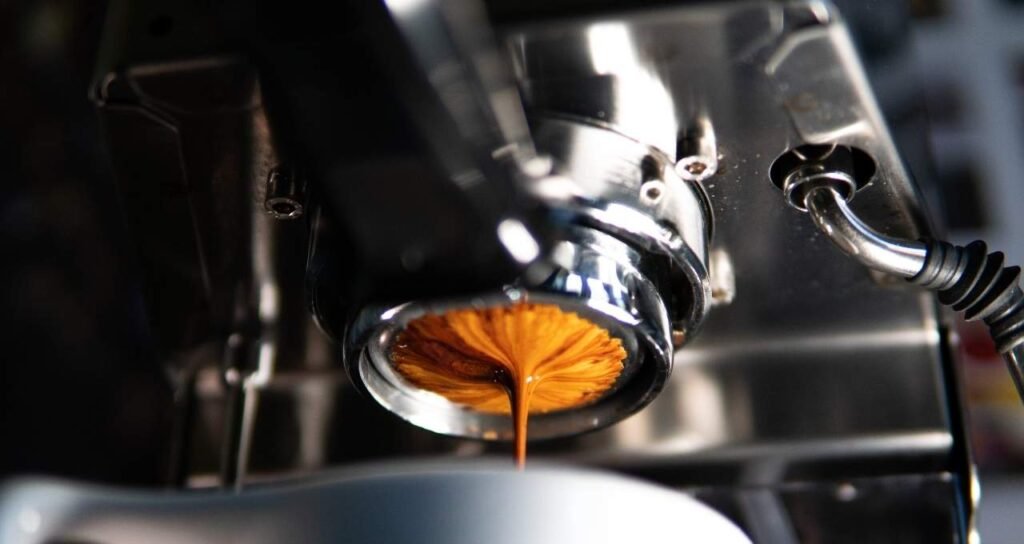
豆の向こう側:熱のカップへの見えない影響
完璧な一杯のコーヒーを求めて、愛好家たちは豆の産地、挽きの精度、水の質、淹れ方について綿密に議論する。しかし、マシンの奥深くに隠された、見過ごされがちな部品が、最終的な味に大きな影響を与えている。 電熱線. .この主力部品は、単にお湯を沸かすスイッチではなく、そのデザイン、素材、性能は、コーヒー粉から抽出される風味のニュアンスに直接関係している。.
休止状態の冷たいマシンから、完璧に加熱された安定した抽出環境までの道のりは、すべてこの重要なパーツに支配されています。劣悪なエレメントは、高いポテンシャルを秘めたスペシャルティコーヒーを期待はずれのバランスの悪いものに変えてしまう。この分析では、[ ]内の設計の複雑な関係を探ります。コーヒーメーカー用ヒーターそしてカップの中の感覚的な体験。電力、材料科学、熱安定性などの要素が、酸味、甘み、ボディ、苦味にどのように直接的に反映されるかを分析し、ボイラー内のエンジニアリングが畑での農学と同じくらい重要であることを実証する。.
抽出の科学:なぜ温度がマスター変数なのか
加熱エレメントの役割を理解するには、まずコーヒー抽出の基本を把握する必要がある。コーヒーの粉には何百もの可溶性化合物が含まれており、それぞれが最終的な風味の特徴に寄与している。これらの化合物の抽出速度と温度はそれぞれ異なります。コーヒーの抽出の目標は、バランスのとれた抽出を行うことであり、望ましい化合物を取り込み、望ましくない化合物は残すことである。.
温度はこのプロセスにおける主要な触媒である。スペシャルティコーヒー協会(SCA)によると、最適な抽出のための理想的な水温は以下の間です。 195°Fおよび205°F(90°Cおよび96°C). .この狭い範囲からの逸脱は、風味に劇的かつ予測可能な影響を与える。.
- 抽出不足(冷たすぎる): お湯の温度が十分でないと、糖分や油分の多くを溶かすことができない。その結果、抽出の早い酸に支配された味になる。 酸っぱい, ボディが薄く、甘みと複雑さに欠ける。.
- 過剰抽出(熱すぎる): お湯の温度が高すぎると、タンニンや特定のアルカロイドのような苦味成分など、あらゆるものを積極的に取り除いてしまう。その結果 苦い, 収斂味があり、空洞で、繊細な原産地の風味を覆い隠している。.
この微妙なバランスは、以下の表に示されている:
| 温度範囲 | 一次抽出化合物 | 出来上がった風味のプロフィール |
|---|---|---|
| 195°F/90°C以下 | 果実酸、いくつかのメイラード化合物 | サワー, 草臥れた、弱々しい、発育不足の、細い体 |
| 195°F - 205°F / 90°C - 96°C | 酸, 砂糖(キャラメル), 油, メイラード化合物 | バランス, 甘く、生き生きとした酸味、フルボディ、複雑味 |
| 205°F / 96°C 以上 | 上記のすべてとタンニンなどの苦味成分 | 苦い, 渋い、きつい、焦げた、デリケートなノートが失われた |
の主な機能である。加熱エレメントそのため、単にお湯を沸かすだけでなく、その “ゴールデン ”ウィンドウの範囲内で、正確かつ揺るぎない温度でコーヒー粉にお湯を供給する必要がある。.
性能の解剖学:ヒーティング・エレメント設計の主な要因
この機能を正確に実行する素子の能力は、その中核となる設計特性によって決まります。ワット数、材料構成、物理的形状は任意の選択ではなく、熱性能に直接影響する設計上の決定事項です。.
ワット数、出力密度、スピード
その ワット数 ヒーターエレメントのワット数は、その出力の尺度である。一般的にワット数が高いほど、コールドスタートからのヒートアップ時間が短くなります。さらに重要なことは、ワット数によってエレメントの 回復時間-ショットや蒸しに大量の水を使用した後、ボイラーを素早く目標温度に戻す能力。.
- 風味への影響: 家庭でも業務用でも、温度回復が遅いと安定性が損なわれます。エレメントが追いつかないと、ショットを重ねるごとに温度が下がり、ますます抽出不足で酸味の強いコーヒーになってしまいます。ハイワットエレメントなら、2杯目、3杯目も1杯目と同じ最適な温度で抽出され、一貫性が保たれます。.
関連する、より高度な指標は 電力密度 (表面積1平方インチあたりのワット)。非常に高い出力密度を持つエレメントは、水を非常に素早く加熱することができますが、その表面に「ホットスポット」を発生させる危険性があります。これは局所的な沸騰やスケール形成につながり、エレメントを劣化させ、長期的な温度安定性に影響を与える可能性があります。専門メーカーは、ワット数と表面積のバランスをとることで、長寿命を損なうことなく急速加熱を実現しています。.
素材構成:純度と耐久性の基礎
The material from which a heating element is made has significant implications for both heat transfer efficiency and the purity of the water.
- Copper: Traditionally favored for its excellent thermal conductivity, copper heats up very quickly. However, it is more susceptible to corrosion and scale buildup, especially in hard water. While often nickel-plated to mitigate this, any degradation of the plating could potentially expose the copper.
- Stainless Steel: This has become the standard for many modern, high-quality machines. While it has slightly lower thermal conductivity than copper, it offers far superior resistance to corrosion and limescale. Its inert nature ensures that no metallic tastes are imparted to the water, preserving the pure flavor of the coffee.
- Incoloy and Advanced Alloys: Found in many high-end commercial and prosumer machines, alloys like Incoloy (a nickel-chromium superalloy) represent the pinnacle of durability. They offer exceptional resistance to both corrosion and high temperatures, ensuring an incredibly long service life and stable performance even under heavy use.
The choice of material directly impacts flavor by preventing off-tastes and, crucially, by resisting the formation of scale buildup. Scale acts as an insulator, forcing the element to work harder and less efficiently, leading to inaccurate temperature readings and unstable performance over time.
Physical Geometry and Heat Distribution
The shape and placement of the element within the ボイラー内で加熱されると、化学の法則により、これらのミネラルは溶液から析出し、硬い結晶性の堆積物、すなわち are engineered for one primary purpose: uniform heat distribution. Whether it’s a long U-shape, a tight coil, or a complex multi-loop design, the goal is to maximize the surface area in contact with the water and to heat the entire volume as evenly as possible.
- 風味への影響: Poor geometry can lead to thermal stratification, where water at the top of the boiler is significantly hotter than water at the bottom. When the machine draws water for brewing, it may pull from a pocket that is outside the ideal temperature range, leading to an unpredictable and inconsistent extraction, even if the machine’s temperature probe reports an “ideal” average temperature.
Translating Design to Performance: The Metrics That Define Flavor
The design factors above culminate in two critical performance metrics that have the most direct and tangible effect on the taste of your coffee: temperature stability and thermal inertia.
Temperature Stability: The Key to Consistency
Temperature stability is the single most important performance characteristic for high-quality coffee extraction. It is the ability of the brewing system to maintain the set temperature with minimal fluctuation, both during a single shot and from one shot to the next.
Modern high-end machines achieve this by pairing a quality heating element with a PID (Proportional-Integral-Derivative) controller. The PID acts as a sophisticated brain, constantly monitoring the temperature and sending precise, rapid pulses of energy to the heating element to counteract any temperature drop.
Imagine a graph of brew temperature over time.
- A machine with a basic サーモスタット would show a jagged line, with wide temperature swings above and below the target as the element crudely switches fully on and fully off.
- A PID-controlled machine would show a nearly flat line, holding the temperature within a fraction of a degree.
This stability is what allows a barista to “dial in” a coffee with confidence, knowing that the water temperature is a constant, not a variable. It ensures that every part of the coffee puck is extracted evenly, unlocking a balanced and repeatable flavor profile.
Thermal Inertia and Recovery
Thermal inertia refers to the ability of the system to resist changes in temperature. A large, heavy brass or stainless steel boiler paired with a powerful [コーヒーメーカー] will have high thermal inertia. When cold water enters the boiler to replenish what was used, the massive heated boiler and the powerful element work together to minimize the temperature drop and recover almost instantly.
- 風味への影響: For a café pulling shots back-to-back or a home user making multiple lattes for guests, this is critical. Low thermal inertia and slow recovery mean a significant waiting period is needed between shots to allow the temperature to stabilize. Rushing the process results in a temperature drop and a sour, under-extracted shot. A system with high inertia and fast recovery provides the thermal consistency needed for high-volume output without sacrificing quality.
The Manufacturer’s Mark: Precision, Purity, and Trust
Achieving the level of performance described above is not a matter of chance; it is the direct result of precision engineering and uncompromising quality control at the manufacturing level. The world’s leading coffee machine brands do not produce their own heating elements. Instead, they partner with a specialized [電熱器メーカー] that possesses the deep expertise required to produce these critical components to exacting specifications.
This is where a manufacturer like [Jinzho] exemplifies the pinnacle of the industry. With over three decades of dedicated experience, their approach highlights what separates a truly superior element from a generic replacement:
- Advanced Process Control: Implementation of 6sigma lean management and automated production lines minimizes manufacturing defects and ensures that every element produced meets the same high standard of quality and performance.
- Material Science and R&D: Collaboration with universities to develop new materials and technologies results in elements that are not only more durable but also more energy-efficient, providing faster and more stable heating.
- Verifiable Quality and Safety: Adherence to over 10 international certification standards (such as ISO, VDE, and UL) provides a verifiable guarantee of safety, reliability, and manufacturing excellence.
- Integrated Production: By controlling the entire manufacturing chain, from die-casting and stamping to final assembly, they can ensure material purity and dimensional accuracy at every step, leading to a more reliable final product.
When a coffee machine brand chooses an element from such a manufacturer, they are investing in the consistency and quality of the final product—the coffee in the cup.
Conclusion: The Engineered Heart of Flavor
The heating element is far more than a simple component; it is the engineered heart of the coffee machine, pumping lifeblood at a precise and stable temperature. Its design—from the power of its wattage to the inertness of its materials and the intelligence of its shape—is a series of deliberate choices that culminate in the final flavor profile of the coffee.
An understanding of this impact elevates the conversation beyond beans and grind, acknowledging the crucial role of thermal engineering. A stable, powerful, and well-designed heating system provides the consistent canvas upon which the true character of the coffee can be painted. The next time you savor a perfectly balanced espresso, with its vibrant acidity, rich sweetness, and clean finish, remember the unseen hero in the boiler, whose precise performance made that moment of sensory perfection possible.
よくある質問(FAQ)
1. Can a failing heating element affect flavor before it stops working completely?
Absolutely. As an element ages or becomes coated in scale, its performance degrades. It may struggle to maintain a stable temperature, leading to unpredictable fluctuations. You might notice shots becoming intermittently sour or bitter, even with no changes to your coffee or grind. This inconsistency is often the first sign of a failing element.
2. Does a more expensive espresso machine always have a better heating element?
Generally, yes. Higher-end machines invest more in the entire thermal system. This often means boilers made of heavier materials (brass, stainless steel), more powerful heating elements made from superior alloys (like Incoloy), and the inclusion of PID temperature controllers. This combination provides the superior temperature stability that is a hallmark of prosumer and commercial equipment.
3. How exactly does limescale on the element impact coffee taste?
Limescale acts as an insulator on the element’s surface. This forces the element to overheat to transfer the same amount of energy to the water. This can cause the temperature sensors to give inaccurate readings and leads to poor temperature stability. The result is inconsistent brew temperatures, which directly translates to unpredictable and often poor-tasting coffee (sour or bitter).
4. コーヒーマシンの加熱要素に「最適」な材質はありますか?
単一の「最適」材質は存在せず、用途に最も適した材質があります。銅は熱伝導が最も速いですが、腐食防止のためメンテナンスが多く必要です。ステンレス鋼は、優れた熱性能、耐久性、耐食性のバランスが極めて良く、高品質マシンの最上級選択肢です。インコロイなどの超合金は、寿命、スケール(水垢)および腐食に対する耐性において絶対的に優れていますが、コストが高くなります。.
5. 風味向上のため、マシンの加熱要素をアップグレードできますか?
技術的には可能ですが、複雑になる場合があります。電圧、取付サイズ、物理的寸法を正確に一致させる必要があります。特に重要なのは、元の要素よりも高いワット数の要素を絶対に取り付けてはいけないことです。マシンの配線、安全ヒューズ、制御基盤は増加した電気負荷に対応する設計ではないため、重大な火災危険を生じます。高品質部品による同型交換が最も安全な方法です。.
6. 加熱要素付きボイラーとサーモブロックまたはサーモコイルの違いは何ですか?
ボイラーは、浸漬式加熱要素によって安定した温度に保たれた水の貯留槽であり、高い熱安定性を提供します。サーモブロックまたはサーモコイルは、少量の水が金属ブロックまたはコイルを通過する際に瞬間加熱するオンデマンドシステムです。サーモブロックは冷間からの立ち上がりがはるかに速いですが、通常、適切に設計されたPID制御ボイラーシステムと比較して、抽出中の温度安定性は低くなります。.
7. 加熱要素の性能は、ミルクドリンク用の蒸気パワーにどのように影響しますか?
蒸気パワーは、ボイラー内部の温度と圧力に直接関係しています。強力な加熱要素は、水を蒸気温度(沸点よりかなり高い、例:255°F / 124°C)に素早く加熱し、蒸気噴射中でも高圧力を維持できます。弱い、またはスケールが付着した要素では性能が低下し、力弱く湿った蒸気となり、圧力が大幅に低下するため、ミルクを適切にテクスチャリングすることが困難になります。.
参考文献:
- Stefano's Espresso Care. (n.d.). エスプレッソマシン用加熱要素. 取得元: https://espressocare.com/collections/heating-elements
- Great Infusions Co. (n.d.). 家庭用エスプレッソマシン交換用加熱要素. 取得元: https://greatinfusions.com/home-espresso-replacement-heating-elements/
- Chris’ Coffee. (n.d.). コーヒーボイラー加熱要素. 取得元: https://www.chriscoffee.com/products/rocket-coffee-boiler-heating-element
- Coffee Addicts. (n.d.). 加熱要素. 取得元: https://coffeeaddicts.ca/collections/elements
- Fix-It Club. (2006). コーヒーメーカーの修理方法. HowStuffWorks. 取得元: https://home.howstuffworks.com/how-to-repair-small-appliances3.htm
- Home-Barista.com. (n.d.). マルチメーターを用いた加熱要素のテスト. 取得元: https://www.home-barista.com/repairs/testing-heating-element-with-multimeter-t58900.html
- Elekheat. (n.d.). コーヒーマシン加熱要素. 取得元: https://elekheat.com/coffee-machine-heating-element/
- The Espresso Shop. (n.d.). 加熱要素&ガスケット. 取得元: https://theespressoshop.com/collections/heating-elements-gaskets
- Jinzho. (n.d.). コーヒーマシンヒーター部品. 取得元: https://jinzho.com/product/coffee-machine-heater-parts/
- iFixit. (n.d.). Cuisinart DCC-1200+ 加熱要素交換. 取得元: https://www.ifixit.com/Guide/Cuisinart+DCC-1200++Heating+Element+Replacement/105224

