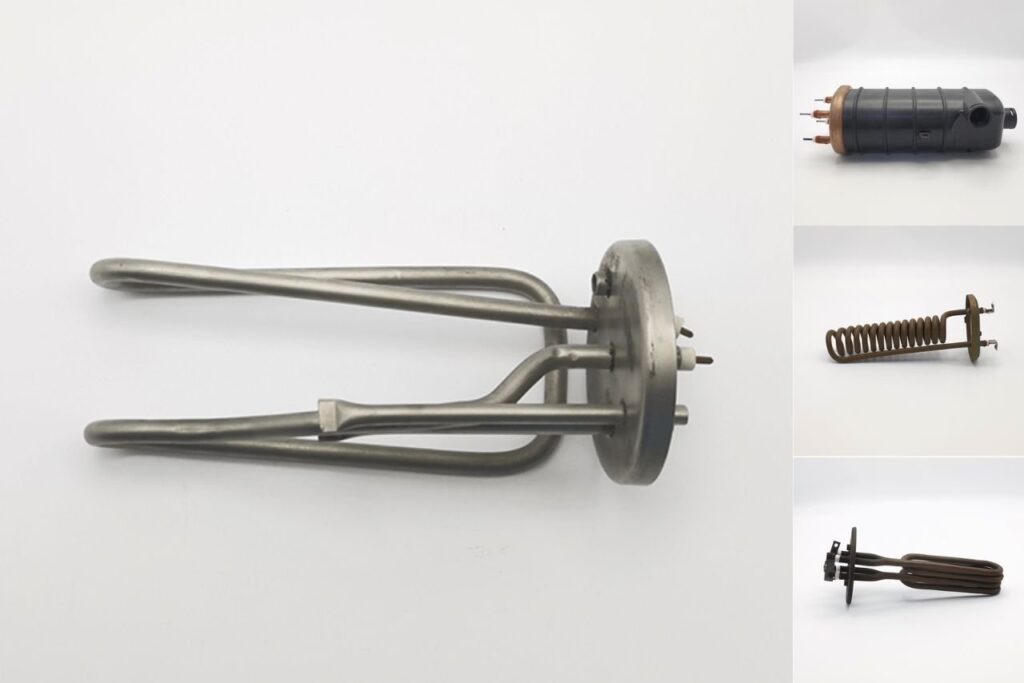
Cluster Page ? ~2005 words ? Global ? 4 FAQs ? Focus: heater assembly, airflow, and failure prevention
When comparing heater strength or longevity between two dryer lines, the deciding factor is rarely the coil alloy alone. The most important practical variables are le flux d'air (vent restriction drives element temperature), terminal condition (loose spades create hot spots), and whether the heater assembly matches the dryer s design and safeties.
Engineering basis: TUTCO defines a élément chauffant as a component made of electrically conductive and insulating material with connectors, designed to serve a purpose, and notes heater life is limited by oxidation, deformation, cycling, and environment. https://tutco.com/conductive/heating-elements
- What you re really comparing (heater + system)
- Centennial vs Bravos: side-by-side checklist
- Airflow: why same wattage can feel different
- Why elements fail (and why replacements fail fast)
- Buying the right element: spec and fit checklist
- Maintenance that extends heater life
- FAQ (4)
- Références et liens internes obligatoires
As described by TUTCO, a élément chauffant includes conductive material plus insulating framework and lead connectors. In dryer terms, that element lives inside a heater housing where airflow and mounting clearances determine coil temperature and stability.
- Conductive part: resistance wire/coil that generates heat
- Insulators: keep coil positioned and electrically isolated
- Terminals: deliver power; loose fit = hot spots
A dryer heater is cooled by the same air it heats. Vent restrictions raise element temperature, which increases cycling and can trigger thermal safeties. This is why two dryers can share similar heater concepts but behave differently in homes.
- Lint screen and housing
- Blower and duct path
- Thermal cutoffs/thermostats
- Exterior vent termination
| Comparison point | Maytag Centennial (what to verify) | Maytag Bravos (what to verify) | Why it matters for the element |
|---|---|---|---|
| Element assembly compatibility | Confirm exact model match and heater housing geometry | Confirm exact model match and heater housing geometry | Wrong fit can cause coil contact, uneven heating, or premature burnout |
| Airflow performance in your installation | Check vent length, elbows, and exterior flap behavior | Check vent length, elbows, and exterior flap behavior | Airflow restriction is a primary driver of overtemperature stress |
| Terminal condition (spade connectors) | Inspect for discoloration/looseness; replace overheated terminals | Inspect for discoloration/looseness; replace overheated terminals | Loose connections create localized resistance heating (hot spots) |
| Thermal safety history | If a cutoff/thermostat opened, treat airflow as root cause first | If a cutoff/thermostat opened, treat airflow as root cause first | Safeties trip for a reason; replacing the element alone often repeats the failure |
Table 1 Without model-specific parts data, the best comparison is practical: compatibility, airflow, terminals, and safeties.
TUTCO describes process air heaters as heaters designed around temperatures, airflows, and pressures. While household dryers are simpler than industrial units, the same physics applies: wattage alone doesn t guarantee good drying if airflow is compromised. Référence
- Exterior vent flap: opens strongly and stays open during a heat cycle.
- Cycle time: drying time suddenly increases = airflow or heating control issue.
- Cabinet heat: unusually hot top/sides can indicate restricted exhaust.
TUTCO emphasizes oxidation, deformation, and cycling as life-limiters for resistance elements; higher operating temperature accelerates these mechanisms.
Whirlpool s heating-element replacement steps (water heater context) warn not to restore power until the tank is full and air is purged, or the element will burn out ( dry fire ). That illustrates a universal heater principle: don t apply power until the heater s surrounding system can safely absorb/remove heat. https://www.whirlpoolwaterheaters.com/support/help/element-was-out-of-range/24
Dryer translation: don t run a newly installed heater with vent disconnected/kinked, missing covers, or known airflow restriction.
- Use the dryer s model/serial to confirm the exact heater assembly part number.
- Confirm mounting points and heater housing style (not just looks similar ).
- Prévoir de remplacer simultanément toutes les bornes endommagées par la chaleur.
Hudson Reed s 1000W plug-in heating element (radiator/towel warmer use) lists key specs clearly 1000W, Approuvé UL, la protection contre les intrusions IP67, materials (ABS + stainless steel), and a 2-year warranty. It s not a dryer part, but it demonstrates the level of specification clarity that reduces buying mistakes. Source
- Clean lint screen thoroughly (wash if fabric softener residue is present).
- Inspect the flex duct behind the dryer for kinks/crushing.
- Verify strong airflow at the exterior vent.
- Deep-clean the full vent run to the outside termination.
- Remove lint accumulation around the blower/heater area (if accessible and safe).
- Check for loose/browned electrical terminals during any service.
Heating elements are available in different technology families, which JINZHO groups as Tubes de chauffage, Plaque chauffante, Film chauffant, Solutions de chauffage pour la coulée sous pression. For steam/hot-water appliances, see Chaudière électrique.
Not reliably. Per heater engineering fundamentals, perceived drying power depends heavily on airflow, controls, and installation. A restricted vent can make any heater feel weak while also stressing it toward early failure.
Usually no. Inspect the airflow path and the heater terminals. If a thermal cutoff opened, treat that as a symptom: correct the overtemperature root cause (often vent restriction) or the new element may fail again.
Common reasons include restricted airflow, incorrect part fit/rating, or loose terminals creating hot spots. TUTCO notes heater life is limited by oxidation, deformation, and cycling higher temperatures accelerate all of those. Référence
Do not energize the heater until the system can remove heat safely. Whirlpool s guidance warns that powering a water-heater élément before the tank is full causes dry fire. In dryers, the equivalent is running heat with disconnected/kinked venting or missing covers/guards. Source
- Élément chauffant
- Fabricant d'éléments chauffants
- Usine d'éléments chauffants
- Solutions de chauffage pour la coulée sous pression
- TUTCO: Heating Elements
- Whirlpool: Replace the Heating Element (safety sequence)
- Hudson Reed: 1000W Plug-In Heating Element (spec example)
- JINZHO : Tubes chauffants
- JINZHO : Plaque chauffante
- JINZHO : Film chauffant
- JINZHO : Chauffe-eau électrique à chaudière
Disclaimer: This comparison is educational and not a substitute for model-specific service data. Always confirm parts by model number and follow electrical safety procedures.