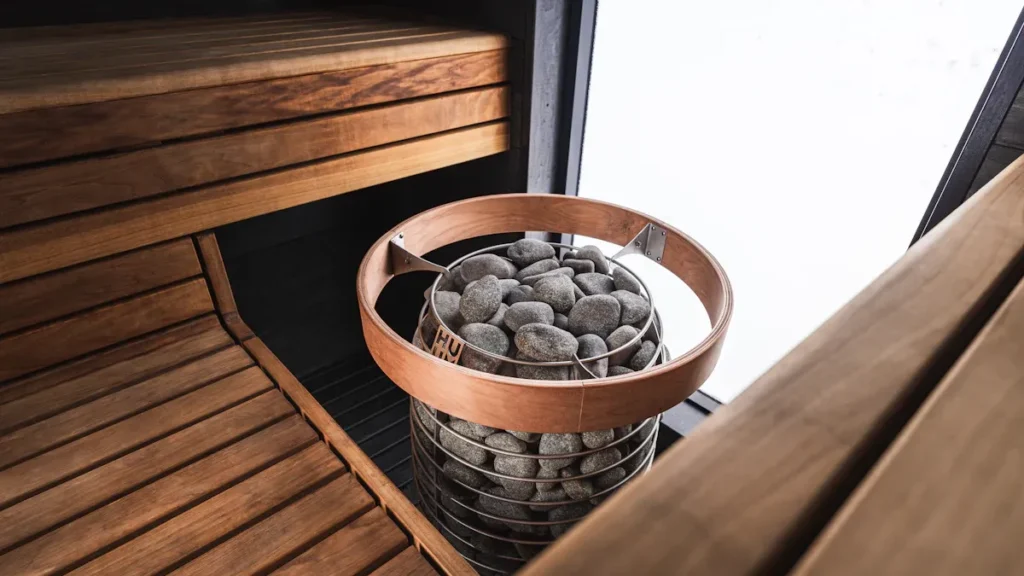

UN élément chauffant transforme l'expérience authentique du sauna en fournissant une chaleur constante et fiable. De nombreux utilisateurs remarquent que les éléments chauffants électriques de sauna peuvent amener un sauna à une température optimale jusqu'à 30 minutes plus rapidement que les méthodes traditionnelles au bois, rendant la relaxation plus accessible. Fabricants d'éléments chauffants comme Chauffage électrique Jinzhong conception éléments chauffants pour appareils ménagers qui assurent un chauffage efficace et une distribution uniforme de la chaleur. La technologie des éléments chauffants de sauna intègre également des dispositifs de sécurité avancés et des contrôles de température précis, permettant aux utilisateurs de profiter de chaque séance avec confiance et confort.
Chaleur constante et efficace avec les éléments chauffants de sauna

Distribution uniforme de la chaleur dans les saunas
Pas de points chauds ou froids
Un élément chauffant bien conçu garantit que chaque coin du sauna reçoit le même niveau de chaleur. Une ventilation adéquate joue un rôle crucial dans ce processus. Medical Saunas souligne que des bouches d'aération et des systèmes de ventilation stratégiquement placés aident à faire circuler l'air frais sans réduire l'intensité de la chaleur. Ce flux d'air continu permet élément chauffant de distribuer la chaleur uniformément, éliminant les points chauds ou froids. Des recherches montrent que placer l'ouverture d'entrée d'air au-dessus du poêle et l'évacuation sous le banc crée un mélange d'air optimal. Cette configuration empêche les zones d'air froid et favorise une distribution uniforme de la chaleur, tant verticalement qu'horizontalement.
Confort uniforme pour tous
Une chaleur uniforme signifie que chaque personne dans le sauna profite du même niveau de confort, quel que soit l'endroit où elle s'assoit. Les radiateurs en fibre de carbone, par exemple, offrent une température plus douce et plus constante dans tout le sauna, réduisant le risque de points chauds. Les radiateurs en céramique, bien qu'offrant des temps de chauffe plus rapides, peuvent créer des gradients de température plus prononcés. Le choix élément chauffant impacte directement le confort global et l'efficacité de l'expérience du sauna.
Performance fiable de l'élément chauffant de sauna
Maintient la température souhaitée
Un élément chauffant de sauna doit maintenir une température stable pour offrir une séance relaxante et thérapeutique. Des études sur les cabines de sauna à vapeur portables révèlent une grande fiabilité dans le maintien des réglages de température et d'humidité, en particulier à des niveaux élevés. Par exemple, au réglage le plus élevé, la température reste stable pendant près d'une heure, garantissant aux utilisateurs une chaleur constante tout au long de leur séance.
Fonctionne dans toutes les conditions
La fiabilité va au-delà du simple contrôle de la température. Les éléments chauffants de sauna fonctionnent bien dans différentes conditions et avec une utilisation répétée. Les données montrent que les réponses physiologiques telles que la fréquence cardiaque, le taux de transpiration et le confort thermique restent stables sur plusieurs séances. Cette constance démontre qu'un élément chauffant de qualité peut résister à une utilisation régulière sans perte de performance.
Conseil : Un chauffage constant et des performances fiables rendent les séances de sauna plus agréables et prévisibles pour tous les utilisateurs.
Efficacité énergétique des éléments chauffants électriques
Utilise moins d'énergie au fil du temps
Les éléments chauffants électriques offrent un équilibre entre commodité et efficacité énergétique. Alors que les saunas électriques traditionnels utilisent entre 9 et 13 kWh par heure, les saunas infrarouges consomment seulement 1,5 à 3,5 kWh par heure. Les radiateurs infrarouges y parviennent en chauffant directement le corps, ce qui entraîne des temps de chauffe plus rapides et des températures de fonctionnement plus basses.
Économies sur les factures d'énergie
| Option de chauffage | Estimation du coût mensuel (USD) | Économies d'énergie par rapport au chauffage électrique traditionnel |
|---|---|---|
| Électrique traditionnel | $8 – $10 | Base de référence |
| Sauna infrarouge | $2,50 – $3,50 | Économies de 60-75% |
| Chauffage au gaz | Variable | Économies de 20-30% |
Les radiateurs de sauna électriques coûtent généralement entre $1 et $3,30 par séance, selon la taille et l'isolation. Alors que les saunas infrarouges offrent les plus grandes économies, les éléments chauffants électriques offrent un mélange pratique de coûts d'exploitation modérés et d'entretien facile. Cela en fait un choix populaire pour ceux qui recherchent à la fois confort et efficacité énergétique dans leur sauna.
Temps de chauffe plus rapides avec l'élément chauffant de sauna

Démarrage rapide avec les éléments chauffants électriques
Prêt à l'emploi en quelques minutes
Les éléments chauffants électriques amènent un sauna à la température souhaitée beaucoup plus rapidement que les méthodes traditionnelles. Le temps de chauffe moyen pour un sauna traditionnel varie de 30 à 40 minutes, tandis que les saunas infrarouges atteignent plus de 100º F en environ 15 minutes. Le tableau ci-dessous met en évidence les différences de vitesse de chauffe et de contrôle de la température :
| Type de sauna | Temps de chauffe | Plage de température | Caractéristiques de la méthode de chauffage |
|---|---|---|---|
| Sauna traditionnel | 30-40 minutes | 150-160º F | Nécessite de chauffer l'air et les pierres ; le temps de chauffe dépend de l'isolation, de la température ambiante et de la ventilation. |
| Sauna infrarouge | ~15 minutes pour 100º F+ | Généralement 110º F ou plus | Les émetteurs infrarouges fournissent une chaleur directe ; pas besoin de chauffer l'air ou les pierres ; les utilisateurs peuvent commencer à se baigner immédiatement. |
Ce démarrage rapide signifie que les utilisateurs passent moins de temps à attendre et plus de temps à profiter de l'expérience du sauna.
Moins d'attente, plus de plaisir
Les éléments chauffants électriques de sauna utilisent souvent un “mode basse puissance ” toujours allumé » pour garder les pierres au chaud. Lorsque les utilisateurs entrent, seul l'air a besoin d'être chauffé. Cette conception réduit le temps d'attente et garantit que le sauna est prêt à être utilisé presque immédiatement. La quantité optimisée de pierres dans les radiateurs électriques équilibre un démarrage rapide avec une production de vapeur efficace, rendant chaque séance plus pratique.
Technologie de chauffage avancée dans les éléments chauffants de sauna
Éléments modernes vs. méthodes traditionnelles
Des solutions modernes et efficaces dans éléments chauffants de sauna ont transformé l'expérience traditionnelle du sauna. Les radiateurs infrarouges émettent la chaleur radiante que le corps absorbe directement, créant ainsi un environnement plus doux et plus confortable. La technologie de sauna intelligent permet aux utilisateurs de contrôler la température et l'humidité à distance, tandis que des interfaces numériques avancées offrent des réglages précis. Une isolation améliorée et des éléments chauffants efficaces réduisent davantage la consommation d'énergie sans sacrifier la production de chaleur.
- Les saunas du futur proposeront des capacités de zonage pour un chauffage personnalisé dans différentes zones.
- Des capteurs permettront des ajustements en temps réel, garantissant un confort constant.
- Les conceptions hybrides combinent le chauffage traditionnel et infrarouge pour des expériences polyvalentes.
Expérience utilisateur améliorée
Les éléments chauffants de sauna modernes offrent bien plus que de la rapidité. Ils proposent des réglages personnalisés de chaleur, d'humidité, d'éclairage et de son pour une expérience sur mesure. Des capteurs de surveillance de la santé pourraient bientôt permettre des ajustements automatiques en fonction des données biométriques de l'utilisateur. Des systèmes de ventilation améliorés maintiennent une qualité d'air et un confort optimaux, favorisant une expérience de sauna supérieure.
Économies d'énergie et de temps dans les séances de sauna
Utilisation efficace des ressources
Les éléments chauffants électriques utilisent l'énergie de manière efficace en ne chauffant que ce qui est nécessaire. Les saunas infrarouges, par exemple, chauffent directement le corps, ce qui réduit la consommation électrique globale. Une isolation améliorée et des commandes avancées aident à maintenir la température souhaitée avec un minimum de gaspillage d'énergie.
Plus de séances, moins de temps d'arrêt
Des temps de préchauffage plus rapides permettent aux utilisateurs de planifier davantage de séances de sauna avec moins de temps d'arrêt entre les utilisations. Le processus de chauffage efficace permet une récupération rapide après chaque séance, faisant du sauna un choix pratique pour les modes de vie chargés.
Remarque : Les éléments chauffants de sauna modernes offrent à la fois rapidité et efficacité, améliorant chaque aspect de l'expérience du sauna.
Sécurité et contrôle renforcés avec les éléments chauffants de sauna
Fonctions de sécurité intégrées des éléments chauffants électriques
Protection contre la surchauffe
Les fabricants conçoivent les éléments chauffants de sauna modernes avec une protection avancée contre la surchauffe. Ces systèmes surveillent la température à l'intérieur du sauna et éteignent automatiquement l'élément chauffant si elle dépasse les limites de sécurité. Cette fonction réduit les risques de brûlures et d'incendie, créant un environnement plus sûr pour les utilisateurs. Des certifications telles que ETL, UL, CSA, CE et TÜV confirment la conformité aux normes de sécurité internationales. Ces certifications offrent une tranquillité d'esprit aux utilisateurs, sachant que le sauna répond à des exigences strictes de sécurité électrique.
Arrêt automatique
Les fonctions d'arrêt automatique ajoutent une couche de sécurité supplémentaire. Si le sauna fonctionne trop longtemps ou si des capteurs détectent des conditions dangereuses, le système de chauffage s'éteindra sans intervention de l'utilisateur. Cette fonction empêche la surchauffe et protège à la fois l'équipement et les personnes à l'intérieur. Les composants électroniques sensibles, souvent logés à l'extérieur du sauna, améliorent la fiabilité et prolongent la durée de vie du système de chauffage.
Conseil : L'inspection et l'étalonnage réguliers des radiateurs de sauna, qui coûtent généralement entre $50 et $150, aident à maintenir ces fonctions de sécurité et à garantir l'efficacité énergétique.
Contrôle précis de la température dans l'élément chauffant du sauna
Commandes faciles à utiliser
Les éléments chauffants de sauna modernes sont dotés de panneaux numériques et de capteurs intelligents qui permettent aux utilisateurs d'ajuster et de surveiller la température en temps réel. Ces commandes facilitent le contrôle de la température, garantissant une expérience de sauna confortable et sûre. Les systèmes compatibles Wi-Fi permettent même un fonctionnement à distance, afin que les utilisateurs puissent préchauffer le sauna ou ajuster les paramètres à distance.
Paramètres personnalisables pour le confort
Un contrôle précis de la température permet des profils de chaleur personnalisés et des programmes de bien-être. Les utilisateurs peuvent sélectionner leur température et la durée de la séance préférées, adaptant chaque séance de sauna à leurs besoins. Le tableau ci-dessous met en évidence comment les normes de sécurité mises à jour ont amélioré la régulation de la température et le confort de l'utilisateur :
| Aspect | Norme précédente (UL 875) | Norme mise à jour (UL 60335-2-53) |
|---|---|---|
| Seuil de déclenchement de température | Inférieur (~360°F/182°C), conservateur | Seuil plus élevé, moins de déclenchements inutiles |
| Emplacement du capteur du thermostat | Au-dessus du radiateur, à 6″ du plafond | Au-dessus de la zone d'assise, contrôle plus précis |
| Mesure de la température | Limité au capteur au-dessus du radiateur | Prend en charge les mesures au niveau du banc d'assise, températures ambiantes plus élevées |
| Sécurité et documentation | Exigences plus anciennes | Aligné sur les normes internationales, avertissements mis à jour |
Ces améliorations permettent une régulation plus précise de la température et une expérience de sauna plus sûre et plus agréable.
Faible entretien et durabilité des éléments chauffants de sauna
Composants durables
Les éléments chauffants de sauna de qualité offrent une durabilité impressionnante. Les radiateurs de sauna infrarouges, par exemple, durent souvent entre 15 à 20 ans avec un minimum de réparations. Cette longévité résulte de matériaux et d'une construction de qualité supérieure. En revanche, les radiateurs bon marché peuvent tomber en panne en quelques années en raison de composants inférieurs. Un nettoyage et un entretien réguliers empêchent l'accumulation de moisissures et de bactéries, contribuant à un environnement de sauna plus sûr et plus agréable.
Moins de réparations et de remplacements
Un entretien de routine, tel que des inspections et un nettoyage annuels, maintient les systèmes de chauffage en fonctionnement efficace et réduit la fréquence des réparations coûteuses. Les coûts d'entretien annuels d'un sauna s'élèvent en moyenne à environ $100, avec des frais de nettoyage supplémentaires allant de $50 à $100. Un entretien constant prolonge la durée de vie de l'élément chauffant et améliore l'efficacité du sauna. Investir dans un entretien de routine évite des réparations coûteuses et garantit une expérience de sauna fiable pendant des années.
Remarque : Un entretien approprié et des composants de haute qualité se combinent pour offrir une valeur à long terme et une tranquillité d'esprit aux propriétaires de sauna.
Choisir le bon élément chauffant pour sauna
Types d'éléments chauffants de sauna
Éléments chauffants électriques pour saunas
Les radiateurs électriques restent le choix le plus courant pour les installations de sauna modernes. Ces radiateurs utilisent des éléments électriques pour chauffer les pierres et l'air, fournissant une chaleur efficace et constante. Les utilisateurs apprécient leur installation facile et leur fonctionnement simple. Les radiateurs électriques nécessitent une installation électrique adaptée et peuvent augmenter les coûts énergétiques, mais ils offrent des performances fiables dans les environnements résidentiels et commerciaux.
Éléments chauffants de sauna infrarouges
Les radiateurs infrarouges, y compris les éléments chauffants à infrarouge lointain, ont gagné en popularité pour leur efficacité énergétique et leurs temps de chauffe rapides. Ces radiateurs émettent un rayonnement infrarouge qui chauffe directement le corps, plutôt que de réchauffer l'air. Les éléments chauffants à infrarouge lointain créent un environnement doux et thérapeutique et conviennent aux petits espaces. Cependant, ils ne reproduisent pas la chaleur intense des expériences de sauna traditionnelles. De nombreux modèles utilisent des éléments chauffants en céramique ou des panneaux en carbone pour fournir une chaleur ciblée.
Éléments chauffants de sauna à bois
Les radiateurs à bois offrent une expérience de sauna authentique avec un arôme et une ambiance naturels. Ces radiateurs nécessitent une ventilation appropriée et un système de cheminée. L'installation est plus complexe, mais de nombreux utilisateurs apprécient le lien avec la tradition et la durabilité de ces unités. Les radiateurs à bois conviennent aux environnements extérieurs ou ruraux où l'électricité peut ne pas être disponible.
| Type de radiateur de sauna | Description | Avantages | Considérations |
|---|---|---|---|
| radiateurs électriques | Les éléments électriques chauffent les pierres et l'air | Efficace, facile à utiliser, chaleur constante | Nécessite une installation électrique, coûts énergétiques |
| Chauffages infrarouges | Les éléments chauffants infrarouges lointains chauffent directement le corps | Économes en énergie, rapides, bénéfices thérapeutiques | Chaleur moins intense, espaces plus petits |
| Poêles à bois | Le bois de chauffage chauffe le sauna, arôme naturel | Authentique, durable, expérience traditionnelle | Nécessite une cheminée, installation complexe |
Que rechercher dans un élément chauffant de sauna
Matériaux de qualité et construction
Choisir un élément chauffant de sauna avec des matériaux de haute qualité garantit durabilité et performance optimale. Les éléments chauffants infrarouges lointains et les éléments chauffants en céramique doivent utiliser des matériaux robustes et résistants à la chaleur. La qualité des pierres de sauna, telles que la péridotite ou l’olivine, affecte également la rétention de chaleur et la longévité. Les appareils de chauffage fiables proviennent souvent de marques jouissant d’une solide réputation et offrant des garanties complètes.
Certifications de sécurité pour les éléments chauffants de sauna
La sécurité reste une priorité absolue. Recherchez des appareils de chauffage avec des certifications telles que ETL, UL, CSA, CE ou TÜV. Ces marques indiquent que l’élément chauffant de sauna a passé des tests de sécurité rigoureux. Les appareils certifiés réduisent les risques de dangers électriques et d’incendie. Des inspections professionnelles régulières et le respect des directives du fabricant renforcent encore la sécurité.
Conseil : Gardez toujours Adapter la puissance de l’appareil à la taille du sauna pour un fonctionnement efficace et sûr.
Installation et entretien des éléments chauffants de sauna
Installation professionnelle ou par soi-même
Une installation professionnelle garantit la conformité aux codes locaux et aux normes de sécurité. Les électriciens agréés gèrent le câblage, la configuration du circuit et la protection GFCI, essentiels dans l’environnement humide du sauna. L’installation par soi-même peut sembler économique, mais peut entraîner des risques de sécurité et une non-conformité. L’installation professionnelle permet généralement un fonctionnement plus rapide, plus sûr et plus fiable.
Conseils d’entretien pour les éléments chauffants de sauna
Un entretien régulier prolonge la durée de vie des appareils de chauffage de sauna. Les utilisateurs doivent inspecter les éléments chauffants pour détecter l’usure, nettoyer les pierres de sauna chaque année, et remplacer les pierres après environ 300 heures d’utilisation. Un agencement approprié des pierres autour des éléments chauffants en céramique favorise la circulation de l’air et génération de vapeur intégrée. La ventilation, les vérifications électriques et l’étalonnage du thermostat aident à maintenir des performances optimales. Suivre les manuels du fabricant et planifier un entretien professionnel sont des recommandations clés pour la longévité des éléments chauffants de sauna.
Remarque : Un entretien constant et une installation professionnelle protègent à la fois le sauna et ses utilisateurs, garantissant des années de plaisir en toute sécurité.
Comparaison des éléments chauffants de sauna avec d’autres méthodes de chauffage
Éléments chauffants de sauna vs poêles à bois
Commodité et propreté
Les poêles à bois créent un environnement de sauna traditionnel avec un arôme unique et une chaleur douce et humide. Cependant, ces appareils nécessitent un fonctionnement manuel, un retrait régulier des cendres et une ventilation soignée. Les utilisateurs doivent gérer le bois de chauffage et contrôler le tirage pour des performances optimales. Les éléments chauffants électriques de sauna, en revanche, offrent une commodité immédiate. Avec un simple interrupteur ou une application, les utilisateurs peuvent démarrer le cycle de chauffe, régler des températures précises et profiter d’un fonctionnement nécessitant peu d’entretien. Ces appareils éliminent la saleté des cendres et de la suie, ce qui les rend idéaux pour les environnements urbains ou intérieurs.
| Aspect | Poêles à bois de sauna | Appareils de chauffage électriques de sauna |
|---|---|---|
| Efficacité de chauffage | La chaleur radiante pénètre plus profondément ; renouvelle l’air frais ; temps de démarrage plus long | Chauffage rapide ; contrôle précis de la température ; chauffe les pierres pour la masse thermique |
| Commodité pour l'utilisateur | Nécessite un entretien (nettoyage des cendres, ventilation) ; démarrage plus long ; contrôle manuel (tirage) | Facile à utiliser (interrupteur ou contrôle par application) ; faible entretien ; commandes numériques précises |
| Impact environnemental | Produit des émissions de fumée et de particules ; le bois durable réduit l’impact ; nécessite une ventilation adéquate | Peut être alimenté par des énergies renouvelables ; émissions plus faibles ; dépend de la disponibilité de l’électricité |
| Cas d'utilisation idéal | Environnements hors réseau ou ruraux ; ambiance traditionnelle et expérience sensorielle | Environnements urbains ; commodité et faible entretien priorisés |
Impact environnemental
Les poêles à bois reposent sur un combustible naturel et peuvent utiliser du bois issu de sources durables, mais ils produisent toujours de la fumée et des particules. Même avec une technologie de combustion moderne, les émissions restent une préoccupation, en particulier dans les zones soumises à des réglementations sur la qualité de l’air. Les appareils de chauffage électriques de sauna, lorsqu’ils sont alimentés par des énergies renouvelables, offrent une alternative plus propre. Ces appareils génèrent moins d’émissions et soutiennent une expérience de sauna plus durable. Cependant, leur dépendance à l’électricité peut limiter leur utilisation dans les endroits isolés.
Remarque : Les poêles à bois conviennent aux saunas ruraux ou hors réseau, tandis que les chauffages électriques sont idéaux en milieu urbain où la commodité et la qualité de l'air sont importantes.
Éléments chauffants pour sauna vs Panneaux infrarouges
Qualité et expérience de la chaleur
Les panneaux de chauffage infrarouge diffusent un rayonnement infrarouge lointain uniforme et constant sur toute la surface du sauna. Cette technologie crée un environnement doux et confortable avec des températures de surface plus basses (27–60°C). Les éléments chauffants infrarouges lointains pénètrent profondément le corps, favorisant la récupération musculaire et le soulagement articulaire. Les éléments chauffants en céramique, souvent utilisés dans les saunas traditionnels, génèrent des températures plus élevées (300–700°C) et une chaleur plus intense. Ces appareils peuvent créer des zones chaudes et froides, entraînant une expérience plus rude. Les éléments chauffants infrarouges lointains permettent des séances plus longues sans surchauffe, tandis que les éléments chauffants en céramique offrent une chaleur classique et revigorante.
| Fonctionnalité | Panneaux de chauffage infrarouge | radiateurs en céramique |
|---|---|---|
| Répartition de la chaleur | Rayonnement infrarouge lointain uniforme et constant | Chaleur localisée, points chauds et froids |
| Température de surface | Température inférieure (27–60°C) | Température supérieure (300–700°C) |
| Pénétration de la chaleur | Réchauffement corporel profond et direct | Plus superficiel, localisé |
| Confort de l'utilisateur | Séances douces et prolongées possibles | Intense, parfois agressif |
| Efficacité énergétique | Haut | Inférieur |
| Durée de vie | Longue (50 000–100 000 heures) | Plus courte (~5 000 heures) |
| Bénéfices thérapeutiques | Soulagement corporel global, musculaire et articulaire | Limité par le chauffage localisé |
Adaptabilité aux différents types de sauna
Les saunas finlandais traditionnels utilisent des poêles électriques ou à bois pour chauffer les pierres, atteignant des températures élevées (71–93°C) et créant un environnement sec ou vapeur. Ces appareils permettent aux utilisateurs de verser de l'eau sur les pierres chaudes pour générer de la vapeur, enrichissant l'expérience du sauna. Les saunas infrarouges utilisent des éléments ou panneaux de chauffage infrarouge lointain pour réchauffer le corps directement à des températures plus basses (46–66°C). Les experts du secteur recommandent les éléments de chauffage traditionnels pour ceux qui recherchent une expérience de sauna authentique, tandis que les panneaux infrarouges conviennent aux utilisateurs préférant une chaleur plus douce et thérapeutique. Un positionnement adéquat des éléments de chauffage infrarouge lointain garantit un bénéfice maximal, particulièrement dans les conceptions de sauna infrarouge.
Pourquoi les éléments de chauffage de sauna se distinguent
Satisfaction globale de l'utilisateur
Les chauffages de sauna électriques reçoivent des éloges pour leurs performances, fiabilité et fonctionnalités modernes. Des modèles comme le HUUM Drop et le Harvia KIP 60 se distinguent par leurs temps de chauffe rapides, leur distribution de chaleur uniforme et leurs commandes conviviales. Les utilisateurs apprécient la chaleur constante et la faible maintenance offertes par ces appareils. Si les poêles à bois procurent une expérience sensorielle riche, les chauffages électriques offrent commodité et contrôle précis, en faisant un choix populaire auprès de nombreux passionnés de sauna.
Valeur à long terme
Investir dans des éléments de chauffage de sauna soutient la santé et le bien-être à long terme. Des études scientifiques associent l'utilisation régulière du sauna à une amélioration de la santé cardiovasculaire, une réduction du stress et une longévité accrue. Les éléments de chauffage infrarouge lointain, en particulier, offrent une exposition thermique confortable et des bénéfices thérapeutiques pour des affections comme l'arthrite et l'asthme. Ces avantages soulignent la valeur durable des chauffages de sauna de qualité, que ce soit pour des expériences de sauna traditionnel ou infrarouge.
Les éléments de chauffage de sauna délivrent une chaleur constante et efficace, transformant l'expérience utilisateur.
- L'efficacité énergétique, le contrôle avancé de la température et les fonctionnalités de sécurité améliorées distinguent les systèmes modernes.
- La durabilité et les options de personnalisation améliorent le confort et la valeur à long terme.
| Type de chauffage | Temps de chauffe | Consommation d'énergie par séance | Coût annuel (3 fois/semaine) |
|---|---|---|---|
| Traditionnel | 30-45 min | 1,5-2,5 kWh | $95-$130 |
| Infrarouge | 10-15 min | 0,5-0,8 kWh | $30-$45 |
Choisir un élément de chauffage de haute qualité maximise les bienfaits pour le bien-être et la satisfaction de l'utilisateur.
FAQ
Quel est le principal avantage d'utiliser un élément de chauffage de sauna électrique ?
Les éléments de chauffage de sauna électriques fournissent une chaleur rapide et constante. Les utilisateurs peuvent contrôler la température avec précision. Ces éléments nécessitent un entretien minimal et offrent des performances fiables dans les saunas domestiques et commerciaux.
Combien de temps dure généralement un élément de chauffage de sauna ?
Un élément de chauffage de sauna de qualité dure souvent 10 à 20 ans. La durée de vie dépend de l'utilisation, de l'entretien et du type d'élément. Un nettoyage et des inspections réguliers aident à prolonger la durée de service.
Les éléments de chauffage de sauna sont-ils sûrs pour un usage domestique ?
Les fabricants conçoivent les éléments de chauffage de sauna modernes avec des fonctionnalités de sécurité comme la protection contre la surchauffe et l'arrêt automatique. Les modèles certifiés respectent des normes de sécurité strictes. Une installation correcte et un entretien régulier assurent un fonctionnement sûr.
Les utilisateurs peuvent-ils installer eux-mêmes un élément de chauffage de sauna ?
Une installation professionnelle est recommandée. Des électriciens agréés garantissent un câblage correct et la conformité aux codes de sécurité. Une installation DIY peut entraîner des dangers ou annuler les garanties.
Quel entretien un élément de chauffage de sauna nécessite-t-il ?
L'entretien de routine comprend l'inspection de l'usure, le nettoyage des pierres et la vérification des connexions électriques. Des inspections professionnelles annuelles aident à maintenir l'efficacité et la sécurité.
Astuce : Remplacer les pierres de sauna après environ 300 heures d'utilisation.
Les éléments de chauffage de sauna fonctionnent-ils sous tous les climats ?
Les éléments chauffants de sauna offrent de bonnes performances dans la plupart des climats. Une isolation et une ventilation appropriées aident à maintenir les températures souhaitées, même dans les environnements plus froids.
Comment les chauffages de sauna électriques se comparent-ils aux poêles à bois en termes de consommation d'énergie ?
Les chauffages de sauna électriques utilisent de l'électricité, qui peut provenir de sources renouvelables. Les poêles à bois dépendent du bois de chauffage et produisent des émissions. Les chauffages électriques offrent une meilleure efficacité énergétique et un fonctionnement plus propre dans la plupart des environnements urbains.
Que doivent prendre en compte les utilisateurs lors du choix d'un élément chauffant pour sauna ?
Les utilisateurs doivent rechercher des matériaux de qualité, des certifications de sécurité et une compatibilité avec la taille du sauna.
- Une installation professionnelle
- Réputation de marque fiable
- Couverture de la garantie
Tous contribuent à une meilleure expérience de sauna.