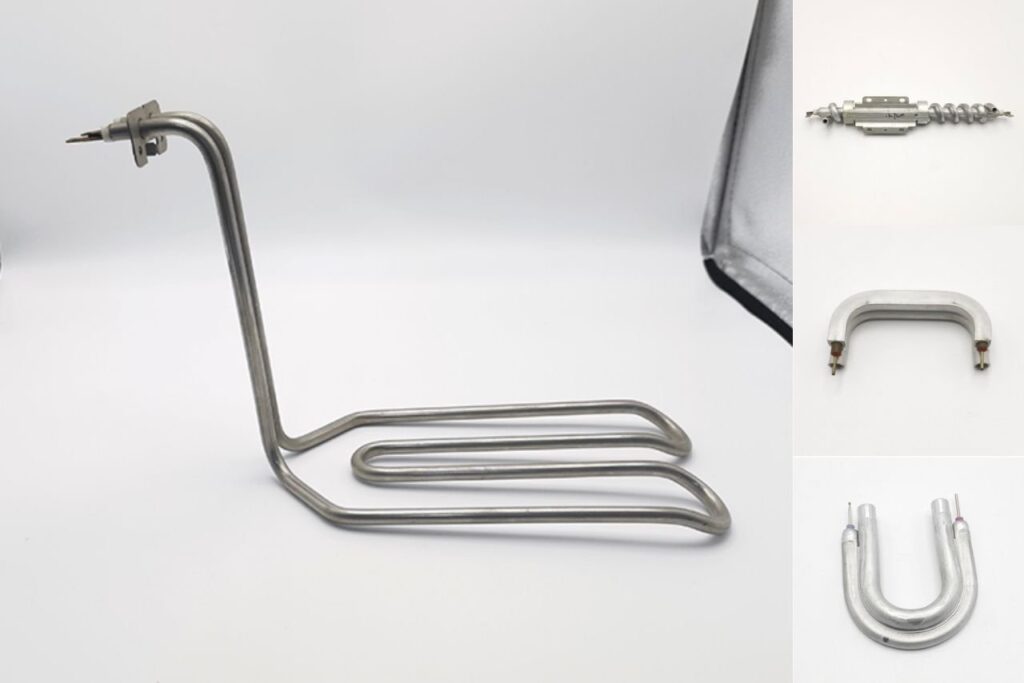
A non-functional electric stove heating element is more than a convenience issue; it is a critical failure in the appliance’s thermal conversion circuit.
Whether you are dealing with a surface burner that remains cold or an oven bake element that won’t glow, the solution requires a deep understanding of Chauffage par effet Joule and electrical continuity. This guide, curated by the engineering team at Camewould (Jin Zhong) a global Fabricant d'éléments chauffants with over 40 years of expertise breaks down the advanced diagnostics and high-performance replacement strategies used by industrial professionals.
Technical Guide Overview
Systematic Failure Diagnosis (Electrical & Visual)
When an electric stove heating element fails, the root cause is typically located in one of three areas: the element itself, the socket/terminal block, or the control switch (infinite switch). For professionals, the diagnosis starts with Continuity Testing.
1. Visual Inspection for Thermal Fatigue
Examine the coil for pitting, bubbles, ou visible breaks. A localized “hot spot” often occurs when the internal Magnesium Oxide (MgO) insulation degrades, allowing the Nichrome wire to touch the outer sheath, resulting in a short circuit or a terminal burnout. If you see physical deformation, the element is beyond repair and requires a replacement from a verified Usine d'éléments chauffants.
2. Electrical Multimeter Analysis
Set your multimeter to the Ohms ( ) setting. A functional domestic Élément chauffant should typically register between 20 and 50 ohms depending on its wattage rating.
- Zero Reading: Indicates a dead short.
- Infinite Reading (O.L): Indicates an “open circuit” where the internal heating coil has snapped.
Standard Resistance Parameters for Electric Range Elements
| Type d'élément | Puissance typique | Ideal Resistance ( ) |
|---|---|---|
| Small Surface Burner (6″) | 1250W – 1500W | 38 – 46 |
| Large Surface Burner (8″) | 2100W – 2600W | 22 – 27 |
| Oven Bake Element | 2500W – 3500W | 16 – 23 |
The Engineering of a Superior Heating Element
Not all replacement elements are created equal. At Camewould Electrical Technology, we utilize advanced material science to prevent common stove failures. High-performance elements rely on the purity of their components to withstand thermal expansion and contraction.
Key Material Standards:
- Incoloy 800 Sheath: Unlike standard stainless steel, Incoloy provides superior resistance to oxidation and “scaling” at temperatures exceeding 1100 C.
- High-Purity MgO: The insulation must be vibration-loaded to maximum density to ensure optimal heat transfer from the coil to the sheath while maintaining electrical isolation.
- Die Casting Integration: For premium ranges, Solutions de chauffage pour la coulée sous pression offer more uniform heat distribution compared to traditional open coils, reducing the risk of “hot spots” that lead to premature failure.
Advanced Fixes: Beyond Simple Swapping
If the Élément chauffant tests positive for continuity but still fails to heat, the problem lies within the power delivery architecture.
1. Replacing the Terminal Block (Socket)
Often, the element is fine, but the socket it plugs into has charred. Over time, loose connections create arcing, which builds up carbon deposits and increases resistance. If the terminal ends of your stove element appear blackened, you must replace the wire harness and terminal block to prevent a fire hazard.
2. Infinite Switch Calibration
The dial you turn to control heat is an “infinite switch.” If it fails, it may not send the full 240V to the element. Professionals use a voltmeter to check the output terminals of the switch while it is in the “on” position. If you see 240V at the switch but 0V at the element, the internal wiring has a break.
Industrial Perspective: Why Quality Matters
As a subsidiary of Anhui Suli Technology, Camewould maintains a CNAS-accredited laboratory to analyze failure modes in heating components. Domestic stoves often fail because of moisture ingress ou low-density insulation. By choosing elements manufactured under ISO9001 and UL standards, users ensure that their appliance operates with a thermal efficiency of 98%, significantly reducing energy consumption over the product’s lifespan.
Expert FAQ & Troubleshooting
Q1: Why does only one side of my bake element get hot?
This indicates a partial internal short or a fracture in the resistive wire. The electricity is finding a shorter path to the ground (the sheath). This is a dangerous condition and the stove should be unplugged immediately until the element is replaced.
Q2: Can I clean my heating element with steel wool?
No. Steel wool can leave microscopic metal fragments that may cause electrical arcing. Use a damp cloth with mild detergent. For persistent food residue, allow the element to heat for a few minutes to carbonize the debris, then gently brush away with a non-metallic soft brush.
Q3: How do I know if I need a 2-wire or 3-wire replacement element?
You must consult the model number of your Whirlpool or GE stove. While most domestic elements are 2-terminal, some high-end convection ovens use 3-terminal elements for tiered heat control. Always match the terminal configuration exactly to avoid damaging the control board.
Trust the Experts in Thermal Technology
With a monthly capacity of 3 million units and partnerships with brands like Philips and DeLonghi, Camewould is the premier source for industrial and domestic heating components.
Experience, Expertise, Authoritativeness, and Trustworthy Manufacturing.
References & Technical Citations:
- 1. Camewould (Jin Zhong) Company Profile & Manufacturing Standards (2025). jinzho.com
- 2. Wikipedia: Joule Heating & Electric Range Physics. en.wikipedia.org
- 3. IQS Directory: Industrial Heating Element Specifications. iqsdirectory.com
- 4. Sears Home Services: Understanding Heating Element Lifecycles. searshomeservices.com