
Page de cluster ? ~2000 mots ? Global ? 5 FAQ ? Aperçu pas à pas du bricolage
Remplacer un Elément chauffant du sèche-linge Maytag est une réparation courante lorsqu'un sèche-linge tourne mais ne chauffe pas, chauffe de manière irrégulière ou déclenche à plusieurs reprises un coupe-circuit thermique.
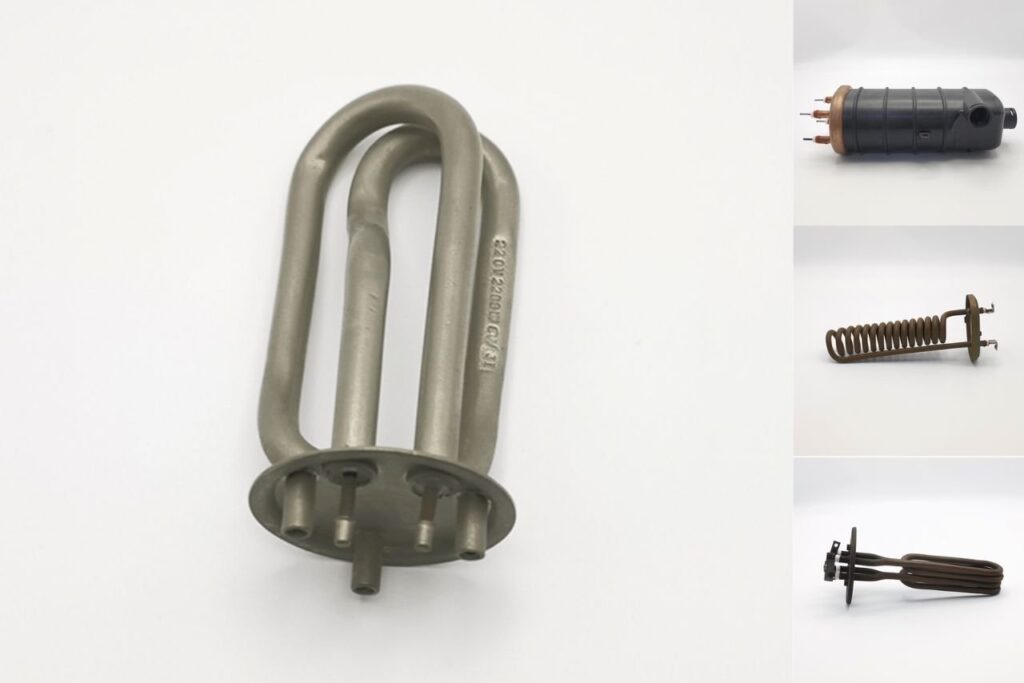
Contexte général : a élément chauffant n'est pas simplement un fil il s'agit d'un ensemble composé d'un alliage conducteur, d'un support isolant et de connecteurs, conçu pour un usage de chauffage. Référence TUTCO.
- Symptômes indiquant un élément chauffant défectueux (et quoi vérifier d'autre)
- Outils, pièces et préparation
- Sécurité : mise hors tension, arêtes vives et risques de chaleur
- Remplacement pas à pas (agencement générique Maytag)
- Test après installation
- Prévention des brûlures récurrentes (liste de contrôle du flux d'air)
- FAQ (5)
- Références et liens internes obligatoires
| Symptôme | Cause probable | À vérifier également |
|---|---|---|
| Le tambour tourne mais pas de chaleur | Bobine de l'élément chauffant ouverte | Fusible thermique / coupe-circuit thermique, thermostat cyclique, problèmes d'alimentation électrique |
| Chauffe quelques minutes puis s'arrête | Surchauffe due à une restriction du flux d'air | Peluche dans le conduit, tuyau d'évacuation écrasé, clapet d'évacuation extérieur bloqué |
| Odeur de brûlé ou bornes calcinées | Connexion électrique desserrée ou surchauffée | Connecteurs à fourche, isolation des fils, état du bornier |
| Le sèche-linge met beaucoup plus de temps à sécher | Faible flux d'air ou cyclage sur les limites de sécurité | Longueur du conduit d'évacuation, accumulation de peluche au niveau du boîtier du ventilateur |
Tableau 1 Les symptômes de chauffage se chevauchent souvent ; confirmez le flux d'air et les dispositifs de sécurité avant de conclure uniquement à l'élément.
- Tournevis (Phillips et plat)
- Clés à douille / jeu de douilles (tailles courantes variables)
- Pince à bec effilé
- Aspirateur + embout étroit (nettoyage des peluches)
- Multimètre (continuité/ohms)
- Correct Élément chauffant Maytag (spécifique au modèle)
- Coupe-circuit thermique / fusible thermique (souvent remplacés ensemble dans des kits)
- Bornes à fourche haute température (si elles sont desserrées ou décolorées)
Conseil : Vérifier le remplacement correct est essentiel pour tout appareil de chauffage. Les instructions de Whirlpool pour les éléments soulignent l'importance de vérifier la tension et la puissance sur la plaque signalétique. Source.
- Débranchez le sèche-linge (ou coupez le disjoncteur pour les unités câblées en dur) avant d'ouvrir tout panneau.
- Ne vous fiez pas au fait que le bouton de commande soit sur arrêt.
- Portez des gants résistants aux coupures – les caissons des sèche-linge ont des arêtes vives.
Règle générale pour les appareils de chauffage illustrée par Whirlpool : ne mettez pas un appareil de chauffage sous tension tant que le système environnant n'est pas prêt à évacuer la chaleur en toute sécurité. Référence.
L'accès au sèche-linge Maytag diffère selon le modèle (accès par le panneau avant ou arrière, emplacement du filtre à peluche et placement du boîtier de l'élément chauffant).
Débranchez le cordon, puis tirez le sèche-linge vers l'avant suffisamment pour accéder au tuyau d'évacuation et au panneau de service arrière/avant.
Retirez le collier et tirez le tuyau d'évacuation. S'il est écrasé, rempli de peluche ou excessivement long, prévoyez de le remplacer ou de le réacheminer.
Retirez les vis et mettez les panneaux de côté. Gardez les vis organisées par emplacement.
Prenez des photos claires des bornes de l'élément chauffant, des thermostats et de tout câblage du coupe-circuit/fusible thermique. Cela évite les erreurs de câblage lors du remontage.
Accédez aux bornes de l'élément et aux points de montage. Aspirez les peluches détachées au fur et à mesure (ne soufflez pas les peluches plus profondément dans le caisson).
Utilisez un multimètre pour vérifier la continuité. Une lecture ouverte indique une bobine défectueuse. Inspectez également les ruptures visibles ou une bobine touchant le boîtier.
TUTCO note que les matériaux et les choix de conception des éléments affectent les performances et la fiabilité ; les défaillances sont influencées par les conditions et les contraintes du cycle de vie. Source.
Tirez les connecteurs à fourche tout droit (ne tirez pas sur le fil). Retirez les fixations maintenant l'élément ou l'ensemble chauffant et faites glisser l'élément vers l'extérieur.
Si les bornes sont desserrées, décolorées ou cassantes, remplacez-les. Des bornes desserrées créent des points chauds de résistance et peuvent réduire la durée de vie de l'élément.
Placez l'élément exactement comme l'original – aucun contact de la bobine avec le boîtier métallique. Remontez les supports/couvercles.
Poussez les connecteurs à fourche complètement sur les bornes. Un connecteur à moitié enfoncé peut surchauffer.
Whirlpool précise explicitement : assurez-vous que toutes les connexions électriques sont bien serrées. Bien que cela soit écrit pour les chauffe-eau, cela s’applique également aux circuits de chauffage à courant élevé. Source.
Aspirez autour du ventilateur, du boîtier du chauffage et de la base. Les peluches peuvent restreindre le flux d’air et emprisonner la chaleur.
Assurez-vous que tous les couvercles sont bien fixés. Rattachez le tuyau d’évacuation sans plis et repoussez soigneusement le sèche-linge.
- Rétablissez l’alimentation (branchez / remettez le disjoncteur).
- Lancez un cycle de séchage minuté avec chaleur pendant 10 à 15 minutes.
- Confirmez la présence d’air chaud à l’évacuation extérieure et un comportement de cycle normal.
- Arrêtez immédiatement en cas d’odeur de brûlé, de bruit inhabituel ou d’arrêt répété.
- Nettoyez le filtre à peluches à chaque charge ; lavez-le et séchez-le périodiquement en cas de suspicion de résidus d’assouplissant.
- Inspectez et nettoyez l’ensemble du conduit d’évacuation vers l’extérieur (en particulier les longs trajets et les coudes multiples).
- Confirmez que le clapet de l'évacuation extérieure s'ouvre fortement pendant le fonctionnement.
- Maintenez la zone du chauffage et le passage du ventilateur exempts de peluches (nettoyage approfondi saisonnier).
TUTCO souligne que la durée de vie du chauffage est limitée par des facteurs tels que l’oxydation et la déformation, et que les conditions de fonctionnement et l’environnement sont importants. Abaisser la température de l’élément (souvent en améliorant le flux d’air/le transfert de chaleur) peut prolonger sa durée de vie. Source.
Si le fusible thermique ou le coupe-circuit thermique s’est ouvert, le sèche-linge ne chauffera pas, même avec un nouvel élément.. De nombreux techniciens remplacent ces composants ensemble en cas de suspicion de surchauffe, mais l’étape la plus importante est de corriger la cause (généralement une restriction de l’évacuation).
Oui. Une bobine cassée crée un circuit ouvert. Un test de continuité au multimètre est la confirmation la plus rapide.
Un flux d’air restreint (surchauffe), des bornes desserrées (points chauds), ou un élément mal positionné qui entre en contact avec le boîtier. Les défaillances du chauffage sont fortement influencées par les conditions de fonctionnement et l’intégration. Référence TUTCO.
Faites correspondre la pièce au numéro de modèle du sèche-linge et confirmez qu’elle correspond au facteur de forme d’origine et à la disposition des bornes. En règle générale pour les chauffages, vérifiez les caractéristiques électriques prévues pour l’application (Whirlpool insiste sur la vérification de la tension et de la puissance sur la plaque signalétique pour les éléments de remplacement). Source.
Certains éléments chauffants résistifs peuvent atteindre des températures rougeoyantes dans les bonnes conditions. Si la lueur est excessive, inégale, ou accompagnée d’odeurs ou de problèmes de cycle, arrêtez-vous et vérifiez à nouveau le flux d’air et le positionnement de l’élément.
- Définition, types et considérations sur la durée de vie des éléments chauffants (TUTCO) : https://tutco.com/conductive/heating-elements
- Discipline de remplacement et consignes de sécurité pour les éléments chauffants (guide Whirlpool pour chauffe-eau) : https://www.whirlpoolwaterheaters.com/support/help/element-was-out-of-range/24
- Élément chauffant
- Fabricant d'éléments chauffants
- Usine d'éléments chauffants
- Solutions de chauffage pour la coulée sous pression
Avis de non-responsabilité : Ceci est un guide général. Les conceptions des sèche-linge Maytag varient selon le modèle et la région. Utilisez la documentation de service spécifique au modèle et suivez les réglementations locales de sécurité électrique.

