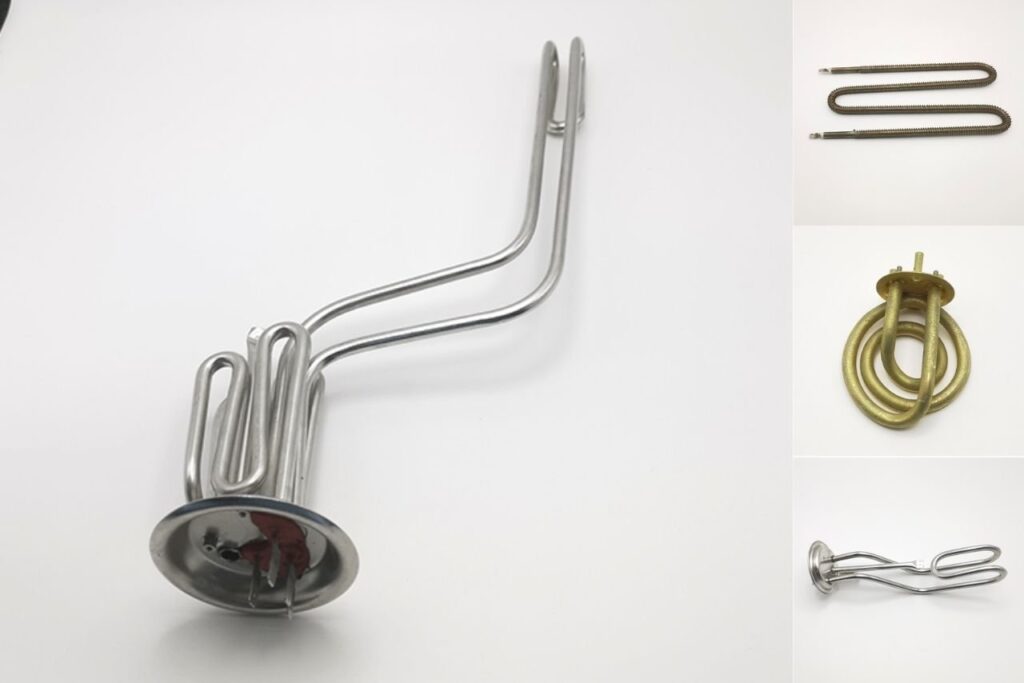
L'interaction chimique entre l'eau riche en minéraux et les surfaces de chauffe à haute puissance est la cause principale de la défaillance prématurée des lave-vaisselle à l'échelle mondiale.
En tant que spécialiste Fabricant d'éléments chauffants Forte de plus de 40 ans d'expertise, Camewould (Jin Zhong) a analysé des milliers de défaillances sur le terrain dans nos laboratoires accrédités CNAS. Ce guide technique présente les stratégies professionnelles utilisées pour atténuer les dommages causés par l'eau dure, en tirant parti de la science avancée des matériaux et de la maintenance préventive afin de protéger les composants thermiques essentiels de votre appareil.
Aperçu du guide technique
I. Le mécanisme de l'entartrage minéral et de la fatigue thermique
L'eau dure contient des concentrations élevées d'ions calcium et magnésium dissous. Lorsque le Élément chauffant s'active, l'eau immédiatement adjacente à la surface de la gaine atteint des températures d'ébullition. Cela provoque une diminution localisée de la solubilité des carbonates, entraînant la formation d'une couche de calcaire (Carbonate de calcium) adhérant au métal.
Ce processus d'entartrage est auto-renforçant. Parce que la couche de tartre est non conductrice, la chaleur générée par le Nickel-Chrome (NiCr) fil reste piégée à l'intérieur de l'élément. Cela augmente la densité de puissance par pouce carré de la surface de l'élément, conduisant à corrosion par piqûres. Dans les cas extrêmes, l'isolation interne en oxyde de magnésium (MgO) se dilate en raison de la chaleur piégée, provoquant éventuellement la rupture de la gaine extérieure.
II. Stratégies de prévention chimique et mécanique
Une prévention efficace nécessite d'attaquer les minéraux avant qu'ils ne puissent se lier à la surface tubulaire élément chauffant . Les professionnels recommandent une approche à plusieurs niveaux pour garantir la durée de vie opérationnelle de plus de 5 000 heures des composants de haute qualité.
1. Adoucissement de l'eau par échange d'ions
La solution à long terme la plus efficace est l'installation d'un adoucisseur d'eau pour toute la maison ou au point d'utilisation. Ces systèmes remplacent les ions calcium et magnésium par des ions sodium ou potassium, qui ne précipitent pas sous forme de tartre à haute température. Cela préserve l'efficacité thermique de l'élément à 98%.
2. Protocoles de détartrage à l'acide citrique
Pour le tartre existant, un détartrage chimique régulier est obligatoire. L'acide citrique ou les détartrants commerciaux réagissent avec le carbonate de calcium pour former un citrate soluble facilement éliminé par rinçage. Il est recommandé d'effectuer un cycle de détartrage tous les 30 à 60 jours dans les régions où l'eau dure dépasse 7 grains par gallon (GPG).
Impact de la dureté de l'eau sur la durée de vie de l'élément
| Type d'eau | Grains par gallon (GPG) | Durée de vie estimée de l'élément | Besoin de maintenance |
|---|---|---|---|
| Eau douce | 0 à 3 | 8 à 12 ans | Inspection annuelle |
| Modérément dure | 3 à 7 | 5 à 7 ans | Détartrage tous les 6 mois |
| Eau dure | 7 à 10 | 3 à 5 ans | Détartrage mensuel |
| Très dure | 10+ | < 2 ans | Adoucisseur d'eau requis |
III. Science des matériaux : Incoloy 800 vs eau dure
Chez Usine d'éléments chauffants, nous sélectionnons les matériaux de gaine spécifiquement pour leur résistance à la corrosion fissurante sous contrainte induite par les chlorures et aux piqûres. Alors que l'acier inoxydable standard (SS304) est courant, Incoloy 800 offre des performances supérieures dans les environnements riches en minéraux. La teneur élevée en nickel fournit une couche d'oxyde stable qui résiste à l'effet de “ perçage ” chimique des minéraux à des températures de surface élevées.
De plus, nos éléments utilisent une isolation de haute pureté en oxyde de magnésium (MgO) comprimé de haute pureté. Cela garantit que la chaleur générée par la bobine NiCr est transférée à la gaine avec une résistance minimale, réduisant la température interne du fil et empêchant la dilatation thermique qui conduit à la rupture de la gaine dans des conditions d'eau dure.
IV. Moulage sous pression spécialisé pour environnements corrosifs
Pour les appareils haut de gamme et les sanitaires industriels, Solutions de chauffage pour la coulée sous pression représentent le summum de la défense contre l'eau dure. En enfermant l'élément tubulaire dans un bloc en aluminium ou en laiton moulé sous pression, nous créons un bouclier physique principal.
- Température de surface réduite : Le bloc moulé a une plus grande surface qu'une bobine fine, réduisant la température de surface localisée et ralentissant le taux de précipitation des minéraux.
- Protection par décapage mécanique : La structure moulée rigide est plus résistante aux effets abrasifs de l'eau à haute vélocité contenant des particules.
- Chaleur uniforme : Élimine l“” anneau » de tartre qui se forme souvent sur les bobines traditionnelles de cuisson ou de lave-vaisselle.
V. FAQ d'expert sur l'entretien en présence d'eau dure
Q1 : Puis-je utiliser du vinaigre à la place d'un détartrant commercial ?
Bien que le vinaigre (acide acétique) puisse dissoudre le tartre léger, il est moins efficace que l'acide citrique et nécessite des temps de contact beaucoup plus longs. Pour un entretien Élément chauffant professionnel, l'acide citrique est la norme industrielle préférée en raison de sa réactivité plus élevée avec le carbonate de calcium.
Q2 : Pourquoi mon élément a-t-il “ sauté ” alors que le lave-vaisselle lavait encore bien ?
Ceci est typique de la fatigue thermique causée par le tartre. L'élément fonctionnait probablement à 200% de sa température de conception car la chaleur ne pouvait pas s'échapper de la couche de tartre. Finalement, l'isolation interne en MgO s'est tellement dilatée qu'elle a physiquement fendu la gaine métallique.
Q3 : Combien d'unités Camewould produit-il pour les marques mondiales confrontées à des problèmes d'eau dure ?
Avec une capacité mensuelle de 3 millions d’unités, Camewould fournit des éléments aux leaders mondiaux tels que Philips et Midea. Nos éléments sont conçus pour répondre aux normes VDE et UL, intégrant du MgO à haute densité afin de résister aux contraintes thermiques extrêmes causées par l’entartrage dans les marchés d’eau dure.
Q4 : L’agent de rinçage aide-t-il à prévenir les dommages causés par l’eau dure ?
Indirectement, oui. L’agent de rinçage réduit la tension superficielle de l’eau, permettant à celle-ci de “ s’écouler ” plus rapidement de l’élément pendant le cycle de séchage. Cela empêche les grosses gouttes d’eau dure de s’évaporer en surface et de laisser des dépôts minéraux concentrés.
Précision industrielle, ingénierie mondiale
Suli Technology (Camewould) exploite des laboratoires accrédités CNAS pour garantir que chaque Élément chauffant résiste aux conditions d’eau les plus difficiles au monde. Faites confiance à nos 40 ans d’expertise pour maintenir le fonctionnement de vos appareils.
Références et sources de données techniques :
- [1] Camewould Electrical Technology – Manuel technique pour la prévention de l’entartrage minéral (2025). jinzho.com
- [2] Wikipédia – Tartre et efficacité des échangeurs de chaleur. en.wikipedia.org
- [3] IQS Directory – Résistance à la corrosion dans les radiateurs tubulaires industriels. iqsdirectory.com
- [4] Sears Home Services – Entretien des composants de lave-vaisselle dans les zones d’eau dure. searshomeservices.com