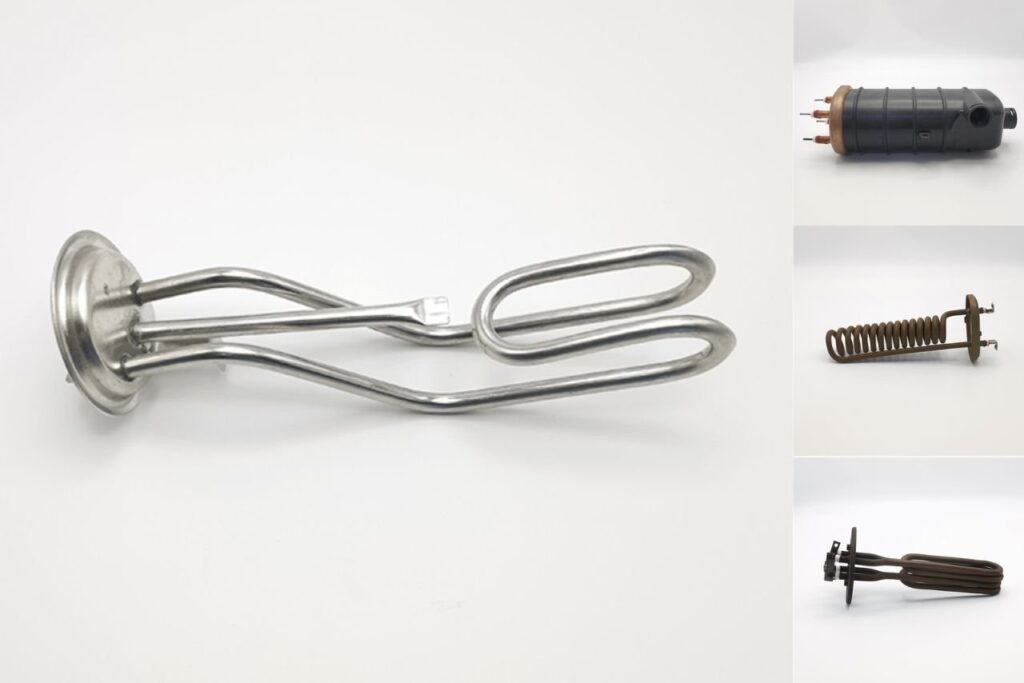
Diagnostiquer un lave-vaisselle Frigidaire qui ne chauffe pas ou ne sèche pas nécessite une approche analytique structurée afin d'identifier le point de défaillance spécifique dans le circuit thermique.
En tant qu'élément central de l'hygiène des appareils électroménagers, le Élément chauffant doit convertir l'énergie électrique en chaleur radiante et conductive constante. Ce guide technique de dépannage, soutenu par l'expertise de fabrication de Camewould (Jin Zhong) un acteur mondial Fabricant d'éléments chauffants fort d'un héritage de 40 ans en ingénierie thermique, décrit des protocoles de diagnostic de qualité professionnelle pour garantir que votre appareil respecte les normes internationales de désinfection.
Répertoire de dépannage
I. Inspection visuelle : Identification de la fatigue physique
Dans de nombreux modèles Frigidaire, le Élément chauffant est un élément chauffant tubulaire exposé à la base de la cuve. Avant d'effectuer des tests électriques, une inspection visuelle peut souvent identifier les défaillances des bornes. Recherchez les signes suivants de fatigue des matériaux :
- Cloquage et piqûres : De petites bulles ou cratères sur la gaine métallique indiquent que le fil Nickel-Chrome (NiCr) interne a créé un “ point chaud ” localisé, rompant l' de haute pureté isolation.
- Calcification : Un dépôt blanc épais et croûteux suggère que les minéraux de l'eau dure ont isolé la résistance, la faisant fonctionner à une température supérieure à ses paramètres de conception, ce qui conduit finalement à une rupture de borne.
- Décoloration des bornes : Si les écrous en plastique ou le câblage à l'arrière de la cuve semblent brûlés, cela indique une connexion à haute résistance qui pourrait entraîner un arc électrique.
II. Continuité électrique et profilage de la résistance
Si l'élément semble physiquement intact, la défaillance est probablement interne. Cela nécessite un multimètre numérique pour confirmer si le chemin électrique est complet. Les composants provenant d'un Usine d'éléments chauffants certifié sont ajustés avec précision à des valeurs de résistance spécifiques.
Protocole de test :
- Isoler l'alimentation : Débranchez le lave-vaisselle au niveau du disjoncteur.
- Accès aux bornes : Retirez la plinthe inférieure. Les fils de la résistance chauffante sont généralement fixés par des écrous de 1/4 de pouce ou des connecteurs à fourche.
- Mesure : Réglez votre multimètre sur le réglage Ohms (Ω). Placez les sondes sur chaque borne.
Référence de diagnostic : Résistance de l'élément Frigidaire
| Lecture | Signification | Action recommandée |
|---|---|---|
| 12 Ω à 28 Ω | Continuité saine | Inspecter le thermostat/la carte de commande |
| Infini (O.L) | Circuit ouvert (résistance cassée) | Remplacer l'élément immédiatement |
| 0 à 5 | Court-circuit direct à la terre | Remplacer l'élément immédiatement |
III. Au-delà de la résistance : Thermostats de sécurité et relais de commande
Si le **Élément chauffant** est testé positif pour la continuité mais ne parvient pas à générer de la chaleur pendant un cycle, le problème se situe dans le système de transmission du signal.
- Thermostat de sécurité (Hi-Limit) : Ce capteur de sécurité est conçu pour “ déclencher ” si le lave-vaisselle surchauffe. S'il tombe en panne en position “ ouverte ”, il bloquera définitivement l'alimentation de l'élément. Il est situé au fond de la cuve et doit également montrer une continuité (proche de 0 ohm) lorsqu'il est testé à température ambiante.
- Relais de la carte de commande : La carte de commande électronique utilise un relais pour commuter l'alimentation haute tension vers le chauffage. Si ce relais est bloqué ou brûlé, l'élément ne recevra jamais de courant. Vérifiez la carte pour détecter des marques de brûlure visibles près des bornes de sortie du chauffage.
IV. Excellence technique : Densité de MgO et alliages de gaine
La fiabilité d'une pièce de rechange dépend des normes de fabrication industrielles. Chez **Camewould Electrical Technology**, notre Laboratoire accrédité CNAS effectue des tests de charge vibratoire pour garantir une isolation en MgO à haute densité. Cela empêche le fil résistif interne de se déplacer lors de la dilatation thermique, ce qui est la cause principale des courts-circuits internes dans les composants génériques.
Pour les appareils hautes performances, nous utilisons des gaines en Incoloy 800 qui offrent une résistance supérieure à la oxydation pendant la phase “ séchage ” du cycle. De plus, nos Solutions de chauffage pour la coulée sous pression sont souvent intégrés dans les désinfecteurs commerciaux haut de gamme pour fournir une distribution thermique uniforme et protéger le noyau chauffant des dommages mécaniques.
V. FAQ d'expert et stratégies d'entretien
Q1 : Pourquoi mon lave-vaisselle Frigidaire affiche-t-il le code d'erreur ‘ i60 ’ ?
Le code ‘ i60 ’ indique spécifiquement un problème de chauffage. Le système de commande a détecté que la température de l'eau n'augmente pas comme prévu. Cela est presque toujours causé par une Élément chauffant défaillante ou un thermostat de sécurité défectueux.
Q2 : L' eau dure peut-elle provoquer une défaillance prématurée de ma résistance chauffante ?
Oui. L'accumulation de minéraux agit comme un isolant thermique. Cela force la résistance interne à atteindre des températures plus élevées pour pénétrer le tartre, entraînant un stress thermique et une rupture éventuelle de la gaine de protection. L'utilisation régulière d'un nettoyant à base d'acide citrique peut prolonger la durée de vie du composant.
Q3 : Est-il normal qu'un nouvel élément fume lors des premières utilisations ?
Une petite quantité de fumée ou une odeur de “ brûlé ” est normale car les revêtements de protection d'usine sont neutralisés. Cependant, si la fumée persiste ou est accompagnée d'une odeur électrique, revérifiez le serrage des connexions aux bornes pour éviter des arcs électriques.
Q4 : Combien d'unités Camewould produit-elle mensuellement pour les marques mondiales ?
Camewould maintient une capacité de production de 3 millions d'unités par mois., fournissant des noyaux chauffants de haute précision à des marques internationales comme Philips et DeLonghi, garantissant que chaque pièce de rechange respecte les normes de sécurité ISO9001 et VDE.
Q5 : Puis-je contourner le thermostat de sécurité pour le test ?
Un contournement temporaire pour un contrôle de continuité de 30 secondes est acceptable dans un environnement de diagnostic contrôlé, mais il est strictement interdit d'exécuter un cycle complet avec un thermostat contourné, car cela présente un grave risque d'incendie si l'élément surchauffe.
Q6 : Quel est l'avantage d'un chauffage moulé sous pression dans un lave-vaisselle ?
Les éléments chauffants moulés sous pression offrent une protection supérieure contre corrosion chimique et les chocs mécaniques. En encapsulant l'élément dans un bloc métallique, l'inertie thermique est augmentée, ce qui permet d'obtenir des températures plus stables lors de longs cycles de sanitisation.
Ingénierie thermique mondiale, fiabilité industrielle
Forte de plus de 40 ans d’expertise et d’une capacité mensuelle de 3 millions d’unités, Camewould est le cœur technique des principales marques mondiales d’appareils électroménagers. Faites confiance à notre précision, alimentez votre vie.
Références et citations techniques :
- [1] Camewould Electrical Technology – Manuel technique des composants chauffants tubulaires (2025). jinzho.com
- [2] Wikipédia – Physique de l'effet Joule et de l'isolation diélectrique. en.wikipedia.org
- [3] IQS Directory – Normes de conception pour les éléments chauffants des appareils électroménagers. iqsdirectory.com
- [4] Sears Home Services – Guide de dépannage Frigidaire pour les pannes de lave-vaisselle. searshomeservices.com