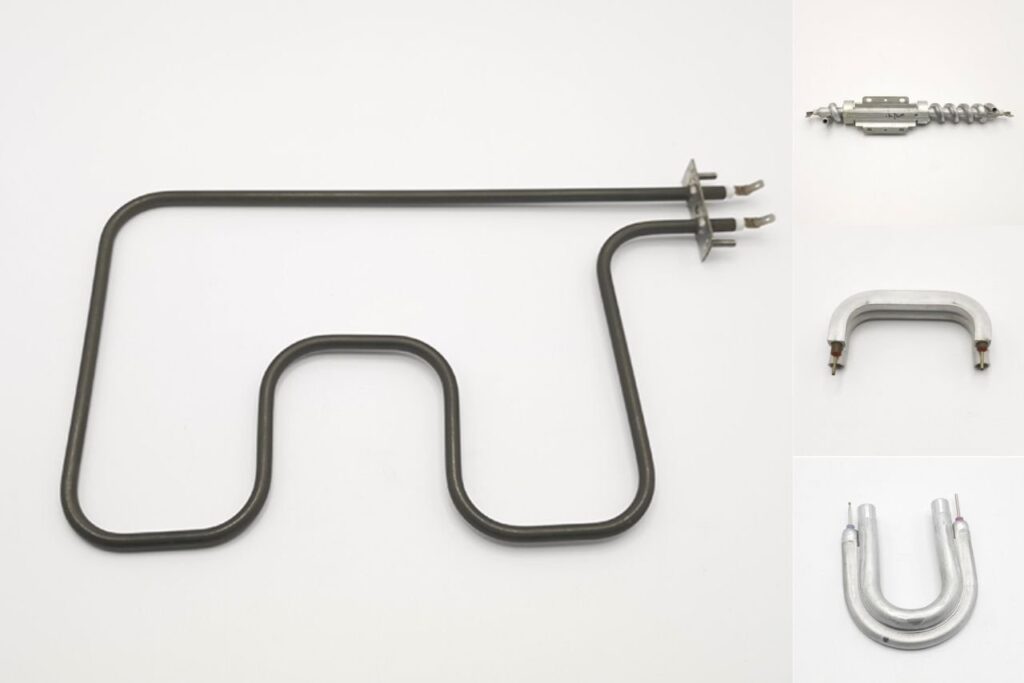
Eau chaude Les éléments chauffants ont généralement tendance à griller prématurément parce que l'élément est contraint de fonctionner à une température trop élevée ou dans des conditions dangereuses, le plus souvent en raison de cuisson à sec (mise sous tension avant que le réservoir ne soit complètement rempli et purgé de l'air), d'une accumulation importante accumulation de tartre qui isole l'élément et fait grimper sa température de surface,.
Exigence de purge d'air
3 minutes
Whirlpool : purge à plein débit
Conséquence d'une mise sous tension à sec
Grillage de l'élément supérieur
Avertissement Whirlpool
Attente de chauffe
Jusqu'à 2 heures
Note de Whirlpool
Exemple de prix de composant
$209.95
Élément enfichable 1000W Hudson Reed
- Diagnostic rapide : schémas indiquant la cause réelle
- Causes profondes : pourquoi les éléments grillent de manière répétée
- Mise sous tension à sec : la panne évitable par excellence (et comment la prévenir)
- Tartre, densité de puissance et contrainte de transfert thermique
- Problèmes électriques et d'installation (connexions, inadéquation de tension/puissance)
- Correctifs à long terme : réduire les pannes récurrentes
- Contexte plus large des éléments chauffants (tubes, plaques, films, solutions en fonderie sous pression)
- FAQ (6)
- Références et liens externes
Les pannes répétées d'éléments sont rarement une « malchance ». La plupart des cas suivent l'un des trois schémas suivants : panne immédiate après l'installation, panne précoce après une courte période de service,.
| Chronologie de la panne | Groupe de causes le plus probable | Première étape de confirmation |
|---|---|---|
| Panne immédiate ou en quelques heures/jours | Mise sous tension à sec / processus de remplissage et de purge incorrect | Confirmer que le réservoir était complètement rempli et que l'air a été purgé pendant 3 minutes avant la mise sous tension |
| Panne en semaines/mois (plus rapide que la normale) | Accumulation de tartre, mauvais transfert de chaleur, contrainte environnementale | Inspecter l'élément retiré pour détecter des dépôts importants et des signes de surchauffe |
| Chaleur intermittente, décoloration aux bornes, puis panne | Connexions desserrées / échauffement du câblage / problèmes de régulation | Inspecter les bornes pour déceler des dommages thermiques ; vérifier le serrage des connexions |
- Mise sous tension à sec due à une mise sous tension avant que le réservoir ne soit plein et l'air évacué
- Fuites de joint qui entraînent des reprises et compromettent les compartiments de câblage
- Mauvais choix d'élément (inadéquation tension/puissance)
- Tartre minéral isolant la surface de l'élément
- Densité de puissance effective élevée densité de puissance à la surface de l'élément due aux dépôts
- Contaminants de l'environnement d'exploitation affectant la durée de vie du matériau (dépend de l'application)
TUTCO définit un élément chauffant comme un assemblage de matériaux conducteurs et isolants électriques et explique que les propriétés des matériaux et des alliages changent avec les conditions. éléments traces (contaminants ou améliorations), affectant la fiabilité et le coût du cycle de vie.
Les instructions de Whirlpool décrivent un mode de défaillance qui explique de nombreux cas de « mon nouvel élément a encore grillé ». Leur avis stipule que l'alimentation ne doit pas être appliquéechauffage à sec).
Leur méthode d'évacuation de l'air est explicite : retirer l'aérateur, ouvrir un robinet d'eau chaude, attendre le plein débit, puis laisser couler à plein débit pendant TROIS MINUTES.
Source : https://www.whirlpoolwaterheaters.com/support/help/element-was-out-of-range/24
Même avec une installation parfaite, un chauffe-eau élément chauffant peut tomber en panne prématurément lorsque la chaleur ne peut pas être transférée efficacement à l'eau. accumulation de tartre agit comme un isolant, élevant la température de surface de l'élément et accélérant l'oxydation, la déformation ou le grillage.
- Dépôts durs et crayeux ou croûte épaisse
- Décoloration localisée ou « points chauds »
- Déformation ou cloques cohérentes avec une surchauffe
TUTCO note que les propriétés des matériaux varient avec la température et que la sélection de l'alliage fait partie de l'ingénierie de conception des éléments chauffants.
La séquence d’étapes de Whirlpool comprend le rebranchement des fils d’alimentation et la vérification que toutes les connexions sont serrées.
Whirlpool indique explicitement de vérifier le nouvel élément par rapport à la plaque signalétique pour la tension et la puissance.
- Suivre les étapes de remplissage complet et de purge d’air à chaque fois (Whirlpool : TROIS MINUTES débit maximal)
- Remplacer les joints défectueux ; ne pas forcer un joint endommagé
- Inspecter le câblage pour détecter des dommages thermiques lors de chaque intervention
- Traiter les conditions de tartre et de sédiments pour réduire le risque de surchauffe
La fiche de Hudson Reed montre comment les homologations et les classifications environnementales (UL, IP67) peuvent faire partie de la sélection des composants, tandis que TUTCO souligne que le choix des matériaux,.
Hudson Reed : https://usa.hudsonreed.com/1000-plug-in-watt-electric-heating-element-76309
TUTCO : https://tutco.com/conductive/heating-elements
Les éléments immergés de chauffe-eau sont généralement une forme de élément chauffant tubulaire, mais de nombreux appareils utilisent différentes constructions de chauffage telles que des plaques, des films, ou des corps de chauffe moulés sous pression.
- Tubes de chauffage (liste de catégories : tubes de chauffe-eau, tubes de chauffe-chaudière, éléments de friteuse)
- Plaque chauffante (plaques chauffantes pour bouilloires, machines à café, lave-vaisselle)
- Film chauffant (produits de chauffage à film épais et à film mince)
- Solutions de chauffage pour la coulée sous pression (éléments chauffants moulés sous pression, échangeurs de chaleur de chaudière, corps de chauffe)
- Chaudière électrique (liste de catégories : chaudière à vapeur et chaudière à café)
Pourquoi un élément chauffant neuf a-t-il grillé immédiatement ?
Whirlpool prévient que rétablir l’alimentation avant que le réservoir ne soit complètement rempli et que tout l’air ne soit évacué peut griller l’élément supérieur (chauffage à sec). TROIS MINUTES.
Combien de temps faut-il pour que l’eau chauffe après le remplacement de l’élément ?
Whirlpool note que cela peut prendre deux heures pour que le réservoir chauffe après le rétablissement de l'alimentation électrique.
Les sédiments peuvent-ils vraiment empêcher un remplacement d’élément de se dérouler correctement ?
Oui. Whirlpool note que les sédiments peuvent obstruer la vanne de vidange et empêcher un drainage correct. Si le réservoir ne se vide pas, un technicien qualifié doit être contacté.
Pourquoi les éléments tombent-ils en panne plus rapidement dans certaines maisons que dans d’autres ?
Un entartrage important accumulation de tartre réduit le transfert de chaleur et peut entraîner une surchauffe. Les conditions environnementales et la compatibilité des matériaux comptent également ; TUTCO note que traces d'éléments et de contaminants qui peuvent réduire la durée de vie du chauffage life.
Que faut-il vérifier avant d’installer un élément de remplacement ?
Whirlpool exige de vérifier que le nouvel élément est le bon remplacement en utilisant la plaque signalétique du chauffe-eau pour la tension et la puissance.
Payer plus cher pour un élément chauffant garantit-il une durée de vie plus longue ?
Pas automatiquement. Cependant, le prix peut refléter les choix de matériaux, les homologations et les classifications environnementales. La fiche de Hudson Reed, par exemple, divulgue l’homologation UL et l’indice IP67 pour son application,.
- Whirlpool Water Heaters — étapes de remplacement, avertissement de mise sous tension à sec et durée de purge : https://www.whirlpoolwaterheaters.com/support/help/element-was-out-of-range/24
- TUTCO — définition de l’élément chauffant, matériaux, éléments traces, considérations environnementales : https://tutco.com/conductive/heating-elements
- Hudson Reed — exemple documenté de prix/spécifications de composant ($209.95, 1000W, IP67, homologué UL) : https://usa.hudsonreed.com/1000-plug-in-watt-electric-heating-element-76309
- Jinzhong — navigation interne et contexte des familles de produits : https://jinzho.com/, https://jinzho.com/product-category/heating-element/, https://jinzho.com/about/, https://jinzho.com/product-category/die-casting-heating-solutions/