
Le voyage d’un simple grain de café à une tasse riche et aromatique est un processus régi par la précision, et en son cœur se trouve un composant à la fois fondamental et souvent négligé : l’élément chauffant. Cette pièce essentielle est le moteur de toute machine à café, responsable de la transformation de l’eau froide en un milieu parfaitement chauffé, nécessaire à une extraction optimale des arômes. Sans un élément chauffant fonctionnant correctement, l’ensemble du processus d’infusion est compromis, produisant un café sous-développé, acide ou amer.
Cet article complet explorera en profondeur le monde complexe de l’ élément chauffant machine à café. Nous examinerons ses principes de fonctionnement fondamentaux, analyserons les différents types et matériaux utilisés dans la fabrication moderne, et identifierons les modes de défaillance courants ainsi que les techniques de dépannage. De plus, nous étudierons l’importance des normes de fabrication de qualité, fournissant les connaissances nécessaires tant aux passionnés de café qu’aux professionnels de la maintenance pour comprendre, entretenir et réparer ce composant vital.
Qu’est-ce qu’un élément chauffant de machine à café ?
À son niveau le plus basique, un Élément chauffant est une résistance électrique conçue pour convertir l’énergie électrique en énergie thermique par un processus appelé effet Joule. Dans une machine à café, sa fonction principale est d’élever la température de l’eau dans la chaudière ou le thermobloc à une plage précise, généralement entre 195 °F et 205 °F (90 °C à 96 °C). Cette plage de température est largement reconnue par la Specialty Coffee Association (SCA) comme la norme industrielle pour une extraction idéale.
Atteindre et maintenir stabilité thermique dans cette fenêtre étroite est primordial. Si l’eau est trop froide, elle n’extraira pas les composés solubles souhaitables du marc de café, donnant un résultat faible et acide. À l’inverse, si l’eau est trop chaude, elle sur-extraira, dissolvant des composés amers indésirables et brûlant le café. Par conséquent, la performance, la réactivité et la fiabilité de l’élément chauffant déterminent directement la qualité finale dans la tasse.
La science derrière la chaleur : comment fonctionnent-ils ?
Le principe de fonctionnement d’un élément chauffant repose sur la physique de la résistance électrique. Lorsqu’un courant électrique traverse un matériau à haute résistance électrique, les électrons peinent à le traverser. Cette difficulté provoque des collisions au niveau atomique, générant ainsi de la chaleur.
La clé de ce processus est la sélection d’un fil résistif spécialisé, le plus souvent un alliage de Nichrome (nickel-chrome). Ce matériau est exceptionnellement adapté aux applications de chauffage pour plusieurs raisons essentielles :
- Il possède une haute résistance électrique, permettant de générer efficacement une chaleur significative.
- Il forme une couche externe stable et adhérente d’oxyde de chrome lorsqu’il est chauffé, protégeant le matériau interne d’une oxydation et d’une dégradation supplémentaires, garantissant une longue durée de vie opérationnelle.
- Il a un point de fusion élevé, lui permettant de fonctionner à des températures élevées sans se dégrader.
Cette opération fil Nichrome est généralement enroulé et logé dans une gaine métallique protectrice. Une poudre isolante, telle que l'oxyde de magnésium, remplit l'espace entre la bobine et la gaine. Cet isolant est un excellent conducteur thermique mais un mauvais conducteur électrique, permettant de transférer efficacement la chaleur à l'eau environnante tout en empêchant toute fuite de courant électrique, garantissant ainsi la sécurité.
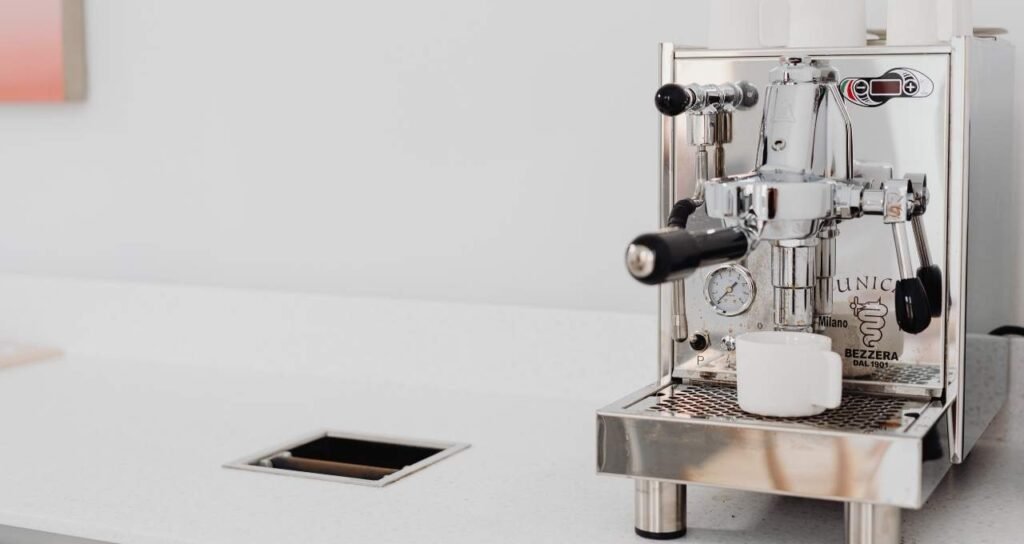
Types d’éléments chauffants dans les machines à café
Les éléments chauffants ne sont pas des composants universels. Leur conception et leur construction varient considérablement en fonction du type de machine à café, de son application prévue (commerciale ou résidentielle) et des caractéristiques de performance souhaitées.
Réchauffeurs tubulaires immergés
Il s’agit de la conception la plus courante dans les machines à espresso équipées de chaudières. L’ Elément chauffant de la machine à café consiste en une gaine métallique tubulaire, souvent en acier inoxydable ou en cuivre, qui abrite la bobine résistive. Cet élément est directement immergé dans le réservoir d’eau de la chaudière. Il est généralement monté sur bride ou vissé dans la chaudière, scellé avec un joint haute température pour éviter les fuites. Leur principal avantage est un transfert de chaleur direct et efficace vers un grand volume d’eau.
Réchauffeurs moulés (fonderie sous pression)
Une solution plus avancée consiste à couler l’élément chauffant tubulaire directement dans un bloc d’aluminium. Cette méthode, souvent employée dans les thermoblocs et certaines têtes de groupe modernes, offre une conductivité thermique et une distribution de chaleur supérieures. La masse d’aluminium agit comme un dissipateur thermique très efficace, assurant une température uniforme sur toute la surface. Cette conception permet un chauffage rapide à partir d’un état froid et une excellente récupération de température entre les extractions, ce qui est essentiel dans les environnements à forte demande.
Réchauffeurs à couche épaisse
Représentant une nouvelle génération de technologie de chauffage, les réchauffeurs à couche épaisse sont fabriqués en imprimant des pâtes résistives et diélectriques en couches sur un substrat en céramique ou en acier inoxydable. Ce processus permet une conception compacte et de faible profil avec une réponse thermique extrêmement rapide. Ils peuvent chauffer l’eau presque instantanément lorsqu’elle s’écoule sur eux, ce qui les rend idéaux pour les chauffe-eau à la demande et les machines à café compactes à portion individuelle.
[Tableau de données : Comparaison des technologies d’éléments chauffants. Un tableau comparant les réchauffeurs tubulaires immergés, moulés et à couche épaisse selon plusieurs indicateurs clés.]
| Fonctionnalité | Tubulaire immergé | Moulé (fonderie sous pression) | Film épais |
|---|---|---|---|
| Excellent ; contact direct entre l'élément et l'eau. | Modéré à lent | Rapide | Très Rapide |
| Stabilité thermique | Bonne (dans les grandes chaudières) | Excellent | Bonne (dépend du débit) |
| Efficacité énergétique | Bon | Très Bonne | Excellent |
| Durabilité | Haut | Très élevé | Modéré |
| Cas d'Utilisation Courant | Chaudières de machines à espresso | Thermoblocs, têtes de groupe | À la demande, portion individuelle |
Indicateurs de performance clés et matériaux
Lors de l’évaluation ou du remplacement d’un élément chauffant, plusieurs spécifications techniques sont d’une importance cruciale.
Puissance (Wattage) et Tension
Le wattage indique la puissance de sortie de l’élément et sa capacité à générer de la chaleur. Un élément de wattage plus élevé chauffera un volume d’eau donné plus rapidement. Les machines commerciales sont souvent équipées d’éléments de 2000 W à 6000 W pour supporter une utilisation continue, tandis que les machines résidentielles vont généralement de 1000 W à 1600 W. La tension est tout aussi cruciale ; un élément conçu pour 110 V tombera rapidement en panne s’il est connecté à une alimentation de 230 V, et vice versa.
Composition du matériau
Le choix du matériau de la gaine impacte à la fois la performance et la longévité.
- Acier inoxydable : Offre une excellente résistance à la corrosion, ce qui en fait un choix durable, en particulier dans les zones avec une eau dure. C’est la norme pour la plupart des applications de qualité.
- Cuivre : Possède une conductivité thermique supérieure à celle de l’acier inoxydable mais est plus sensible à la corrosion avec le temps.
- Incoloy® : Un superalliage à base de nickel offrant une résistance exceptionnelle à l’oxydation et à la corrosion à haute température, souvent utilisé dans les machines commerciales haut de gamme.
Modes de défaillance courants et dépannage
Même l’élément chauffant le plus robuste finira par tomber en panne. Comprendre les causes courantes peut aider à prolonger sa durée de vie et à diagnostiquer efficacement les problèmes.
Accumulation de tartre
C’est la cause la plus courante de défaillance de l’élément chauffant. Les minéraux de l’eau dure (carbonates de calcium et de magnésium) précipitent et forment une couche dure et croûteuse à la surface de l’élément. Ce tartre agit comme un isolant, forçant l’élément à travailler plus dur et à surchauffer pour transférer la chaleur à l’eau. Cette surchauffe prolongée finit par faire griller le fil résistif interne. Un Il est essentiel de comprendre que le régulier est la tâche de maintenance la plus importante pour éviter cela.
Défaillance électrique (grillage)
Le ” fonctionnement à sec » — faire fonctionner la machine sans eau dans la chaudière — est un moyen rapide et certain de détruire un élément chauffant. Sans eau pour absorber l’énergie thermique, la température de l’élément monte en flèche presque instantanément, provoquant la fusion de la bobine interne et la rupture du circuit. Des fusibles et des coupe-circuits thermiques sont conçus pour éviter cela, mais ils peuvent aussi tomber en panne.
Corrosion et piqûres
Une mauvaise qualité d’eau, en particulier une eau à forte teneur en chlorure ou avec un pH inapproprié, peut entraîner une corrosion par piqûres sur la gaine de l’élément. Avec le temps, ces petites piqûres peuvent pénétrer la gaine, permettant à l’eau d’entrer en contact avec les composants internes et de provoquer un court-circuit.
Comment tester un élément chauffant
Pour un technicien ou un bricoleur expérimenté, tester un élément suspecté d’être défectueux est simple. La sécurité est primordiale : débranchez toujours la machine de la source d’alimentation avant de commencer.
- Accédez aux bornes de l'élément chauffant.
- Déconnectez les fils reliés à l'élément.
- Réglez un multimètre sur la position test de continuité (souvent indiquée par une icône sonore) ou sur la position de mesure de résistance la plus basse (Ohms/Ω).
- Placez une sonde sur chaque borne de l'élément.
- Bon élément : Le multimètre doit émettre un bip ou afficher une faible valeur de résistance (généralement entre 5 et 30 Ω), indiquant un circuit complet.
- Élément Défectueux (Circuit Ouvert) : Le multimètre n'indiquera aucune continuité (aucun bip) ou affichera une résistance infinie (OL ou “Open Loop”), indiquant que le fil interne a grillé.
- Testez un court-circuit à la masse en plaçant une sonde sur une borne et l'autre sur la bride métallique de l'élément ou le châssis de la machine. Il ne doit y avoir aucune continuité. S'il y en a, l'élément est en court-circuit et n'est pas sûr.
[Tableau de données : Guide de dépannage de l'élément chauffant. Un format de tableau simple pour une référence rapide.]
| Symptôme | Cause possible | Solution |
|---|---|---|
| La machine ne chauffe pas | Élément chauffant défectueux (circuit ouvert) | Testez avec un multimètre. Remplacez-le s'il est défectueux. |
| Le disjoncteur différentiel (GFI/RCD) déclenche immédiatement | Élément chauffant en court-circuit | Testez le court-circuit à la masse. Remplacez-le s'il est défectueux. |
| Temps de chauffage lents | Accumulation importante de calcaire | Effectuez un détartrage approfondi. |
| L'eau n'est pas assez chaude | Problème de thermostat ou élément entartré | Vérifiez le thermostat ; détartrez la machine. |
L'Importance de la Qualité et des Normes de Fabrication
Lorsqu'un élément chauffant tombe en panne, choisir un remplacement de haute qualité est crucial pour la sécurité, les performances et la longévité de la machine. Le marché est inondé de pièces de qualité variable, et opter pour un composant moins cher et non certifié peut entraîner une défaillance prématurée ou même créer un risque important pour la sécurité.
Un fabricant établi élément chauffant électrique fabricant adhérera à des normes internationales strictes. Par exemple, un fabricant comme Jinzho, avec plus de trois décennies d'expérience dans le domaine, démontre son engagement envers la qualité grâce à des certifications telles que ISO 9001 (Management de la Qualité), UL (Underwriters Laboratories) et VDE (VDE Testing and Certification Institute). Ces certifications garantissent que le produit a subi des tests rigoureux en matière de sécurité électrique, d'intégrité des matériaux et de fiabilité des performances. Un fabricant réputé fournit non seulement une pièce, mais aussi une garantie d'excellence technique et de tranquillité d'esprit.
Foire Aux Questions (FAQ)
1. Puis-je remplacer un élément chauffant de machine à café moi-même ? 2. À quelle fréquence dois-je détartrer ma machine à café pour protéger l'élément chauffant ? 3. Un élément chauffant de puissance plus élevée signifie-t-il un meilleur café ?
Pour les personnes possédant de solides compétences en mécanique et en électricité, remplacer un élément chauffant est une tâche réalisable. Cependant, cela implique de manipuler des composants électriques sous tension et d'assurer une étanchéité parfaite lors du remontage. La sécurité doit être la priorité absolue. Débranchez toujours la machine, videz-la complètement de son eau, et en cas de doute, consultez un technicien de réparation professionnel.
L'élément chauffant est le héros méconnu de la machine à café. Sa capacité à fournir rapidement et régulièrement de l'eau à la température parfaite est le fondement sur lequel une excellente tasse de café est construite. En comprenant ses principes de fonctionnement, les différentes technologies disponibles et l'importance cruciale d'un entretien régulier comme le détartrage, les utilisateurs peuvent garantir que leurs machines fonctionnent de manière optimale pendant des années. Lorsqu'un remplacement devient nécessaire, choisir un composant auprès d'un fabricant certifié et expérimenté est un investissement dans la sécurité, la fiabilité et la poursuite de la dégustation d'un café exceptionnel. protect the heating element?
La fréquence de détartrage dépend entièrement de la dureté de votre eau. Pour les utilisateurs ayant une eau douce, un détartrage tous les 6 à 12 mois peut suffire. Pour ceux ayant une eau moyennement dure à très dure, un détartrage tous les 1 à 3 mois est fortement recommandé pour éviter une accumulation dommageable de calcaire et préserver la durée de vie de votre élément chauffant.
3. Does a higher wattage heating element mean better coffee?
Pas nécessairement. Bien qu'un élément de puissance plus élevée chauffe l'eau plus rapidement, ce qui est bénéfique pour la récupération de température en milieu professionnel, c'est la précision et la stabilité du système de contrôle de température (thermostat, régulateur PID) qui ont un impact plus important sur la qualité du café. Un élément surpuissant sans contrôle précis peut facilement dépasser la température cible, conduisant à un café amer et sur-extrait. L'équilibre est la clé.
Conclusion
Le heating element is the unsung hero of the coffee machine. Its ability to quickly and consistently deliver water at the perfect temperature is the foundation upon which a great cup of coffee is built. By understanding its operational principles, the different technologies available, and the critical importance of regular maintenance like descaling, users can ensure their machines perform optimally for years. When replacement becomes necessary, choosing a component from a certified, experienced manufacturer is an investment in safety, reliability, and the continued enjoyment of exceptional coffee.
Références
- Stefano’s Espresso Care. “ Éléments chauffants pour machines à espresso. ” Consulté sur https://home.howstuffworks.com/how-to-repair-small-appliances3.htm
- Coffee Addicts. ’ Éléments. “ Consulté sur https://www.chriscoffee.com/products/rocket-coffee-boiler-heating-element
- Jinzho. “ Élément chauffant. ” Consulté sur https://espressocare.com/collections/heating-elements
- YouTube. “ Comment fonctionne une machine à espresso. ” Consulté sur https://coffeeaddicts.ca/collections/elements
- Home-Barista.com. “Tester un élément chauffant avec un multimètre.” Consulté sur https://www.home-barista.com/repairs/testing-heating-element-with-multimeter-t58900.html
- Jinzho. “Élément chauffant pour machine à café.” Consulté sur https://jinzho.com/coffee-machine-heating-element/
- Elek-Heat. “Élément chauffant pour machine à café.” Consulté sur https://elekheat.com/coffee-machine-heating-element/