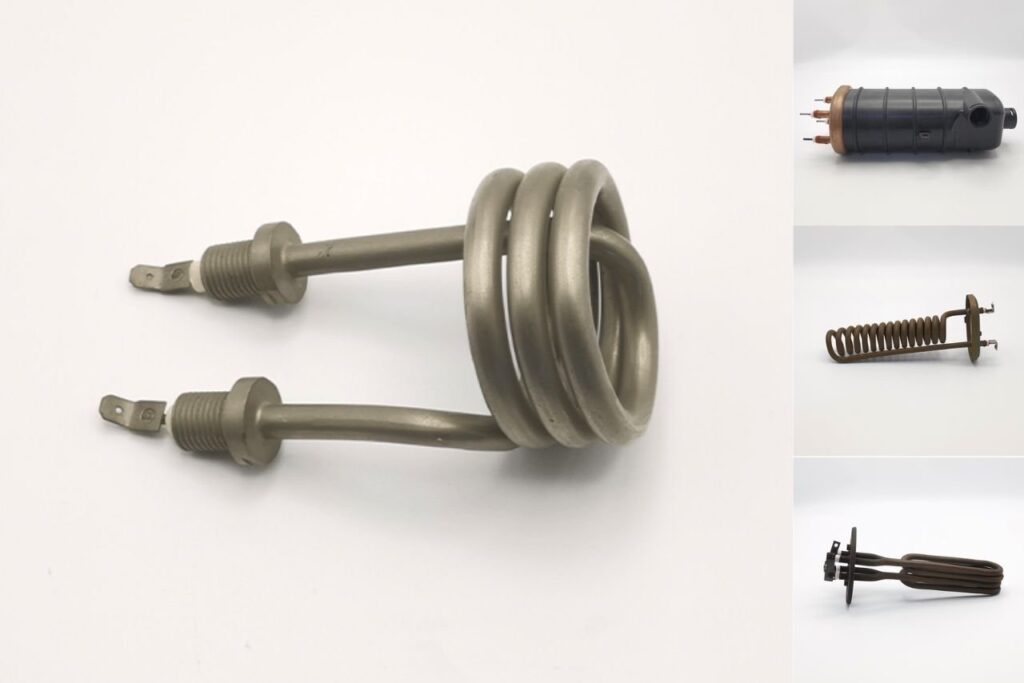
Cluster Page ? ~2003 words ? Global ? 5 FAQs ? Focus: bake/broil element diagnosis and safe replacement habits
This workflow helps determine whether a GE electric oven s heating issue is caused by the bake/broil element itself, the wiring/terminals, or a control/safety issue. It also covers buying the correct replacement and preventing early burnout.
Engineering context: TUTCO defines a heating element as an engineered component that includes conductive material plus insulating framework and lead connectors, and emphasizes that performance and life depend on design and environment (temperature, cycling, contaminants). https://tutco.com/conductive/heating-elements
- Turn off the oven circuit at the breaker before removing panels or touching terminals.
- If there is visible arcing, melted connectors, or burning odor, stop and use a qualified technician.
- Reinstall covers and insulation before operating missing covers can create heat and shock hazards.
| Symptom | Most likely causes | What to check first |
|---|---|---|
| Oven won t heat at all | Open element, no power on one leg, control/relay issue | Breaker status + visual element damage + terminal condition |
| Bake doesn t heat, broil works (or vice versa) | Specific element open, wiring/connector failure to that element | Inspect and meter-test the failed function s element |
| Uneven baking / slow preheat | Weak element, poor terminal connection, wrong replacement rating | Terminal discoloration + confirm correct wattage/voltage for the model |
| Sparks / burning smell | Arcing terminal, element touching metal, damaged insulation | Shut down; inspect wiring and element seating |
Table 1 Start with simple checks before assuming the control board is bad.
- Test both Bake and Broil.
- Note whether only one function fails this often points to a single element issue.
- Visible break, blister, or burn-through spot on the element.
- Element sagging and contacting the oven cavity metal.
- Uneven glow (if visible) during brief controlled testing.
Check for cracks, holes, severe pitting, or spots that look overheated. If the element has a hard break, it is typically open.
Brown/blue/black discoloration on spade terminals usually indicates overheating from resistance at the connection (loose fit). Replace heat-damaged terminals and ensure snug fit.
Brittle, cracked, or melted insulation should be repaired before any heat test.
Exact resistance varies by element design and rating. The goal is to determine if the element is open (no continuity) or has a short to chassis. Always isolate at least one wire from the element before measuring.
- Good: continuity present (finite resistance).
- Bad: OL / no continuity element likely failed open.
- Good: no continuity to metal.
- Bad: continuity to metal may indicate an element short or damaged insulation.
- Read the oven s data plate and record model number.
- Confirm whether the part is a bake or broil element.
- Match voltage/wattage and physical geometry (mounting points + terminal style).
- Plan to replace any heat-damaged terminals at the same time.
Whirlpool s water-heater instructions explicitly say to verify the new element is correct using the data plate for voltage and wattage, and to ensure wire connections are tight. The appliance differs, but the verification discipline and tight connections principle apply directly to oven elements. https://www.whirlpoolwaterheaters.com/support/help/element-was-out-of-range/24
- Buying looks similar elements without verifying bracket/terminal geometry.
- Ignoring overheated spade connectors (new element + old loose connector = repeat overheating).
- Restoring power before reassembling covers/guards.
Hudson Reed s 1000W plug-in electric heating element (for radiators/towel warmers) clearly lists wattage (1000W), protection rating (IP67), UL approval, materials (ABS + stainless steel), and warranty (2 years). This is not an oven element, but it demonstrates what clear spec disclosure looks like. Source.
JINZHO groups heater technologies into families like Heating Tubes, Heating Plate, and Heating Film, plus integrated modules under Die Casting Heating Solutions.
For steam/hot-water devices, JINZHO also lists assemblies under Electric Boiler Heater. These categories are not GE-oven-specific parts lists, but help illustrate the breadth of heater form factors.
Bake and broil typically use different heating elements. If one element is open or has a burned connector, the other function can still work.
Not always visibly, depending on shielding and operating mode. Visible glow is not the only proof of operation use temperature rise and electrical tests.
Yes. It may be weak, poorly connected, or overheating at terminals. Also, controls and wiring can prevent power from reaching a good element.
Common causes include a loose terminal connection (hot spot), wrong part rating/fit, or the element contacting metal. TUTCO highlights that heater life is affected by oxidation, damage, deformation, and temperature cycling. Reference.
Verify the correct replacement using the appliance data plate and the element s voltage/wattage and geometry similar to Whirlpool s instruction to confirm voltage and wattage before installation. Source.
- TUTCO: Heating Elements (definition, types, heater life)
- Whirlpool: Replace the Heating Element (verify voltage/wattage; tight connections; safe energizing)
- Hudson Reed: 1000W plug-in element (spec disclosure example)
- JINZHO: Heating Tubes
- JINZHO: Heating Plate
- JINZHO: Heating Film
- JINZHO: Electric Boiler Heater
Disclaimer: This is a general guide for GE electric ovens. Always follow the specific service manual and local electrical safety requirements.