
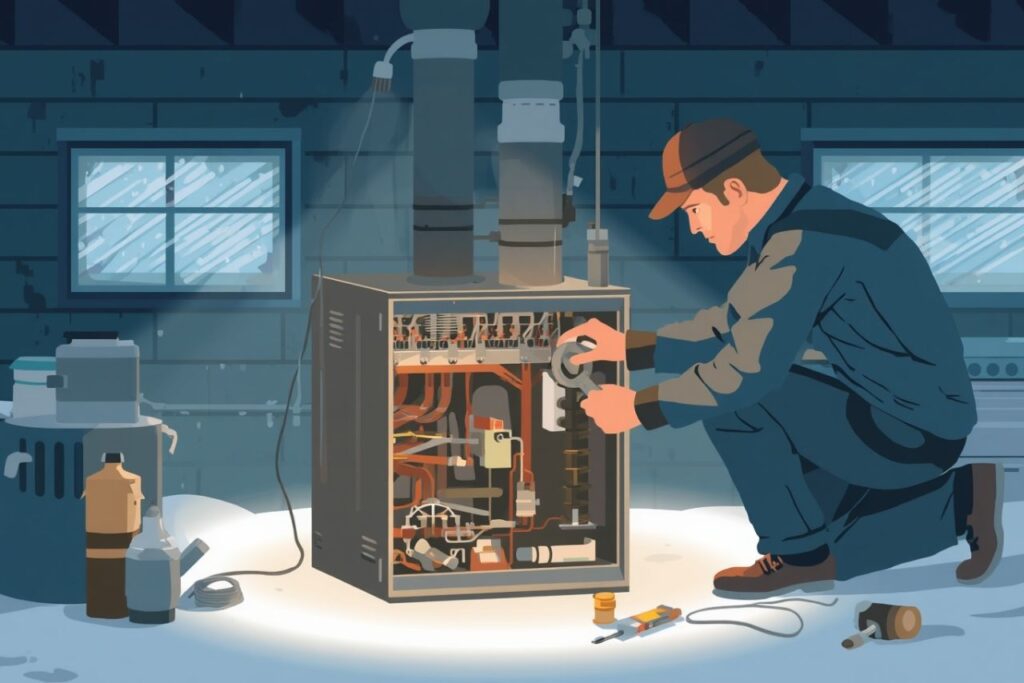
Aquecedores de lareira elétrica são tipicamente altamente eficientes na conversão de eletricidade em calor no ponto de uso, pois dependem de aquecimento resistivo (efeito Joule)—a liga do elemento de aquecimento transforma energia elétrica em calor quando a corrente flui. conforto do ambiente por kWh, custo total da residência, distribuição de calor, e tempo de funcionamento da unidade. A resposta mais prática é: eles podem ser eficientes para aquecimento de zona (pequenas áreas),.
Contexto do produto e fabricação: Elemento de Aquecimento, Fabricante de Elementos de Aquecimento, Fábrica de Elementos de Aquecimento, Soluções de Aquecimento por Fundição.
- O que “eficiente em termos energéticos” significa para lareiras elétricas
- Como os elementos de aquecimento produzem calor (por que a eficiência é alta no dispositivo)
- Os fatores ocultos do consumo de energia (fluxo de ar, controles e perdas de calor)
- Calculadora rápida de custo de energia (kWh e custo por hora)
- Maneiras de melhorar a eficiência no mundo real
- FAQ (3)
- Referências
O que “eficiente em termos energéticos” significa para lareiras elétricas
“Eficiente” pode significar coisas diferentes:
| Perspectiva de eficiência | O que ela pergunta | Resultado do aquecedor de lareira elétrica |
|---|---|---|
| Eficiência de conversão do dispositivo | Quanto da entrada elétrica se torna saída de calor? | Geralmente muito alta, porque o aquecimento resistivo transforma energia elétrica em calor no elemento. |
| Eficiência de conforto | O calor atinge as pessoas onde é necessário? | Bom para aquecimento de zona; limitado pelo padrão de fluxo de ar, layout do ambiente e infiltração. |
| Eficiência de custo do sistema | É a maneira mais barata de manter a temperatura de toda a residência? | Nem sempre; depende dos preços locais de eletricidade e do desempenho do sistema de aquecimento alternativo. |
Resumo da seção
Lareiras elétricas tendem a ser eficientes em “transformar watts em calor”, mas a eficiência no mundo real depende de para onde o calor vai e por quanto tempo deve funcionar.
Como os elementos de aquecimento produzem calor (por que a eficiência é alta no dispositivo)
A orientação de engenharia define um elemento de aquecimento como um componente composto por material condutor elétrico e isolante, projetado para servir a um propósito de aquecimento. aquecimento resistivo (efeito Joule).
Entrega de calor em aquecedores de lareira elétrica (importância por design)
Lareiras elétricas geralmente dependem fortemente de convecção forçada por ventilador, com radiação contribuindo próximo à unidade.
Resumo da seção
O próprio elemento do aquecedor é um conversor quase total de entrada elétrica em calor, mas o benefício no nível do ambiente depende de convecção, fluxo de ar e posicionamento.
Os fatores ocultos do consumo de energia (fluxo de ar, controles e perdas de calor)
Os custos menos óbvios descritos em discussões de engenharia de aquecedores não são apenas sobre o preço da peça—eles incluem desempenho, confiabilidade e eficiência após a instalação.
| Fator | Por que é importante | Como ele se apresenta no uso diário |
|---|---|---|
| Condição do fluxo de ar | Fluxo de ar restrito pode elevar a temperatura do elemento e acionar ciclos de segurança; a entrega de calor torna-se irregular. | O aquecedor liga e depois desliga; fluxo de ar quente fraco; acúmulo de poeira nas grades. |
| Controles e ciclagem | Ciclagem curta pode reduzir o conforto por kWh (mais tempo recuperando do que mantendo). | O ambiente nunca estabiliza; comportamento frequente de liga/desliga. |
| Perda de calor do ambiente | The heater can only “keep up” if the room’s insulation and infiltration allow it. | Cold drafts, leaky windows; heater runs continuously. |
A practical way to avoid waste is to treat replacement parts like a specification task: verify the correct voltage and wattage, and ensure wire connections are tight before energizing. These steps are explicitly emphasized in heater replacement guidance for other appliances and reduce failures that cause repeat energy waste and downtime.
Resumo da seção
“Efficiency complaints” are often airflow, control, or building-envelope issues rather than a heating-element technology issue.
Calculadora rápida de custo de energia (kWh e custo por hora)
Electric fireplaces are usually labeled by wattage. If a heater draws (P) watts, its energy use per hour is:
kWh per hour = P / 1000.
For example, a 1000W element draws about 1 kWh per hour when running at full power.
| Heater rating | Energy per hour | How to compute hourly cost |
|---|---|---|
| elemento de aquecimento elétrico plugável de 1000W | ~1.0 kWh | (1.0 times) (your electricity price per kWh) |
| 1500W (common in space heaters) | ~1.5 kWh | (1.5 times) (your electricity price per kWh) |
| 2000W | ~2.0 kWh | (2.0 times) (your electricity price per kWh) |
Spec transparency matters when estimating cost. A consumer listing for a plug-in electric heating element shows Element Power: 1000W (plus safety/quality cues like UL approval and warranty), which is exactly the information needed to estimate kWh usage.
Resumo da seção
“Energy efficiency” becomes tangible when translated into kWh per hour: 1000W ≈ 1 kWh per hour at full output.
Maneiras de melhorar a eficiência no mundo real
Because the element already converts electricity into heat effectively, most improvements come from delivering that heat to the right place and reducing wasted runtime.
| Ação | Why it improves efficiency | What to do |
|---|---|---|
| Use it as zone heat | Heats the occupied area instead of the whole building | Close doors to the room; reduce central thermostat slightly if appropriate |
| Maintain airflow | Better convection means more usable heat and less overheating/cycling | Keep intake/outlet clear; remove dust regularly |
| Prevent repeat failures | Loose connections and wrong ratings create downtime and waste | When servicing: verify voltage/wattage match; keep wire connections tight; secure covers |
For product designers: integrated thermal modules (e.g., die-cast heater approaches) are described as improving heat transfer efficiency and adding mechanical strength and corrosion resistance, which can support stable long-term performance in demanding applications.
Resumo da seção
The biggest efficiency gains come from zone heating strategy, clean airflow, and correct specification/installation practices—more than from changing the element material.
FAQ (3)
1) Are electric fireplace heaters “100% efficient”?
At the device level, resistive heaters convert electrical input into heat very effectively (Joule heating in the element alloy). But “efficient” in a home also depends on where that heat ends up and whether the unit must run continuously due to drafts or poor airflow.
2) Why does my electric fireplace run but the room still feels cold?
Common reasons are high room heat loss (drafts/poor insulation) and weak heat distribution (airflow restrictions or poor placement). The element may be fine, but the system’s convection path is not delivering heat where occupants feel it.
3) Does replacing the heating element improve efficiency?
Only if the old element was faulty (open circuit, damaged, or causing safety cycling). Replacement should match voltage and wattage, and connections must be tight; otherwise performance and reliability can degrade, increasing runtime and perceived inefficiency.
Conclusão
Electric fireplace heating elements are typically energy-efficient at the point of use because they generate heat through resistive (Joule) heating. In practice, they are most efficient when used as targeted zone heaters with clear airflow and correct control settings. If energy bills or comfort feel “inefficient,” the cause is often airflow restriction, cycling behavior, or room heat loss—not the basic heating element technology itself.
Referências
-
Heating element definition, materials, suspended/embedded/supported frameworks, and cost/installation considerations:
https://tutco.com/conductive/heating-elements -
Replacement discipline principles (verify voltage/wattage; tight wire connections; secured covers before powering):
https://www.whirlpoolwaterheaters.com/support/help/element-was-out-of-range/24 -
Example heater product listing with explicit wattage (1000W) and quality cues (UL approval, warranty):
https://usa.hudsonreed.com/1000-plug-in-watt-electric-heating-element-76309 -
Product family context (heating elements and integrated die-cast heater modules):
https://jinzho.com/product-category/heating-element/
https://jinzho.com/product-category/die-casting-heating-solutions/
https://jinzho.com/
https://jinzho.com/about/
Disclaimer: This page is general information. Energy cost depends on local electricity rates, building heat loss, and operating behavior.

