Heating elements in humidifiers make warm mist by heating water. The water turns into steam. You find these in many medical and industrial places. These places need careful moisture control. Heated humidifiers are about 41% of the market. These devices can lower germs in the air. They also give comfortable humidity, especially in cold months. Knowing how heating elements work helps you pick the right humidifier.
Key Takeaways
Heating elements warm up water. This makes steam that adds moisture to your room.
There are three main types of heating elements. These are resistive, PTC, and electrode. Each type has its own benefits and care needs.
Cleaning your humidifier often is important. Using distilled water helps stop minerals from building up. This keeps your humidifier working well.
Safety features like temperature sensors are important. They stop your humidifier from getting too hot or breaking.
Picking good heating elements, like those from jinzhong, is smart. They save energy, last longer, and help control humidity better.
Heating Elements Overview
What They Are
Heating elements are important parts inside many humidifiers. They help make warm mist. These parts change electrical energy into heat. When you plug in the humidifier, the heating element turns on. It gets hot fast and warms up the water in the tank. Most heating elements are made from strong materials. Incoloy is a special metal alloy used in electric steam humidifiers. It does not let scale build up and can handle high heat. Stainless steel is also used a lot. You often see resistive heating elements inside stainless steel tanks. These materials help the heating element last longer and keep it safe.
Tip: The material of the heating element is important. It changes how well your humidifier works and how long it will last.
Purpose in Humidifiers
The main job of the heating element is to heat water until it boils. When water boils, it turns into steam. The humidifier lets this steam out into the air. This adds moisture to your room and keeps the air comfy. You do not need a fan for this kind of humidifier. The steam goes up on its own and spreads around. Some humidifiers have temperature sensors to watch the heating element. These sensors stop the humidifier from getting too hot. They turn off or lower the heat when needed. This keeps your humidifier safe and working well.
You get warm mist that helps you breathe better.
The air in your home stays at a good humidity level.
The heating element is quiet and does not need much care.
How Heating Elements Work
Step-by-Step Process
Here is how a humidifier with heating elements works, step by step:
First, fill the water reservoir to the right level.
Next, turn on the humidifier. The heating element gets hot.
The heating element heats the water until it boils.
When the water boils, steam forms above the water.
The humidifier cools the steam a little to make it safe.
The device sends the warm mist into the air through a nozzle or diffuser.
If the water runs out, the humidifier turns off by itself to stop damage.
Tip: Always keep enough water in the reservoir. This helps your humidifier work safely and well.
Steam Generation
Heating elements in humidifiers use Joule heating. When you turn on the humidifier, electricity goes through a resistive material inside the heating element. This material slows down the electricity, which makes it hot. All the electricity changes into heat. The heat moves into the water and makes it warmer. When the water gets to about 100°C (212°F), it boils and turns into steam.
How fast steam forms depends on how much heat the heating element gives. More heat means the water boils faster and makes more steam. If your water has lots of minerals, scale can build up on the heating element. This can make steam form more slowly over time. Some humidifiers have sensors to watch the temperature and keep things safe. These sensors stop the humidifier from getting too hot and keep the steam safe.
You get steady, warm mist as long as the heating element works and the water is clean. Cleaning your humidifier and using good water helps it last longer and keeps your air comfy.
Types of Heating Elements
Heating elements in humidifiers come in a few types. Each type works in its own way and has special benefits. You can pick the best one by learning how each type works and what makes them different.
Resistive Elements
Resistive heating elements are used in many humidifiers. You find them inside stainless steel tanks or cylinders. These elements work when electricity goes through a metal wire or coil. The wire gets hot and heats the water nearby. This makes pure and clean steam.
You can use tap, softened, or reverse osmosis water.
The design helps stop scale from building up, so cleaning is easier.
These elements let you control the steam amount very well. You can change the heat to get the humidity you want.
The steam is clean and safe to breathe.
Note: Resistive elements last longer and need less care than some other types. They also work with many kinds of water.
PTC Elements
PTC means Positive Temperature Coefficient. PTC heating elements have a special ceramic core. When you turn on the humidifier, the ceramic gets hot. As it gets hotter, its resistance goes up. This lets it control its own temperature and stops it from getting too hot.
PTC elements do not need extra thermostats. They keep the temperature safe by themselves.
These elements save energy and are safe for long use.
If the water runs out, PTC elements stay safe and do not break.
They give steady and reliable heat, so your humidifier works well.
You can use them with many voltages and temperatures.
PTC elements are a good choice if you want safety and little care. They last a long time and can fit many humidifier styles.
Electrode Elements
Electrode heating elements work in a different way from resistive and PTC types. Instead of heating a wire, they send electricity right through the water. The minerals in the water help the electricity move, which heats the water and makes steam.
The steam amount depends on the minerals in the water and the water level.
If you use cleaner water, you get less steam because there are fewer minerals.
Over time, minerals can build up on the electrodes. You need to clean or change them to keep your humidifier working well.
Electrode elements work best with regular tap water, not purified water.
Tip: Always unplug your humidifier before cleaning electrode elements. Use water with fewer minerals to stop scale and keep your humidifier safe.
Comparison Table: Types of Heating Elements
You can see the main differences between these types in the table below:
Heating Element Type | How It Works | Efficiency / Energy Use | Maintenance Needs | Safety Features |
|---|---|---|---|---|
Resistive | Heats water with a metal coil or wire | High, precise control | Low, less scale buildup | Durable, safe with sensors |
PTC | Ceramic core self-regulates temperature | Energy-efficient, stable | Very low, long lifespan | Self-limiting, no overheating |
Electrode | Passes current through water to make steam | 100% conversion, depends on water | Needs regular cleaning | Needs careful water handling |
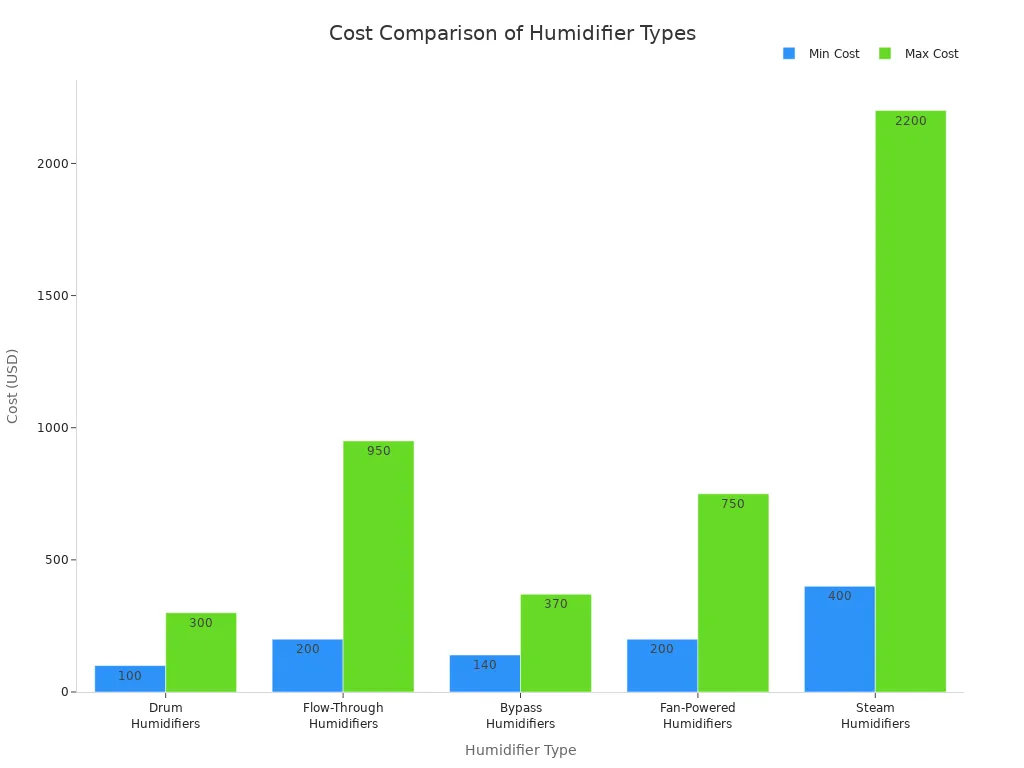
Cost Comparison Chart
Steam humidifiers with heating elements usually cost more than other types. They also use more electricity but give you better control of humidity.
jinzhong Heating-Element Solutions
Jinzhong makes advanced heating elements for humidifiers. You get products made from strong materials like nickel-chromium alloys and PTC ceramics. These materials give you powerful, efficient, and safe heating.
Jinzhong heating elements include tubes, plates, and films. You can pick the right one for your humidifier.
The products have exact temperature control and built-in safety systems. You get protection from overheating and dry burning.
Jinzhong tests every product for high heat and corrosion. This means you get products that work well for a long time.
The company has many international certificates, like ISO9001, CE, and RoHS. You can trust the quality and safety of each product.
You can ask for custom designs to fit your needs. Jinzhong supports both small and big orders with fast delivery.
Tip: Jinzhong’s heating elements help you save energy and need less care. You get a product that fits your humidifier and lasts longer.
If you want a heating element that is efficient, safe, and strong, Jinzhong gives you many choices. You can learn more about their products on their official website.
Pros, Cons, and Safety
Advantages
There are many good things about using high-quality humidifiers with certified heating elements. Certifications like CE, UL, and ISO 9001 mean the product is safe and made well. These marks show the company cares about safety and how the product works. You can trust these humidifiers to work well and last a long time. Jinzhong’s heating elements have passed many tests from other countries. This means you get a humidifier that is safe, saves energy, and works well at home or work. You also get better control of humidity, less germs in the air, and a quieter machine.
Limitations
Even the best humidifiers have some problems. Here are the most common ones you might see:
Minerals can build up on the heating element if you use hard water. This makes the humidifier work worse and can break it.
High heat kills most germs, but some can live and grow when the humidifier cools down. You need to clean it often.
You have to clean and descale the water tank a lot. This keeps the humidifier safe and working right.
If you use tap water, minerals build up faster, so you must clean more.
Some humidifiers make extra water in the tubes, which can collect and need to be emptied.
Sensors usually check temperature, not humidity, so you might not get perfect control.
Things like room temperature can change how well your humidifier works.
Safety Tips
You can keep your humidifier safe and working well by following these tips:
Use distilled water to stop minerals from building up and to lower germs.
Empty and fill the water tank every day with clean water.
Clean all parts that touch water at least two times a week. Use vinegar or hydrogen peroxide for best cleaning.
Dry every part before you put the humidifier away to stop mold and bacteria.
Change filters and wicks when the company says to.
Clean the heating element once a month with white vinegar.
Watch the humidity so the room does not get too wet.
Keep warm mist humidifiers away from kids so they do not get burned.
Check wires and sensors often to find problems early.
Store your humidifier in a cool, dry place when you are not using it.
Tip: Cleaning your humidifier often and using it carefully helps it last longer and keeps your air healthy.
Maintenance and Performance
Cleaning Tips
Cleaning your humidifier helps it work well and last longer. Here are some easy steps to keep it free from minerals and germs:
Soak the heating part in vinegar and water once a month. This helps break up hard minerals.
Do not use sharp things or steel wool. These can scratch or hurt the surface.
Use a soft brush or old toothbrush to scrub off loose stuff.
Take off any parts you can, like a plastic cone, to reach hidden spots.
Tilt the base to keep metal parts safe from too much vinegar.
Let the heating part soak for a few hours or overnight if there is a lot of buildup.
Rinse everything well and gently scrape off any small bits left after soaking.
Always look at your user manual for special cleaning steps.
Clean your humidifier every three days to stop mold and bacteria. If you smell something bad or see mold, clean it right away. For extra cleaning, use a 3% hydrogen peroxide solution once or twice a month. Change the filter at least once a month if you use it a lot.
Tip: Wrap a cloth with white vinegar around the heating part for a few minutes, then scrub gently. This stops buildup that can block steam.
Longevity and Efficiency
Many things change how long your humidifier lasts and how well it works. The table below shows the most important things:
Factor | Explanation |
|---|---|
Make and Model | Good brands use better materials and last longer. |
Frequency of Use | Using your humidifier a lot can wear out parts faster. |
Maintenance Regimen | Cleaning and disinfecting often stops mold and minerals, helping your device last. |
Water Quality | Hard water leaves more minerals, which can hurt how it works. |
Environmental Conditions | Dust, low humidity, and temperature changes can make it not last as long. |
Check your humidifier for mineral buildup often. Cleaning it keeps the parts working and stops damage. Change filters on time to keep the air clean and help the machine. Deep clean the humidifier every season by soaking parts in white vinegar overnight. This gets rid of tough minerals and germs.
Note: Taking good care of your humidifier and cleaning it often helps it work well and last for years.
You have learned how humidifiers work and why some are better. When picking a humidifier, choose a good brand like jinzhong. Their humidifiers work well, make less waste, and are easy to clean. The table below shows why many people like resistive humidifiers for their homes.
Feature | Resistive Humidifiers | Electrode Humidifiers |
|---|---|---|
Water Quality Needed | Any clean water | Needs minerals |
Maintenance | Simple cleaning | Frequent parts change |
Reliability | Very consistent | Can lose power |
Environmental Impact | Less waste | More waste |
Pick good parts so your humidifier is safe, works well, and lasts a long time.
FAQ
What is the main job of a heating element in a humidifier?
The heating element heats water until it turns into steam. This steam goes into the air and adds moisture. It helps you breathe easier and keeps your room nice.
How often should you clean the heating element?
Clean the heating element every week or two. If you see white stuff on it, clean it sooner. Cleaning often helps your humidifier work well and last longer.
Can you use tap water in a humidifier with a heating element?
You can use tap water, but it has minerals. These minerals can build up faster on the heating element. Distilled water stops this and keeps the part clean. Using distilled water also helps your humidifier last longer.
What makes jinzhong heating elements different?
Jinzhong uses strong materials like nickel-chromium alloy and PTC ceramics. These materials make the heating element safe and save energy. Jinzhong also lets you pick custom designs and ships orders quickly.
How do you know if the heating element needs to be replaced?
If you see less steam or hear odd sounds, check the heating element. If cleaning does not fix it, you may need a new one. Always look at your user manual for help and signs.