The Hidden Cost of Your Daily Brew: Unpacking Heater Efficiency
In an era of rising energy costs and growing environmental awareness, the efficiency of our household appliances has never been more scrutinized. For millions of coffee lovers, the daily ritual begins with the flick of a switch, awakening a machine that will transform water and ground beans into a cherished beverage. Yet, behind this simple act lies a significant energy transaction, orchestrated primarily by one component: the élément chauffant. This vital part is the single largest consumer of electricity in any coffee machine, and its design and technology directly dictate not only the quality of your coffee but also the impact on your electricity bill and the environment.
Understanding the energy efficiency of a [Elément chauffant de la machine à café] is not just for the eco-conscious or the budget-minded; it is for anyone who values performance and longevity in their appliance. An inefficient element wastes energy as excess heat, can lead to slower performance, and may have a shorter lifespan due to thermal stress. Conversely, a highly efficient element delivers precise, rapid heating, consumes less power in standby, and contributes to a more sustainable and cost-effective coffee experience.
This comprehensive review will delve into the various types of heating technologies used in modern coffee machines, from traditional boiler elements to advanced thermocoils. We will analyze how material science, system design, and manufacturing quality contribute to overall energy efficiency, providing a clear guide to understanding what makes one heating system superior to another.
Core Heating Technologies: A Comparative Overview
The method a coffee machine uses to heat water is the primary determinant of its energy consumption profile. There are several distinct technologies, each with its own set of advantages and disadvantages regarding efficiency.
1. Immersed Boiler Elements
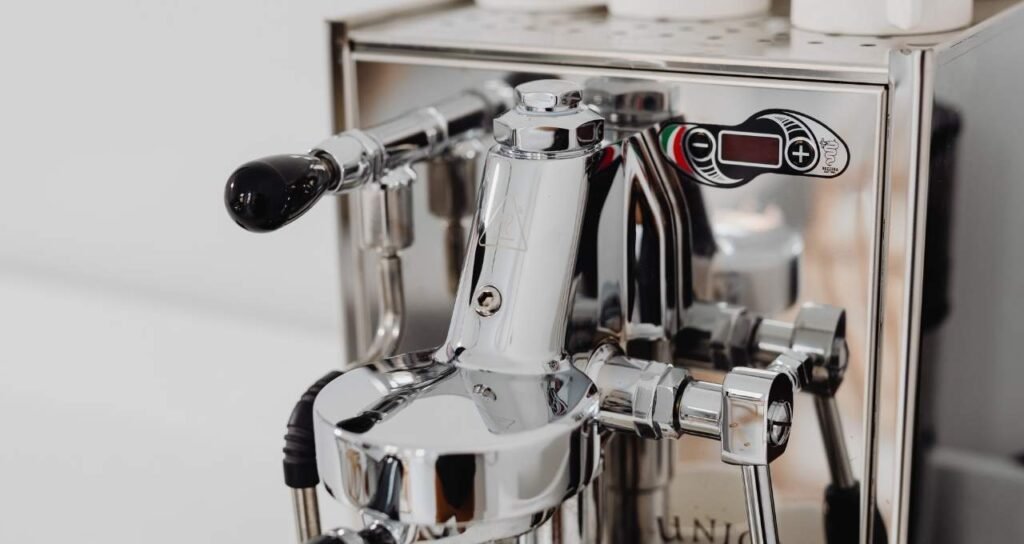
This is the classic design found in most traditional espresso machines and many high-end drip brewers. A metal chaudière, or tank, holds a reservoir of water that is heated by an element submerged within it.
- How it Works: A powerful resistive [Élément chauffant], often shaped like a coil or U-tube, is screwed or bolted into the boiler. When electricity passes through it, the element heats up, transferring this energy directly to the surrounding water. A thermostat or a more advanced PID controller monitors the water temperature and cycles the element on and off to maintain a set point.
- Energy Efficiency Profile:
- Heat-Up Time: Initial heat-up can be slow and energy-intensive, as the entire volume of water in the boiler (which can range from 300ml in a small machine to over 10 liters in a commercial one) must be brought to temperature.
- Standby Consumption: Once hot, the large thermal mass of the boiler is excellent at retaining heat. However, to keep it ready for brewing or steaming, the element must periodically cycle on to compensate for heat loss to the environment. Well-insulated boilers significantly reduce this standby consumption, but it remains a constant energy draw.
- Brewing Efficiency: During brewing, this system is very efficient. The water is already at the correct temperature, and the powerful element can quickly recover from the influx of cold water, ensuring stable and energy-efficient operation during use.
2. Thermoblocks and Thermocoils
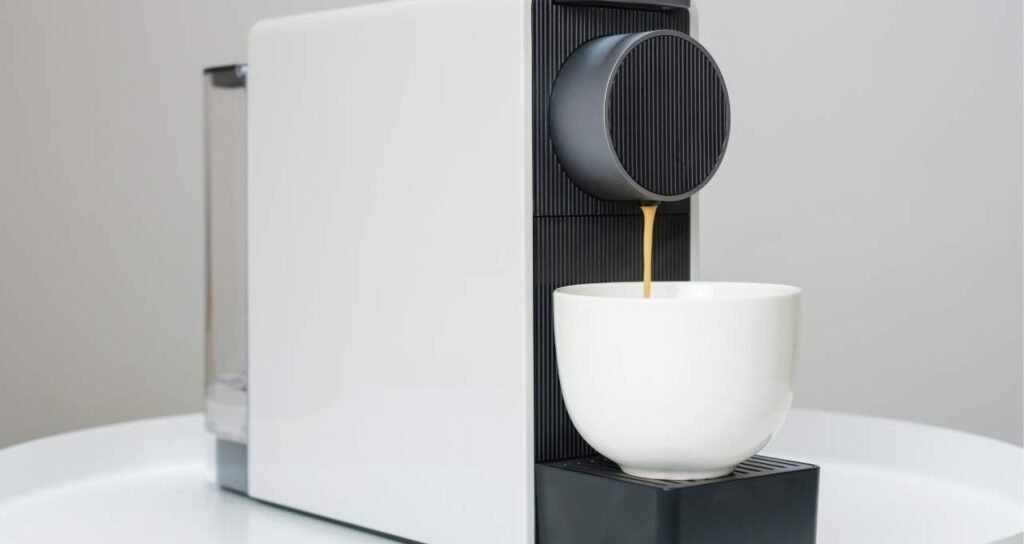
Prevalent in many super-automatic machines, entry-level espresso makers, and on-demand hot water dispensers, thermoblocks and thermocoils are designed for speed.
- How it Works: Instead of heating a large reservoir, these systems flash-heat water as it flows through a narrow channel. A thermoblock is typically a metal block (often aluminum) with a serpentine path drilled through it, surrounded by a powerful embedded heating element. A thermocoil is a variation where water flows through a long, coiled stainless steel tube that has a heating element running alongside or wrapped around it.
- Energy Efficiency Profile:
- Heat-Up Time: Extremely fast and efficient. Since there is no large body of water to heat, the machine can be ready to brew in under a minute, using significantly less energy for the initial warm-up compared to a boiler.
- Standby Consumption: Virtually zero. The system only consumes significant power when it is actively heating water for brewing or steaming. This makes it highly efficient for intermittent, single-cup use.
- Brewing Efficiency: This is where the trade-off occurs. Maintaining a perfectly stable temperature throughout the entire brew cycle is more challenging for a thermoblock. The system must constantly adjust the element’s power as water flows through, and it can be less stable than a large, PID-controlled boiler. This can lead to temperature fluctuations that, while small, represent minor inefficiencies in heat application.
3. Heating Plates (Drip Coffee Makers)
This is the simplest form of heating technology, common in standard automatic drip coffee makers.
- How it Works: A strip-style resistive heating element is attached to the underside of an aluminum water tube. This element performs two functions: it flash-heats small amounts of water, causing it to boil and percolate up to the brew basket, and it simultaneously heats the warming plate (hot plate) that keeps the carafe warm.
- Energy Efficiency Profile:
- Brewing: The brewing process itself is relatively efficient, as it heats water on demand.
- Warming: The primary source of inefficiency is the warming plate. Keeping a glass carafe of coffee hot for an hour or more consumes a continuous amount of energy, much of which is lost to the surrounding air. Machines with thermal carafes are vastly more energy-efficient as they eliminate the need for a constant-on warming plate.
Energy Profile Comparison
| Technologie de chauffage | Heat-Up Energy | Standby Energy | Use Case Suitability |
|---|---|---|---|
| Immersed Boiler | Haut | Medium (with insulation) | High-volume use, back-to-back shots, best thermal stability |
| Thermoblock/Thermocoil | Very Low | Very Low | Intermittent use, single cups, speed is a priority |
| Heating Plate (Drip) | Faible | High (if warming plate is used) | Basic drip brewing; inefficient for keeping coffee warm |
The Role of Material Science in Energy Efficiency
The materials used to construct both the heating element and the boiler are fundamental to their efficiency. The key property is thermal conductivity—the ability of a material to transfer heat.
- Copper: With its very high thermal conductivity, copper transfers heat from the element to the water extremely quickly. This means less energy is wasted during the transfer process. However, copper is more prone to limescale buildup.
- Stainless Steel: The most common material in modern, quality machines. While its thermal conductivity is lower than copper’s, it offers excellent durability and superior resistance to corrosion and scale. Its ability to stay clean and free of insulating scale is a major long-term efficiency benefit.
- Aluminum: Often used in thermoblocks due to its good thermal conductivity and ease of manufacturing (casting). Its primary drawback is its susceptibility to corrosion over time if not properly coated or anodized.
- Advanced Alloys (e.g., Incoloy): These superalloys are the gold standard for high-end immersed elements. They combine good heat transfer with exceptional resistance to both high temperatures and scale formation, ensuring they operate at peak efficiency for a very long time.
The Impact of Limescale: Regardless of the material, the single greatest enemy of energy efficiency is limescale. A layer of scale acts as an insulator on the [élément chauffant machine à café], forcing it to run longer and at higher temperatures to heat the water. This wastes a significant amount of electricity and puts extra strain on the component. Regular descaling is the most important maintenance task for preserving energy efficiency.
System Integration: The Sum is Greater Than its Parts
A high-quality heating element is only as efficient as the system it’s a part of. Several other design features work in concert to minimize energy consumption.
- PID Temperature Control: A Proportional-Integral-Derivative (PID) controller is far more efficient than a simple thermostat. A thermostat operates with a wide temperature band, crudely turning the element fully on or off. A PID uses intelligent algorithms to deliver short, precise pulses of energy to the element, holding the temperature incredibly stable while using the minimum amount of power necessary. This “sipping” of energy is much more efficient than the “gulping” of a thermostat.
- Boiler Insulation: In boiler-based machines, insulation is paramount. A thick layer of insulating material wrapped around the boiler dramatically reduces heat loss to the environment. This means the heating element needs to cycle on far less frequently to maintain standby temperature, resulting in significant energy savings for machines that are left on for extended periods.
- Dual Boiler vs. Heat Exchanger (HX): In espresso machines, dual boiler designs (one boiler for brewing, one for steam) can be more energy-efficient for brew-only use, as only the small brew boiler needs to be kept at brew temperature. Heat exchanger machines must keep the entire large boiler at a much higher steam temperature, even when only pulling shots. However, many modern dual boiler machines allow the user to switch the steam boiler off entirely, offering a major energy-saving advantage.
Manufacturing Excellence: The Foundation of Efficiency
The theoretical efficiency of a design can only be realized through manufacturing precision. This is where a specialized [fabricant d'éléments chauffants électriques] plays a crucial role. Generic, low-cost elements may not meet the performance standards required for optimal efficiency.
Leading manufacturers like [Jinzho] leverage decades of expertise to build efficiency into their products from the ground up:
- Pureté des matériaux : Using high-purity, certified raw materials ensures optimal thermal conductivity and corrosion resistance.
- Advanced R&D: Collaborations with research institutions to develop new nano-electric heating materials can directly boost energy efficiency by 15-30% compared to traditional designs.
- Precision Manufacturing: Fully automated production lines and laser welding robots ensure uniform element density and perfect contact between components, eliminating “hot spots” and maximizing heat transfer efficiency.
- Quality Control: Implementing rigorous quality management systems like 6sigma ensures that every element performs to its designed specification, preventing energy-wasting defects.
By choosing a machine that uses components from such a manufacturer, you are investing in a product engineered for peak efficiency and longevity.
Conclusion: Making an Energy-Conscious Choice
The energy efficiency of a coffee machine’s heating element is a complex interplay of core technology, material science, system integration, and manufacturing quality. There is no single “most efficient” solution for everyone; the best choice depends on the user’s habits.
- For the user who makes one or two cups a day, the rapid heat-up and near-zero standby consumption of a thermoblock or thermocoil system is undeniably more energy-efficient.
- For the office, café, or enthusiast household where the machine is on for hours and used frequently, a well-insulated, PID-controlled boiler system offers superior efficiency during operation and unmatched performance.
Ultimately, investing in a machine from a reputable brand that prioritizes quality components and smart design is the surest path to energy efficiency. By understanding the technology inside your machine and practicing regular maintenance like descaling, you can enjoy countless cups of exceptional coffee with the peace of mind that you are minimizing both your energy costs and your environmental footprint.
Foire aux questions (FAQ)
1. How much electricity does a typical coffee maker use?
This varies widely. A simple 1200W drip coffee maker running for 10 minutes to brew a pot uses 0.2 kWh. If its 60W warming plate stays on for two hours, that’s another 0.12 kWh. An espresso machine with a 1400W element might take 15 minutes to warm up (0.35 kWh) and then use a smaller amount of energy to maintain its temperature. The biggest factors are the machine’s power (wattage) and how long it is actively heating.
2. Does leaving my espresso machine on all day use a lot of energy?
Yes, it can. While a well-insulated machine is designed to be left on, it will still continuously cycle its heating element to maintain temperature. This standby consumption can add up to several kilowatt-hours over a day. For home use, it is almost always more energy-efficient to turn the machine on 20-30 minutes before you need it and turn it off afterward.
3. Is a 230V heating element more efficient than a 115V one?
Not inherently. Efficiency is a measure of how much electrical energy is converted to useful heat. Both 115V and 230V resistive elements are nearly 100% efficient at this conversion. The main difference is that a 230V element can deliver a higher wattage (power) more easily, allowing it to heat the same amount of water faster. The total energy consumed (watts x time) to reach a target temperature will be roughly the same.
4. Will using a smart plug to schedule my machine’s warm-up time save energy?
Yes. A smart plug is an excellent tool for energy management. It allows you to have the machine fully heated and ready the moment you wake up, without leaving it on all night. This saves a significant amount of standby energy consumption.
5. Besides descaling, what else can I do to keep my machine energy-efficient?
Regularly check for and repair any leaks, especially steam or hot water leaks. A constant drip is a constant loss of heated water, forcing the element to work harder to compensate. For boiler machines, ensure the insulation is intact. For drip makers, brew into a thermal carafe and turn the machine off immediately, rather than using the hot plate.
6. Do “eco modes” on modern coffee machines actually save energy?
Yes. Eco modes typically work by lowering the boiler’s standby temperature or by automatically shutting the machine off after a period of inactivity. Lowering the temperature reduces the amount of energy needed to maintain it, and an auto-off feature is the most effective way to prevent wasted standby power.
7. Can I replace my heating element with a more efficient one?
This is generally not advisable. A heating element is part of an integrated system. Replacing it with a different type or wattage could damage the machine’s electronics and create a safety hazard. The best approach is to replace a failed element with a high-quality, OEM-spec part from a reputable supplier like Stefano’s Espresso Care or Chris’ Coffee.
Références :
- Stefano’s Espresso Care. (s.d.). Éléments chauffants pour machines à expresso. Récupéré sur https://espressocare.com/collections/heating-elements
- Great Infusions Co. (s.d.). Éléments Chauffants de Remplacement pour Expresso Maison. Récupéré sur https://greatinfusions.com/home-espresso-replacement-heating-elements/
- Chris’ Coffee. (s.d.). Élément chauffant de la bouilloire à café. Récupéré sur https://www.chriscoffee.com/products/rocket-coffee-boiler-heating-element
- Coffee Addicts. (s.d.). Éléments. Récupéré sur https://coffeeaddicts.ca/collections/elements
- Fix-It Club. (2006). Comment réparer une machine à café. HowStuffWorks. Consulté sur https://home.howstuffworks.com/how-to-repair-small-appliances3.htm
- Jinzho. (s.d.). Élément chauffant. Récupéré sur https://jinzho.com/product-category/heating-element/
- YouTube. (s.d.). [Vidéo sur le test ou la fonction des éléments chauffants]. Récupéré sur https://www.youtube.com/watch?v=NHaoo0Ld-oM
- Home-Barista.com. (s.d.). [Discussions sur les forums concernant la réparation et l'efficacité des machines à expresso]. Consulté à partir de divers fils de discussion.