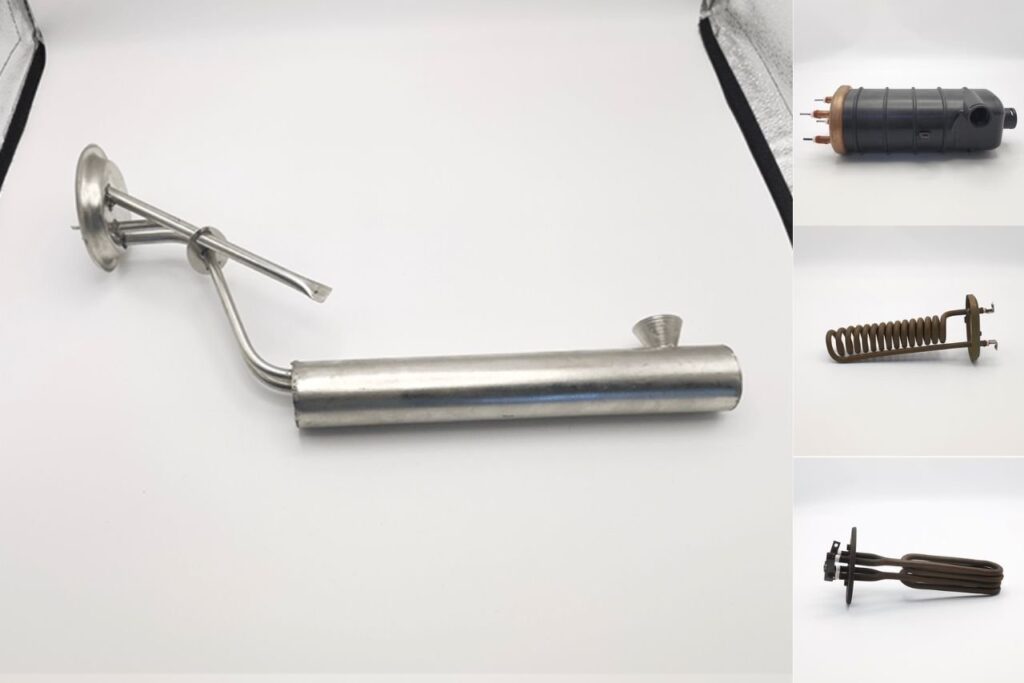
La résolution rapide des pannes de chauffage du lave-vaisselle est essentielle pour maintenir l'hygiène de la cuisine et empêcher la prolifération bactérienne sur la vaisselle humide.
En tant que composant thermique critique, Élément chauffant doit fonctionner à un rendement maximal pour atteindre les températures de désinfection. S'appuyant sur l'héritage industriel de 40 ans de Camewould (Jin Zhong) un leader mondial et premier Fabricant d'éléments chauffants ce guide fournit un protocole de diagnostic et de réparation à haute vitesse pour restaurer la fonctionnalité de votre appareil avec une précision professionnelle.
Répertoire de réparation rapide
Triage rapide : L'élément est-il vraiment défectueux ?
Avant de démonter l'appareil, effectuez un triage visuel et opérationnel. Les problèmes de chauffage du lave-vaisselle sont souvent mal diagnostiqués ; parfois Élément chauffant est en bon état, mais le système l'empêche de s'alimenter.
Points de contrôle opérationnels :
- Réinitialisation du thermostat de limite haute : De nombreux lave-vaisselle modernes disposent d'un interrupteur thermique au fond de la cuve. Si le lave-vaisselle a fonctionné sans eau, ce fusible peut avoir “sauté”. Certains sont réinitialisables avec un bouton, tandis que d'autres nécessitent un remplacement.
- Calibrage de la carte de commande : Si le lave-vaisselle affiche un code d'erreur (comme ‘1-1’ ou ‘7-1’ sur certains modèles), la carte de commande a détecté un défaut de chauffage et a peut-être “verrouillé” le circuit du chauffage. Une réinitialisation du système peut parfois restaurer la fonction.
- Piqûres visuelles, Si vous voyez cloques ou taches blanches crayeuses sur la gaine de l'élément, l'isolation en oxyde de magnésium (MgO) est probablement compromise. Cela nécessite un remplacement immédiat par un Usine d'éléments chauffants.
Diagnostic multimètre en 5 minutes
La seule façon définitive de tester un **élément chauffant tubulaire** est un test de résistance électrique. Cela vérifie que le Nickel-Chrome (NiCr) fil interne est toujours intact.
Comment tester la continuité :
- Couper l'alimentation : Assurez-vous que le disjoncteur est éteint.
- Accéder aux bornes : Retirez le panneau de la plinthe inférieure. Les bornes de l'élément se trouvent généralement à l'arrière, fixées par des écrous en plastique.
- Mesurer les ohms : Réglez votre multimètre sur le réglage d'ohms le plus bas ( ). Placez les sondes sur chaque borne.
Tableau de référence de résistance
| Lecture du multimètre | Résultat du diagnostic | Action |
|---|---|---|
| 15 à 30 | Fonctionnement normal | Vérifier la carte de commande/le fusible |
| Infini (O.L) | Rupture interne | Remplacer l'élément |
| 0 Ω à 2 Ω | Court-circuit | Remplacer l'élément immédiatement |
Procédure de remplacement accélérée
Si l'élément est défaillant, suivez cette stratégie de remplacement simplifiée pour minimiser les temps d'arrêt. Assurez-vous de vous être procuré un remplacement de qualité OEM auprès d'un Élément chauffant fabricant.
Étape 1 : Vidanger et incliner
Épongez toute l'eau restante de la cuve. Couchez le lave-vaisselle sur le dos (placez d'abord une serviette). Cela permet un accès direct aux écrous de montage.
Étape 2 : Dévisser et extraire
Retirez les connecteurs de fils des bornes. Utilisez une clé pour dévisser les écrous de montage en plastique. Depuis l'intérieur de la cuve, soulevez l'élément hors de ses clips de support et tirez-le à travers les trous.
Étape 3 : Sceller et fixer
Insérez le nouvel élément. Critique : Assurez-vous que les joints en caoutchouc sont correctement positionnés sur le Élément chauffant avant de serrer les écrous. Un serrage excessif peut fissurer les écrous en plastique, tandis qu'un serrage insuffisant provoquera des fuites.
Ingénierie des matériaux : Pourquoi la qualité prévient les défaillances
Les éléments de lave-vaisselle tombent principalement en panne en raison de corrosion chimique et entartrage minéral. Chez Suli Technology (Camewould), nous concevons nos éléments pour résister à ces contraintes de niveau industriel.
- Gaine en Incoloy 800 : Contrairement à l'acier inoxydable standard, l'Incoloy offre une résistance supérieure aux piqûres causées par le chlore et les détergents à haute alcalinité.
- Intégration par moulage sous pression : Dans les appareils haut de gamme, Solutions de chauffage pour la coulée sous pression sont utilisés pour distribuer la chaleur plus uniformément, évitant les “points chauds” qui entraînent la rupture de la gaine.
- Tests CNAS : Nos éléments sont testés pour la résistance d'isolement à 1500V, garantissant qu'ils ne fuient jamais de courant dans l'eau de lavage, même après 5 000 cycles.
FAQ de dépannage expert
Q1 : Pourquoi mon nouvel élément chauffant sent-il le brûlé ?
C'est standard pour les éléments de haute qualité. Un revêtement protecteur d'usine est “brûlé” lors des premiers cycles de chauffage. L'odeur devrait disparaître après deux lavages complets.
Q2 : Puis-je utiliser un élément universel pour mon lave-vaisselle Bosch ou Whirlpool ?
Cela est fortement déconseillé. Les éléments de lave-vaisselle ont des formes spécifiques afin d’éviter toute interférence avec les bras de lavage. Une pièce universelle pourrait entraver le fonctionnement mécanique ou ne pas assurer une étanchéité correcte contre le fond de la cuve.
Q3 : Comment puis-je éviter qu’un nouvel élément ne tombe en panne prématurément ?
Utilisez un adoucisseur d’eau si votre eau est dure. L’accumulation de calcaire est le principal ennemi. Éléments chauffants. De plus, évitez d’utiliser les cycles “ chaleur supplémentaire ” sauf en cas de nécessité, car cela réduit la contrainte thermique sur la bobine en NiCr.
Chauffage de précision pour les foyers du monde entier
Fabriquant 3 millions d’unités par mois dans le respect des normes ISO9001 et VDE, Camewould est le cœur technique des plus grandes marques d’électroménager mondiales.
Références et données techniques :
- 1. Normes des composants industriels Camewould (Jin Zhong) (2025). jinzho.com
- 2. Wikipédia – Propriétés du chauffage résistif et de l’isolation en MgO. en.wikipedia.org
- 3. IQS Directory – Principes de conception des éléments chauffants tubulaires. iqsdirectory.com
- 4. Sears Home Services – Dépannage des pannes de chauffage du lave-vaisselle. searshomeservices.com