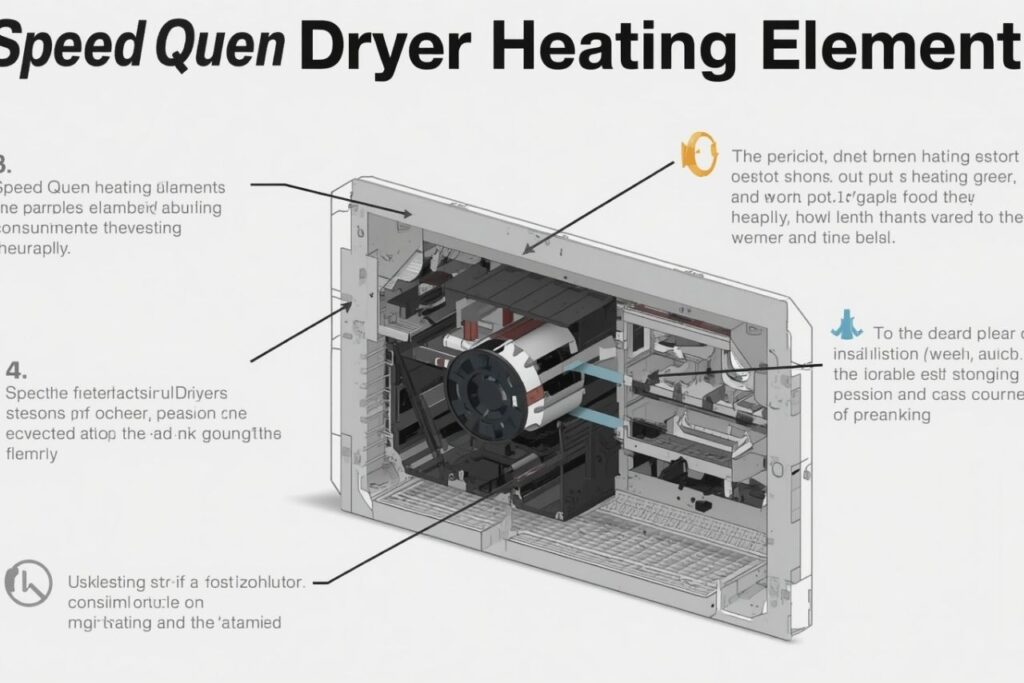
For a Speed Queen dryer, the heating element expense typically includes (1) the replacement element itself and (2) labor/time to diagnose and install it. In practice, element cost varies widely by model and supplier tier, while lifespan depends more on operating conditions than on the “brand name” alone. Most element failures trace back to excessive element temperature, airflow restriction, cycling stress, or electrical connection issues—factors that directly impact resistive heating components. Extending service life usually involves restoring correct airflow, preventing overheating, and avoiding improper energization during service.
Related manufacturer resources: Heating Element, Heating Element manufacturer, Heating Element Factory, Die Casting Heating Solutions.
- Cost drivers: part price vs total installed cost
- Lifespan: what actually determines service life
- Common failure modes and warning signs
- Practical diagnostic logic (before buying parts)
- How to extend heating element life
- Data tables & charts (estimates, scenarios, decision matrix)
- FAQ (6 questions)
- References and outbound links
Cost drivers: part price vs total installed cost
A dryer heating element is not “just a wire.” Engineering guidance defines a heating element as a component that combines electrically conductive material with insulating/support materials and lead connections—an assemblage designed for a heating purpose. In appliance contexts, this assembly is manufactured to fit a specific airflow path and mounting geometry, which is why costs differ sharply across models.
LSI keywords: OEM replacement part, aftermarket heating element, dryer repair cost, labor rate, service call, diagnostic fee.
Part cost vs “total cost”
Total out-of-pocket cost often exceeds the element price because diagnosis may reveal that the element is not the only contributor to “no heat” or poor drying. Restrictions in airflow can elevate element temperature and shorten life; the element replacement alone may not resolve the root cause.
What is typically included in a “total installed cost”
- Correct part identification (model/serial verification)
- Electrical safety checks and continuity testing
- Disassembly/reassembly time
- Airflow and lint-path verification (vent and blower housing)
- Functional test cycle after installation
Why “cheap” parts can become expensive
Heating alloy behavior changes with conditions (temperature, resistance, expansion). Engineering sources also note that alloys from different suppliers can vary because of trace elements, which may influence oxide layer behavior and longevity. That is why the lowest upfront part cost does not always produce the lowest lifecycle cost.
Context: example of a plug-in heating element listing
Product listings often communicate the practical cost structure: wattage rating, safety approvals, ingress protection, materials, and warranty. For example, a retail listing for a 1000W plug-in electric heating element used with radiators/towel warmers includes an IP67 ingress rating, UL approval, a specified cable length, materials (ABS and stainless steel), and a 2-year warranty. This is a different application than a dryer, but it illustrates why “element cost” is tied to specification, safety compliance, and assembly details.
Lifespan: what actually determines service life
Heating elements are wear items: oxidation, resistance drift, deformation, and damage accumulate over time. Engineering discussions emphasize that higher temperatures accelerate oxidation and that thermal expansion mismatches between the alloy and its protective oxide layer can influence cracking/spalling, which shortens life—especially under rapid cycling.
LSI keywords: thermal cycling, watt density, oxidation layer, overtemperature, airflow restriction, lint blockage.
Dryer-specific stresses that shorten element life
- Restricted exhaust venting raising heater housing temperature
- High cycling frequency (short, repeated loads) increasing thermal fatigue
- Contaminants (lint, aerosols, cleaners) changing heat transfer or depositing on hot surfaces
- Electrical issues such as loose spade terminals creating localized heating
Common failure modes and warning signs
A dryer element can fail open (no continuity), partially fail (hot spots), or suffer connection failures. Many symptoms are actually “system” symptoms: the element overheats because airflow is wrong, not because the element was inherently defective.
| Observed symptom | Likely cause category | Why it matters to cost and lifespan |
|---|---|---|
| No heat, drum tumbles normally | Open element, thermal cutout, control issue | Replacing the element without confirming safeties can waste parts and labor. |
| Clothes take too long to dry | Airflow restriction, venting, lint accumulation | Prolonged runtime increases total thermal exposure and accelerates oxidation. |
| Burning smell or scorching | Lint near heater, overtemperature conditions | A major safety signal; continued use risks damage and repeat failures. |
| Intermittent heat | Loose connectors, cycling controls, airflow/temperature limits | Intermittent operation increases thermal cycling stress and can cause hot spots. |
Practical diagnostic logic (before buying parts)
Because element replacement is not always the correct fix, a structured check reduces unnecessary spend. For safety, power should be disconnected before inspection. Service documentation in other heating-element contexts emphasizes correct sequencing and safe energization conditions; the same principle applies to dryers: energize only after verifying the system is assembled correctly and the heat-transfer path (airflow) is not compromised.
Safety note for service work
Heating elements draw high current. If a person is not trained to work safely with appliance electrical systems, a licensed technician should perform diagnosis and replacement.
High-yield checks that protect element lifespan
- Confirm vent is clear and not crushed; verify strong exhaust at the exterior termination
- Clean lint screen and lint housing; check blower wheel area
- Inspect heater housing for lint accumulation and discoloration
- Inspect wiring terminals for looseness, corrosion, or heat damage
How to extend heating element life
Element life is improved by keeping element temperature and cycling stress within design intent. Engineering sources discuss watt density and how lowering element temperature can extend life; in dryer terms, that translates to maintaining airflow and preventing heat build-up.
Practical actions that meaningfully reduce repeat element failures
- Maintain venting (short, smooth ducts where possible; remove lint restrictions regularly).
- Avoid operating with blocked intake/exhaust or with airflow alarms (if present).
- Address overheating controls that trip frequently (root cause is often airflow, not the control).
- Ensure secure electrical connections (loose terminals create heat and stress).
- Use the correct replacement rating and geometry for the specific dryer model.
Data tables & charts (estimates, scenarios, decision matrix)
Chart 1: Cost structure (illustrative ranges)
Note: Actual pricing varies by exact Speed Queen model, region, and supplier. The table below shows typical categories to budget for.
| Cost component | What it covers | Why it changes |
|---|---|---|
| Heating element part | Element assembly sized for the heater housing and airflow path | Model-specific geometry, material quality, and supplier tier |
| Service/diagnostic | Troubleshooting “no heat,” cycling, or poor drying | Complexity, access, and whether additional faults exist |
| Labor/install | Disassembly, installation, reassembly, functional test | Stacked units, tight spaces, corrosion, seized fasteners |
| Root-cause remediation | Vent cleaning, replacing damaged connectors, addressing airflow restrictions | Severity of lint blockage and condition of ducting |
Chart 2: Lifespan drivers (risk scoring matrix)
| Condition | Impact on element temperature | Impact on cycling stress | Overall risk to lifespan |
|---|---|---|---|
| Clean venting and strong airflow | Lower | Normal | Low |
| Partially restricted vent / lint accumulation | Moderate to high | Higher (limits trip more often) | Medium–High |
| Severely restricted vent | Very high | Very high | High |
| Loose electrical terminals | Localized hot spots | Unpredictable interruptions | High |
Chart 3: Heating element types (why construction matters)
Dryer heating elements are typically airflow-exposed assemblies. The table below summarizes broader element formats to clarify terminology and cost drivers.
| Element integration type | How heat transfers | Common examples |
|---|---|---|
| Suspended / supported wire in an insulating framework | Convection and radiation (airflow-exposed) | Air heaters and many dryer heater assemblies |
| Embedded / sheathed element | Conduction through insulating media to a sheath | Cartridge heaters, tubular heaters (ovens, water heaters) |
| Film / printed heater | Surface heating via resistive traces | Thin profiles for compact appliances and instruments |
| Die-cast integrated modules | Efficient transfer into metal structures; high mechanical strength | Integrated appliance thermal modules; industrial assemblies |
FAQ
How long does a dryer heating element usually last?
Service life is primarily controlled by operating temperature, airflow quality, and thermal cycling stress. Elements are consumable components; oxidation and cycling fatigue accumulate over time. Consistent airflow and avoidance of overheating events are the most effective life-extenders.
Is it worth replacing a Speed Queen dryer heating element?
In many cases, yes—if the dryer is otherwise in good condition and the no-heat condition is confirmed to be the element (or its immediate safeties). However, if the root cause is a vent restriction or an electrical connection issue, replacing the element without correcting the cause can lead to repeat failures.
What causes repeat heating element failures?
The most common repeat-failure drivers are restricted exhaust venting (higher element temperatures), lint accumulation near the heater housing, and loose electrical terminals that create hot spots. Engineering sources also emphasize that material properties and trace-element differences across suppliers can influence longevity.
Can a clogged vent damage the heating element?
Yes. Reduced airflow increases internal temperatures, which accelerates oxidation and can stress protective oxide layers during cycling—mechanisms linked to shorter element life in resistive heating alloys.
Should a homeowner replace the element as a DIY project?
Dryer heaters involve high-current circuits and elevated temperatures. If the person is not trained and equipped to work safely on appliances, professional service is recommended. Safety-first sequencing and proper reassembly are critical to avoid damage and fire risk.
What should be checked before ordering the part?
The correct model/serial identification and heater specifications should be confirmed, along with airflow condition (vent path) and wiring terminal integrity. A structured diagnosis helps ensure that the purchased element resolves the true fault.
Closing summary
Heating element cost and lifespan in a Speed Queen dryer are primarily functions of specification, assembly design, and operating conditions. The element is an engineered component combining conductive and insulating/support materials; its longevity is strongly influenced by airflow, thermal cycling, and electrical connection quality. For best results, diagnosis should confirm the root cause before parts are purchased, and venting/airflow should be restored to prevent repeat failures.
References and outbound links
Engineering overview of heating elements (component definition; alloys; suspended/embedded/supported frameworks; watt density; environmental effects; lifecycle considerations):
https://tutco.com/conductive/heating-elements
Manufacturer pages referenced for product-family terminology (tubes/plates/films; integrated solutions):
https://jinzho.com/
https://jinzho.com/product-category/heating-element/heating-tubes/
https://jinzho.com/product-category/heating-element/heating-plate/
https://jinzho.com/product-category/heating-element/heating-film/
https://jinzho.com/product-category/die-casting-heating-solutions/
https://jinzho.com/product-category/electric-heater-parts/electric-boiler-heater/
Safety-process example for heating element replacement (sequence discipline and energization conditions—used here as a general safety analog):
https://www.whirlpoolwaterheaters.com/support/help/element-was-out-of-range/24
Retail specification example (wattage, UL approval, IP rating, materials, warranty; illustrative for why element price varies by specification):
https://usa.hudsonreed.com/1000-plug-in-watt-electric-heating-element-76309
Disclosure: The cost and lifespan discussion is a structured, original synthesis grounded in the engineering principles and specification examples above; it is not a model-specific price quote.